

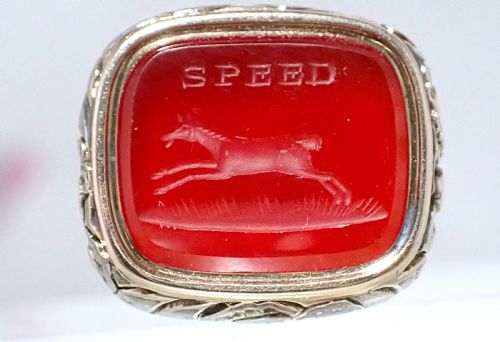


Intaglio Wax Seal
An intaglio wax seal is a small carved stone or metal matrix used for signing documents, prized for personal engraving and tactile history.
Intaglio Wax Seal
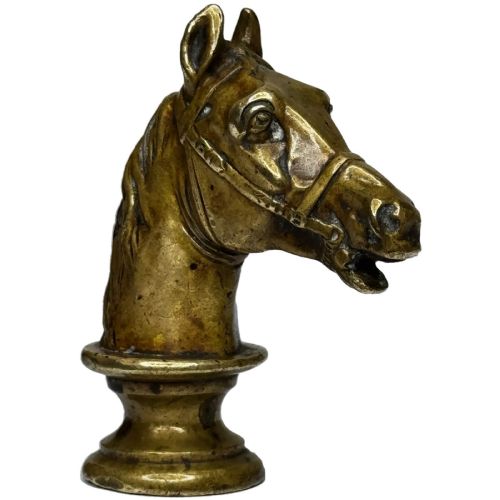
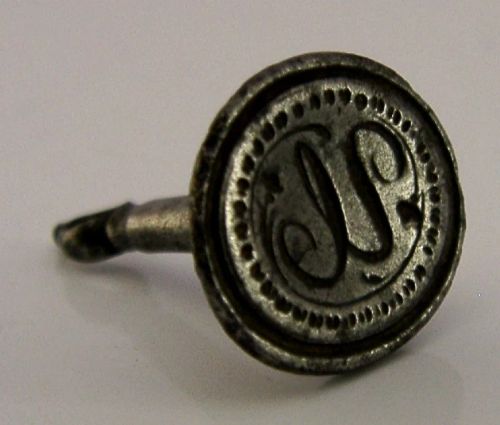
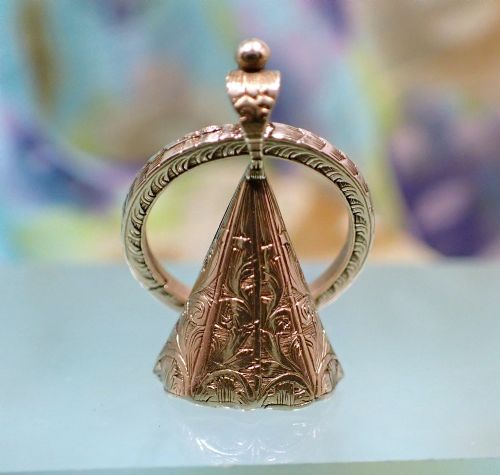
An intaglio wax seal is a functional desk accessory or piece of wearable jewellery designed to press a distinct impression into hot wax. These objects function as miniature markers of identity, often carrying armorial bearings, initials, portraits or classical figures.
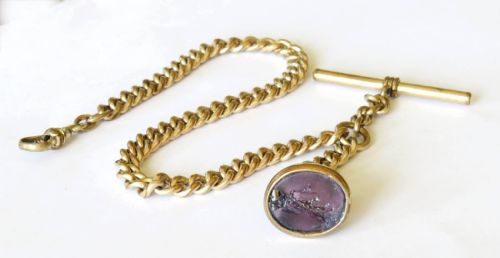
On this page, you will most frequently meet fob seals designed to hang from watch chains or charm bracelets, alongside desk seals and occasional boxed sets. The forms span the Georgian, Victorian and Edwardian eras, reflecting changing social habits from private correspondence to decorative display.
How they were made
The materials recorded in these listings combine precious metals with hardstones, featuring gold, rolled gold, gilt metal and steel alongside carved carnelian, bloodstone, chalcedony and glass. Artisans mounted these stones into swivel or fixed mounts, allowing the base to carry a reverse-carved design.
Carving an intaglio requires meticulous hand-cutting into the stone so that the resulting wax impression stands in positive relief. Metal seals employ direct engraving or casting, often finished with ornate chased decoration around the handle and collar.
Listings feature seals spanning Georgian, Victorian and Edwardian periods, utilising carnelian, bloodstone, gold, steel and glass.
What varies in quality
The distinction between ordinary and exceptional pieces lies in the crispness of the intaglio carving and the weight of the metal mount. Finer stones display precise anatomical detail in portraits or heraldry, whereas lesser examples show softer, shallower lines.
Mounts also dictate grade, with solid gold settings and substantial carnelian or bloodstone matrices representing superior workshop output compared to light gilt brass or hollow rolled metal housings.
Wedgwood and Bentley
The Intaglio Wax Seal Glossary
- Intaglio
- A design carved into the surface of a material so that the impression produced in relief. This technique reverses the image on the stone.
- Fob seal
- A small pendant seal hung from a pocket watch chain or ribbon. Gentlemen and ladies carried these daily for signing letters.
- Armorial
- A design displaying a coat of arms or heraldic crest. These denoted family lineage and social standing.
- Carnelian
- A brownish-red variety of the mineral chalcedony, widely used for intaglio seals due to its hardness and colour.
Intaglio Wax Seal: Frequently Asked Questions
What is an intaglio wax seal?
An intaglio wax seal is a carved stone or metal stamp used to leave an impression in molten sealing wax.
They were essential tools for authenticating letters and documents before the widespread adoption of modern adhesives.
How were fob seals worn?
Fob seals were attached to watch chains and suspended from waistcoat pockets or worn on charm bracelets.
They served as both practical writing implements and fashionable accessories displaying personal motifs.
What stones are used for seals?
Carvers utilised hardstones such as carnelian, bloodstone, chalcedony, sardonyx and rock crystal.
These minerals resisted the heat of sealing wax and retained sharp carved edges over decades of use.
How do I date an antique seal?
Dating relies on stylistic shifts in the metal mount, the cut of the stone, and hallmarks where present.
Georgian examples tend toward neoclassical motifs, while Victorian pieces often incorporate heavier gold work and varied hardstones.