



Engraved Intaglio Seal
An engraved intaglio seal is a carved stone or metal matrix pressed into wax to leave a raised impression, prized for its miniature artistry and history.
Engraved Intaglio Seal
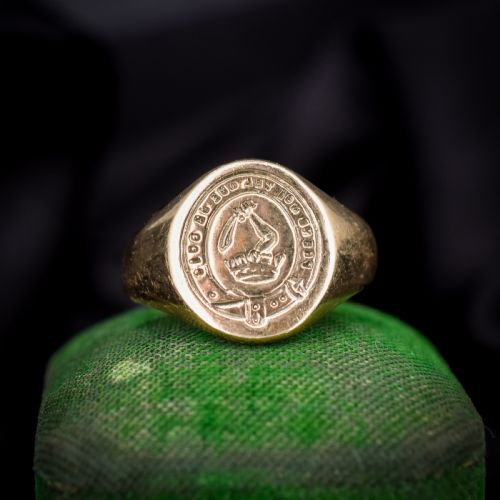
When you search for an engraved intaglio seal, you encounter small, carved objects intended for personal marking, frequently mounted as fob pendants or set into signet rings. These pieces function as wearable history, often carrying initials, crests, or classical figures carved directly into the stone.
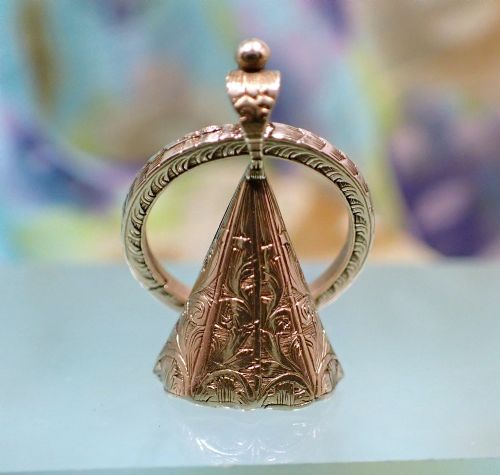
The versions most commonly met on this page span the Georgian and Victorian eras, alongside select medieval bronze examples. They appear in forms ranging from handheld desk accessories and fobs to heavy gold rings designed to leave a lasting impression.
Makers utilised durable materials to ensure the carved design endured repeated pressings into hot wax without losing definition. The resulting objects combine practical utility with intimate portraiture, heraldry, or mythological scenes.
How they were made
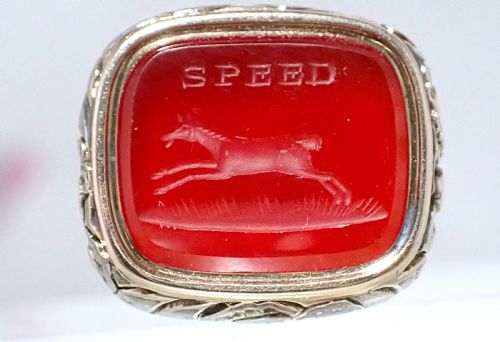
The production of an engraved intaglio seal relied on selecting hardstones such as carnelian, bloodstone, and agate, which were then laboriously carved by hand using specialised miniature drills and abrasives. Metals like gold, silver, bronze, and gilt metal provided robust mountings and bezels to secure the stones.
In the Georgian and Victorian periods, goldsmiths formed settings from nine-carat, fifteen-carat, and eighteen-carat gold, or cast them in base metals with gold cased layers. The meticulous reverse carving required immense skill, as every stroke had to appear correct when inverted in the wax impression.
Stones seen across these pieces include carnelian, bloodstone, and agate, mounted into rings, fobs, and pendants.
What varies in quality
The distinction between ordinary and exceptional examples rests primarily on the depth and precision of the miniature carving. Superior pieces display crisp anatomical details, legible lettering, and harmonious proportions within the stone.
Material selection also dictates value, with deeply saturated carnelian, unblemished bloodstone, and heavy gold mounts marking the upper tier of production. Lesser examples rely on cast base metals and shallower, less refined incisions.
The Engraved Intaglio Seal Glossary
- Intaglio
- A design carved into the surface of a material so that the impression produced is raised. This technique stands in direct contrast to cameo carving.
- Fob
- A short chain or ribbon attached to a pocket watch, frequently ending in a decorative seal. These were worn by gentlemen and ladies to secure and display personal signets.
- Carnelian
- A brownish-red mineral of the quartz family used widely for intaglio seals. Its translucent quality made it a favoured choice for gemstone carving.
- Signet ring
- A finger ring bearing a carved motif or monogram used for sealing documents. They served both as personal signatures and decorative items.
- Matrix
- The face of a seal bearing the engraved design. The matrix creates the positive relief when pressed into sealing wax.
Engraved Intaglio Seal: Frequently Asked Questions
How do I use an antique seal?
These pieces press into heated sealing wax to close letters or authenticate documents. Modern users typically melt coloured wax sticks and apply the matrix firmly to leave a clean, raised impression.
While functional, many owners now wear them as pendants or display them on desk chains rather than using them for correspondence.
What is the difference between a fob and a ring?
Fobs hang from chains and feature a handle or loop at the top for carrying in a pocket or on a chatelaine. Rings are sized to be worn directly on the finger as signets.
Both formats utilise the same reverse-carved stone matrix to transfer a design into wax.
How do I date an engraved seal?
Dating relies on the metallurgical composition, the style of the carving, and the mounting fashion of the period. Georgian pieces often feature heavier pinchbeck or high-carat gold mounts with distinct neoclassical motifs.
Victorian examples introduce varied gold standards and sometimes incorporate specific commemorative dates or sentimental inscriptions directly into the metalwork.
Are these stones natural?
The stones used in these pieces, including carnelian, bloodstone, and agate, are natural minerals selected for their hardness and colour. Artisans shaped and polished these materials by hand before executing the detailed intaglio cuts.
Natural variations in the quartz give each stone unique tonal qualities visible beneath the carved motifs.