
Inlaid Wooden Pedestal Table
An inlaid wooden pedestal table brings surface decoration and upright form together, offering a compact centrepiece for a sitting room or corner.
Inlaid Wooden Pedestal Table
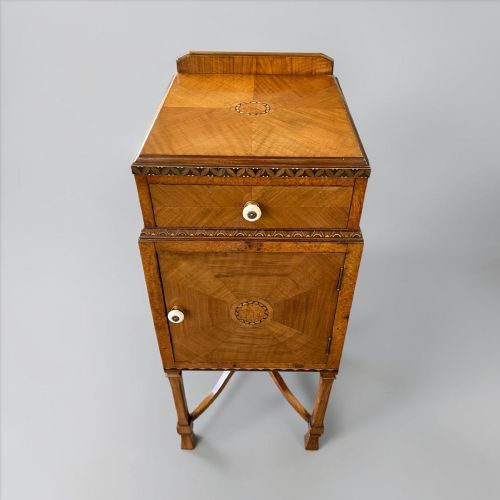
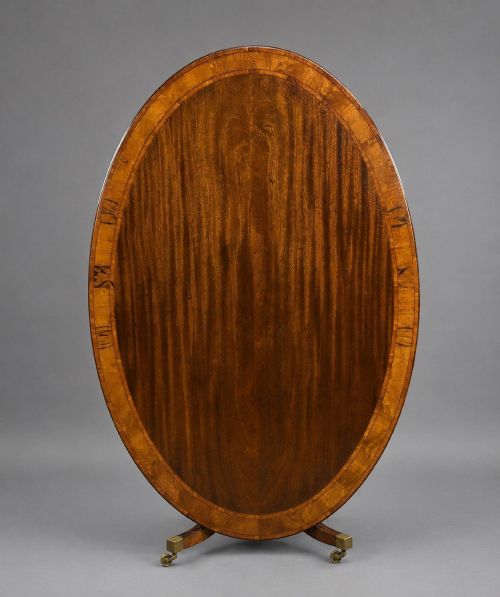
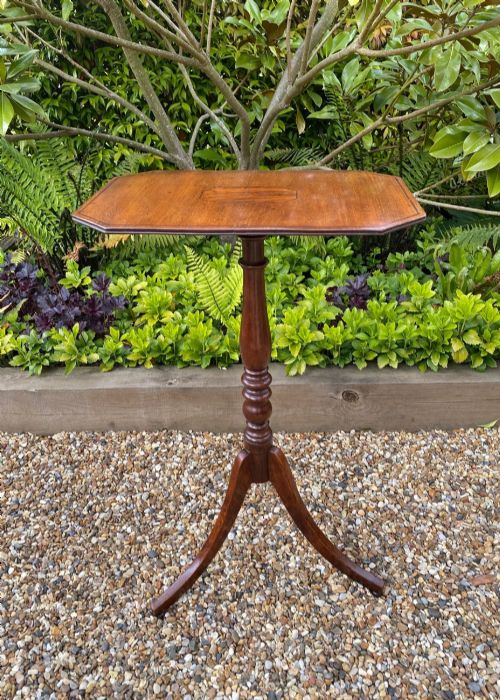
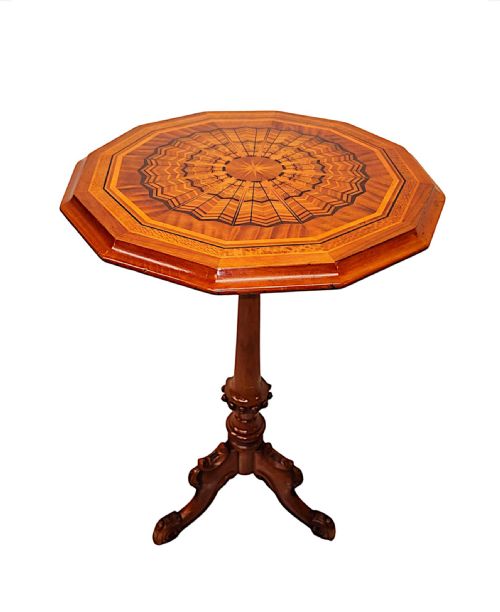
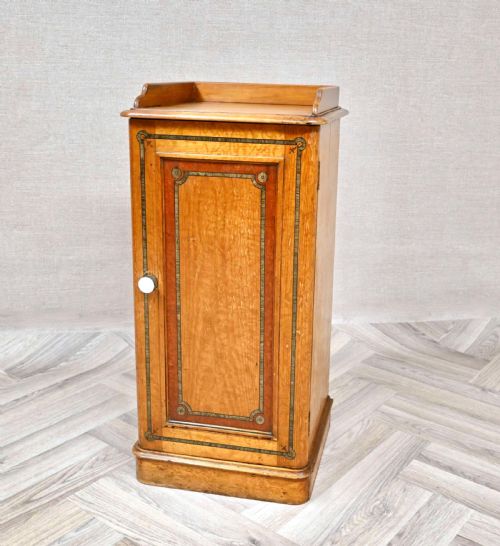
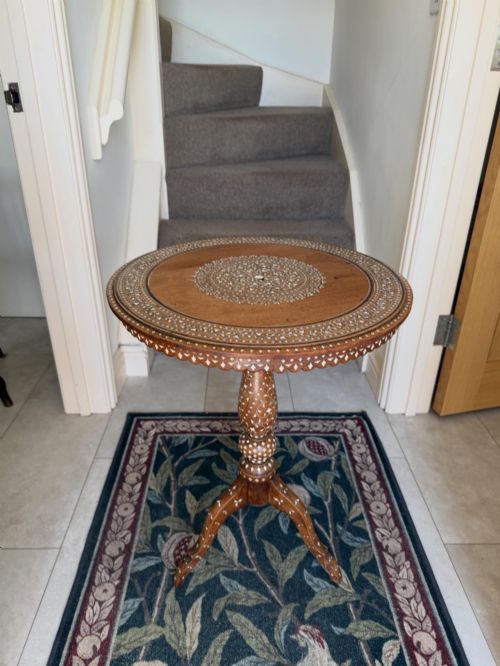
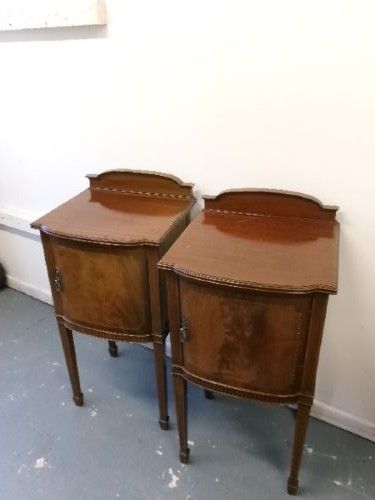
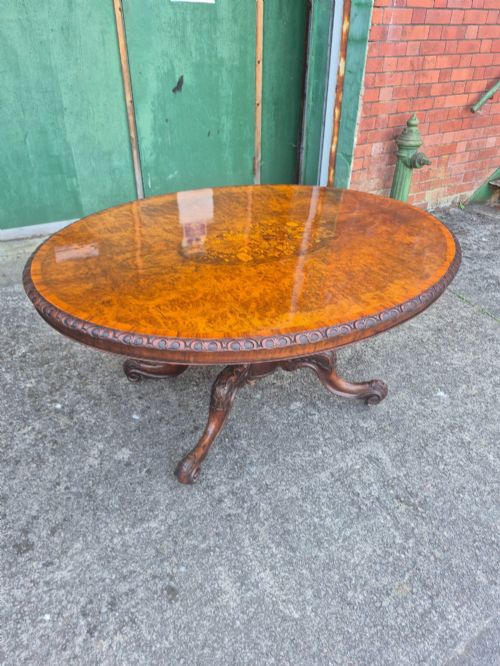
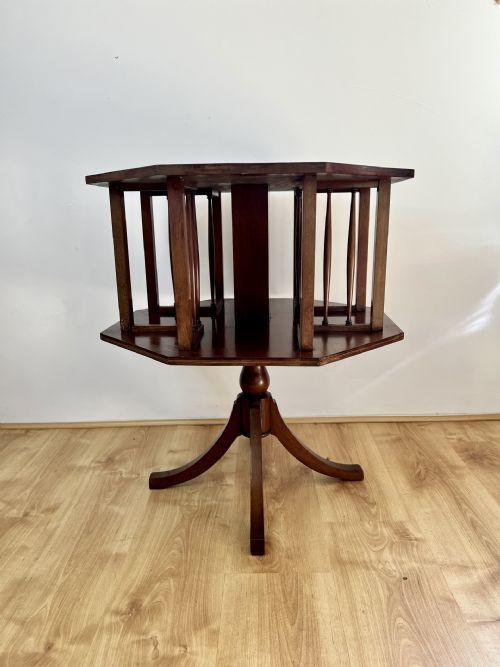
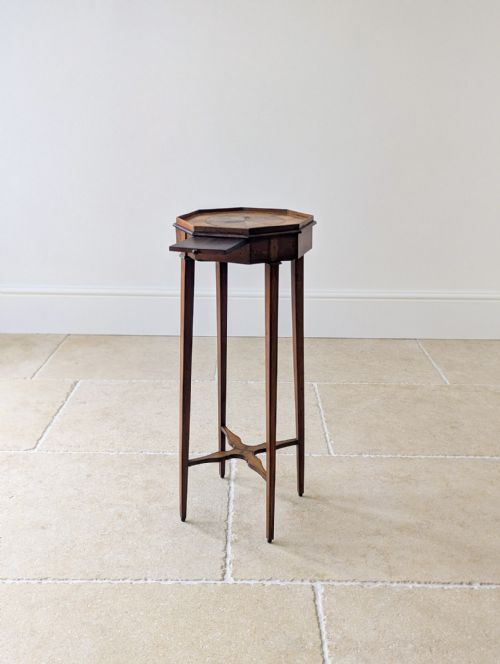
When you search for an inlaid wooden pedestal table, you encounter diverse nineteenth-century and early twentieth-century forms, including occasional tables, wine tables, lamp tables, and breakfast tables supported by a central column. Victorian and Edwardian examples dominate the selection, often rendered in rich timbers with contrasting marquetry or stringing.
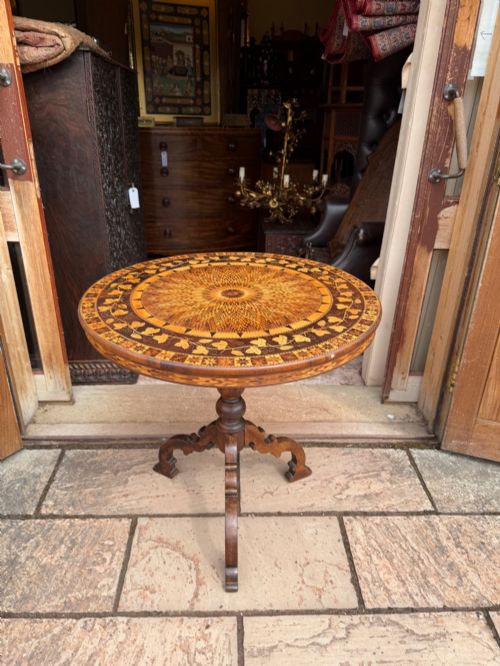
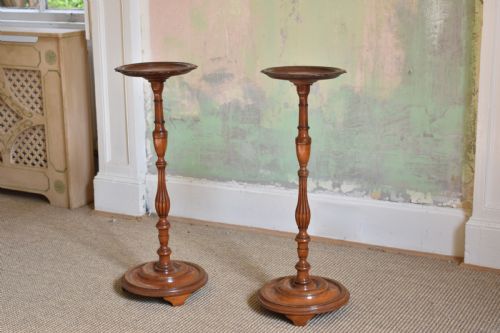
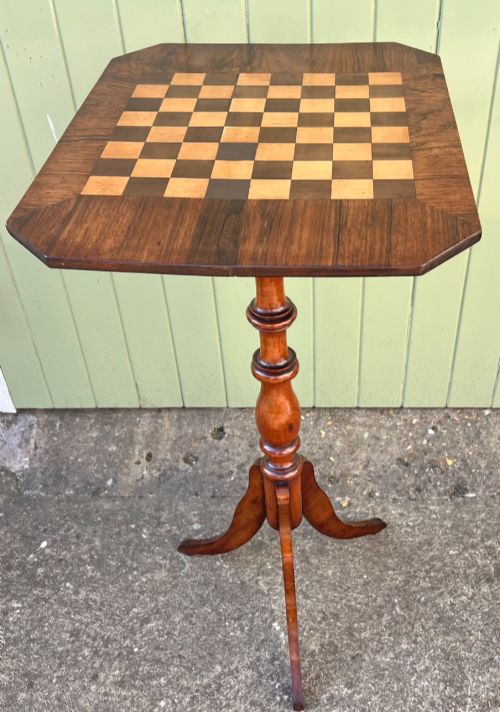
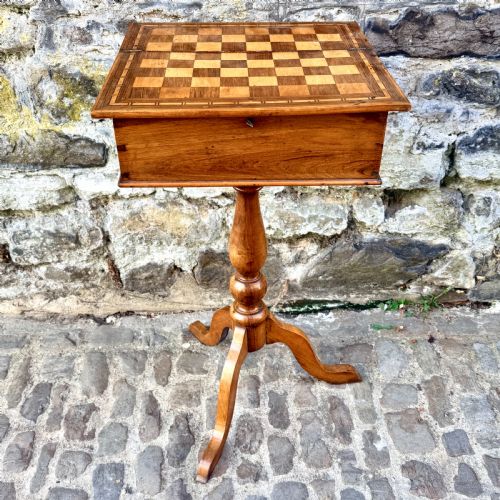
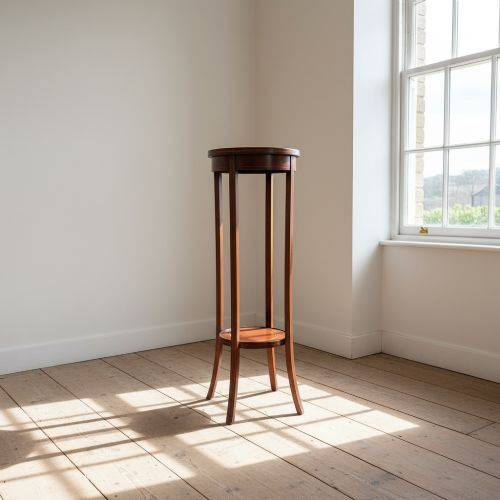
Many of these tables serve specific domestic functions, spanning chess tables with inlaid boards, plant stands, and larger walnut centre tables designed for drawing rooms. The central support typically rises from a tripod or platform base, keeping the footprint modest while displaying decorative wood veneers on the top.
Origins range widely across English workshops, French provincial makers, and specialist regional centres such as Hoshiarpur, introducing varied decorative motifs from classical urns to dense floral marquetry. Georgian and Regency revivals also appear frequently, reflecting later makers looking back to eighteenth-century proportions.
Materials and construction methods
Cabinet makers constructed these tables using dense hardwoods like mahogany, walnut, burr walnut, and rosewood as a structural base and primary surface. Satinwood and various contrasting timbers provided the pale tones necessary for detailed inlay work and geometric stringing.
The decorative surfaces rely on precise wood inlay and marquetry techniques, where thin veneers of contrasting species are cut and fitted into recessed channels or panels within the primary timber. Central pillars are frequently turned on a lathe, joining solid timber columns to shaped feet or tripartite bases.
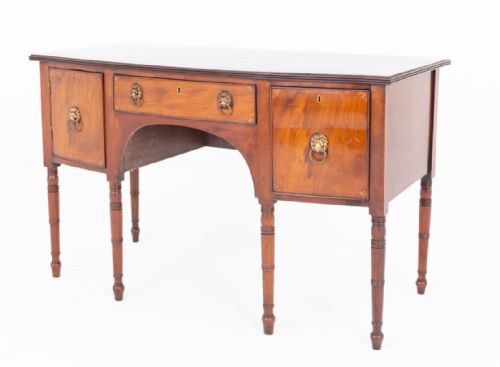
Listings feature nineteen-century and early twentieth-century periods, showcasing mahogany, walnut, rosewood, and satinwood across tables, plant stands, and desks.
Judging the quality of craftsmanship
Quality rests primarily on the crispness of the inlay work and the selection of figured veneers, such as burr walnut or highly grained satinwood, which demonstrate superior raw material choice. Finer pieces maintain tight joints around the pedestal column and stable flat surfaces without excessive warping.
The sophistication of the carved base and the finesse of the decorative motifs separate ordinary utility pieces from exceptional studio or cabinet-maker outputs. Secondary timbers used underneath and inside drawers also reveal the level of care taken during the original construction.
Gillows·Maple and Co
The Inlaid Wooden Pedestal Table Glossary
- Marquetry
- Decorative patterns formed by fitting together small pieces of veneer into a wood ground. This technique allows for elaborate floral or pictorial designs across the tabletop.
- Pedestal table
- Any table supported by a single central pillar or column rather than four corner legs. They typically stand on tripod feet for stability.
- Satinwood
- A durable, hard timber with a natural golden lustre and satin-like sheen. It is frequently employed for contrasting inlay work on dark mahogany grounds.
- Burr walnut
- Wood taken from a walnut tree growth that produces intricate swirling grain patterns. It commands attention for its rich visual texture on Victorian tabletops.
- Stringing
- Thin lines of contrasting wood inlay used to outline panels, drawers, and tabletops. It defines geometric borders with neat precision.
Inlaid Wooden Pedestal Table: Frequently Asked Questions
What rooms suit an inlaid wooden pedestal table best?
These tables fit easily into sitting rooms, hallways, and studies where surface space is needed without a large footprint. Their decorated tops make them effective as lamp tables or display surfaces next to seating.
Because the central column keeps the perimeter clear, they tuck neatly into corners or float beside chairs without obstructing movement around the room.
How do I distinguish Victorian from Edwardian examples?
Victorian pieces tend to use darker, heavier timbers like burr walnut and rosewood, often featuring dense floral marquetry and hand-carved pedestal bases. They reflect a taste for ornate, substantial furniture.
Edwardian examples frequently show lighter satinwood inlay, brighter mahogany tones, and Sheraton revival influences. The decorative vocabulary is typically more restrained and linear.
Can I use a games table for everyday dining?
Games tables with inlaid chess or sewing boards are generally built for specific leisure activities rather than heavy family meals. Their folding tops and internal compartments require careful handling.
While they provide a sturdy surface for drinks or books, the specialised veneers and mechanisms are better preserved by avoiding heavy daily wear and moisture.
How should I care for antique wood inlay?
Keep inlaid tables away from direct sunlight and heat sources to prevent the adhesives beneath the delicate veneers from drying out. Consistent indoor humidity protects the wood from shrinking and cracking.
Apply a traditional beeswax polish occasionally to nourish the timber and maintain the soft lustre of the surface without building up synthetic residues.