


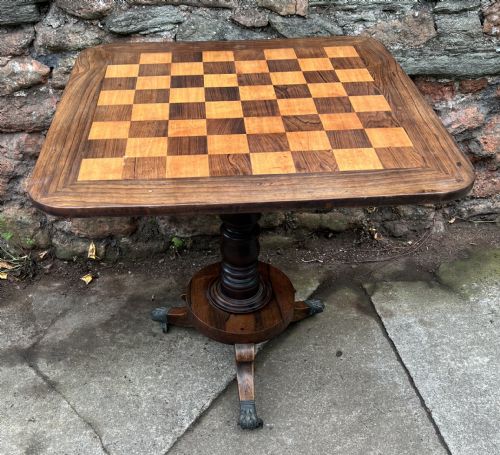
Inlaid Wooden Chess Board
An inlaid wooden chess board offers a tactile surface for play while bringing rich timber contrast into a room.
Inlaid Wooden Chess Board
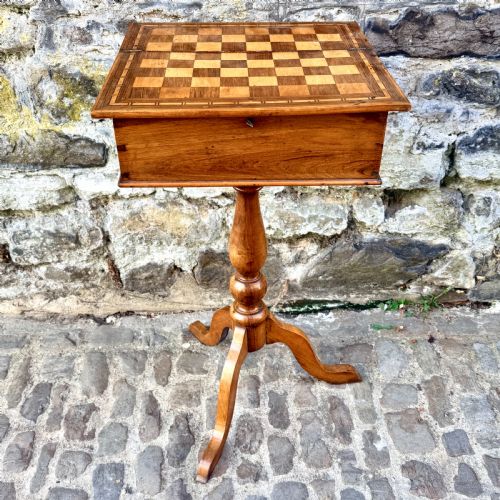
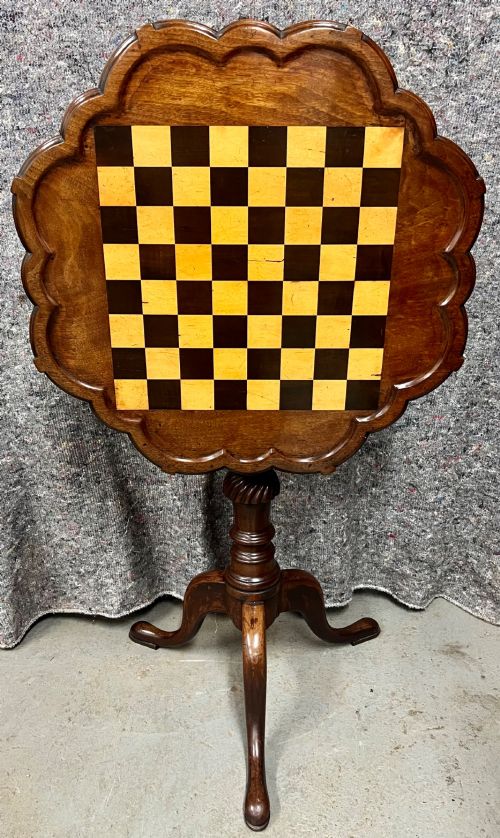
An inlaid wooden chess board appears in various forms on this page, ranging from folding travel boards and rigid games boards to tripod tables and games boxes. The selections span the Georgian, Regency, and Victorian periods, alongside specific regional expressions such as French Provincial, Anglo-Indian, and Swedish Biedermeier.
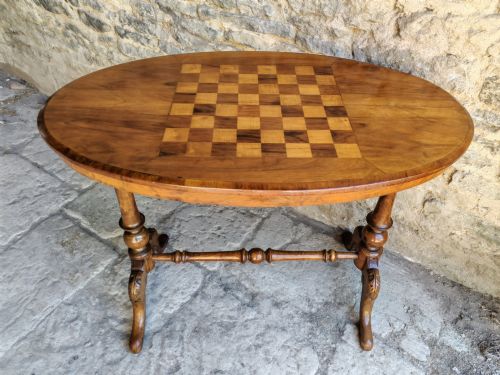
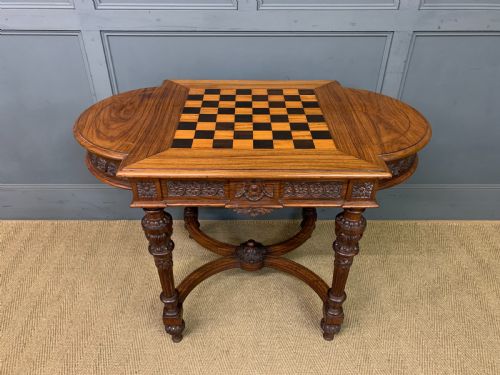
Tables with integrated chequered tops function as occasional furniture, whilst folding boxes and compendiums often combine chess with backgammon interiors. Buyers encounter both standalone boards intended for tabletop use and substantial pedestal tables designed for permanent display.
The origin of these pieces stretches across English, French, Swedish, and Anglo-Indian workshops. Most examples date from the nineteenth century, utilising contrasting timbers to delineate the sixty-four squares.
How they were made
Cabinetmakers constructed these surfaces using diverse timbers including walnut, mahogany, rosewood, ebony, boxwood, satinwood, and sycamore. Individual squares were cut and fitted precisely together using wood inlay techniques to create the distinct dark and light chequerboard pattern.
Some boards incorporate mother-of-pearl alongside traditional woods to add luminosity to the playing surface. Tripod bases and folding hinges required specialised joinery to ensure stability during play and longevity in domestic settings.
Certain nineteenth-century boards slipped secret backgammon layouts inside, letting players abandon a stalemate for a quick dice chase.
What varies in quality
The standard of a board depends upon the precision of the timber matching and the crispness of the geometric inlay. Superior examples display tight joints between contrasting light and dark woods that remain stable across temperature changes.
The choice of secondary timbers and the finesse of the turned pedestals or box hinges differentiate standard production from finer cabinetmaking. Well-executed surfaces maintain flat planes without warping, ensuring pieces rest securely during a game.
British Chess Company
The Inlaid Wooden Chess Board Glossary
- Chequered
- A pattern of alternating dark and light squares used for the playing field. This geometric arrangement defines the primary function of the surface.
- Inlay
- The technique of inserting pieces of contrasting wood into a recessed solid base to form a decorative pattern. It creates a smooth, flush surface across the board.
- Tripod table
- A small freestanding table supported by a central pillar on three feet. Many nineteenth-century examples feature fixed or tilt tops with inlaid chess boards.
- Games compendium
- A boxed collection containing multiple board games and equipment within a single fitted case. These portable sets often combine chess, backgammon, and draughts.
Inlaid Wooden Chess Board: Frequently Asked Questions
How do I date an inlaid wooden chess board?
Dating relies upon timber selection, construction methods, and the style of the supporting table or box. Nineteenth-century pieces often display distinct joinery and specific wood combinations characteristic of Victorian or Regency cabinetmaking.
Examining hinges, secondary woods, and any maker marks helps narrow the decade of production. Comparative analysis with dated examples in the archive provides further chronological context.
Can I use an antique chess board for regular play?
Most antique boards remain robust enough for regular use provided they are handled with care. Flat wooden boards and sturdy tables withstand standard chess pieces without issue.
Owners should protect the polished wooden surfaces from moisture and direct sunlight. Storing folding boards in stable humidity prevents warping of the inlaid squares.
What is the difference between a games table and a board?
A games table is a piece of furniture with a permanent or folding top designed to stand independently in a room. These often feature pedestals or four legs alongside storage for playing pieces.
A board is a portable surface intended for placement on an existing table or desk. Some boards double as folding boxes that store pieces and alternative games inside.
How are different wood species identified on the board?
Identification involves observing the natural grain, colour, and density of the timber used for the light and dark squares. Boxwood and satinwood typically provide the pale squares, whilst walnut, mahogany, rosewood, and ebony supply the dark tones.
Close inspection reveals natural pores and growth rings characteristic of each species. Artisans selected these specific woods to achieve high visual contrast without relying on artificial stains.