





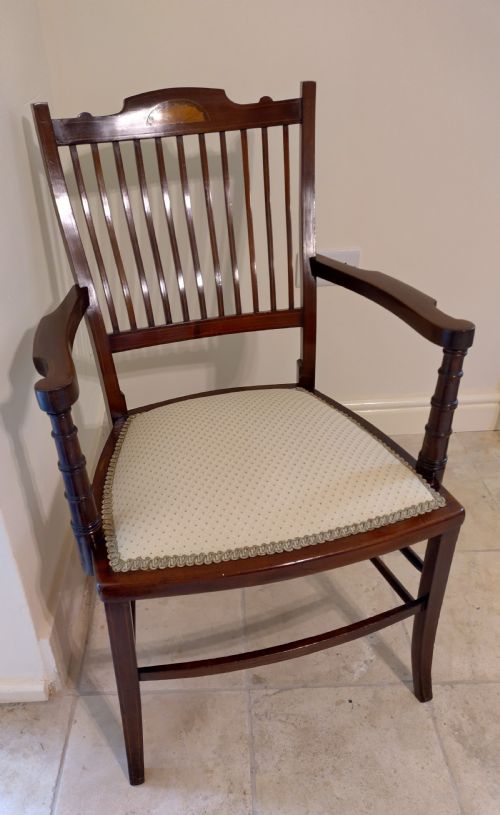

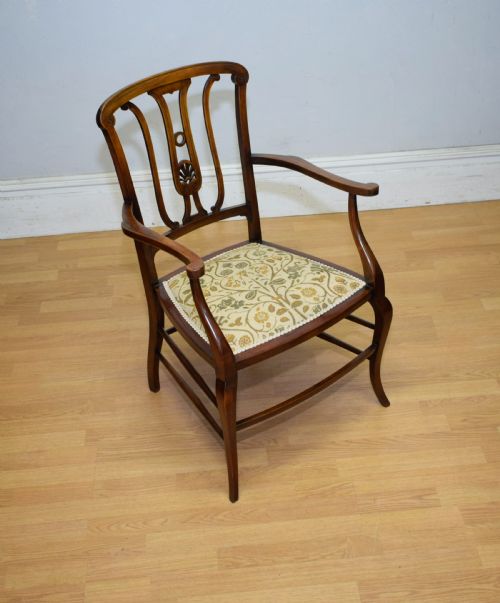


Inlaid Wooden Carver Chair
An inlaid wooden carver chair brings refined seating to a room, combining supportive armrests with decorative craftsmanship.
Inlaid Wooden Carver Chair
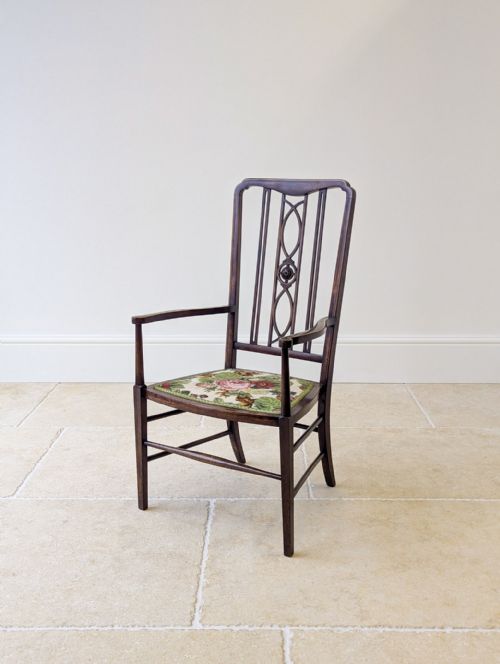
An inlaid wooden carver chair is a sturdy seat with armrests, designed historically for the head of a dining table or for use at a desk. You will most frequently encounter Edwardian and late nineteenth-century examples fashioned from mahogany with contrasting wood inlay.
The selections span various forms including salon armchairs, library chairs, and desk chairs originating across the Georgian, Regency, Victorian, and Edwardian periods. Many pieces display distinct stylistic influences such as Sheraton Revival, Art Nouveau, and the Aesthetic Movement.
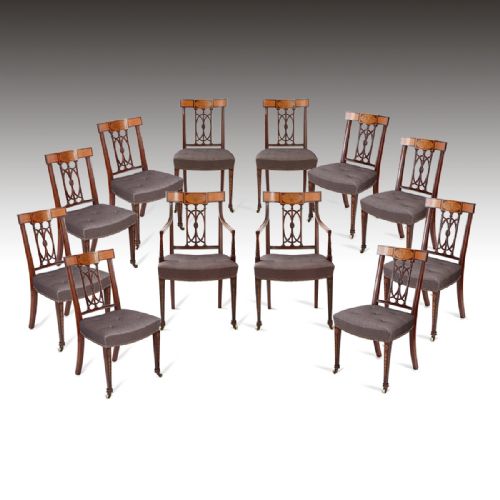
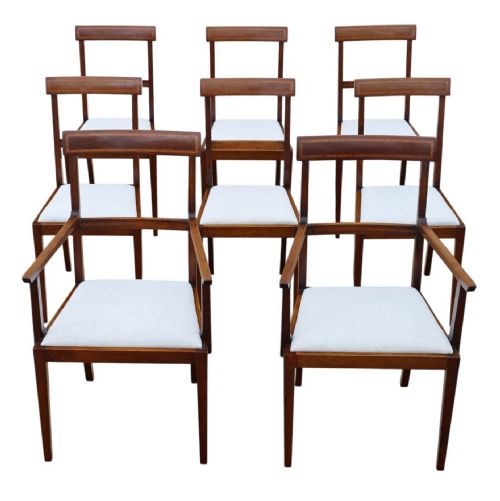
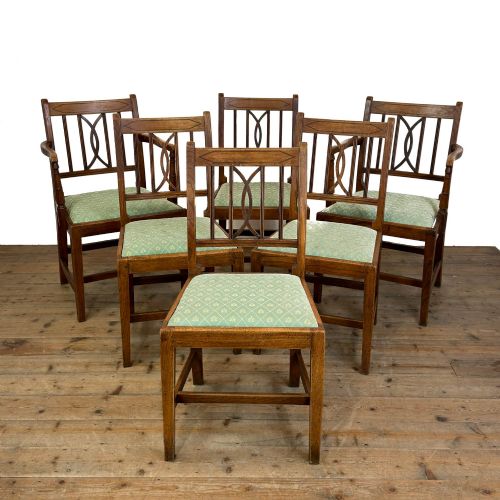
Makers and workshops of the era employed diverse seating configurations, from single occasional chairs to large matching dining sets incorporating carvers alongside standard side chairs. The presence of upholstered pads in fabric, leather, or brass details further defines these functional household items.
How they were made
Cabinetmakers constructed the primary frame using solid timbers like mahogany, walnut, and oak, shaping the structural components to support daily use. Wood inlay and satinwood inlay were then painstakingly set into recesses on the timber surface to create delicate geometric or floral patterns.
Upholstery techniques involved securing fabric or leather over padded seats, sometimes complemented by brass elements such as castors or decorative tacks. Artisans relied on traditional joinery methods to ensure the armrests and back rails remained rigid over decades of service.
Inlaid Wooden Carver Chair Retail Price Guide 2026
Typical asking prices for inlaid wooden carver chair among the pieces listed under this phrase on Sellingantiques today, from the lower quarter to the upper quarter. They describe what is for sale here now, not the wider market.
Victorian craftsmen occasionally hid subtle signature stamps beneath the upholstery webbing, leaving a quiet greeting for future restorers.
What varies in quality
The standard of timber selection and the precision of the inlay work distinguish finer examples from standard production pieces. Crispness in the botanical or linear motifs carved and inlaid into the wood indicates a higher level of workshop skill.
Proportion and structural integrity dictate the overall merit of an armchair, where balanced armrests and securely jointed frames demonstrate superior furniture making. The integration of complementary materials, such as polished brass fittings and quality fabric or leather, elevates the piece.
Shoolbred·Lamb of Manchester
The Inlaid Wooden Carver Chair Glossary
- Carver chair
- An armchair traditionally placed at the head of a dining table or utilised as a desk seat. These chairs feature supportive armrests integrated into the upper frame.
- Inlay
- A decorative technique where contrasting materials are inserted into recessed cavities of a wooden base. This creates a flush, ornamented surface popular in period cabinetmaking.
- Satinwood
- A pale, lustrous timber utilised extensively for contrasting details and stringing on darker wood furniture. It provides a bright golden tone to decorative motifs.
- Sheraton Revival
- A late nineteenth-century design movement inspired by the lightness and neoclassical motifs of eighteenth-century designer Thomas Sheraton. Pieces often feature delicate tapered legs and fine inlay.
- Aesthetic Movement
- A late Victorian artistic philosophy promoting art for art's sake, reflected in furniture through stylised natural forms and simplified structural lines.
Inlaid Wooden Carver Chair: Frequently Asked Questions
What is a carver chair used for?
A carver chair serves as an armchair, historically placed at the head or foot of a dining table for the host. They also function well as standalone desk chairs or occasional seating in a parlour.
The arms provide added support, making them comfortable for extended periods of sitting during meals or writing correspondence.
How do I identify an Edwardian chair?
Edwardian chairs often feature light mahogany frames combined with delicate satinwood inlay and tapered legs. They reflect a revival of earlier eighteenth-century aesthetics with a lighter, more slender construction.
Looking beneath the seat or checking the joinery often reveals the machine-assisted hand-finishing typical of the early twentieth century.
Are these chairs suitable for daily use?
Most antique armchairs are structurally robust enough for regular use provided the joints remain sound and the upholstery is well-maintained. Mahogany and walnut frames offer strong natural durability.
Placing them away from direct heat sources helps preserve the timber and prevents the inlay from drying out.
What is the difference between an elbow chair and a carver?
An elbow chair and a carver chair both describe seats equipped with armrests designed to support the user's arms. In many regional contexts, the terms are used interchangeably for dining and library armchairs.
Context within a dining set usually defines the carver as the larger armchair meant for the table ends.