

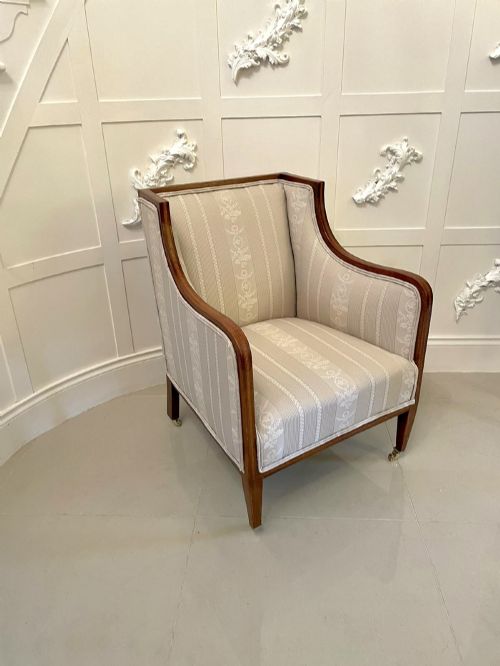


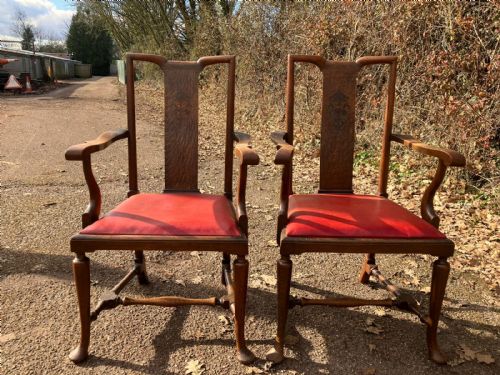


Edwardian Inlaid Library Chair
An edwardian inlaid library chair brings classic proportions and subtle decorative woodwork into a study, offering both comfort and enduring style.
Edwardian Inlaid Library Chair
An edwardian inlaid library chair is a sturdy yet elegant seat designed for reading and writing, appearing most frequently in forms dating from around nineteen hundred. These pieces combine practical desk seating with decorative elements suited to period interiors.
The pieces on this page span several related styles including Sheraton Revival, Neoclassical Revival, and Arts and Crafts. You will encounter armchair and desk chair variants upholstered in fabrics, leather, velvet, or textiles.
Origins represented in the selection lean toward English craftsmanship from the late nineteenth and early twentieth centuries. They function equally well as office seating, occasional chairs, or traditional library furnishings.
How They Were Made
Cabinet makers utilised solid woods like mahogany, walnut, and oak to construct the frames of these chairs. These primary timbers provide the structural strength needed for daily seating.
Decorative detail relies on precise woodwork techniques, incorporating contrasting wood inlays and marquetry into the timber surfaces. Brass fittings and supportive upholstery materials such as leather and fabric complete the construction.
Edwardian Inlaid Library Chair Retail Price Guide 2026
Typical asking prices for edwardian inlaid library chair among the pieces listed under this phrase on Sellingantiques today, from the lower quarter to the upper quarter. They describe what is for sale here now, not the wider market.
Some chairs served double duty in bedrooms as dressing table seats, proving that Victorians and Edwardians loved multi-tasking furniture just as much as we do.
What Varies in Quality
The refinement of the woodwork largely separates standard examples from superior ones. Crisp detailing in the inlay and precise joinery indicate a higher standard of manufacture.
The choice of primary timber and the execution of the upholstery also influence the standing of a piece. Finer examples display harmonious grain patterns and balanced proportions across the arms and back.
The Edwardian Inlaid Library Chair Glossary
- Inlay
- A technique where contrasting pieces of wood or other materials are inserted into depressions in the base timber to form a decorative pattern. This ornamentation defines the visual character of the woodwork.
- Bergere
- An enclosed upholstered armchair with wooden frames where the sides are often filled with cane or fabric. It offers a distinct silhouette compared to open elbow chairs.
- Marquetry
- Elaborate veneer patterns applied to furniture surfaces to create pictorial or geometric designs. Craftsmen assemble these decorative veneers before fixing them to the carcase.
- Sheraton Revival
- A late nineteenth and early twentieth century style inspired by the furniture designs of George Sheraton. It is characterised by slender proportions, classical motifs, and delicate inlay work.
Edwardian Inlaid Library Chair: Frequently Asked Questions
What is an edwardian inlaid library chair?
An edwardian inlaid library chair is a traditional wooden seat featuring decorative marquetry or stringing, produced around the turn of the twentieth century.
These chairs were built for studies and libraries, combining comfortable upholstered seating with refined period aesthetics.
How were these chairs used originally?
They served primarily as functional seating at writing desks, reading tables, or within private libraries.
Their sturdy frames and supportive arms made them suitable for prolonged periods of reading and administrative work.
How do I date an inlaid library chair?
Dating relies on examining the timber species, construction methods, and stylistic cues such as Sheraton Revival motifs.
Pieces originating from this period typically display specific machine-assisted joinery alongside hand-finished inlay and traditional upholstery.
How do I care for mahogany and walnut frames?
Maintain the timber by keeping the chair away from direct heat sources and sudden changes in humidity.
Regular dusting and occasional treatment with appropriate wood waxes will preserve the natural lustre of the polished surface.