



Inlaid Wooden Bureau
When you select an inlaid wooden bureau, you secure a practical writing station enriched by centuries of cabinet-making craft.
Inlaid Wooden Bureau
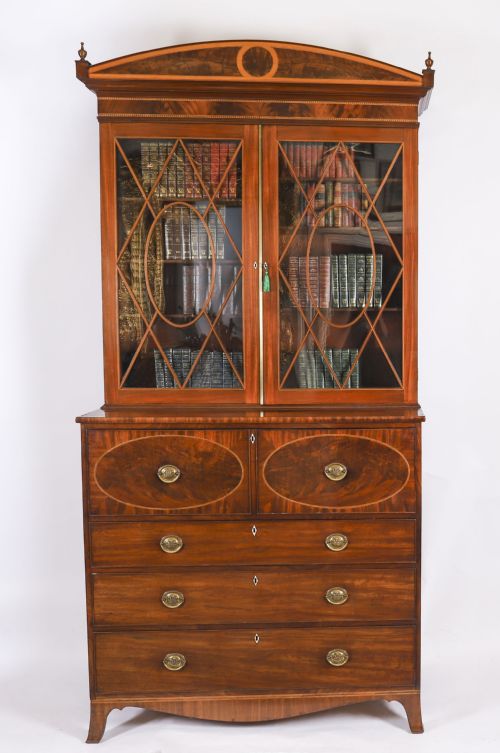
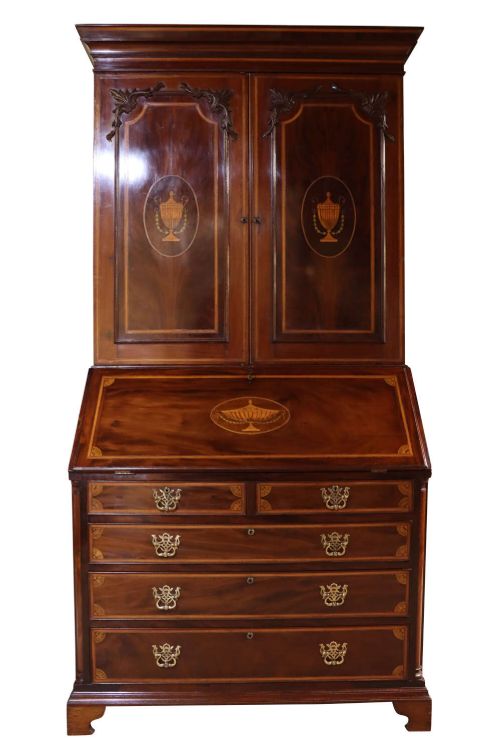
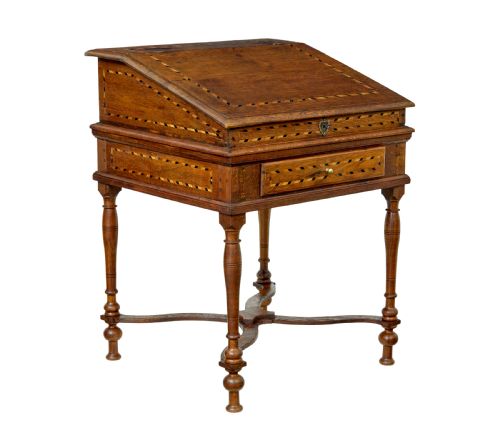
An inlaid wooden bureau combines a sloping writing flap or drop front with internal compartments, often rising into bookcase extensions or resting atop chests of drawers. These writing pieces span from the Georgian era through the Victorian and Edwardian periods.
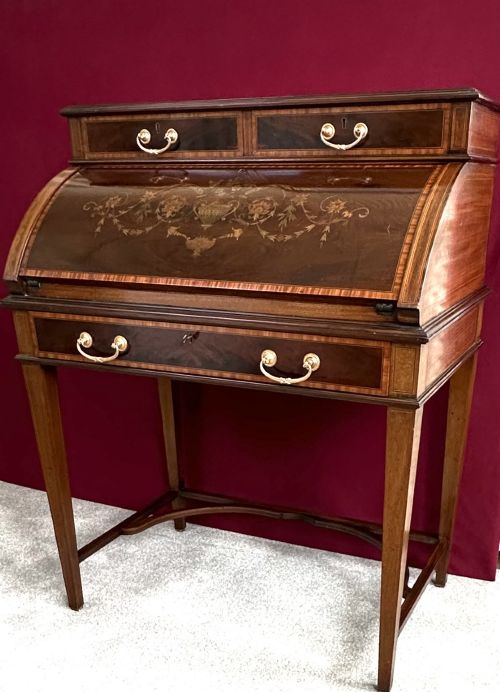
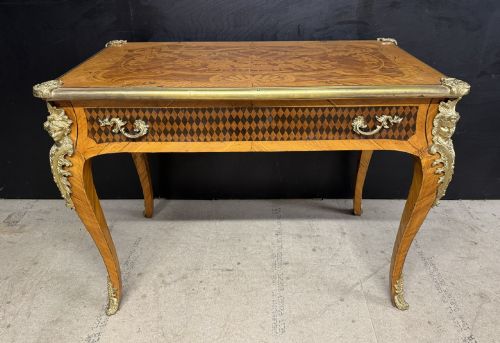
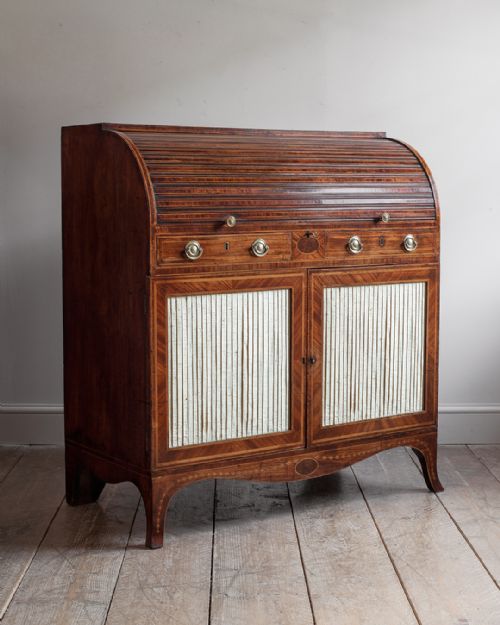
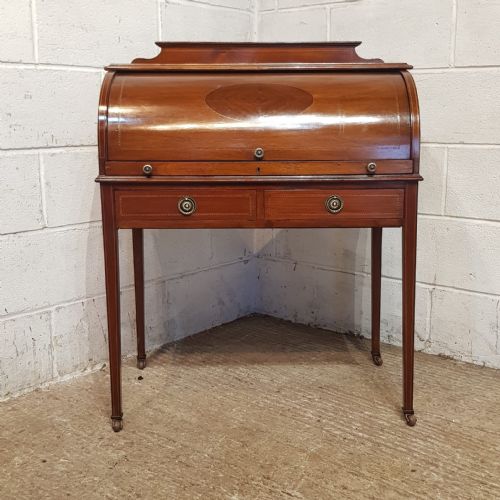
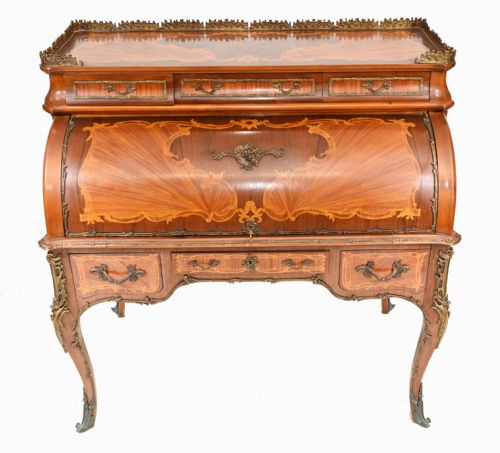
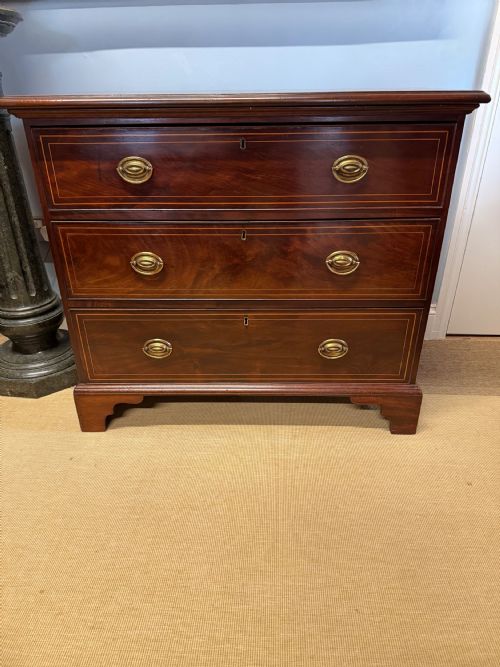
The versions most frequently met on this page include mahogany fall-front models decorated with satinwood or boxwood line inlay. Alongside these, buyers encounter cylinder desks, bureau bookcases, and compact writing tables utilising similar ornamental wood techniques.
Makers shaped these items for practical domestic correspondence and document storage, resulting in diverse forms ranging from large secretaire bookcases to intimate ladies writing desks.
Materials and construction methods
Cabinet-makers built the primary carcase using dense timbers such as mahogany, walnut, and oak, often selecting figured veneers like flame mahogany or burr walnut for visible surfaces. These solid foundations ensured structural stability for heavy writing sections and drawers.
Decoration relied on contrasting woods including satinwood, boxwood, and various fruitwoods cut into thin strips for line inlay, banding, and intricate marquetry scenes. Metal mounts in brass or ormolu frequently reinforced keyholes, handles, and structural corners.
Some models hide tiny secret drawers behind pigeonholes, designed for letters that required absolute discretion.
Factors determining quality
Quality rests upon the precision of the cabinet-maker's joinery and the selection of timber veneers. Superior examples display tightly matched wood grains across large surfaces and seamless integration of decorative inlay without gaps.
Internal secondary timbers and drawer construction reveal the standard of manufacture. Finer pieces maintain robust drawer linings, original brass hardware, and intricate internal fittings like secret compartments or revolving tabernacles.
Mawer & Stephenson
The Inlaid Wooden Bureau Glossary
- Fall front
- A hinged writing flap that drops forward to create a horizontal desk surface. When closed, it conceals the pigeonholes and small drawers inside.
- Marquetry
- The art of forming decorative patterns using thin veneers of different coloured woods, shells, or metals. Craftsmen assemble these pieces like puzzles onto the furniture surface.
- Secretaire bookcase
- A tall cabinet combining a dedicated writing drawer or drop-front desk section with upper shelving enclosed by glass or wooden doors.
- Crossbanding
- A border strip of veneer laid around the perimeter of a panel with the wood grain running perpendicular to the centre. This frames the main timber grain.
- Cylinder desk
- A writing table featuring a curving quarter-circle wooden shutter that rolls backward to reveal the desk interior.
Inlaid Wooden Bureau: Frequently Asked Questions
What is an inlaid wooden bureau?
An inlaid wooden bureau is a traditional writing desk featuring a hinged writing flap and decorative wood contrasting details. These pieces typically include internal compartments for stationery and documents.
They emerged in various forms across the Georgian, Victorian, and Edwardian periods, serving as functional furniture for private correspondence.
How do I identify the period?
Identifying the period involves examining the primary timber, the style of inlay, and the construction methods used inside the drawers. Georgian pieces often show simpler mahogany lines, while Victorian examples embrace heavier walnut and elaborate marquetry.
Hardware styles and secondary woods also offer reliable clues to dating an antique writing desk.
Where were they placed?
These desks typically stood in private studies, drawing rooms, or bedrooms where correspondence took place. Their compact footprints suited domestic spaces needing both storage and writing facilities.
Larger bureau bookcases functioned as combined libraries and secretary stations in principal rooms.
How do I care for the surface?
Maintaining these wooden surfaces requires regular dusting with a soft, dry cloth and avoiding direct sunlight. Keeping the timber away from extreme temperature shifts prevents veneer cracking and warping.
Application of appropriate wax polish helps preserve the sheen of aged mahogany, walnut, and satinwood.