

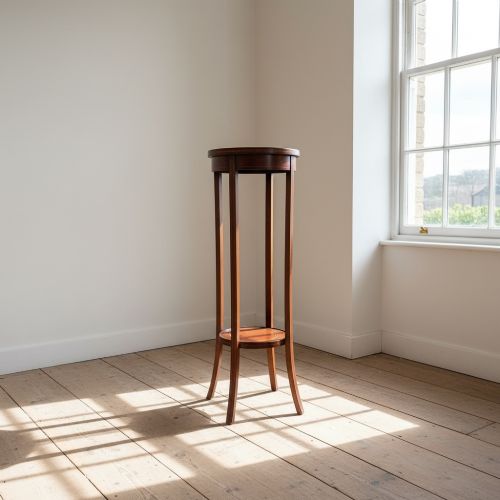


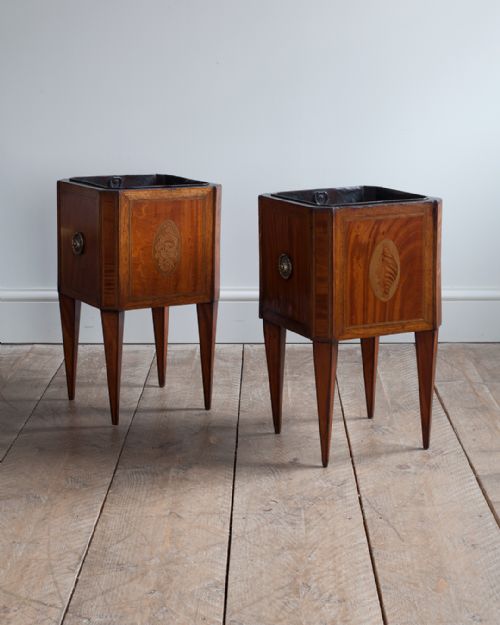
Inlaid Wood Planter
These inlaid wood planter examples bring botanical display indoors through centuries of craftsmanship, offering timeless botanical housing for the discerning collector.
Inlaid Wood Planter
When you search for an inlaid wood planter, you are looking at decorative botanical vessels designed to hold potted plants within domestic interiors. These pieces range from plant stands and jardinieres to peat buckets and wine coolers adapted for floral display.
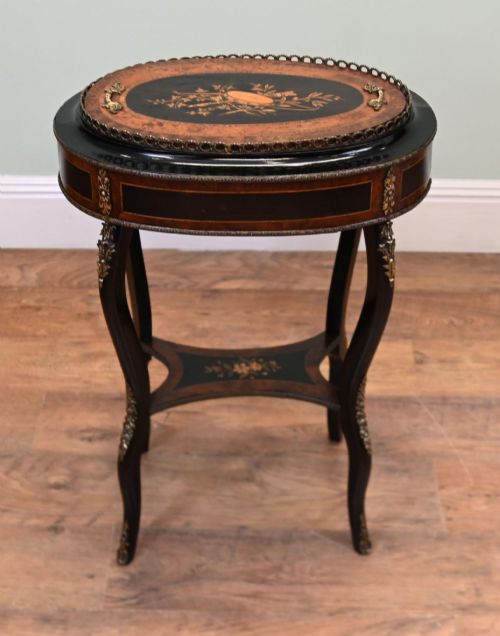
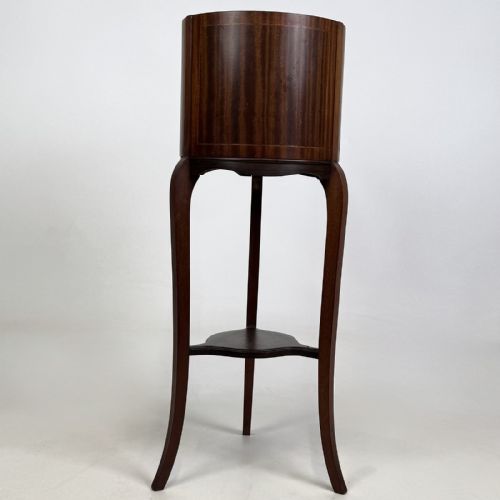
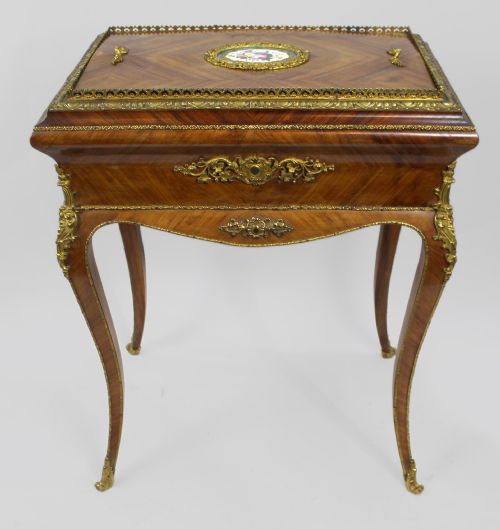
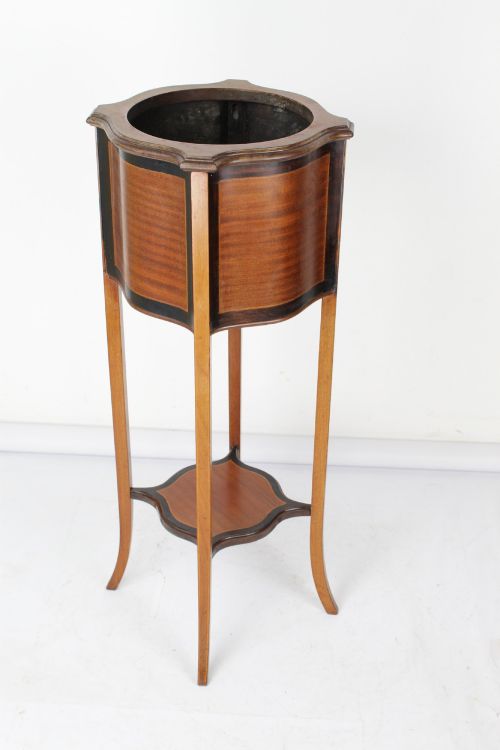
You are most likely to meet Edwardian and nineteenth-century examples on this page, reflecting periods of refined interior horticulture. They appear in forms spanning simple tripod stands to elaborate ormolu-mounted receptacles.
The objects combine functional waterproof linings with decorative timber frames, often elevated on slender legs or sturdy plinths. Their presence in a room immediately signals a Victorian or Edwardian dedication to indoor greenery.
How they were made
Cabinetmakers utilised dense timbers such as mahogany, satinwood, walnut, and rosewood as the primary structural bodies for these planters. These woods provided a stable canvas for decorative surface work.
Craftsmen applied intricate boxwood inlay and contrasting veneers to create geometric or floral motifs across the panels. Metal elements like brass and ormolu mounts were frequently added to reinforce corners and frame the timber work.
Inlaid Wood Planter Retail Price Guide 2026
Typical asking prices for inlaid wood planter among the pieces listed under this phrase on Sellingantiques today, from the lower quarter to the upper quarter. They describe what is for sale here now, not the wider market.
Some containers started life carrying peat to a parlour hearth before spending their retirement holding ferns.
What varies in quality
The refinement of the inlay work separates ordinary containers from superior pieces, with crisp, tightly fitted boxwood lines indicating master craftsmanship. Simpler versions rely on basic timber grain, whereas finer examples incorporate elaborate contrasting veneers.
Mounting hardware also dictates the standing of a piece, as heavy cast ormolu and quality brass liners elevate the status of a jardiniere. Structural integrity in the legs and joins determines whether a stand remains stable under the weight of wet soil and foliage.
The Inlaid Wood Planter Glossary
- Jardiniere
- A decorative pot or stand designed to hold live plants or flowers indoors. They frequently feature metal liners to protect the surrounding wooden structure from moisture.
- Inlay
- A technique where pieces of contrasting material are inserted into a recessed wooden surface to form a pattern. Boxwood and satinwood are common contrasting elements in these designs.
- Ormolu
- Gilded bronze ornamentation applied to furniture and decorative objects during the nineteenth century. It provides a bright metallic contrast to dark mahogany and walnut bodies.
- Peat Bucket
- A deep wooden vessel historically used for holding fuel near a hearth, often repurposed as a planter. Their robust construction suits the containment of heavy pots.
- Sheraton Revival
- A late nineteenth-century design style drawing on eighteenth-century neoclassical lightness and symmetry. Pieces from this movement often display delicate floral marquetry.
Inlaid Wood Planter: Frequently Asked Questions
What is the difference between a jardiniere and a plant stand?
A jardiniere typically refers to the vessel or pot holder itself, which can sit upon a table or floor. A plant stand incorporates legs or a pedestal as an integral part of the piece, elevating the greenery.
Historical terminology often blurs these lines, as makers and retailers used the terms interchangeably for similar botanical furniture. Both items served the same Victorian and Edwardian desire to display indoor flora at height.
How were these planters used historically?
Victorians and Edwardians placed these vessels in drawing rooms and conservatories to bring living plants indoors. They housed potted ferns and flowering plants, protected by metal liners that caught excess water.
Beyond simple botany, grander examples doubled as wine coolers or decorative coal buckets during formal entertaining. Their dual utility made them central pieces of nineteenth-century interior display.
How can I tell an Edwardian piece from a Victorian one?
Edwardian planters tend to display lighter satinwood veneers and more delicate, airy Sheraton Revival influences. They often favour restraint and brightness in keeping with early twentieth-century tastes.
Victorian examples generally utilise darker timbers like heavy mahogany and rosewood, sometimes paired with robust ormolu mounts. Their construction feels heavier and more substantial, reflecting mid-nineteenth-century interior scale.