

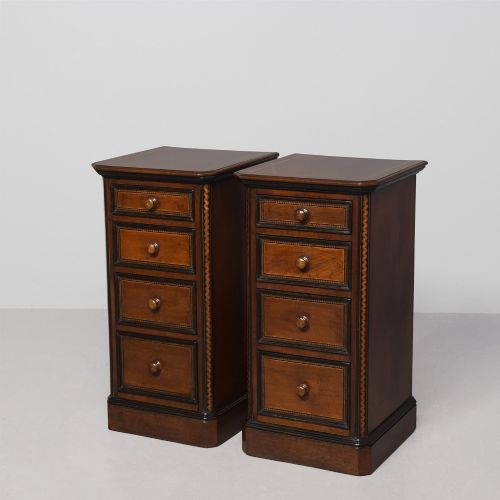
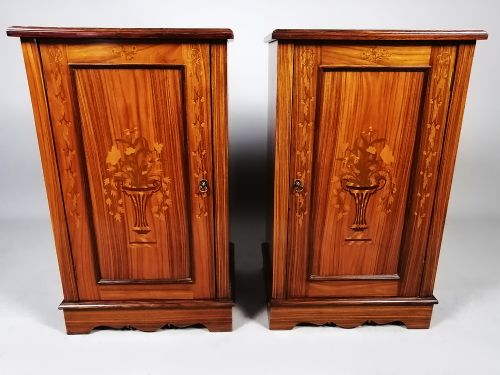
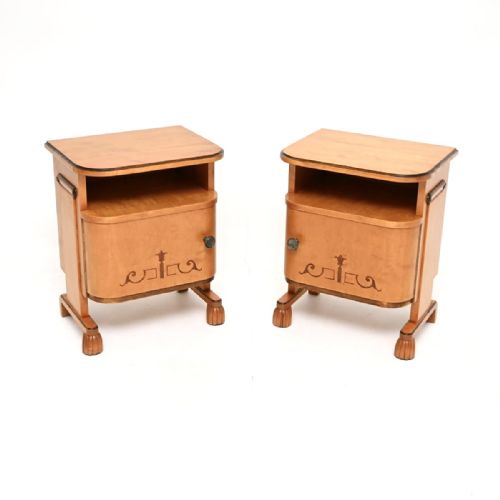
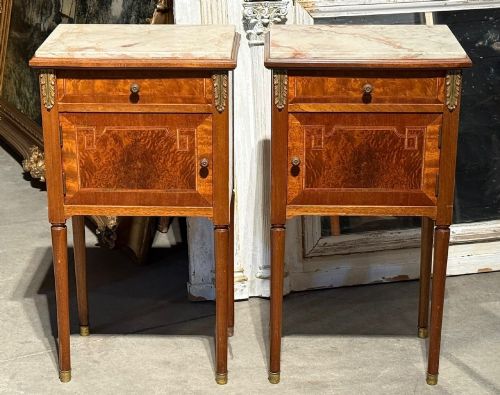
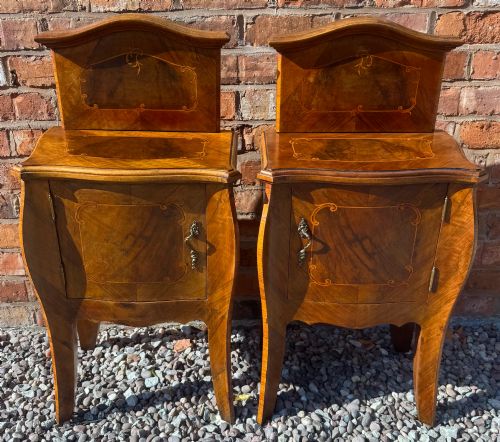

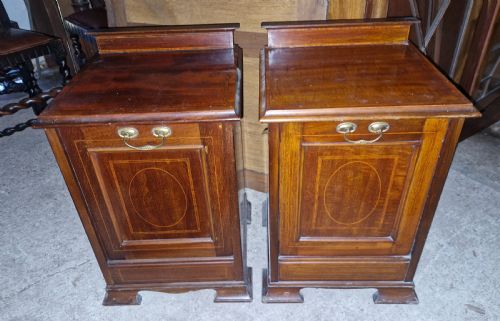


Inlaid Wood Nightstand Pair
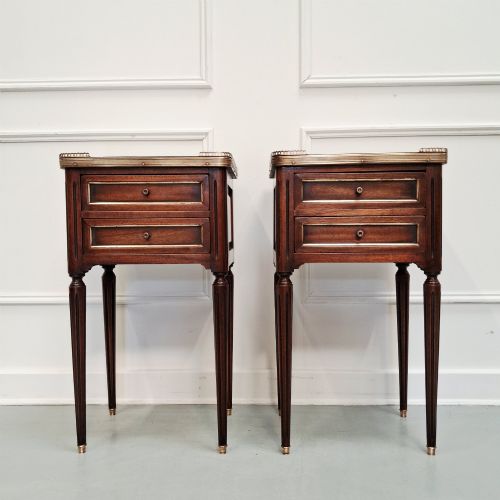
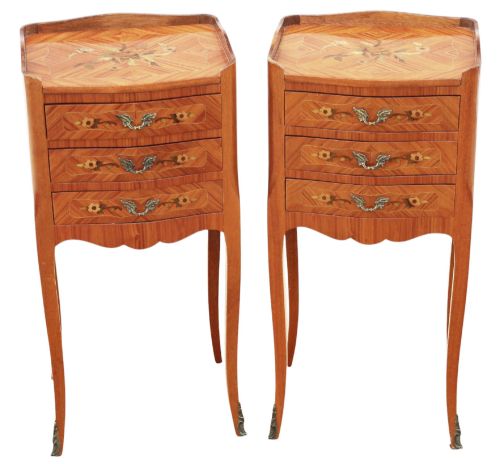
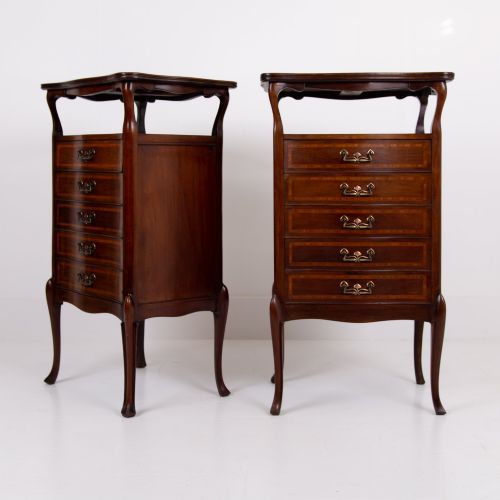
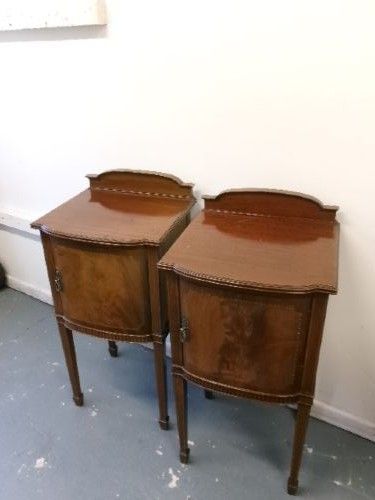
These inlaid wood nightstand pair examples bring matched symmetry and intricate surface decoration to the bedside.
Inlaid Wood Nightstand Pair
An inlaid wood nightstand pair provides symmetrical bedside storage and display surface through matched pairs of small cabinets, cupboards, and tables. These pieces serve domestic bedrooms with enclosed spaces for nighttime items while offering decorative surfaces.
The selections encountered here span Victorian, Edwardian, and twentieth-century periods, alongside revival influences like Sheraton and Louis XV. Most examples take the form of bedside cabinets, commodes, or kidney-shaped side tables.
Makers and workshops across Britain, France, Sweden, and Italy produced these duos using native and exotic timbers. Buyers meet pieces featuring drop doors, drawers, marble tops, and marquetry patterns designed specifically as matching sets.
Materials and construction
Cabinetmakers utilised hardwoods including mahogany, walnut, rosewood, satinwood, amb මෙම and kingwood as primary structures and veneers. Marquetry and parquetry patterns incorporated contrasting timbers and boxwood stringing into the top surfaces and door panels.
Construction methods combined traditional carcass framing with detailed veneer application and wood inlay techniques. Brass handles, gilt metal mounts, and fitted marble tops completed the hardware integration on French and English models.
Inlaid Wood Nightstand Pair Retail Price Guide 2026
Typical asking prices for inlaid wood nightstand pair among the pieces listed under this phrase on Sellingantiques today, from the lower quarter to the upper quarter. They describe what is for sale here now, not the wider market.
Certain French bedside tables conceal secret compartments designed for safeguarding private nighttime belongings.
Factors of quality
Quality rests upon the precision of the wood inlay and the complexity of the marquetry motifs integrated into the timber surfaces. Finer cabinets display seamless veneer matching and tightly fitted joints across both items in the set.
The selection of secondary timbers and the retention of original hardware, such as brass handles and marble inserts, separate standard production from superior examples. Cohesion between the matched pair demonstrates the skill of the original workshop.
The Inlaid Wood Nightstand Pair Glossary
- Marquetry
- Decorative patterns formed by inserting pieces of veneer into a wood foundation. This technique allows intricate pictorial or geometric designs across tabletop surfaces.
- Parquetry
- Geometric mosaic woodwork used for repeating patterns on floors and cabinet doors. It creates structured visual depth utilising varied wood grains.
- Kidney-shaped
- Describing a curved tabletop resembling a kidney bean. This silhouette appears frequently on serpentine bedside tables and side units.
- Sheraton Revival
- A late nineteenth and early twentieth-century design movement copying the neoclassical furniture style of Thomas Sheraton. These pieces often feature satinwood and delicate inlay work.
Inlaid Wood Nightstand Pair: Frequently Asked Questions
How do I match a pair?
Matched pairs were constructed together in workshops to ensure identical timber grain, dimensions, and inlay motifs. Examining the height, hardware style, and internal construction confirms the matching set status.
Slight variations can occur in hand-finished marquetry, but the core proportions and materials should align perfectly across both cabinets.
What periods are common?
The available selection centres heavily on Victorian, Edwardian, and early twentieth-century decades up to nineteen-thirty. French and English workshops produced the majority of these surviving bedside pairs.
Art Deco and revival styles from the nineteen-twenties and thirties also appear alongside nineteenth-century iterations.
How were they used?
Bedside cabinets and pot cupboards housed nighttime necessities, chamber pots, or personal items within easy reach of the bed. The top surfaces held lamps, clocks, and books.
Matching pairs allowed symmetrical placement on either side of a grand bed frame in period bedrooms.
How do I clean inlaid surfaces?
Inlaid timber surfaces require gentle dusting with a dry, soft cloth to prevent moisture damage to delicate veneers. Avoid harsh chemical polishes that can degrade historical finishes.
Wax polishing applied sparingly maintains the sheen of mahogany, rosewood, and walnut without lifting the boxwood stringing.