

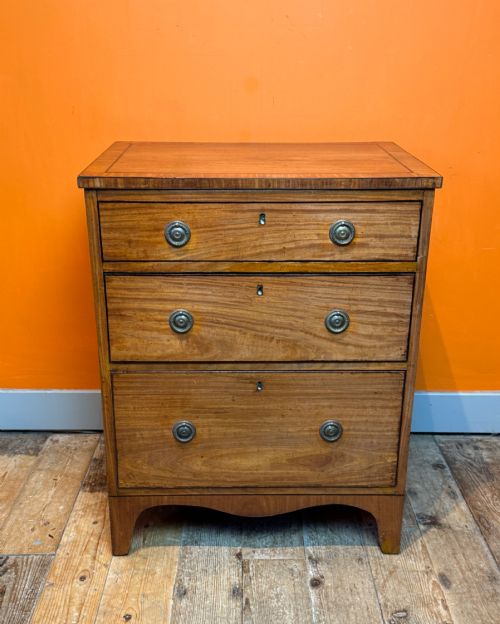
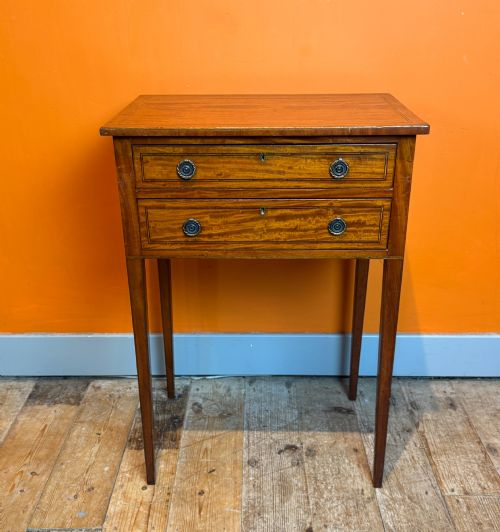
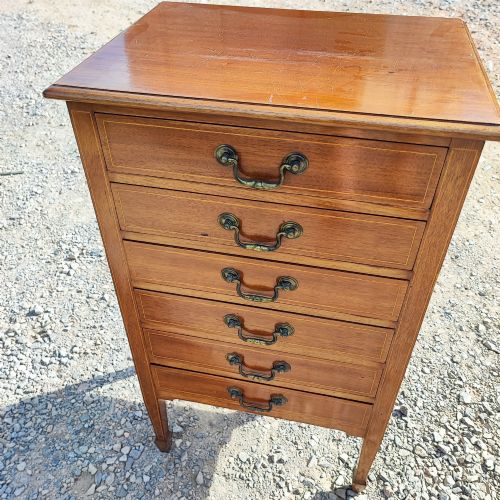
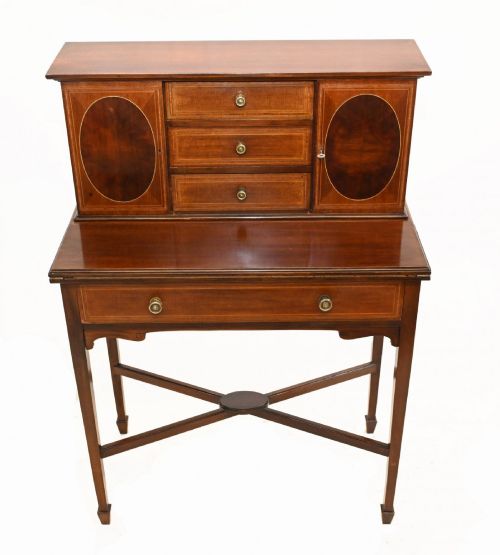
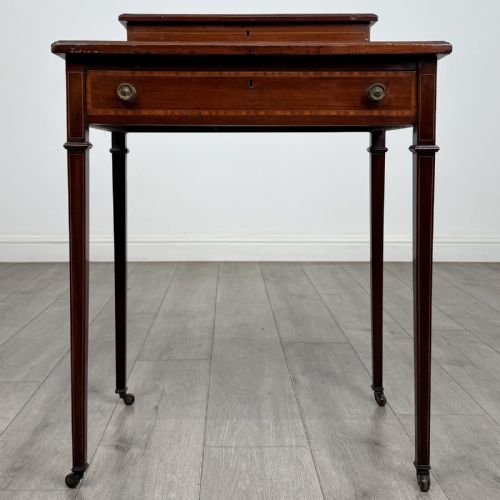
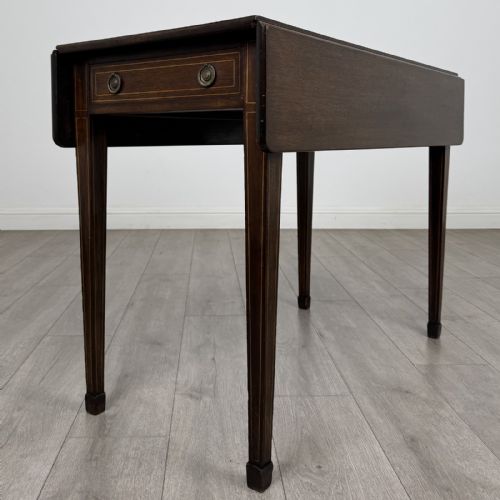
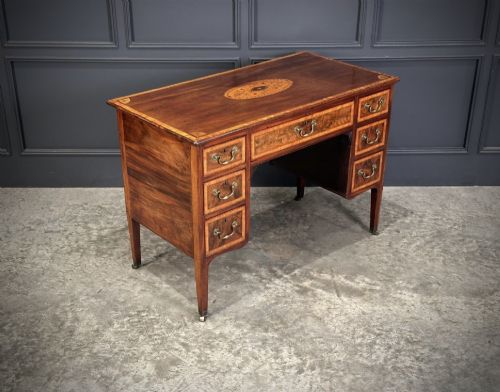
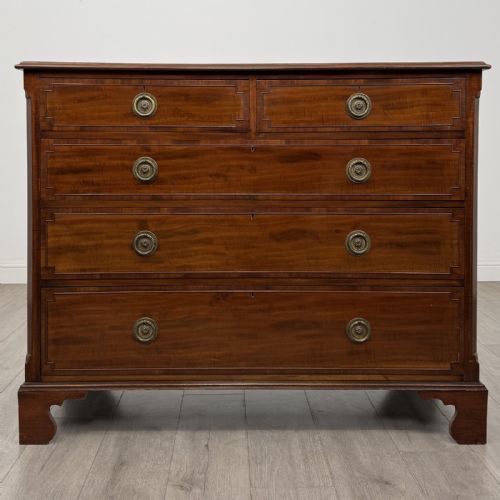
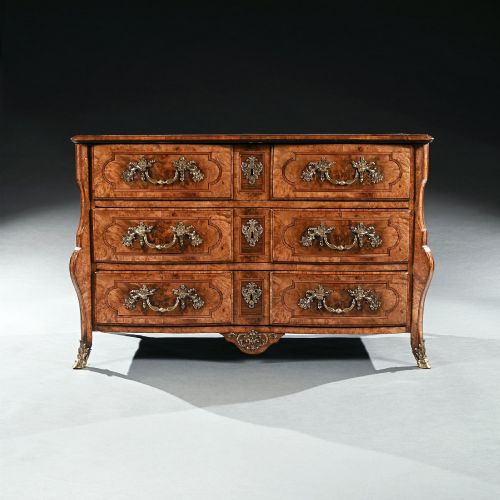
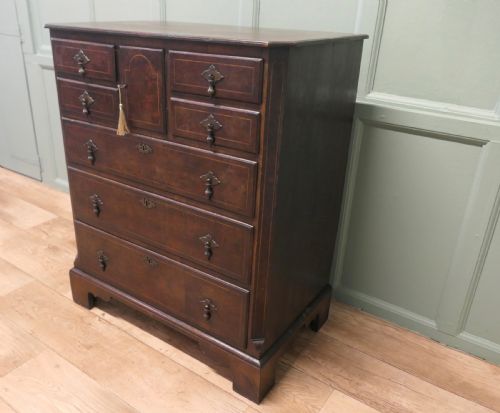
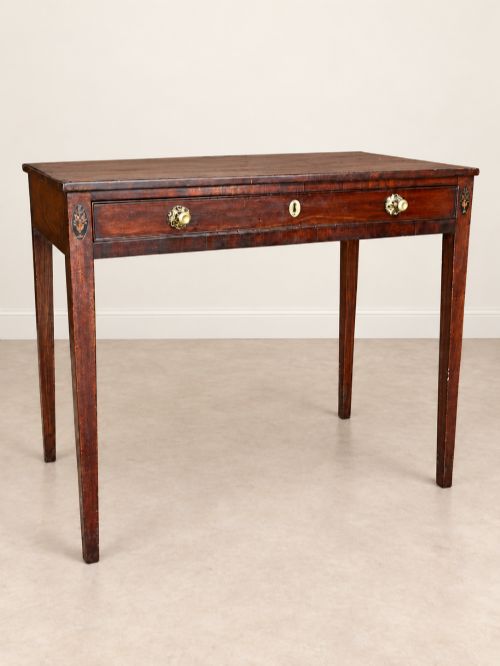
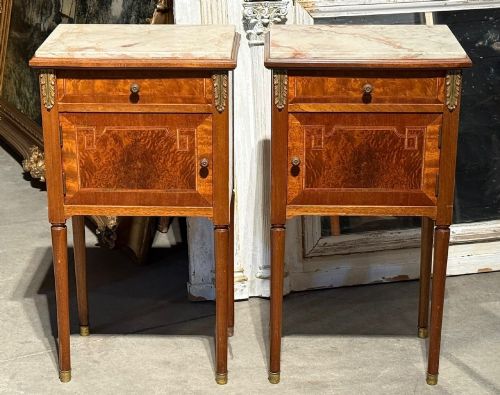
Inlaid Wood Drawers
Inlaid wood drawers bring contrasting botanical veneers and compartmented storage into a room, joining practical utility with decorative cabinetwork.
Inlaid Wood Drawers
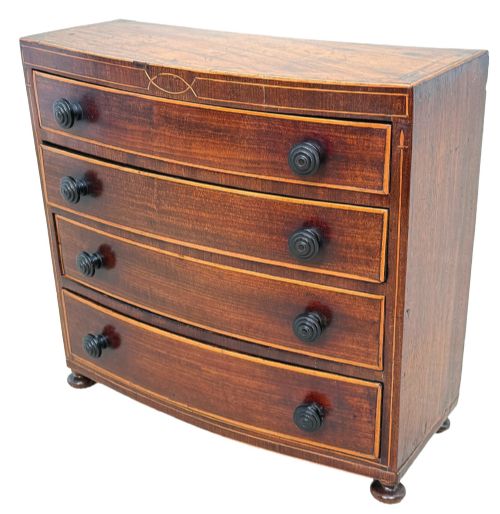
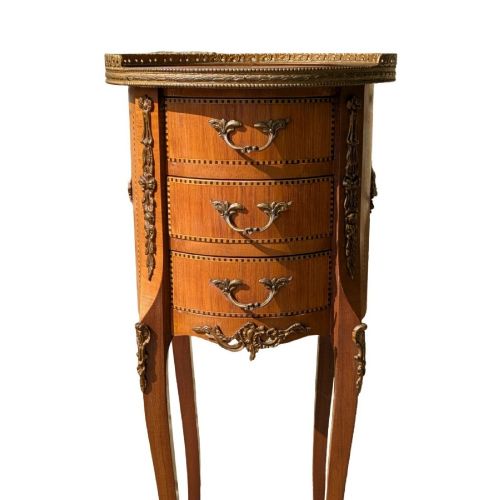
Inlaid wood drawers span centuries of cabinetmaking, appearing across Georgian, Regency, Edwardian, and twentieth-century periods. The listings here centre on chests of drawers, side tables, desks, and bedside cabinets.
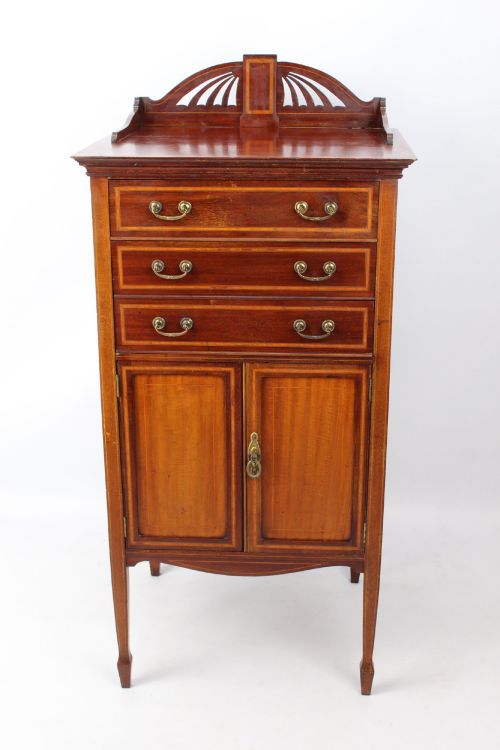
A buyer examining these pieces encounters larger bedroom chests alongside smaller items such as music cabinets, writing tables, and miniature serpentine chests. Woods like mahogany, walnut, and satinwood form the carcases for these compartmented pieces.
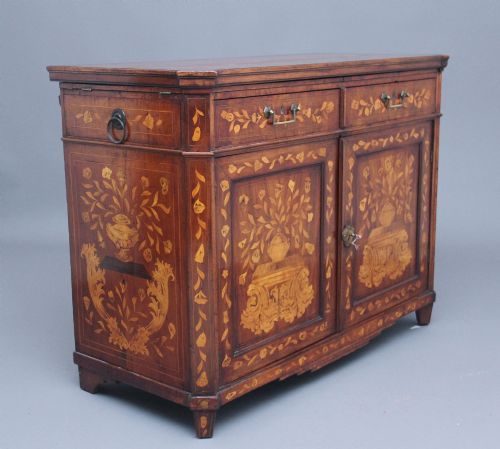
Origins stretch from English workshops to French Louis XV style pieces and Dutch cabinets. Edwardian and Georgian examples dominate the selection, showing varied scales from lowboys to tallboys.
Materials and techniques
Cabinetmakers constructed carcases from primary timbers such as mahogany, oak, and walnut, applying finer veneers like satinwood and kingwood to external surfaces. Boxwood and brass frequently provide linear stringing and contrasting detail around drawer fronts and edges.
Marquetry and inlay techniques involve cutting floral, geometric, or figurative motifs from thin sheets of contrasting wood and fitting them flush into recesses. Finished pieces rely on bracket feet, brass handles, and precise joinery to house the sliding compartments.
Inlaid Wood Drawers Retail Price Guide 2026
Typical asking prices for inlaid wood drawers among the pieces listed under this phrase on Sellingantiques today, from the lower quarter to the upper quarter. They describe what is for sale here now, not the wider market.
The listings include mahogany, walnut, satinwood, and kingwood, paired with brass and bone details across eight distinct periods.
Judging the work
Quality rests upon the crispness of the inlay work and the selection of figured timber grains, such as flame mahogany or burr walnut. Finer pieces show tight, seamless joints where contrasting veneers meet without gaps or filler.
The secondary timbers inside the drawers, the smooth movement of the running surfaces, and the integrity of the original brass hardware distinguish superior examples. Proportions and the balance between structural carcase work and delicate surface decoration govern the overall success of the piece.
Thomas Hache of Grenoble·A. F. Lloyd, Bideford
The Inlaid Wood Drawers Glossary
- Inlay
- A technique where pieces of contrasting wood, bone, or metal are inserted into a recessed wooden surface to form a flat design. This method differs from applied veneer by cutting directly into the solid timber or ground layer.
- Marquetry
- An elaborate assembly of veneer pieces cut from various coloured woods to create pictorial or decorative patterns. Artisans glue these assembled sheets onto the carcase of a desk, cabinet, or chest.
- Bowfront
- A convex, curved front on a chest of drawers or sideboard popular during the Georgian period. This shape softens the profile of case furniture.
- Stringing
- Thin, narrow strips of contrasting wood or light-coloured boxwood inlaid in lines around drawer edges or table tops. It frames the panels and defines the geometric boundaries of the piece.
- Tallboy
- A tall chest of drawers made in two sections, placing a smaller set of drawers on top of a larger base. These pieces maximise vertical storage space in a bedroom.
Inlaid Wood Drawers: Frequently Asked Questions
How do I clean inlaid wood drawers?
Dust surfaces regularly with a soft, dry cloth to prevent dirt accumulation in the grain and around the delicate veneer edges.
Avoid liquid cleaners and harsh polishes, applying a microcrystalline wax sparingly when the timber appears dry to protect the finish.
Can I use a small chest as a bedside table?
Miniature chests and small cabinets with drawers offer practical surface space and enclosed storage beside a bed.
Check the height of the piece against the mattress level before placement to ensure comfortable daily access.
What is the difference between inlay and marquetry?
Inlay involves fitting contrasting pieces of wood or other materials into hollowed-out cavities within a solid wood surface.
Marquetry covers the entire carcase with a jigsaw-like puzzle of veneered pictures and patterns adhered to the foundation.
How do I date an inlaid chest?
Examine the secondary interior timbers, the construction methods of the drawer linings, and the style of the bracket feet or hardware.
Georgian pieces often feature oak linings and hand-cut dovetails, whereas Edwardian examples utilise lighter internal woods and machine-finished components.