


Inlaid Wood Console
An inlaid wood console brings together structured form and delicate surface ornament, offering a practical yet decorative surface for an interior.
Inlaid Wood Console
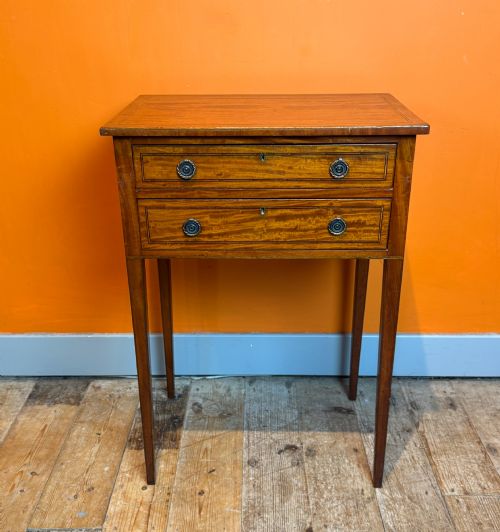
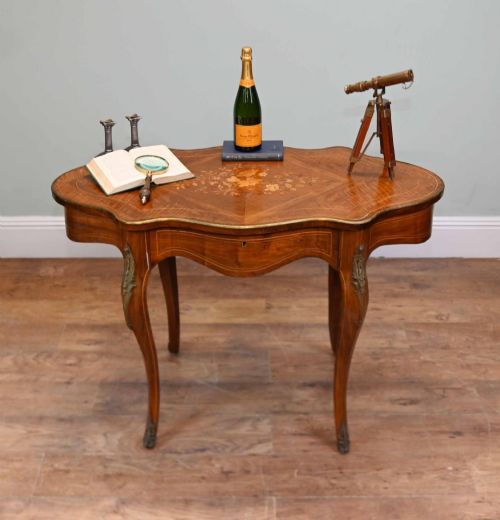
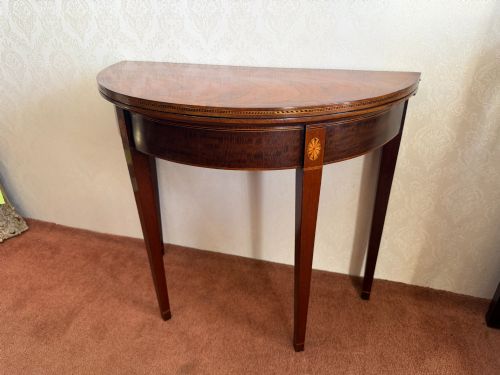
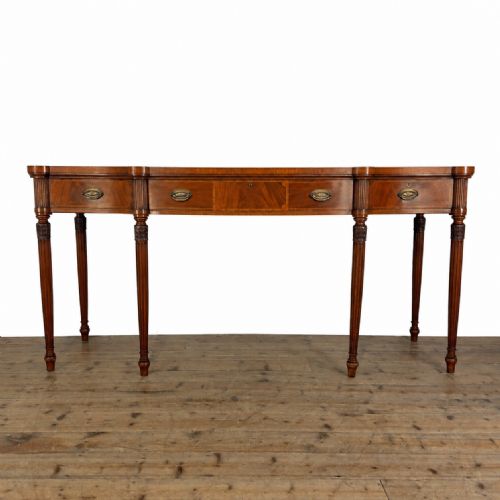
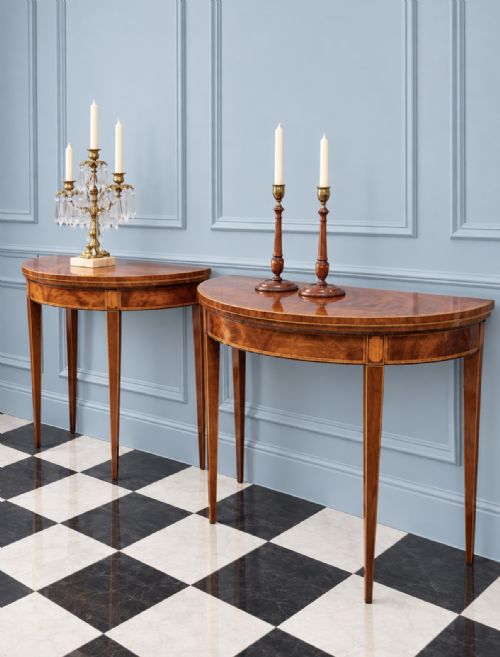
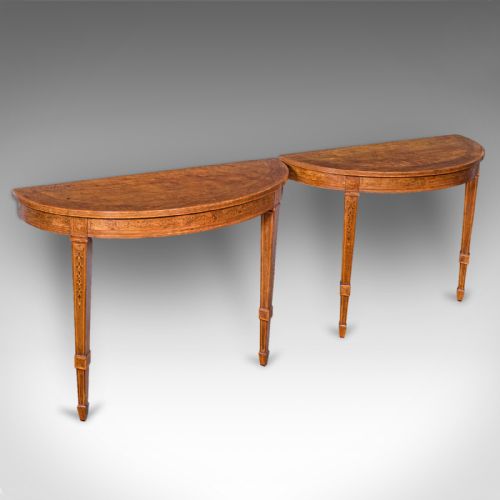
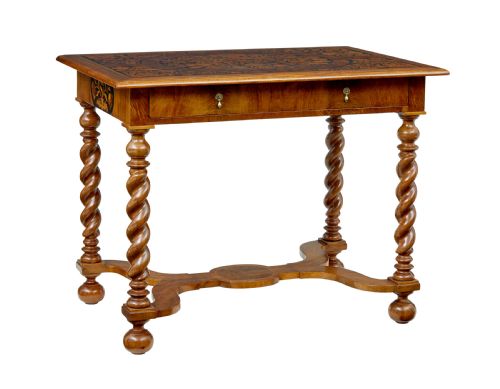
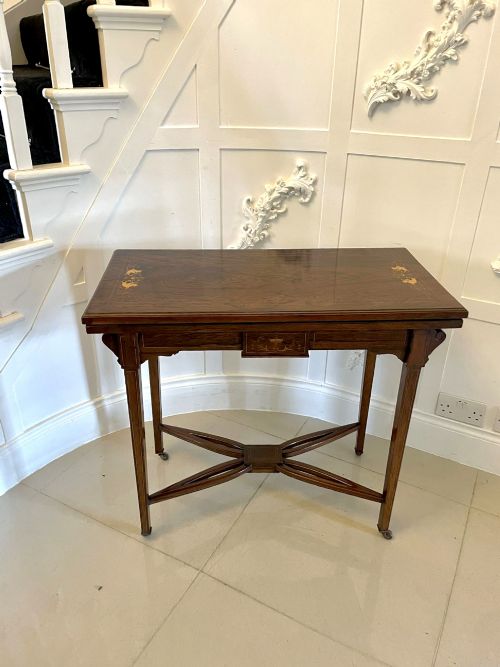
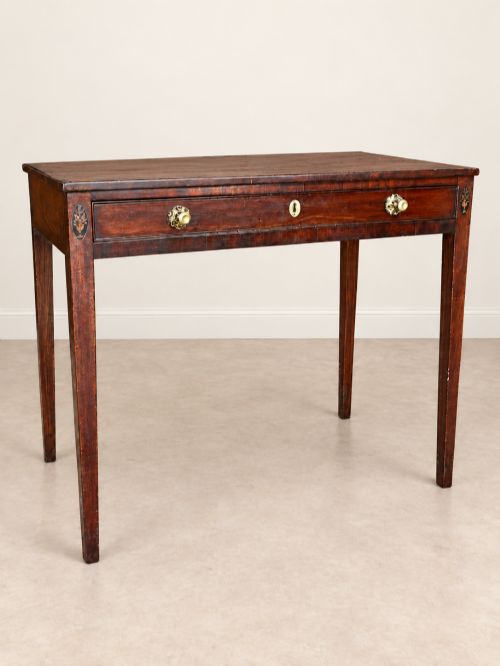
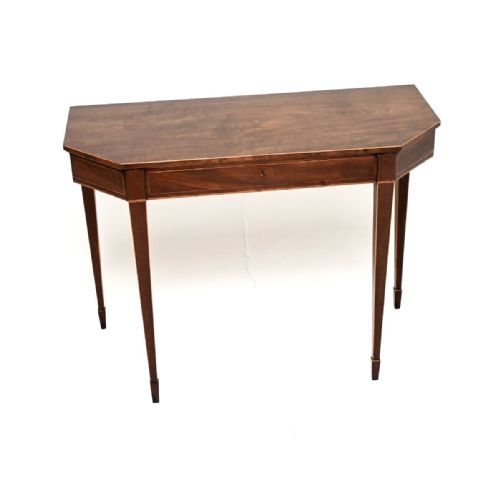
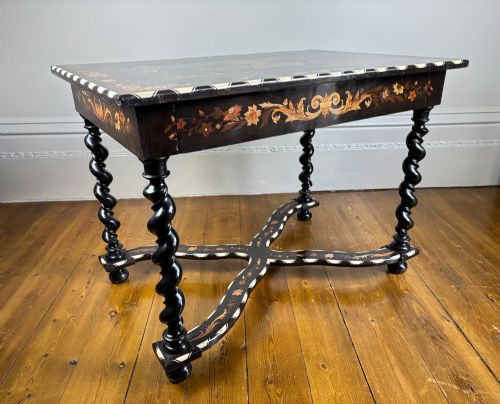
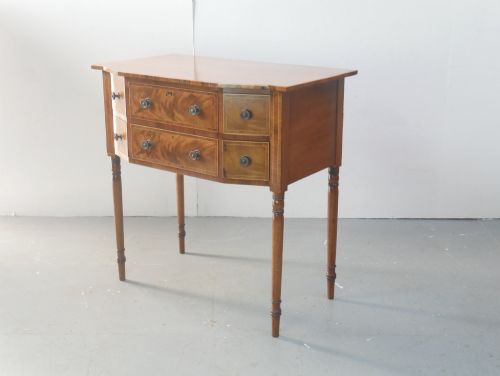
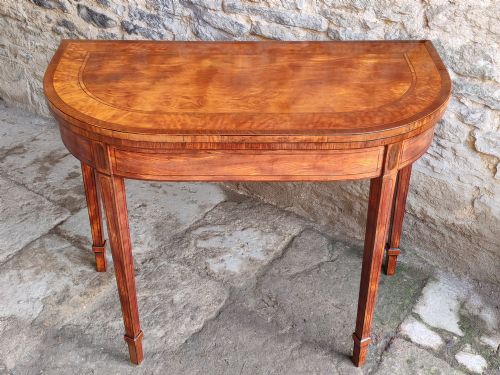
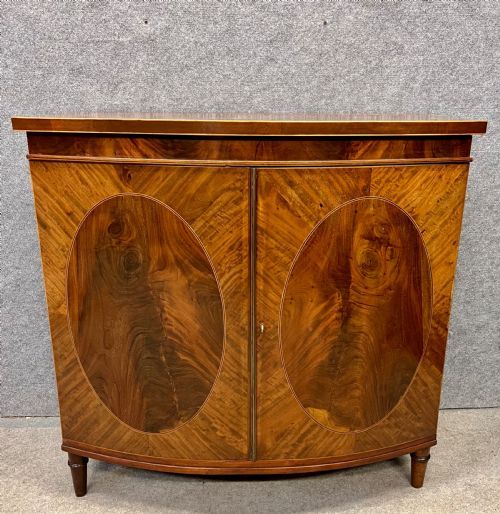
When searching for an inlaid wood console, buyers encounter forms that span from the eighteenth century through the Edwardian period, including console tables, side tables, card tables, and cabinets. These pieces often feature geometric or pictorial wood inlay, boxwood inlay, or satinwood inlay set into primary timbers.
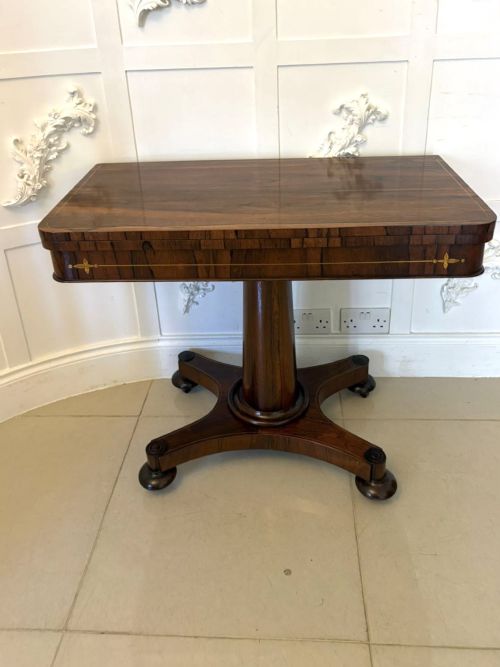
The selection ranges from George III mahogany and satinwood examples to Regency rosewood tables with brass inlay, alongside later Edwardian interpretations and revival styles. Many pieces double as fold-over games tables or tea tables, designed to stand against a wall until needed.
Origin and period dictate the structural silhouette, moving from straight-legged Georgian proportions to curved demi-lune shapes and pedestal-supported Regency designs. The integration of contrasting veneers defines the visual character across all surviving formats.
Materials and construction methods
Cabinetmakers utilised dense hardwoods such as mahogany, rosewood, and walnut as the primary structural bodies, often applying finer veneers of satinwood and burr yew across the top surfaces. Timber preparation required careful seasoning to prevent warping in large flat planes like table tops.
Surface decoration relied on precision cutting of contrasting woods, bone, and brass stringing to form intricate marquetry and linear borders. These decorative elements were bedded into shallow recesses carved into the primary timber and secured with animal glue before being scraped level.
Secondary framing frequently incorporated oak and deal for internal drawer linings and structural battens, maintaining stability while keeping the visible exterior unified in colour and grain pattern.
Inlaid Wood Console Retail Price Guide 2026
Typical asking prices for inlaid wood console among the pieces listed under this phrase on Sellingantiques today, from the lower quarter to the upper quarter. They describe what is for sale here now, not the wider market.
Several tables retain the hidden compartments once used for concealing playing cards, counters, and secret notes away from prying eyes.
Distinctions in construction and design
The refinement of the surface ornament marks the primary separation between standard output and exceptional pieces. Finely judged brass stringing and varied wood inlay demonstrate superior draughtsmanship compared to repetitive, mechanical patterning.
Structural integrity of folding mechanisms and leg joints dictates long-term utility. Tables designed with pivoting tops or complex leaf supports rely on tight tolerances in the hinges and pivot blocks to remain level over centuries of use.
The choice of underlying timber and veneer selection sets the baseline for overall elegance. Dense, figured grains and well-matched symmetrical veneers indicate an artisan who selected materials for visual harmony rather than mere utility.
George Bullock·Amleto Bertoni
The Inlaid Wood Console Glossary
- Console table
- A table designed to stand against a wall, traditionally fixed with brackets or supported by front legs. These surfaces were intended for display rather than heavy centre-room placement.
- Marquetry
- A decorative technique where thin pieces of wood, bone, or other materials are assembled into pictorial or geometric patterns on a veneered background. This method requires exact cutting to ensure tight joints between differing elements.
- Stringing
- A narrow, contrasting line of inlay used to outline table edges, drawer fronts, and panel borders. It provides linear definition and accentuates the geometric form of the furniture.
- Demi-lune
- A half-moon shape characteristic of side and card tables produced during the eighteenth and early nineteenth centuries. This curved profile allows the piece to fit flush against a wall while offering a useful top surface.
- Fold-over top
- A hinged table top that doubles the surface area when opened, commonly found on card and games tables. The pivoting leaf often reveals a baize-lined interior designed for playing cards.
Inlaid Wood Console: Frequently Asked Questions
How were console tables used historically?
Console tables functioned primarily as decorative ledges placed against walls in reception rooms and hallways. They held ornamental objects, candelabra, and ceramics rather than bearing heavy everyday loads.
Many variants also served dual purposes as card or tea tables. Their fold-over tops allowed households to adapt room layouts quickly when entertaining guests.
How do I care for inlaid wood surfaces?
Protect inlaid wood furniture from direct sunlight and dramatic shifts in relative humidity to prevent veneer lifting. Dust regularly with a dry, soft cloth and avoid silicone-based polishes that can degrade historical finishes.
Maintaining a stable indoor climate preserves the animal glues used beneath delicate brass stringing and contrasting wood veneers. Gentle waxing with traditional beeswax helps nourish the timber surface over time.
What defines a George III inlaid table?
George III furniture typically displays classical proportions with straight or slightly tapering legs, often constructed in mahogany or satinwood. The inlay work relies on restrained stringing and symmetrical fan motifs rather than heavy carving.
These pieces reflect the transition towards lighter neoclassical forms popular during the late eighteenth century. The craftsmanship prioritises balanced grain patterns and refined linear borders.
How do I distinguish Regency pieces?
Regency tables frequently incorporate rosewood veneers, brass inlay, and pedestal bases or lyre supports. The design vocabulary draws on classical Greek and Roman motifs, resulting in bolder silhouettes than earlier Georgian examples.
Brass mounts and stringing contrast sharply against dark tropical hardwoods like rosewood. These elements reflect an aesthetic that favoured strong colour contrasts and substantial structural forms.