


Inlaid Wood Chessboard Table
These inlaid wood chessboard table examples bring together traditional cabinet-making and social pastimes, offering a practical surface with an integrated playing board.
Inlaid Wood Chessboard Table
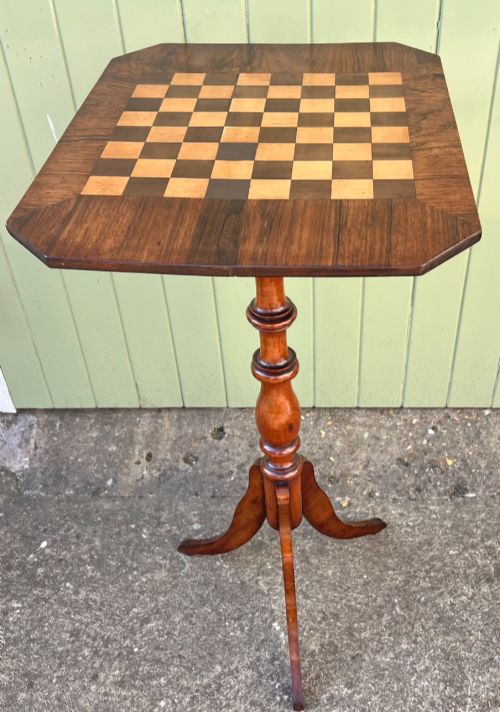
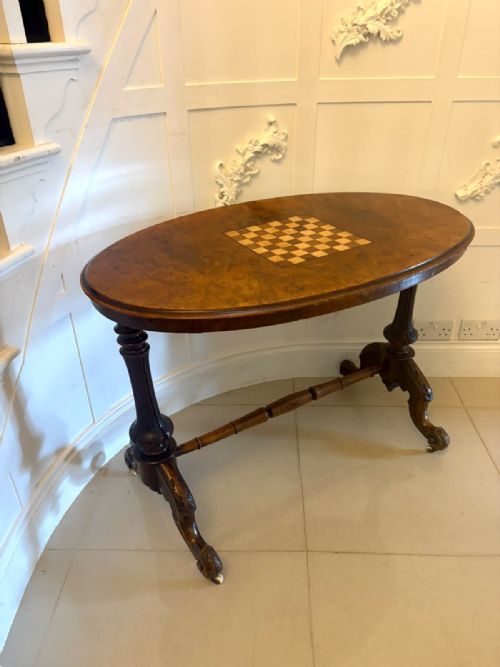
An inlaid wood chessboard table combines a functional domestic table with a dedicated playing surface set directly into the top. Buyers seeking an inlaid wood chessboard table will frequently encounter nineteenth-century examples, including Regency and Victorian interpretations designed for the parlour.
The selection ranges from compact games boards and specific chess tables to multi-functional sewing or work tables featuring reversible or lift-off tops. These pieces often take the form of centre tables or smaller occasional pieces intended for domestic recreation.
Origins span the Georgian era through to the late Victorian period, demonstrating how cabinet-makers adapted standard furniture forms to accommodate popular board games.
How they were made
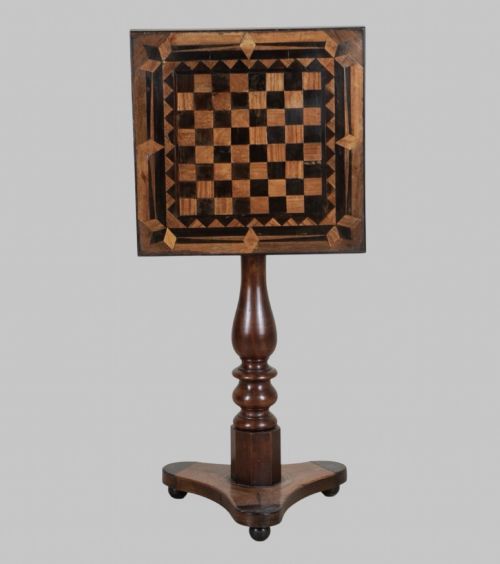
The construction of these pieces relies on cabinet-makers utilising dense timber foundations such as rosewood, mahogany, and burr walnut. Workshops applied contrasting veneers like boxwood and ebony to create the distinct dark and light squares of the playing surface.
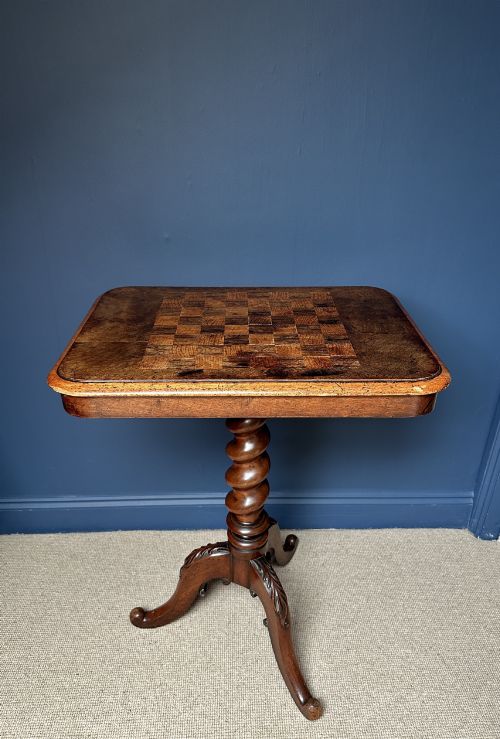
Advanced joinery techniques allowed makers to integrate intricate parquetry and marquetry into the table tops while maintaining a stable surface for play. Turning and carving appear on the pedestals and supports, particularly in Regency and Victorian designs.
Listings feature pieces from the Georgian, Regency, and Victorian periods, constructed in rosewood, mahogany, walnut, and boxwood.
What varies in quality
Quality in these tables is determined by the precision of the wood inlay and the selection of figured timber for the main body. Finer examples display tight, exact joints between the contrasting squares without visible gaps or filler.
A British Chess Company
The Inlaid Wood Chessboard Table Glossary
- Parquetry
- Geometric mosaic woodwork used to create patterns such as chessboards. This technique relies on small, precisely cut veneer blocks.
- Victorian
- A period spanning the reign of Queen Victoria, characterised by varied revival styles and robust domestic furniture. Pieces from this era often incorporate elaborate turning and heavy timber frames.
- Compendium
- A multi-game box or table containing equipment for several pastimes. These sets typically include chess, checkers, and backgammon components.
- Scumbled
- A surface finish painted to imitate the grain of more expensive timber. Artisans applied translucent glazes over a base coat to create decorative texture.
Inlaid Wood Chessboard Table: Frequently Asked Questions
What is an inlaid wood chessboard table?
These pieces are dual-purpose items of furniture that incorporate a playing grid directly into the upper surface. They allow for both standard domestic use and board games.
Craftsmen built them using a variety of dense hardwoods and contrasting veneers to form the individual squares. They remain practical items for both display and recreation.
How were these tables used historically?
Households used them primarily in parlours and drawing rooms for social gaming and leisure. Many designs also incorporated drawers or compartments for storing pieces.
Some variants doubled as sewing tables or general work surfaces when the board was not in active use. They formed part of the standard entertaining furniture of the period.
How do I identify a Regency period table?
Regency pieces typically date from the early nineteenth century and feature classical proportions with refined decorative details. They often utilise dark timbers like rosewood alongside pedestals with brass fittings.
Cabinet-making from this era focuses on balanced forms and restrained application of veneer. The silhouette tends to be more architectural than later Victorian equivalents.
How should I care for a wooden games table?
Maintain the timber by keeping the table away from direct sunlight and sudden changes in temperature. This prevents the delicate veneers and inlay work from drying out or lifting.
Apply suitable wax polish occasionally to preserve the finish of the wood. Avoid placing damp items directly onto the antique surface.