

Inlaid Wood Bedside Tables
These inlaid wood bedside tables combine practical bedside storage with centuries of fine marquetry and cabinet-making traditions.
Inlaid Wood Bedside Tables
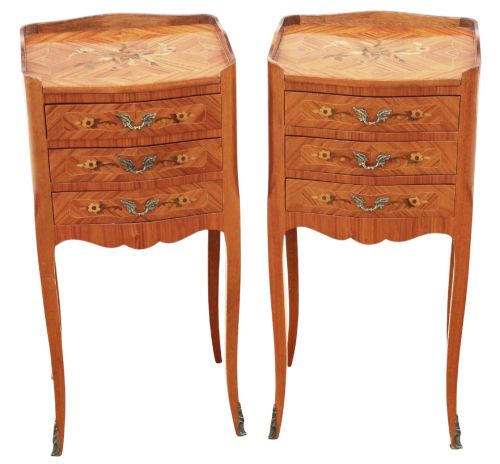
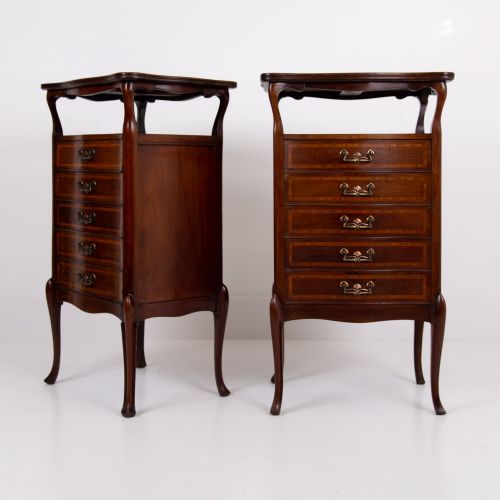
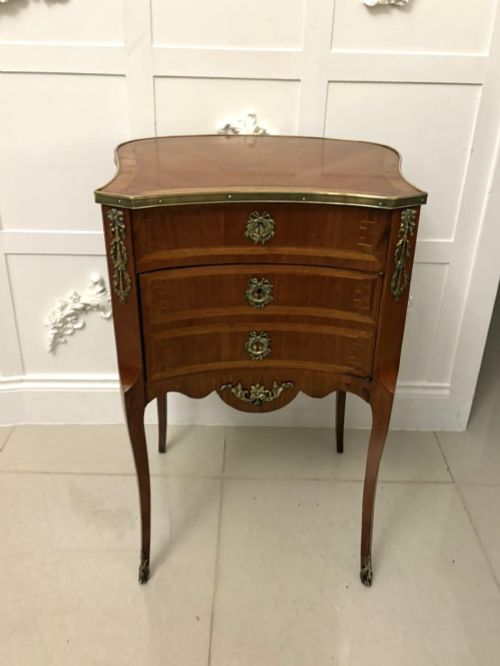
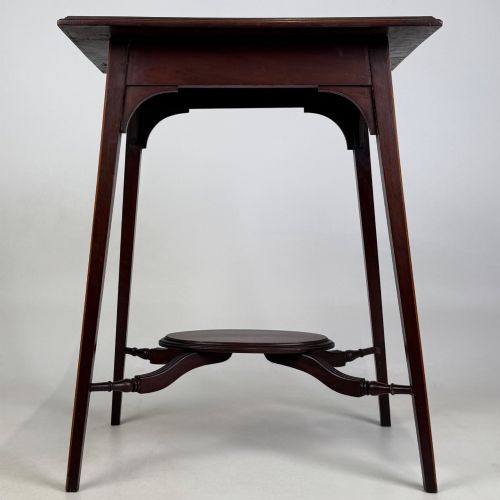
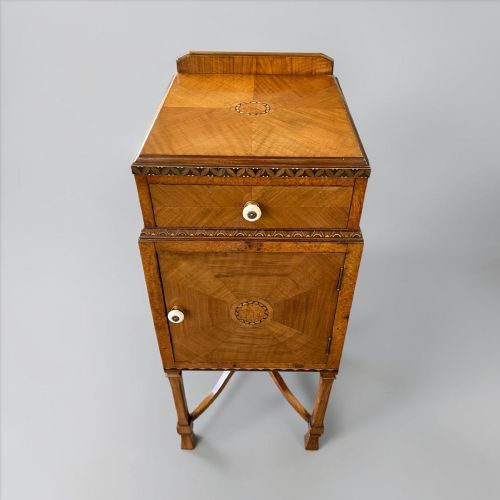
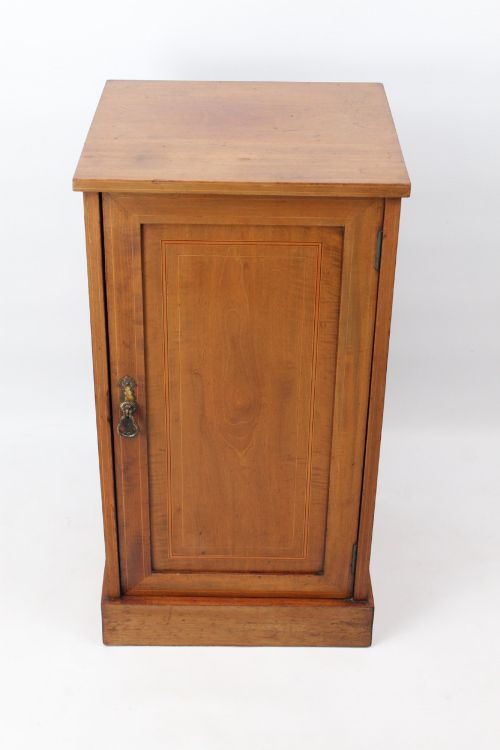
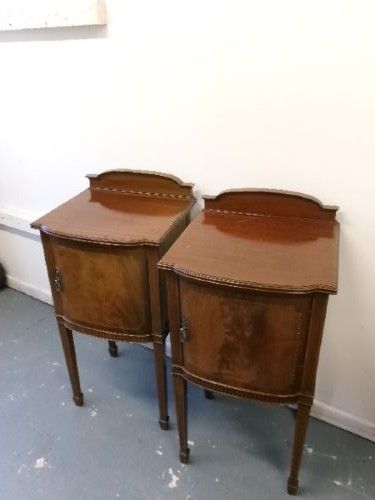
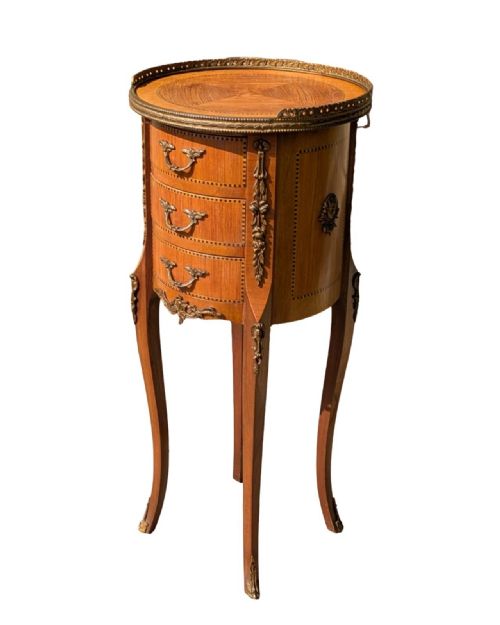
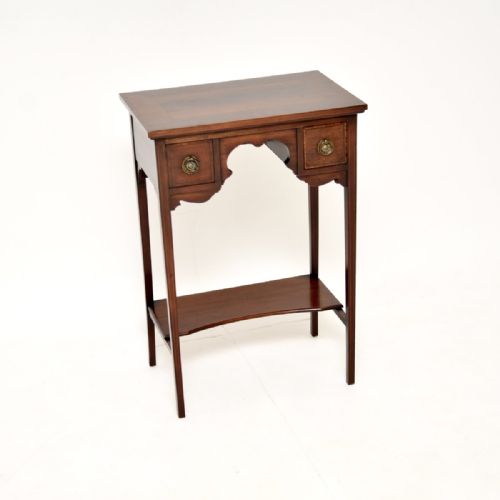
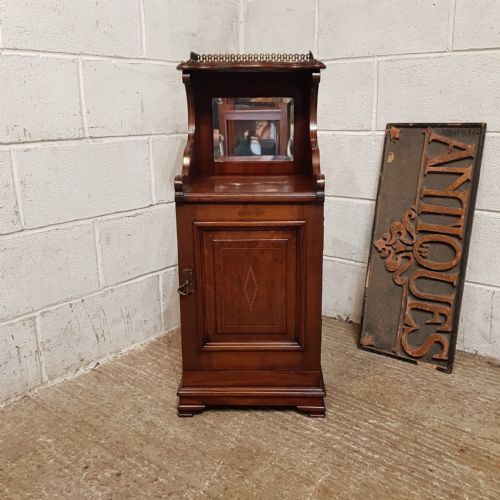
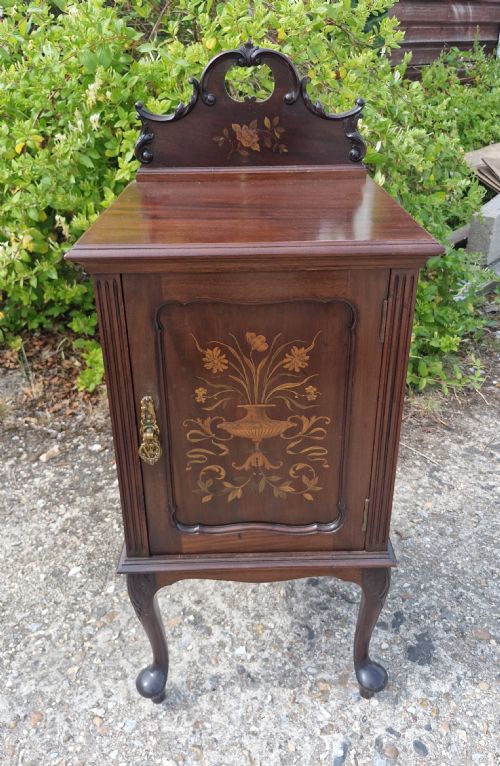
Inlaid wood bedside tables span the Victorian, Edwardian and early twentieth century periods, taking the form of compact bedside cabinets, side tables and small commodes. The most frequent examples met here are Edwardian mahogany cabinets and French pieces featuring marquetry or parquetry.
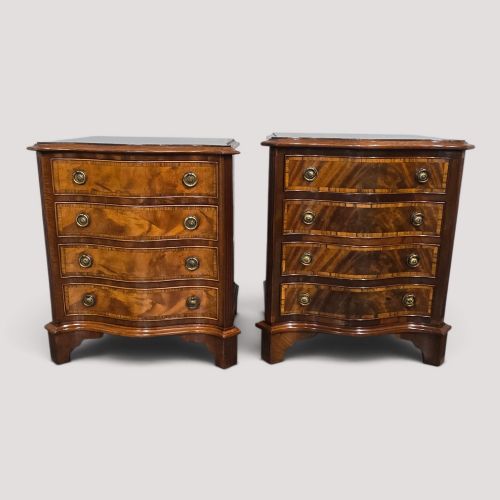
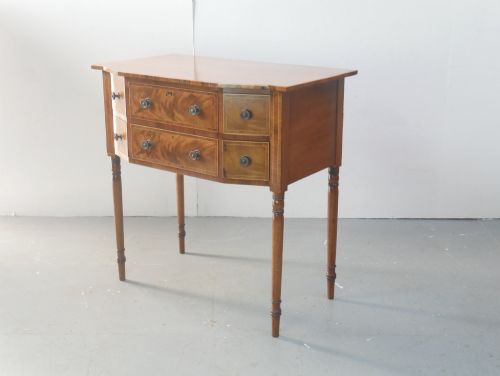
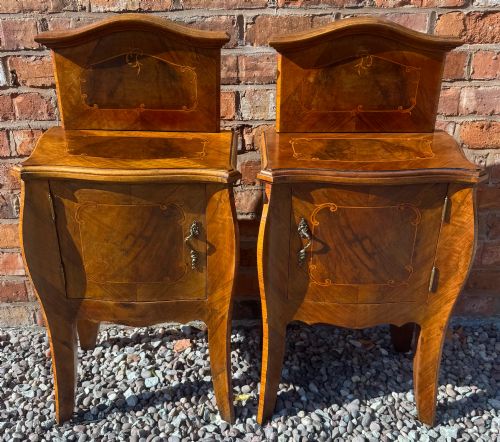
Makers and workshops of these eras produced varied silhouettes, including serpentine, bowfront, kidney-shaped and bombe forms. Buyers encounter single items as well as matched pairs designed to flank a bed.
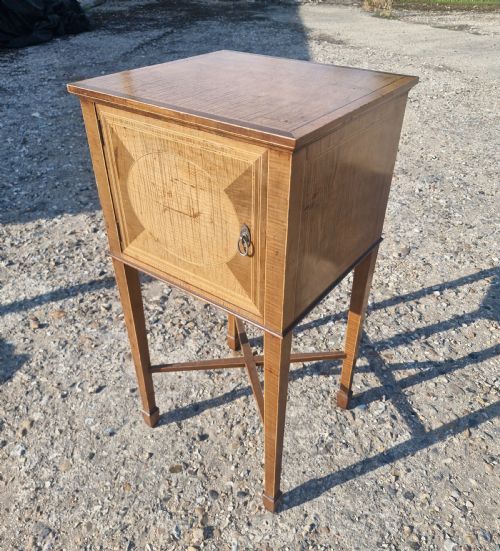
Origins stretch from English workshops influenced by Sheraton Revival styles to French ateliers working in the Louis XV manner. Function meets decorative ambition in each piece, offering enclosed cupboard space or small drawers alongside detailed wood surfaces.
What varies in quality
Quality rests upon the precision of the marquetry and the choice of veneer timbers used across the surface. Finer examples display crisp botanical or geometric patterns with minimal timber shrinkage, while simpler pieces rely on basic mahogany panels.
The sophistication of the internal construction and secondary woods marks the difference between standard production and higher workshop output. Subtle details such as shaped marble tops, matching veneer book-matching and cast brass hardware separate the top tier of tables from ordinary domestic items.
Listings feature nineteenth and twentieth century pieces utilising mahogany, satinwood, kingwood, marble and brass.
Morant And Co London
The Inlaid Wood Bedside Tables Glossary
- Marquetry
- Decorative veneer work forming pictures or patterns using various tinted woods. It differs from parquetry through its pictorial or floral designs.
- Parquetry
- Geometric mosaic woodwork used for floors and furniture surfaces. Squares, triangles and lozenges form repeating patterns across the top.
- Bombe
- An outward-swelling convex shape characteristic of French furniture. This curved profile requires skilled veneer shaping.
- Satinwood
- A durable hardwood yielding a yellowish timber with a lustrous satin-like sheen. Makers utilised it extensively for lighter Edwardian inlays.
- Sheraton Revival
- A late nineteenth and early twentieth century style drawing on the neoclassical furniture designs of Thomas Sheraton. Pieces show balanced proportions and delicate marquetry.
Inlaid Wood Bedside Tables: Frequently Asked Questions
How do I match a single table?
Look for matching timber tones, similar leg profiles and comparable inlay motifs rather than an exact copy. Minor variations in height or handle style are typical in historic bedroom furniture.
Mixing distinct periods often works if the wood species and overall scale complement the existing bedside piece.
Can I use marble top tables safely?
Marble tops offer a resilient surface for glasses and lamps, requiring only a damp cloth for routine care. The stone rests within or atop the wooden frame.
Avoid placing acidic liquids directly on unsealed marble to prevent surface etching over time.
How do I clean inlaid surfaces?
Dust regularly with a dry, soft cloth and apply quality beeswax periodically to nourish the timber. Avoid modern silicone sprays that build up residue on old veneer.
Keep these tables away from direct heat sources and strong sunlight to prevent the natural wood veneers from drying out.
Were these made as pairs originally?
Many Edwardian and French examples were constructed as pairs to balance twin beds, though single cabinets were equally common. Matched pairs command strong interest from collectors.
Slight discrepancies in grain or dimensions often indicate pieces made side by side in the same workshop batch.