
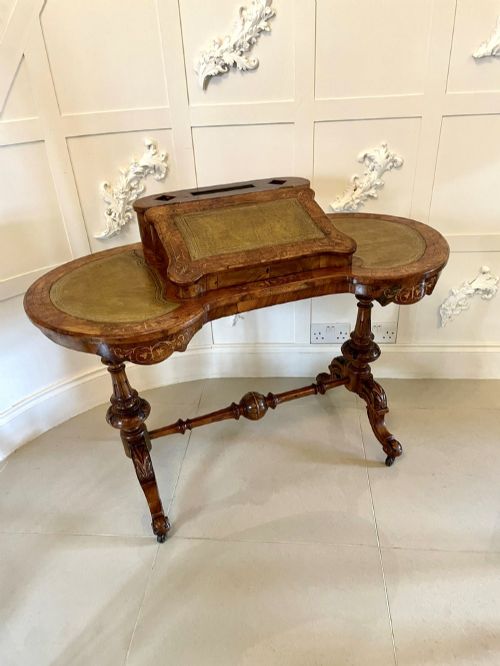
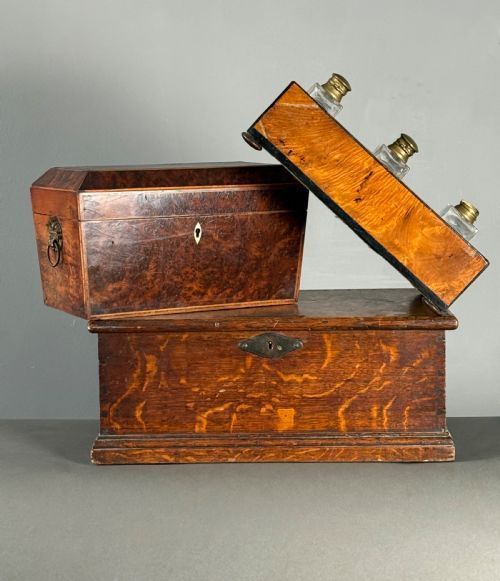
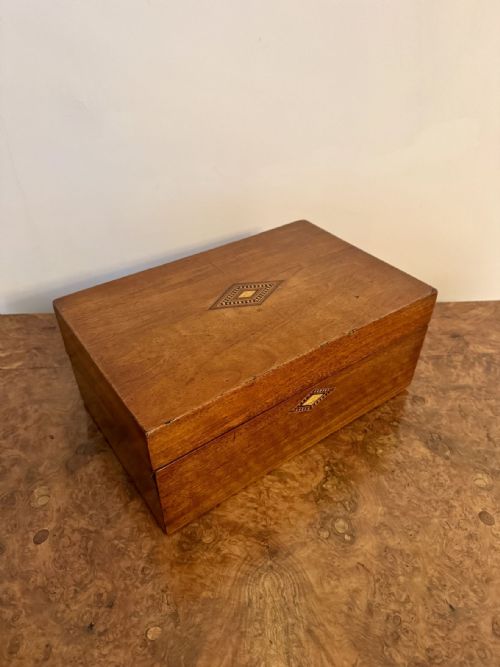
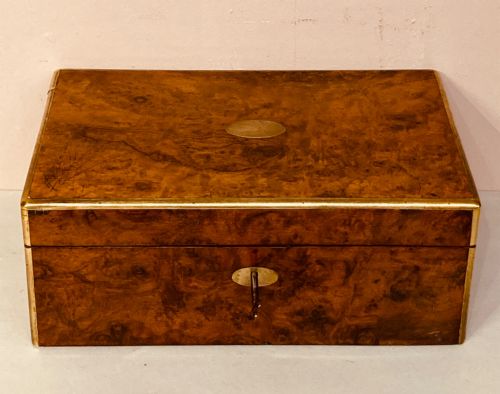

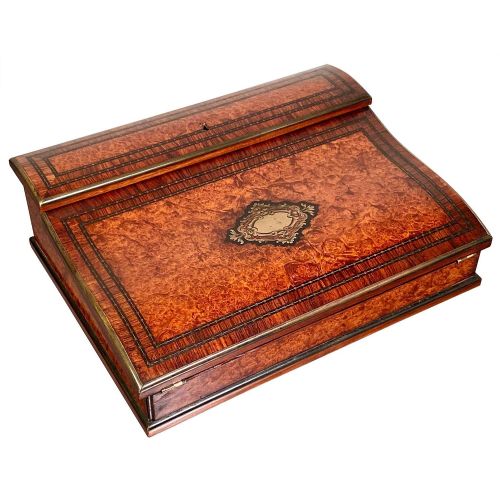


Inlaid Walnut Writing Box
These inlaid walnut writing box examples combine rich timber surfaces with intricate decorative banding for portable desk spaces.
Inlaid Walnut Writing Box
An inlaid walnut writing box serves as a portable desk for correspondence, featuring a sloping lid that opens to reveal a writing surface and internal compartments. The evidence shows these pieces most commonly date from the Victorian period, though examples stretch from Georgian decades through to Edwardian times.
Makers utilised burr walnut, figured walnut, and mixed hardwood veneers for the outer shells, often enhancing the timber with brass banding or mother-of-pearl. Forms range from traditional slopes and lap desks to stationery boxes, correspondence chests, and travelling inkwells.
Makers constructed these boxes to house ink, pens, and paper while offering secure storage behind specialised locks. Secret drawers concealed within the internal fittings remain a frequent characteristic of the Victorian slope.
How They Were Made
Craftsmen built the carcasses from softwood or hardwood bases entirely covered in burr walnut or figured walnut veneers. This upper layer displays the intricate swirling grain patterns characteristic of the timber.
Decorators applied boxwood, fruitwood, and mixed wood inlay to form geometric parquetry, floral marquetry, or Tunbridge ware mosaic patterns across the lids and slopes. Brass corners, edges, and escutcheons reinforced the joints and protected the wood during travel.
Internal fittings utilised matching walnut alongside secondary timbers to create pen trays, inkwell recesses, and lidded compartments. Specialised mechanisms such as Bramah locks secured the main lid and operated the release catches for hidden drawers.
Listings show walnut writing boxes spanning from the 17th century through to the 19th and 20th centuries, with Victorian examples dominating the selection.
What Varies in Quality
Quality depends heavily on the selection and matching of the walnut veneer, where richly figured burr timber commands greater visual presence than plain grain. The precision of the marquetry, parquetry, or Tunbridge ware mosaic work also separates standard boxes from finer examples.
Hardware contributes significantly to the overall standard of the piece, with heavy cast brass mounts and branded locks such as Bramah indicating superior workshop output. The complexity of the internal arrangement, including secret drawers and matched accessories, reflects the original cost of production.
Edmund Nye·George Austin of Dublin
The Inlaid Walnut Writing Box Glossary
- Burr Walnut
- Timber taken from a growth on a walnut tree, producing swirling, highly figured grain patterns. This material forms the primary decorative surface on the finest Victorian writing boxes.
- Tunbridge Ware
- Wood mosaic work involving thousands of tiny coloured wood blocks assembled to create pictorial or geometric designs. Makers used this technique extensively on box lids and stationery cabinets.
- Parquetry
- Geometric wood inlay forming patterns such as cubes, diamonds, or chequers across the surface of the box. It provides a structured decorative border to the sloping lid.
- Writing Slope
- A portable box with an angled lid that folds down to form a writing surface covered in leather or velvet. Inside are compartments for stationery and writing implements.
- Escutcheon
- A small plate of brass surrounding the keyhole to protect the surrounding wood from wear. Better quality boxes employ thicker brass plates shaped to match the inlay.
Inlaid Walnut Writing Box: Frequently Asked Questions
What are secret drawers used for?
Secret drawers conceal valuables, private letters, or spare keys away from the main compartment of the box. Makers typically accessed these hidden spaces by removing internal pen trays or sliding specific timber partitions.
Finding these concealed compartments requires careful examination of the internal structure and moving wooden stops.
How do I care for burr walnut?
Burr walnut timber requires stable indoor humidity away from direct sunlight and heat sources to prevent the veneer from drying and lifting. Gentle dusting with a dry cloth maintains the polished surface without damaging the grain.
Applying occasional specialist wax preserves the depth of the wood and protects the delicate inlay work.
How can I date an antique box?
Dating relies on the construction methods, lock types, wood choices, and decorative styles present on the piece. Victorian boxes often feature rich burr walnut and brass binding, while Georgian versions tend toward simpler veneers and cabinet forms.
Maker stamps on locks or paper labels inside the compartments provide more precise historical attribution.