

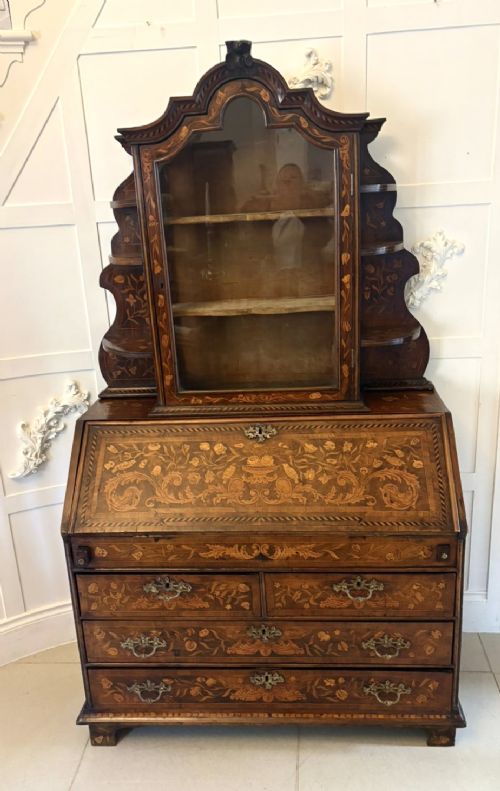


Inlaid Walnut Fall Front
An inlaid walnut fall front brings together deep timber and intricate patterning, offering a working surface that conceals fitted interiors when closed.
Inlaid Walnut Fall Front
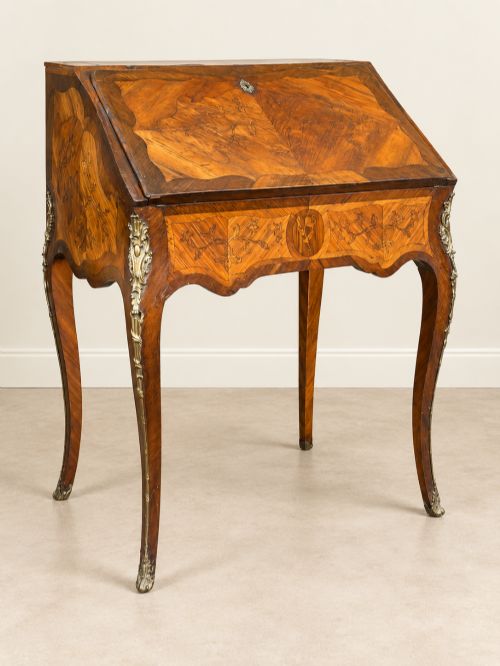
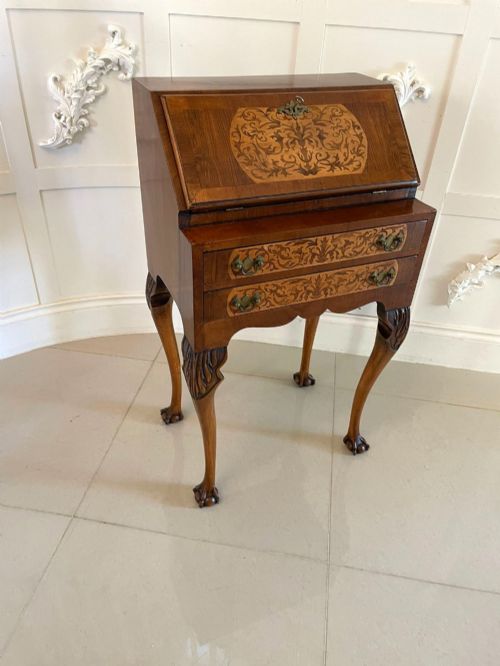
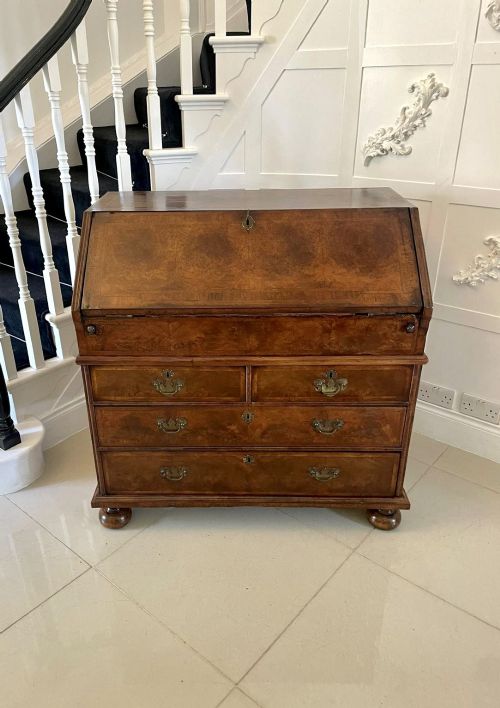
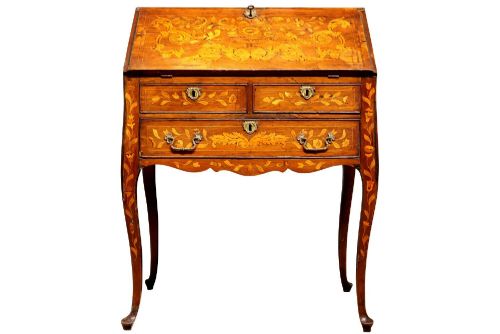
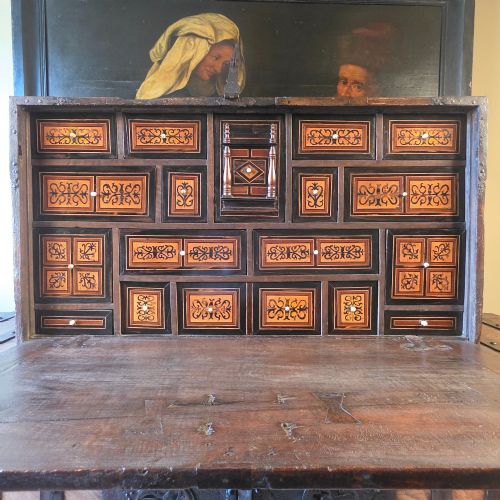
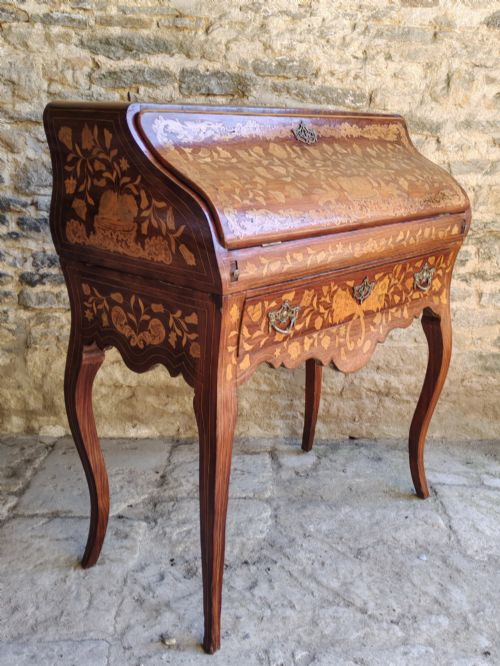
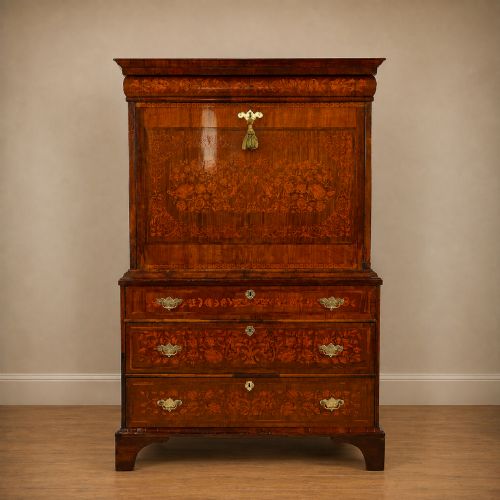
When you examine an inlaid walnut fall front, you are looking primarily at writing furniture that uses a hinged writing flap to conceal internal compartments and drawers. These pieces range from compact bureau desks and bureau de dame writing tables to tall bureau bookcases and cabinets.
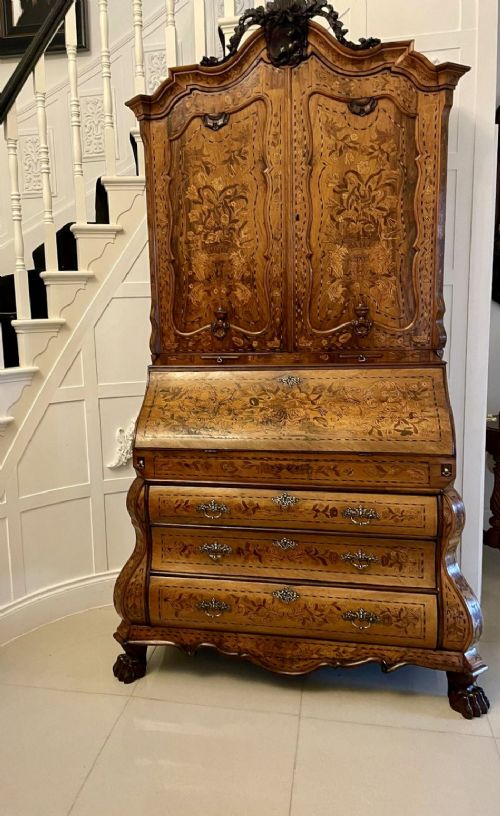
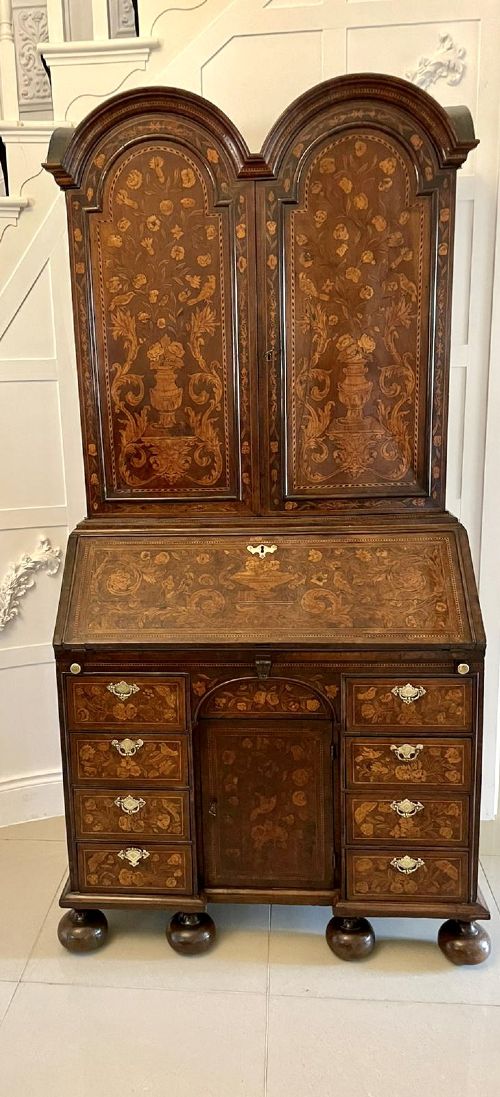
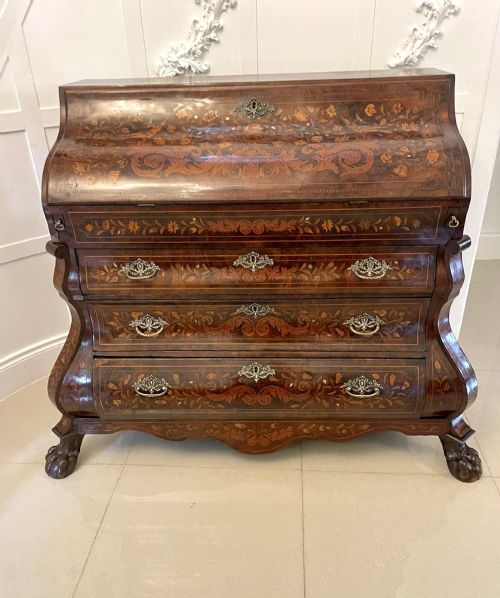
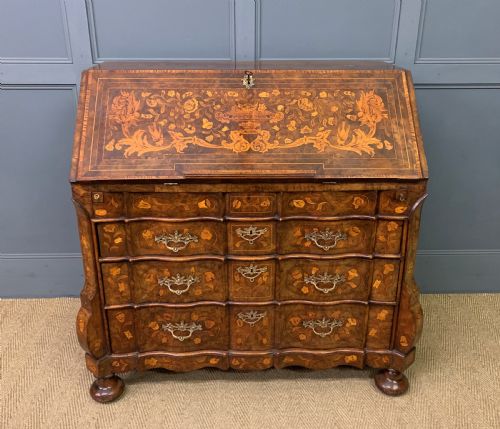
The versions you are most likely to meet on this page span several centuries, with a strong representation of Dutch floral marquetry forms alongside 17th-century William and Mary period designs. Makers across England, France, Italy, and the Netherlands utilised walnut timber as the primary canvas for elaborate decorative schemes.
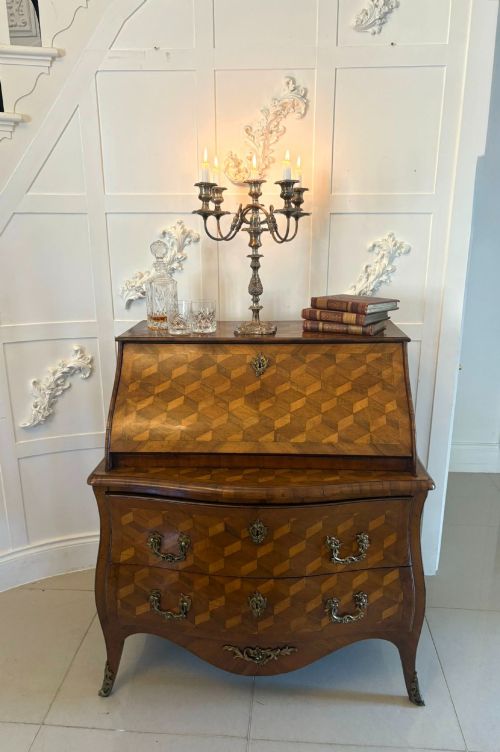
Forms vary from straightforward sloping front desks to bombe shaped carcases and double dome bookcase tops. Each piece provides a combination of concealed storage and display capacity set within distinctive regional stylistic traditions.
How they were made
Cabinet makers constructed the carcases using solid walnut and secondary softwoods, applying burr walnut veneers to larger flat surfaces to display the swirling grain patterns. Marquetry inlay techniques incorporated fruitwood, satinwood, and various tinted woods cut into floral and geometric motifs, often accented with bone or brass details.
The fall front itself relied on robust brass hinges or side support arms to bear the weight of the writing surface. Surface finishing involved French polishing or oiling to seal the timber and highlight the contrast between the dark walnut ground and the lighter inlaid marquetry.
Listings feature walnut furniture spanning from the 17th century through the Victorian era, alongside Dutch floral marquetry and French bureau de dame forms.
What varies in quality
The distinction between tiers of quality rests on the precision of the marquetry cutting and the choice of walnut veneer. Top-tier examples display tight, highly figured burr walnut and complex floral marquetry where the contrasting woods fit together seamlessly without excessive filler.
Structural integrity of the fall front mechanism and the complexity of the interior fittings also separate standard examples from finer works. Pieces with secondary woods matching the period and fully intact original brass hardware hold greater visual coherence.
Morison of Edinburgh·Paul Sormani
The Inlaid Walnut Fall Front Glossary
- Fall front
- A hinged writing flap that drops down to provide a horizontal surface and lifts vertical to conceal interior pigeonholes and small drawers.
- Marquetry inlay
- Decorative patterns formed by fitting contrasting thin slices of wood, bone, or metal into a prepared wooden ground.
- Burr walnut
- Timber sliced from walnut tree growths that produces highly figured, swirling grain patterns prized for decorative veneer work.
- Bombe shaped
- Furniture construction featuring outward curving, bulging sides that add sculptural depth to the lower sections of chests and desks.
- Bureau bookcase
- A writing desk fitted with a tall shelving or cabinet section enclosed by doors directly above the main writing compartment.
Inlaid Walnut Fall Front: Frequently Asked Questions
How do I identify Dutch marquetry?
Dutch marquetry typically displays dense floral and foliage patterns executed in lighter fruitwoods against a darker walnut background. These decorative compositions often cover the entire exterior of the fall front, sides, and drawer fronts.
Many examples from this regional tradition also incorporate shaped bombe profiles and brass hardware.
Where were these desks used?
These pieces served as private writing and correspondence centres within domestic interiors. Wealthy households placed them in parlours, bedrooms, or dedicated studies to manage letters and keep personal documents secure.
The fitted interior compartments held inkwells, stationery, and valuables behind small locking doors.
How do I care for walnut furniture?
Walnut surfaces benefit from stable room temperatures and protection from direct sunlight to prevent timber drying and fading. Regular dusting with a dry cloth maintains the finish without building up residue.
Applying specialised wax sparingly helps nourish the burr veneers and protects the inlaid marquetry details.
What is a bureau de dame?
A bureau de dame is a smaller form of writing desk, often associated with French design traditions. These pieces frequently feature slender proportions and delicate marquetry inlay.
They combine a compact fall front or sloping lid with internal compartments suitable for light correspondence.