
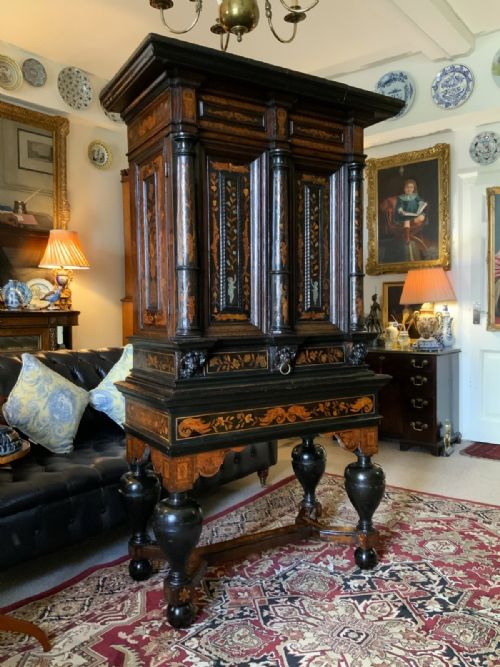


Inlaid Walnut Display Stand
An inlaid walnut display stand brings warmth and vertical presentation to a room, combining figured timber with intricate decorative banding.
Inlaid Walnut Display Stand
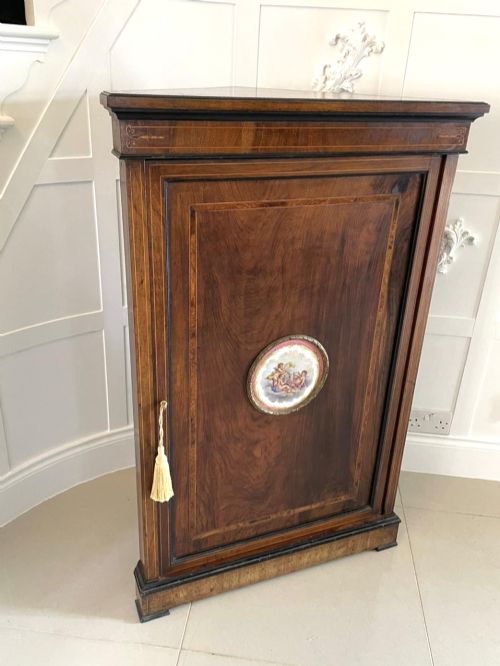
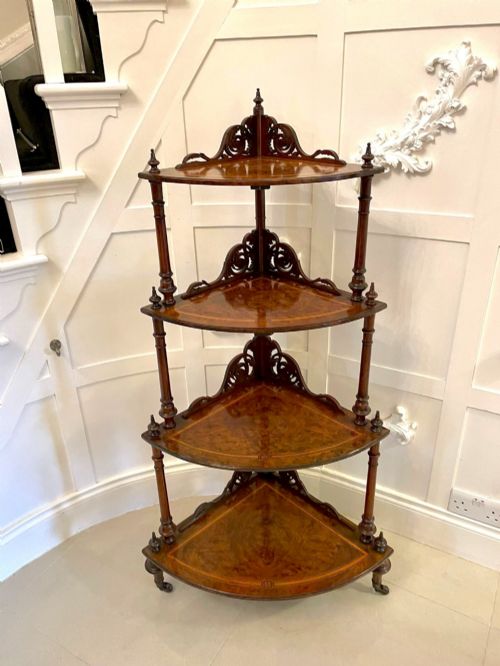
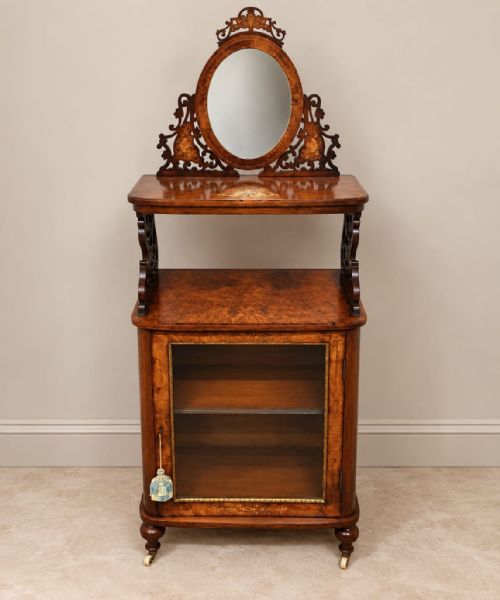
An inlaid walnut display stand encompasses multi-tiered whatnots, corner cabinets, and etageres designed to exhibit small decorative objects. These pieces emerge primarily from Victorian, Edwardian, and nineteenth-century periods, alongside earlier seventeenth-century Dutch examples.
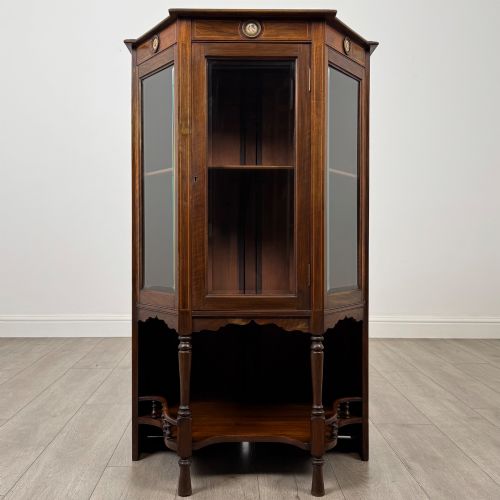
The form ranges from three-tier and four-tier open shelving structures to glazed cabinets and music cupboards. Buyers meet corner stands and freestanding etageres most frequently on this page, reflecting the domestic preferences of the nineteenth century.
How they were made
Cabinet makers utilised walnut and burr walnut veneers applied over secondary timbers, selecting pieces for rich grain patterns and warm colour. Marquetry inlay, often combining fruitwood and various contrasting timbers, decorates the surfaces alongside brass stringing and pewter details.
Structural mounts in ormolu and gilt metal reinforce corners and frame glass doors on the more elaborate French and English pieces. Open tiers rely on turned supports and delicate columns to carry the weight of upper shelves.
The available furniture forms span multi-tier etageres, corner whatnots, glazed display cabinets, and music cupboards.
What varies in quality
The crispness of the marquetry cutting and the choice of burr walnut veneer determine the visual impact of the stand. Dense, highly figured timber paired with fine floral or geometric inlay separates standard production from exceptional workshop output.
The integration of cast ormolu mounts and the stability of multi-tiered structures indicate the original standard of manufacture. Well-executed corner joints and cleanly fitted glass doors show the care taken during construction.
The Inlaid Walnut Display Stand Glossary
- Etagere
- A piece of furniture consisting of a set of open shelves for displaying small objects. These tiered stands developed in France and became popular in Victorian drawing rooms.
- Marquetry
- Decorative veneer work forming pictures or patterns by using thin slices of wood. Craftsmen use contrasting timbers like fruitwood and satinwood within a walnut ground.
- Whatnot
- An open set of shelves used for ornament or books. Victorian examples often feature multiple tiers supported by slender turned columns.
- Burr Walnut
- Timber taken from a tree growth where the grain has swirled into intricate patterns. This highly prized wood produces rich, mottled surfaces on cabinet doors and tabletops.
- Ormolu
- Gilded bronze used for mounts and decorative accents on furniture. French pieces frequently apply these metal mounts to corners and feet.
Inlaid Walnut Display Stand: Frequently Asked Questions
Where should I place a display stand?
These stands suit corners or flat walls in drawing rooms and reception spaces where vertical height adds interest. Corner whatnot versions utilise neglected angles effectively while holding collections of porcelain or small objects.
Keep pieces away from direct sunlight and heat sources to protect walnut veneers and prevent timber movement over time.
How do I clean an inlaid walnut surface?
Dust regularly with a soft, dry cloth to prevent dirt accumulation within the marquetry crevices. Avoid modern silicone sprays or harsh chemical polishes that can damage aged French polish finishes.
Feed the timber periodically with a traditional beeswax polish applied sparingly and buffed to a soft sheen.
What is the difference between a whatnot and an etagere?
A whatnot typically refers to English multi-tiered shelving units designed for corners or walls during the nineteenth century. An etagere often denotes French-influenced open display furniture with decorative mounts and marquetry.
Both forms serve the same primary purpose of elevating ornaments for display within formal rooms.
How do I identify a Victorian stand?
Victorian pieces frequently display rich burr walnut veneers combined with intricate marquetry inlay and turned supports. Look for construction details such as hand-cut dovetails in internal drawer boxes and traditional joining methods.
Proportions and decorative motifs usually align with design preferences from the mid to late nineteenth century.