




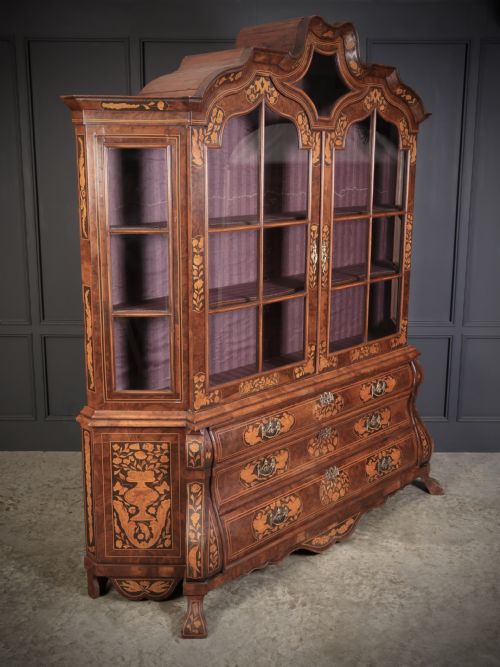


Inlaid Walnut Bureau Bookcase
An inlaid walnut bureau bookcase combines a fitted writing slope and a shelved upper cabinet, finished with decorative floral or figural marquetry.
Inlaid Walnut Bureau Bookcase
An inlaid walnut bureau bookcase is a dual-purpose piece of furniture that pairs a desk workspace with enclosed upper shelving. The form spans the seventeenth, eighteenth, and nineteenth centuries, alongside later revivals.
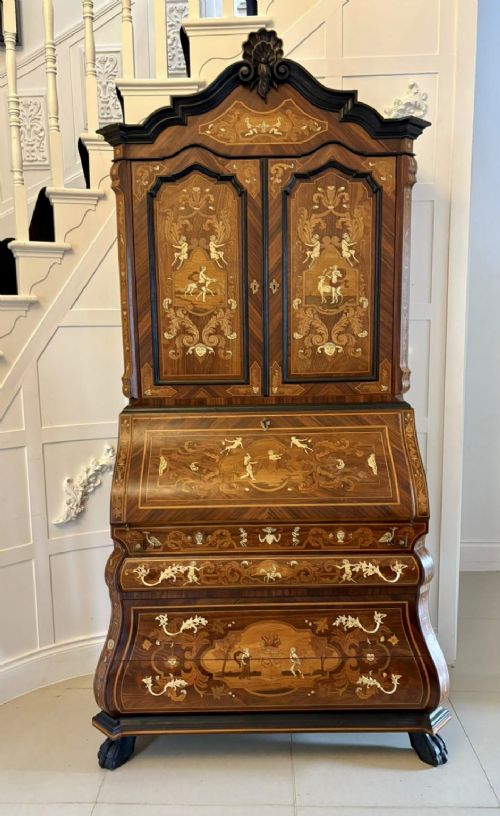
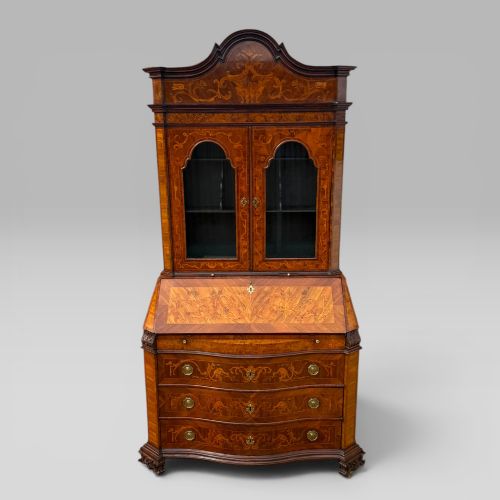
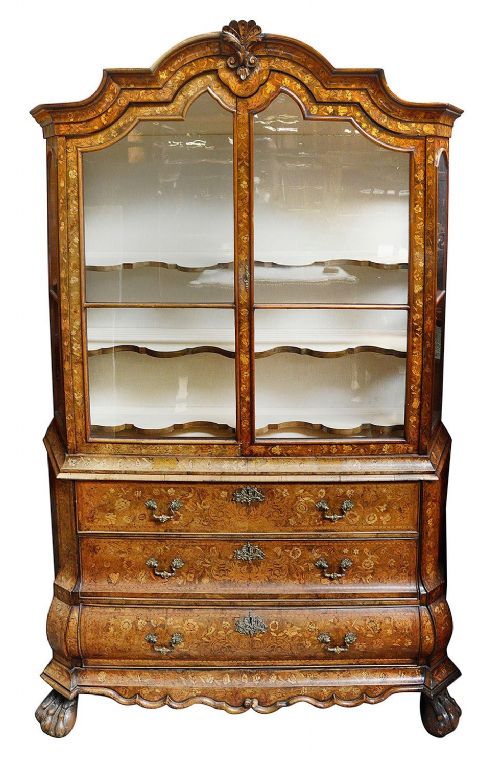
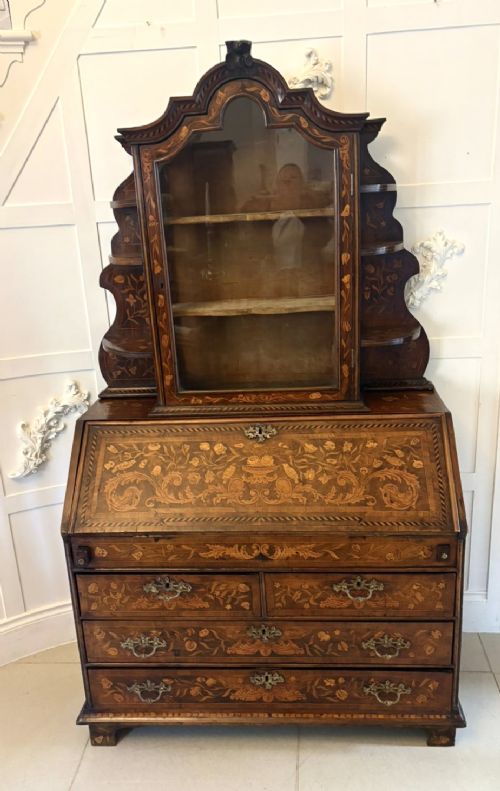
Examples on this page appear in various regional styles, including Dutch Baroque, Italian Rococo, and William and Mary. These pieces often feature bureau cabinets, display cabinets, and bombe-shaped lower chests.
The primary structure combines walnut and burr walnut with contrasting woods used for intricate inlay work. Buyers find both monumental double dome versions and compact proportions designed for smaller rooms.
How they were made
Joiners built the carcases using solid timbers and applied decorative veneers of walnut and burr walnut across the visible surfaces. Tulipwood and fruitwood provided contrasting tones for detailed botanical and architectural imagery.
Marquetry and fruitwood inlay techniques created elaborate floral panels, urns, and birds across the fall fronts and cabinet doors. Brass handles, escutcheons, and hinges secured the drawers and doors, while glazed panels protected the upper library sections.
The listings on this page span the 17th century through the 1920s, featuring walnut, fruitwood, and tulipwood.
What varies in quality
The sophistication of the marquetry design and the selection of timber figure distinguish exceptional examples from standard ones. Dense burr walnut veneers and crisp, multi-wood inlay indicate higher workshop skill.
Proportion and architectural harmony dictate the presence of quality, particularly in how the upper cabinet aligns with the lower bureau chest. Original brass hardware, well-figured walnut, and intact internal pigeonholes elevate a piece.
The Inlaid Walnut Bureau Bookcase Glossary
- Marquetry
- Decorative patterns formed by fitting together thin slices of wood veneer into pictorial designs. This technique covers the exterior surfaces of many bureau bookcases.
- Burr walnut
- Timber taken from the growth excrescence of a walnut tree, producing swirling and mottled patterns. It provides a highly decorative surface for prominent panels.
- Bombé
- A swelling, outward-curving profile seen on the lower chests of certain cabinets. This bulging contour requires advanced woodworking skill to execute properly.
- Double dome
- An upper cabinet pediment featuring two rounded arches side by side. This architectural roofline characterises formal seventeenth-century and revival pieces.
Inlaid Walnut Bureau Bookcase: Frequently Asked Questions
How do I use a bureau bookcase today?
The fold-down writing flap provides a functional desk surface for modern laptops and correspondence, while the internal pigeonholes organise stationery. The upper cabinet serves as a display space for books, glassware, or collections.
The lower drawers offer concealed storage for household items, keeping living areas tidy. Placing the furniture away from direct sunlight and radiators protects the delicate walnut veneers from drying out.
How can I tell an 18th-century piece from a later revival?
Eighteenth-century examples display timber patination, hand-cut dovetails, and secondary woods appropriate to their regional workshops. Construction methods inside the drawers and behind the backboards reveal the age of the materials.
Later revivals from the nineteenth and early twentieth centuries often use more uniform secondary timbers and machine-prepared components. Examining the interior framework and the wear patterns around the hardware clarifies the manufacturing period.
Are these cabinets difficult to move?
Bureau bookcases are heavy, substantial items constructed in two primary sections, with the upper cabinet lifting off the lower bureau chest. This modular design makes transport and placement manageable for specialist handlers.
Securing the internal drawers and removing the glass shelves before relocation prevents accidental damage during transit. Professional installation ensures the tall structure remains stable and level on uneven floors.