



Inlaid Walnut Bookcase Desk
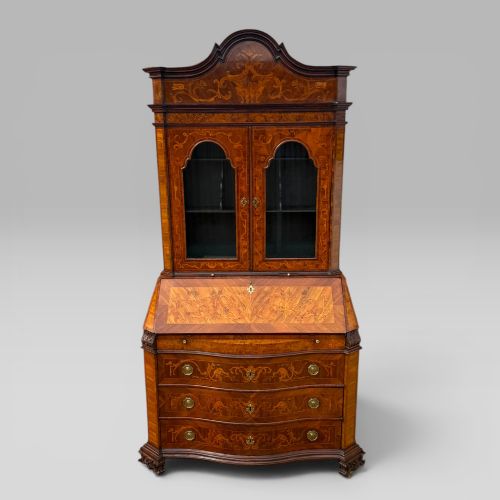
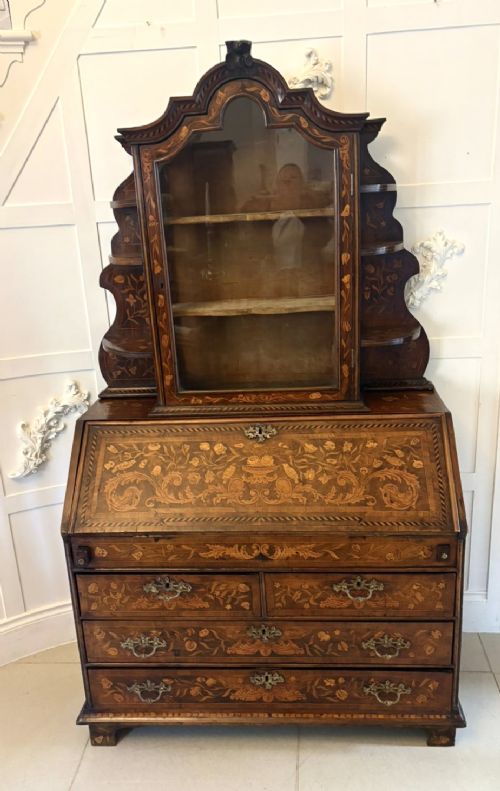
An inlaid walnut bookcase desk brings together fine cabinet-making and practical storage, offering a striking centrepiece for any study or library.
Inlaid Walnut Bookcase Desk
When you search for an inlaid walnut bookcase desk, you encounter substantial combinations of shelving, display space, and fitted writing compartments. These pieces combine a glazed or panelled upper section for books with a lower bureau or cabinet base featuring a sloping fall-front desk.
The versions you meet on this page span several distinct periods, including the 17th Century, 18th Century, 19th Century, and Edwardian eras. They draw upon styles such as William and Mary, Early Georgian, Dutch Baroque, Dutch Rococo, Venetian Rococo, and 18th Century Neoclassical.
Forms vary between bureau bookcases, bureau cabinets, and standard bureaux and writing desks. Examples range from bombe silhouettes and double dome tops to tall upright formats reflecting Italian, Dutch, and English design traditions.
How they were made
Cabinet-makers relied on walnut and burr walnut as the primary timber, often selecting burr veneers for rich, swirling grain patterns across the fall-fronts and doors. Tulipwood and fruitwood provided contrasting tones for detailed inlay and marquetry work.
Marquetry and fruitwood inlay techniques created elaborate floral and foliate motifs across the exterior surfaces. Brass hardware, including drop handles and escutcheons, complemented glazed panels fitted within the upper bookcase doors.
The documented forms encompass bureau bookcases, bureau cabinets, and standard writing desks in Dutch, Italian, and English styles.
What varies in quality
The ambition of the marquetry design and the selection of the burr walnut veneer set finer examples apart from simpler pieces. Master craftsmen aligned the grain meticulously across intersecting drawer fronts and panels to create symmetrical visual impact.
The complexity of the structural form, such as bombe shaping or double dome cornices, indicates the tier of workshop production. Integration of fitted interior pigeonholes, secret compartments, and heavy brass mounts further distinguishes the standard of execution.
Joseph II the Holy Roman Emperor
The Inlaid Walnut Bookcase Desk Glossary
- Marquetry
- Decorative veneer work arranged in pictorial patterns using different coloured woods. Craftsmen cut contrasting timbers like fruitwood and tulipwood to form floral or geometric designs across the surface.
- Bombe
- A swelling, outward-curving contour found on the lower sections of certain cabinets and chests. This curved profile requires advanced woodworking skill to maintain structural stability.
- Double dome
- A cabinet top featuring two parallel rounded arches rising above the cornice. This architectural detail appears on grander 17th-century and 18th-century pieces.
- Fall-front
- A hinged writing flap that pulls down to reveal an enclosed desk interior with pigeonholes and small drawers. It provides a concealed writing surface when closed.
- Escutcheon
- A protective metal plate surrounding a keyhole. Brass examples often feature decorative pierced designs matching the drawer handles.
Inlaid Walnut Bookcase Desk: Frequently Asked Questions
How do I use the desk section safely?
Lower the fall-front gently to ensure the support brackets or lopers take the weight of the writing surface. Avoid placing heavy loads on the open flap to protect the original hinges.
Keep the interior compartments organised and use blotters to protect the antique wood from ink stains and everyday wear.
Where should I place a large bookcase desk?
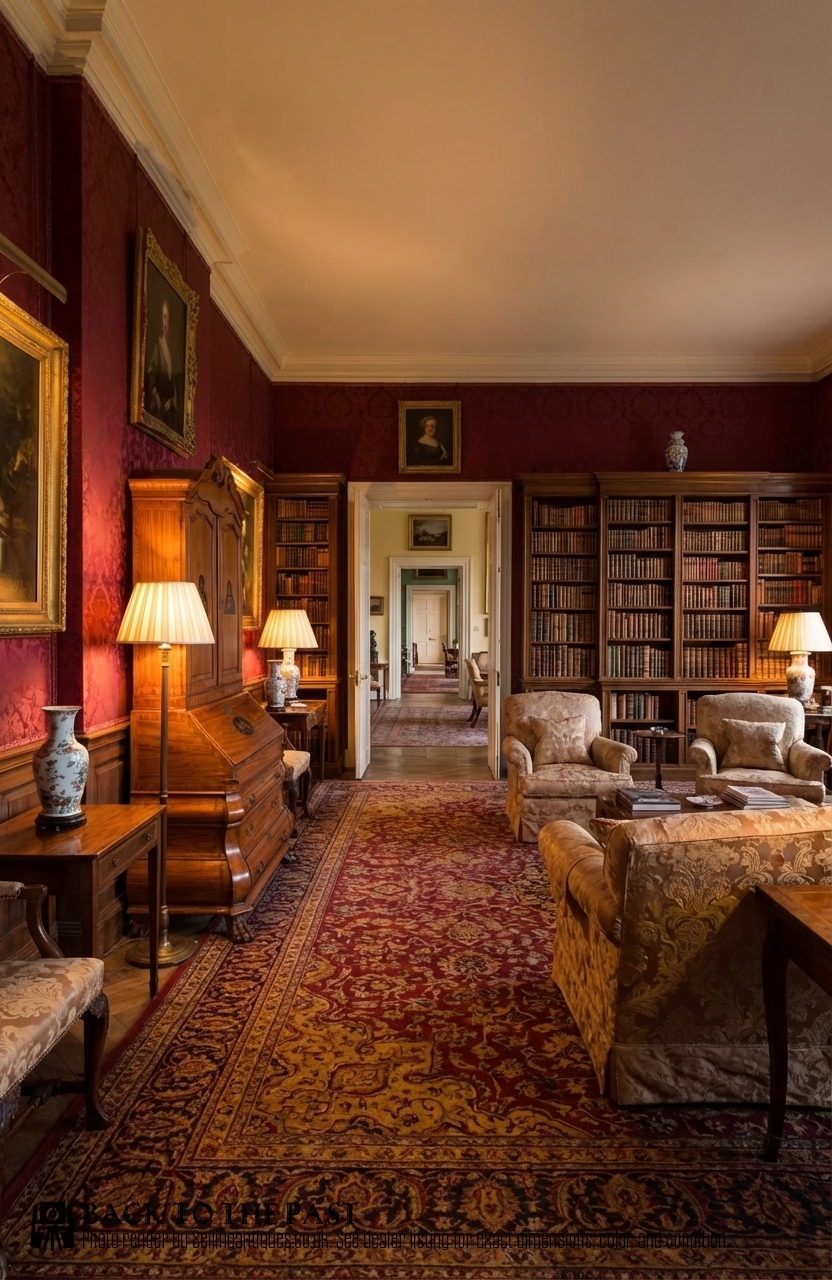
Position the piece against a sturdy interior wall away from direct sunlight and heat sources, which can dry out walnut timber and veneer. Ensure there is adequate floor clearance for the fall-front to open fully.
Because these units are tall and heavy, verify that the room can accommodate their visual weight and height without crowding the space.
How do I tell Dutch styles apart?
Dutch pieces frequently display dense floral marquetry covering the entire exterior, often combined with bombe curved fronts or double dome cornices. These design choices create a more exuberant silhouette than standard English casework.
Look closely at the types of floral inlay and the curvature of the base to identify Dutch Baroque and Rococo characteristics.