



Inlaid Wall Cupboard
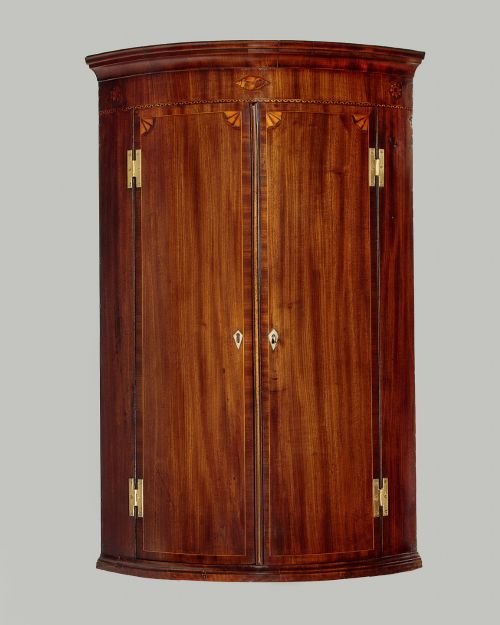
An inlaid wall cupboard is a hanging cabinet built to occupy a room angle, carrying decorative wood ornamentation that turns a practical storage piece into a wall focal point.
Inlaid Wall Cupboard
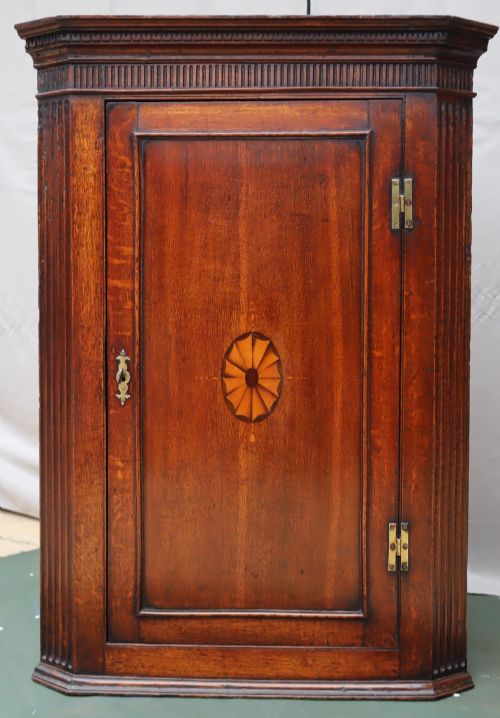
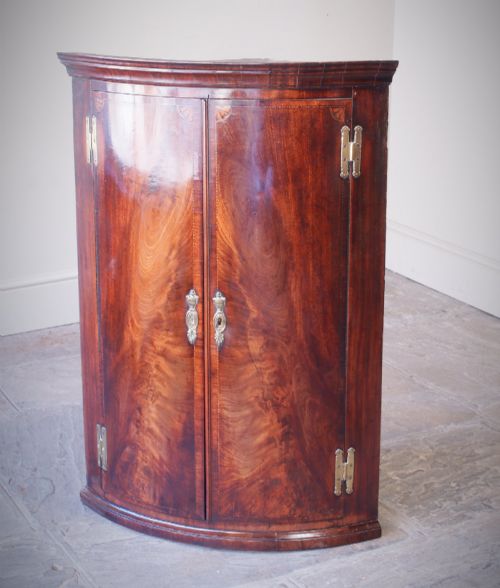
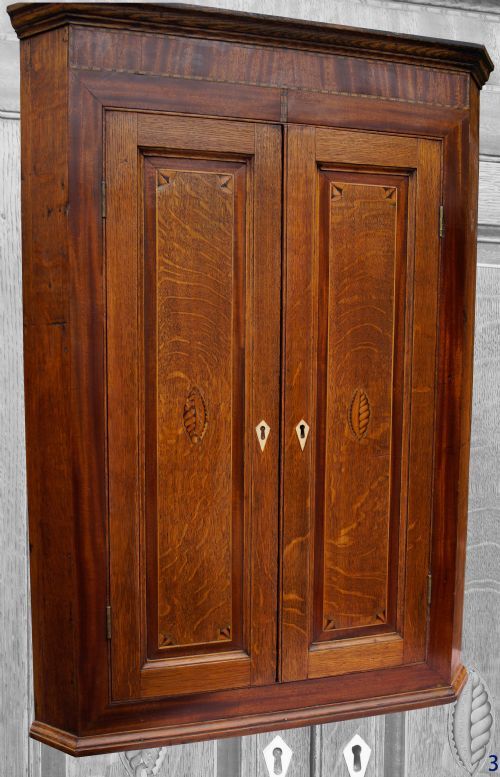
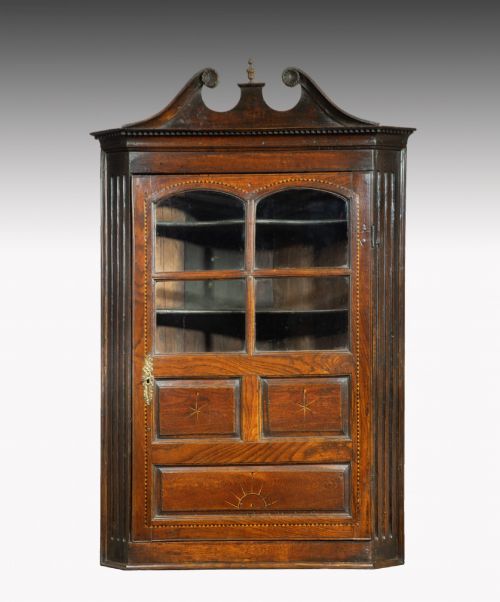
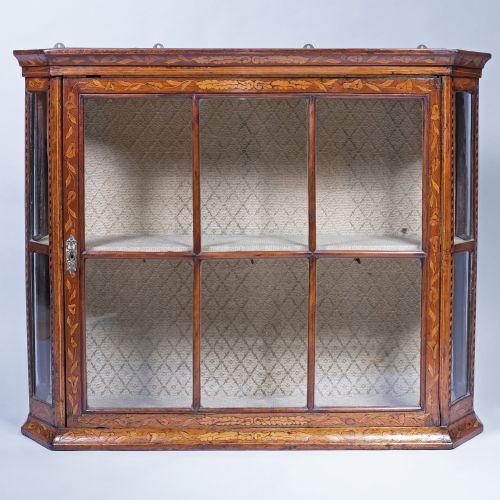
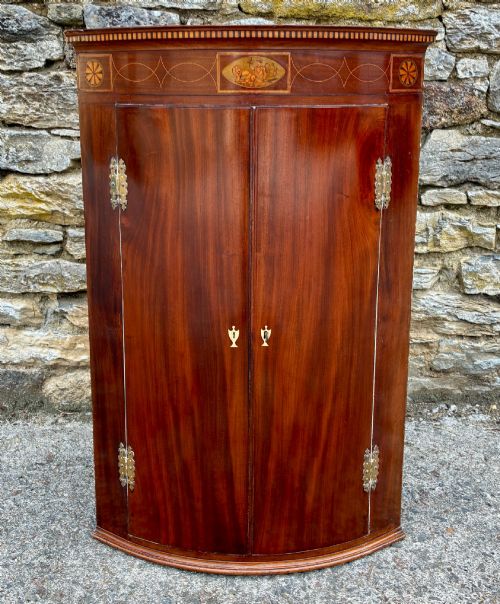
An inlaid wall cupboard most frequently appears on this page as a corner cabinet or hanging wall cabinet designed to mount directly onto domestic walls. These pieces emerge across the Georgian, Victorian, and Edwardian eras, spanning from the eighteenth century into the twentieth century.
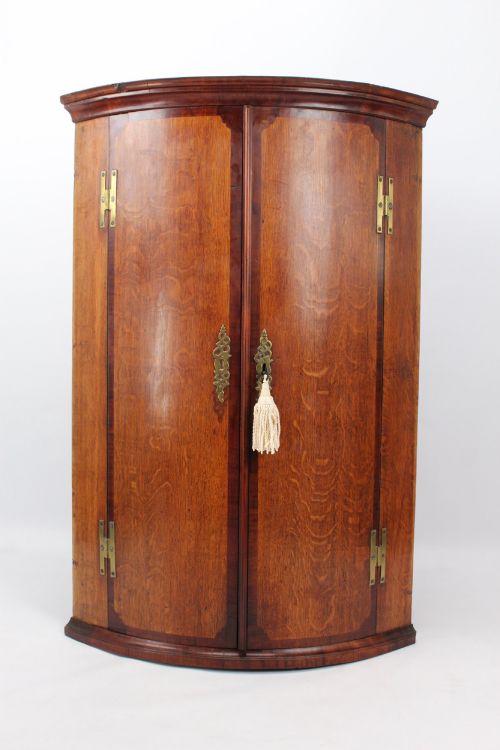
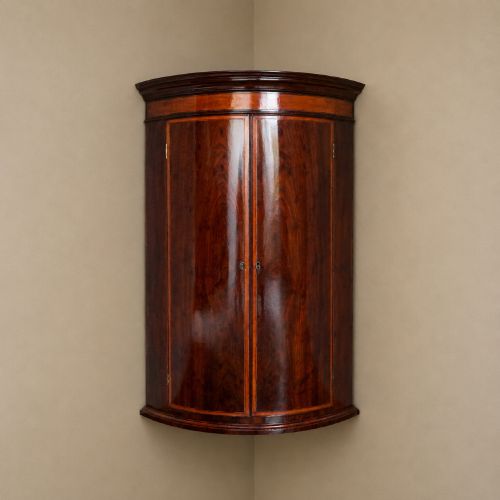
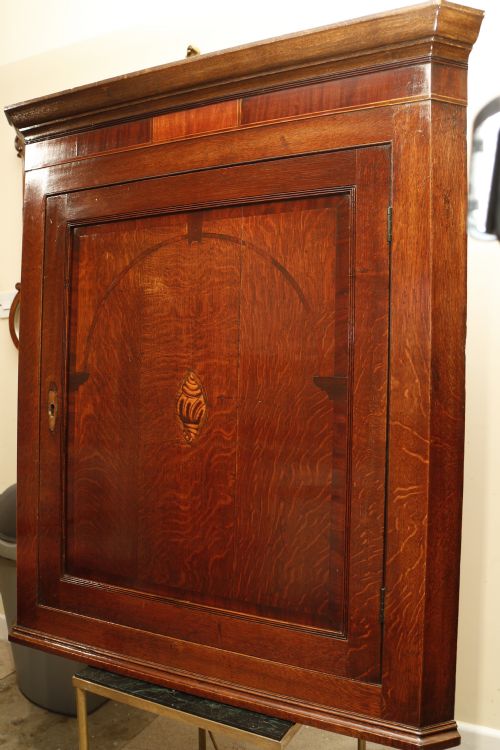
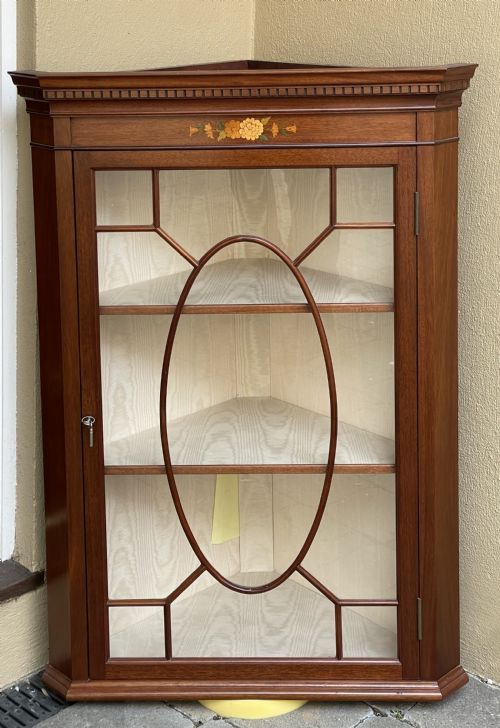
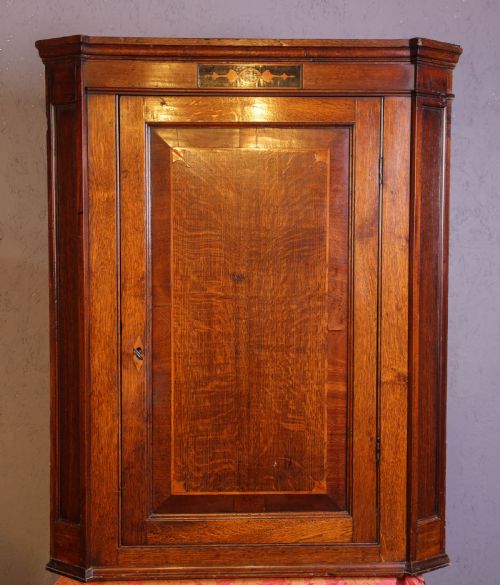
The dominant forms are bow front and flat front corner cupboards. Buyers encounter regional provincial pieces alongside formal Georgian and George III designs, frequently constructed to utilise awkward room angles efficiently while offering display or enclosed storage.
Materials and construction
Makers constructed these cabinets primarily in oak and mahogany, occasionally employing walnut, elm, and rosewood. Solid timbers formed the structural carcase and doors, frequently enhanced with crossbanding.
Decorative surfaces rely on wood inlay, satinwood inlay, boxwood lines, and brass hardware such as hinges and escutcheons. Glazed doors appear on display variants, while solid panel doors secure enclosed shelf space.
The listings on this page span oak, mahogany, walnut, rosewood, and elm, featuring brass hardware and contrasting satinwood and boxwood inlays.
Judging the piece
Quality rests in the crispness of the timber selection and the precision of the inlay work. Plum pudding mahogany, burr walnut, and finely figured satinwood distinguish higher grade cabinets from plain utilitarian pieces.
Structural integrity shows in the dovetail joints, the original brass fittings, and the alignment of the hanging brackets. Cabinets retaining uncompromised timber patination and clean interior shelving hold greater distinction.
The Inlaid Wall Cupboard Glossary
- Bow front
- A convex curved cabinet front that projects outward from the wall corners. This curved design softens the rigid geometry typical of corner furniture.
- Crossbanding
- A strip of veneer applied to the border of a panel where the grain runs perpendicular to the main surface. This technique creates a neat framing effect around cabinet doors.
- Escutcheon
- A protective plate surrounding a keyhole, usually made of brass. It prevents the wood surrounding the lock from wearing down through repeated use.
- Marquetry
- Elaborate patterns formed from fitted pieces of coloured wood veneer applied to a carcase. It provides pictorial or geometric decoration across flat cabinet doors.
Inlaid Wall Cupboard: Frequently Asked Questions
How were corner cupboards used?
These cabinets served to store provisions, glassware, or valuables while occupying unused room junctions. Their elevated wall-hanging design kept contents away from damp floors in domestic spaces.
Many examples functioned as drinks cabinets or display units for prized ceramics. The enclosed shelving kept dust off delicate household possessions in period rooms.
How do I hang a heavy wall cupboard?
Period wall cabinets rely on strong internal fixing points and secure brass brackets attached to the back frame. Fixing directly into solid masonry or substantial timber wall studs is essential.
Due to the weight of dense hardwoods like oak and mahogany, professional installation ensures the cabinet supports its own weight plus stored contents safely.
How do I tell Georgian from Edwardian pieces?
Georgian cabinets dating from the eighteenth and early nineteenth centuries typically exhibit heavier solid oak or mahogany construction with hand-cut dovetails. Their inlays tend toward subtle stringing and simpler geometric motifs.
Edwardian reproductions and later pieces from around nineteen hundred often display lighter satinwood inlays, machine-finished elements, and brighter internal linings reflecting changing domestic tastes.