




Inlaid Hanging Wall Cupboard
An inlaid hanging wall cupboard solves awkward room angles by mounting directly to the wall while displaying personal treasures inside.
Inlaid Hanging Wall Cupboard
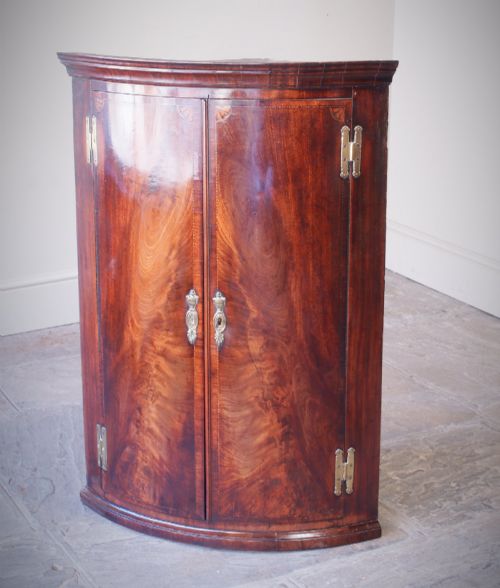
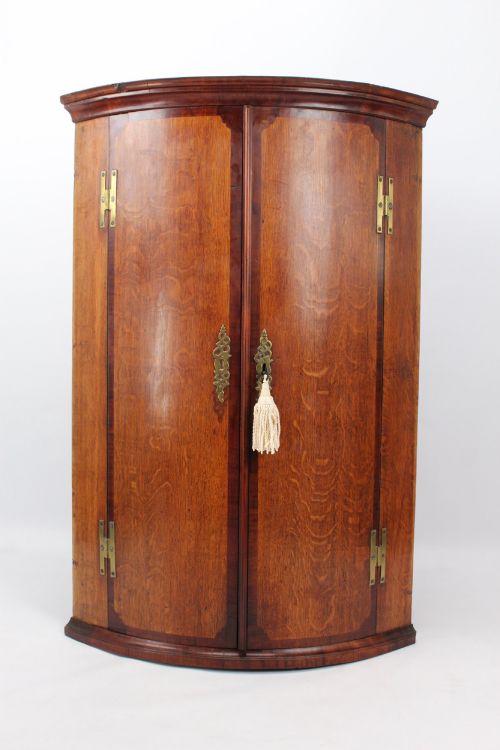
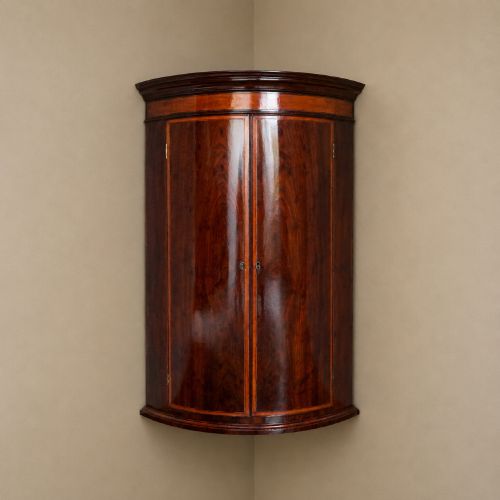
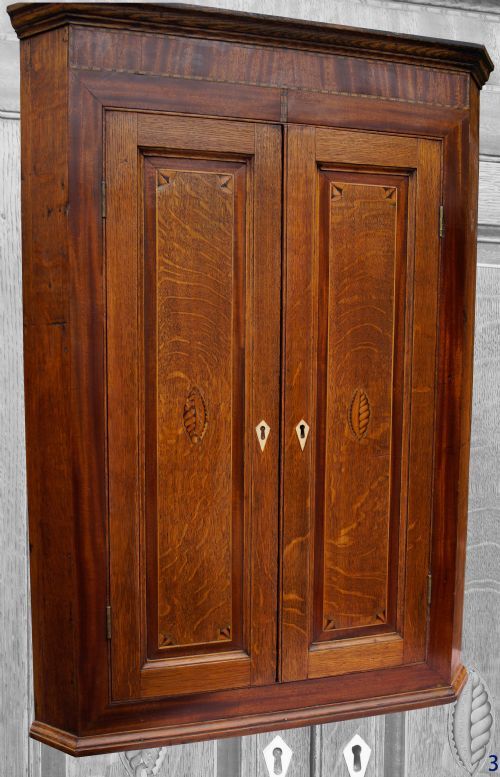
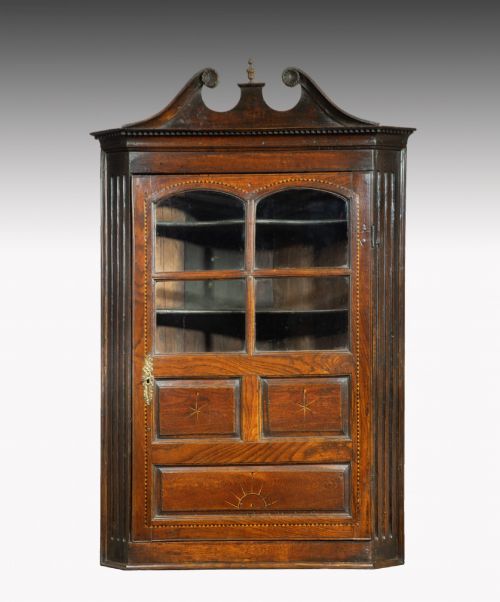
The inlaid hanging wall cupboard category centres on corner cabinets and wall-mounted storage units designed to utilise room junctions. Most examples encountered here belong to the Georgian and Edwardian periods, stretching from the eighteenth century into the twentieth.
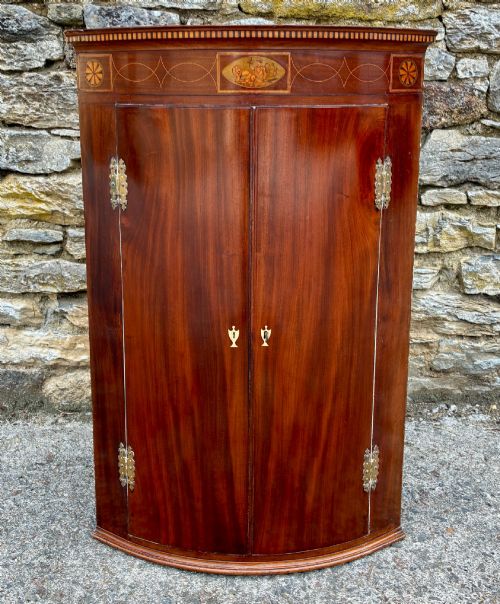
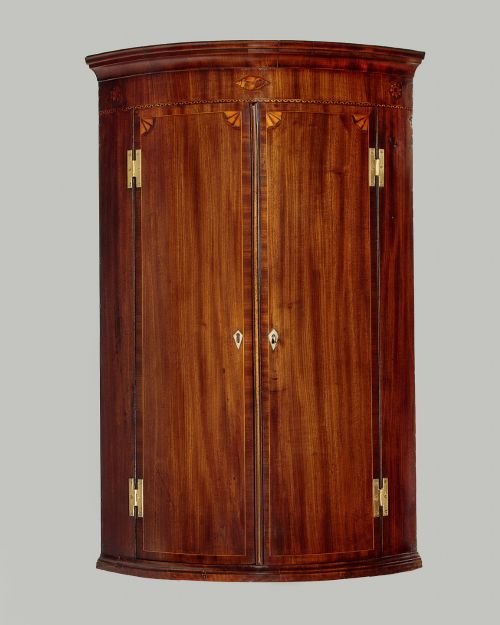
Makers constructed these pieces predominantly as corner cupboards with bow fronts or flat sides to fit snug against plaster walls. Oak and mahogany serve as the primary foundational timbers across the selection.
Regional provincial pieces appear alongside more refined urban examples, showing variations in scale from compact smoker cabinets to tall display units.
Materials and construction
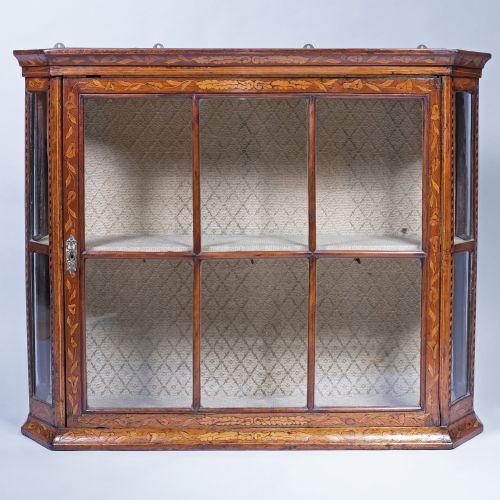
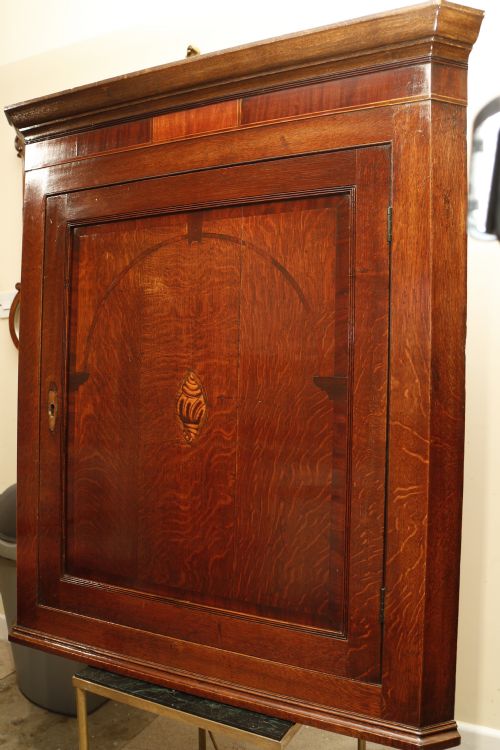
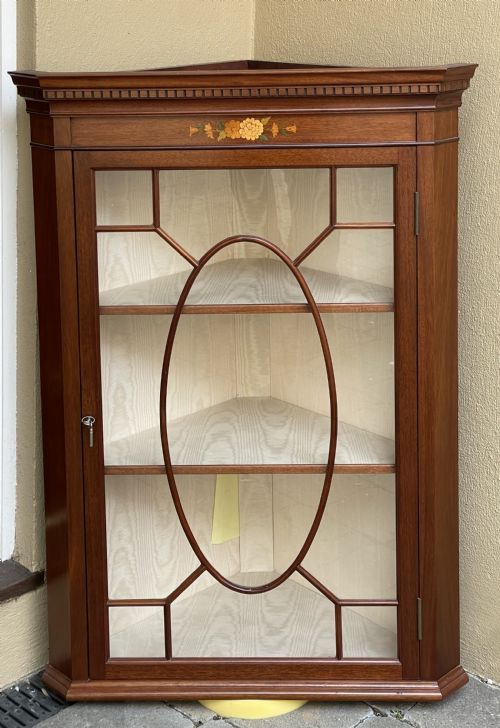
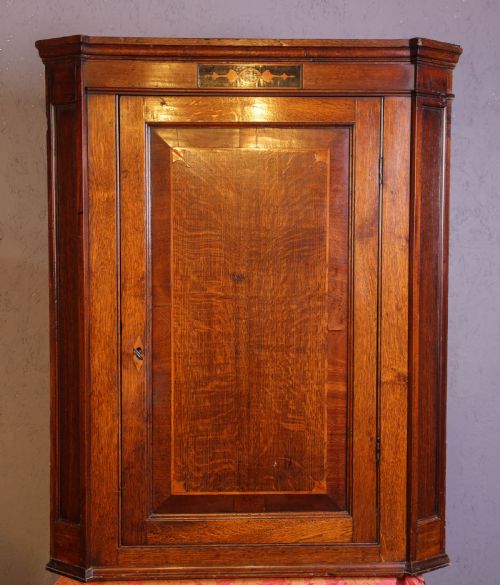
Cabinet makers utilised solid timbers such as oak, mahogany, walnut and elm for the carcase and doors. Panels often received decorative treatments including crossbanding in contrasting woods and detailed wood inlay.
Satinwood, boxwood and brass fittings appear frequently as contrasting elements on door fronts and key escutcheons. Glazed doors feature on display variants, while solid panel doors secure private contents.
Listings span Georgian, Victorian and Edwardian periods, constructed in oak, mahogany and walnut with satinwood inlay.
Craftsmanship and proportion
The distinction between tiers rests upon timber selection, such as plum pudding mahogany or burr walnut, matched against the precision of the inlay work. Finer examples display meticulous crossbanding and tight corner joints that withstand decades of wall-mounted stress.
Hardware integrity and original brass hinges or escutcheons elevate an item above standard utility pieces. The balance of the bow front and the crispness of carved or inlaid details determine the standing of each cabinet.
The Inlaid Hanging Wall Cupboard Glossary
- Bow front
- A convex curved cabinet front that projects outward from the corner or wall line. This curved form requires advanced woodworking skill to shape solid timber or veneer accurately.
- Crossbanding
- A border technique where thin strips of veneer are laid around the perimeter of a door or panel with the wood grain running perpendicular to the central field.
- Escutcheon
- A protective brass plate fitted around a keyhole to prevent the surrounding wood from wearing down through daily use.
- Inlay
- A decorative method where contrasting woods, shell or brass are set flush into recesses carved into the primary timber surface to create patterns.
Inlaid Hanging Wall Cupboard: Frequently Asked Questions
How do I hang a wall cupboard safely?
These cabinets mount directly to wall studs using heavy-duty internal brackets or sturdy backboards designed to bear the weight of solid timber and stored items. Professional installation ensures the cabinet remains secure against plaster.
Older pieces often feature original hanging points that require careful alignment with modern wall anchors to distribute the load evenly.
What were corner cupboards used for originally?
Households utilised these wall-mounted units to store precious ceramics, glassware, tea caddies or alcoholic beverages away from damp floors and busy household traffic. Their angled shape turned unused room corners into functional storage.
Display variants allowed owners to showcase imported porcelain behind glass doors while keeping everyday dining provisions locked safely behind solid wood.
How do I date an antique cabinet?
Examining the secondary timbers inside the carcase, hand-cut dovetails on the drawers and the style of the brass hardware reveals the likely period of manufacture. Georgian pieces display distinct construction methods compared to Edwardian revivals.
Inlay styles and the presence of crossbanding also point toward specific decades, matching the prevailing tastes of eighteenth and nineteenth-century cabinet makers.
Are these cabinets suitable for modern homes?
Compact corner dimensions allow these wall units to fit into narrow hallways, kitchens or living rooms without consuming valuable floor space. They provide practical enclosed shelving while adding historic character to interior walls.
Modern interiors benefit from the vertical storage capacity of hanging cabinets, which draw the eye upward and utilise empty wall junctions effectively.