




Inlaid Tea Canister Box
An inlaid tea canister box is a timber chest built to preserve precious leaf, prized for figured grain and delicate decorative banding.
Inlaid Tea Canister Box
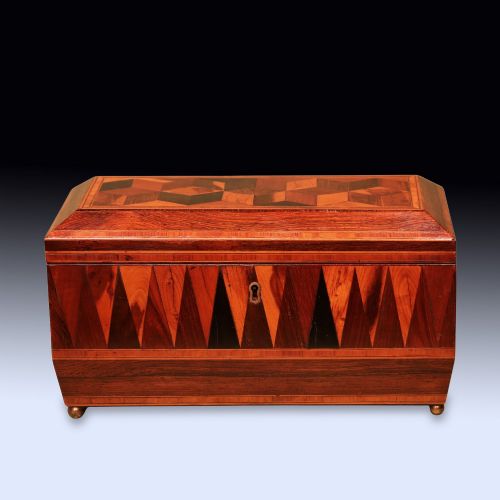
An inlaid tea canister box brings together functional domestic containers and decorative cabinet work from the Georgian, Regency, and Victorian eras. These wooden chests were designed to keep expensive tea secure under lock, utilising precious exotic timbers and contrasting veneers to ornament the parlour.
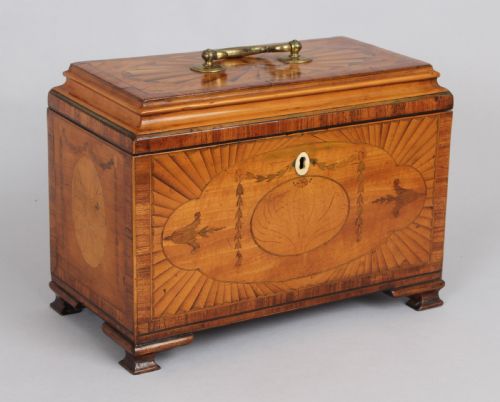
The versions most commonly met on this page span the late eighteenth and nineteenth centuries, taking forms such as sarcophagus shapes, domed tops, and rectangular caddies. They rely on classic cabinet woods like mahogany, rosewood, and satinwood, embellished with stringing, parquetry, and shell motifs.
Materials and construction
Cabinet makers built these boxes using dense primary timbers such as mahogany and rosewood, often selecting figured veneers like burr yew or harewood for the main surfaces. Interiors frequently featured foil lining or fitted wooden compartments to separate different leaves.
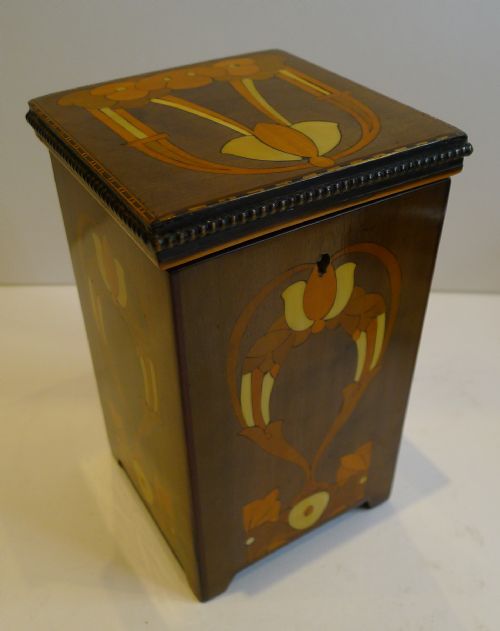
Decoration relied on precise cutting of contrasting woods, bone, and boxwood to create geometric parquetry, floral marquetry, or mosaic patterns. Specialist techniques like Tunbridge Ware employed thousands of tiny coloured wood blocks arranged to form pictorial or mosaic designs.
Tea was once so valuable that keys to these boxes were worn proudly on chatelaines like heavy jewellery.
Assessing craftsmanship
Quality rests in the precision of the timber preparation and the restraint of the decorative inlay. Superior examples display tightly fitted boxwood stringing, symmetrical grain matching, and meticulous parquetry that follows the contours of the box without lifting.
The sophistication of the internal arrangement and the integrity of the original hardware distinguish finer pieces. Hand-cut brass escutcheons, working locks with matching keys, and intact secondary timber linings elevate the standard of the construction.
Henry Hollamby
The Inlaid Tea Canister Box Glossary
- Parquetry
- A geometric mosaic of wood pieces used for ornamentation on surfaces. It creates repeating patterns through the precise placement of contrasting wood veneers.
- Marquetry
- The art of applying pieces of veneer to a structure to form decorative patterns and pictures. Makers used various dyed and natural woods to achieve pictorial depth.
- Tunbridge Ware
- A form of British woodwork characterised by mosaic tiles made from multiple woods. Artisans glued thousands of tiny wooden sticks together and sliced them to create intricate panels.
- Sarcophagus form
- A style of box featuring a stepped, domed lid tapering inwards, resembling a classical stone coffin. This shape gained popularity during the Regency period for tea caddies.
- Stringing
- Thin inlay lines of contrasting wood used to outline panels or borders on furniture and boxes. It provides a crisp visual boundary for figured veneers.
Inlaid Tea Canister Box: Frequently Asked Questions
How were tea caddies used?
Tea was an expensive commodity in Georgian and Victorian households, requiring secure storage away from dampness and theft. The boxes typically featured internal compartments or separate canisters to keep black and green teas distinct.
Households kept them in the parlour or dining room, and the lady of the house usually held the key to dispense the tea herself.
How do I date a tea caddy?
Dating relies on observing the combination of timber choices, construction methods, and decorative styles. Georgian pieces often feature simpler mahogany or satinwood with delicate shell inlays, while Regency examples lean towards sarcophagus shapes and bold rosewood.
Later Victorian versions frequently incorporate complex mosaic decoration or distinct geometric parquetry associated with specific regional workshops.
How do I care for antique wood?
Maintaining these boxes requires stable environmental conditions away from direct sunlight and strong heat sources. Rapid changes in temperature can cause delicate veneers and tiny inlaid elements to warp or separate from the carcase.
Occasional application of appropriate wax polish helps nourish the historic timber surface and preserves the natural lustre of the grain.