
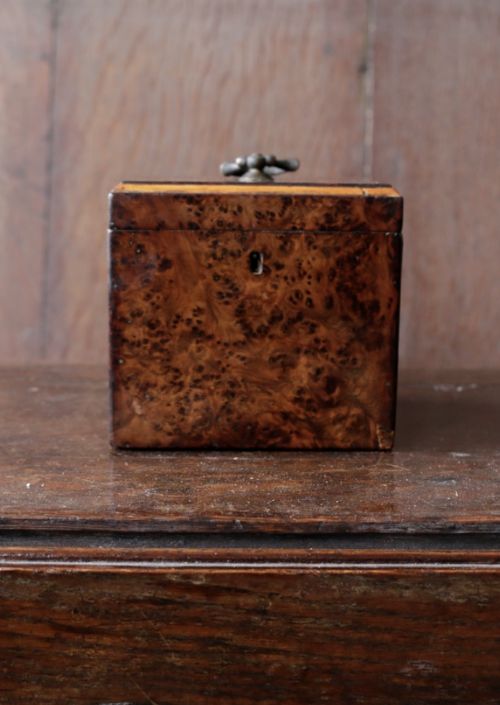


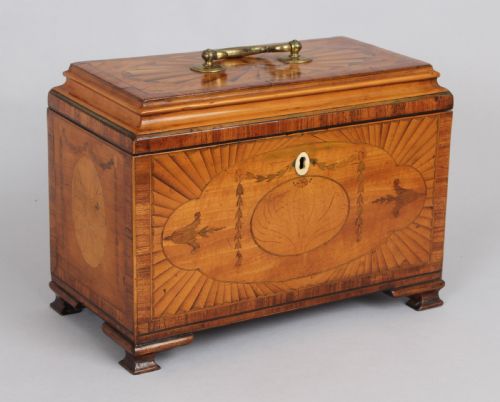


George III Marquetry Caddy
George iii marquetry caddy pieces are refined tea caddies and decorative boxes that bring period warmth and intricate patterned woodwork to any room.
George III Marquetry Caddy
When you search for a george iii marquetry caddy, you are looking at small wooden boxes made for storing tea during the Georgian period and slightly later. The selection on this page centres on George III examples, alongside pieces from the wider Georgian, 18th Century, 19th Century, and Regency periods.
The forms vary across the listings, taking the shape of cubes, ovals, octagons, hexagons, and larger decorative boxes. Most items function as tea caddies or decorative boxes designed to sit on a table or sideboard.
The origin and style tie firmly to the George III and Georgian eras, showcasing distinctive geometric and floral wood inlay. You will frequently encounter satinwood, yew, and burr yew amongst these forms.
How they were made
Cabinet makers constructed these pieces from woods such as satinwood, burr yew, yew, harewood, and calamander, often building a sturdy wooden carcass to receive the decorative surface.
Craftsmen applied intricate marquetry and wood inlay to create patterned surfaces, sometimes incorporating brass fittings or bone details to finish the design.
Listings feature woods such as satinwood, burr yew, yew, harewood, and calamander, combined with brass and bone.
What varies in quality
The refinement of the marquetry inlay sets the finer boxes apart from simpler items, revealing precision in how the contrasting woods fit together. Finer examples utilise timbers like satinwood and harewood with rich natural grain.
The complexity of the box shape also dictates the tier of the piece, moving from straightforward rectangular forms to sophisticated hexagonal, octagonal, and oval geometries.
The George III Marquetry Caddy Glossary
- Marquetry
- Marquetry inlay is the art of applying decorative pieces of veneer to a structure to form intricate pictorial or geometric designs. This technique defines the patterned surfaces seen on many Georgian boxes.
- Satinwood
- Satinwood is a durable timber with a lustrous, satin-like sheen and a yellowish hue. It frequently forms the primary surface for finer inlaid tea caddies.
- Burr yew
- Burr yew is a highly figured wood marked by swirling knot formations and rich grain patterns. Cabinet makers prized this material for decorative panels.
- Harewood
- Harewood is sycamore wood that has been stained green, traditionally using a chemical process involving iron solutions. It provides a distinct contrasting tone in period marquetry.
- Caddy
- A caddy is a small box or chest once used for storing loose tea leaves. These receptacles often featured internal compartments and locking lids.
George III Marquetry Caddy: Frequently Asked Questions
What is a george iii marquetry caddy?
A george iii marquetry caddy is a wooden box made during the late eighteenth century for storing dry tea leaves. These pieces feature decorative wood veneers arranged in geometric or floral patterns.
Cabinet makers used timbers like satinwood, yew, and harewood to construct these functional containers. They served a practical purpose in period households while displaying high craftsmanship.
How were tea caddies used?
Tea caddies stored precious tea leaves under lock and key in the dining room or drawing room. The mistress of the house kept the key to control access to the expensive leaves.
Inside, the boxes often featured separate compartments for different tea varieties and a small mixing bowl. This setup allowed servants or hosts to prepare infusions directly.
How do I date a tea caddy?
Dating relies on observing the timber choices, construction methods, and overall box shape. Pieces from the Georgian period often utilise satinwood, mahogany, or yew alongside specific inlay styles.
Form also guides the date, as oval, hexagonal, and octagonal geometries gained popularity during the late eighteenth century. Comparing the hardware, such as hinges and escutcheons, provides further chronological clues.
Where should I place a caddy?
These boxes sit well on sideboards, console tables, or desks where their decorative wood grain can be appreciated up close. Keeping them out of direct sunlight preserves the delicate marquetry and dyed veneers.
Stable indoor humidity prevents the timber from warping or the fine inlay from lifting over time. Placing them on a level surface protects the original feet and base.