

Inlaid Sofa Table
An inlaid sofa table brings together a versatile drop-leaf surface and fine decorative banding, offering a practical centrepiece for any reception room.
Inlaid Sofa Table
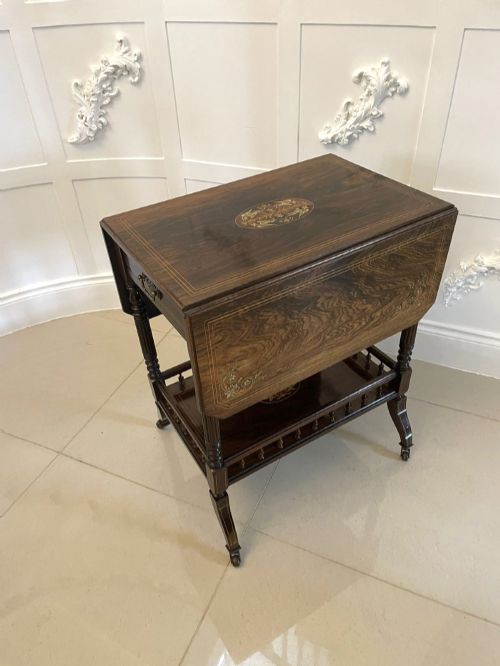
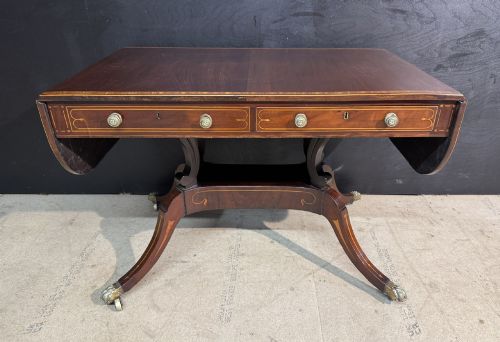
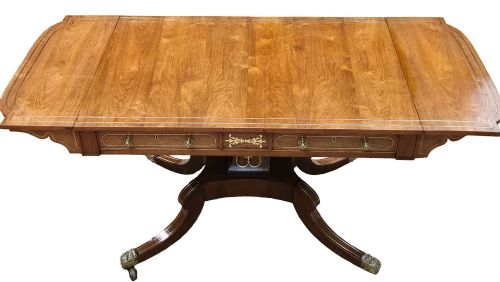
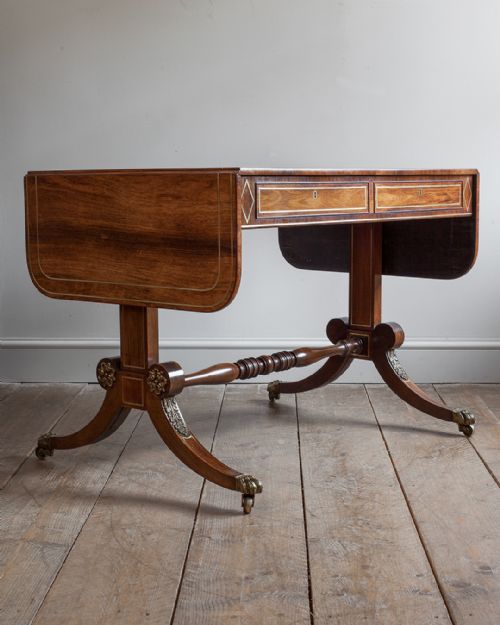
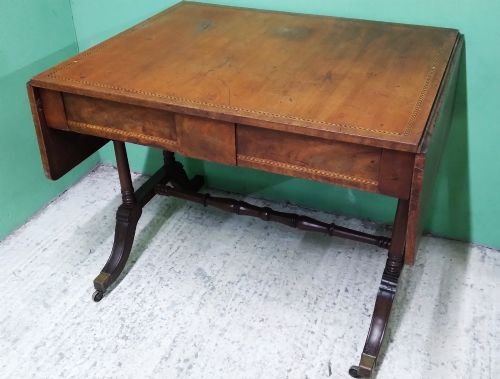
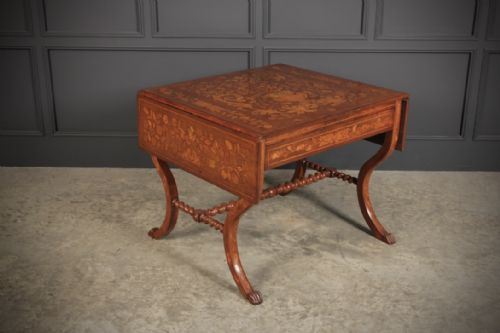
An inlaid sofa table is a movable drop-leaf piece originally designed to stand before a sofa in Georgian and Regency parlours. These tables typically feature two short drop flaps and twin pedestal supports or trestle ends.
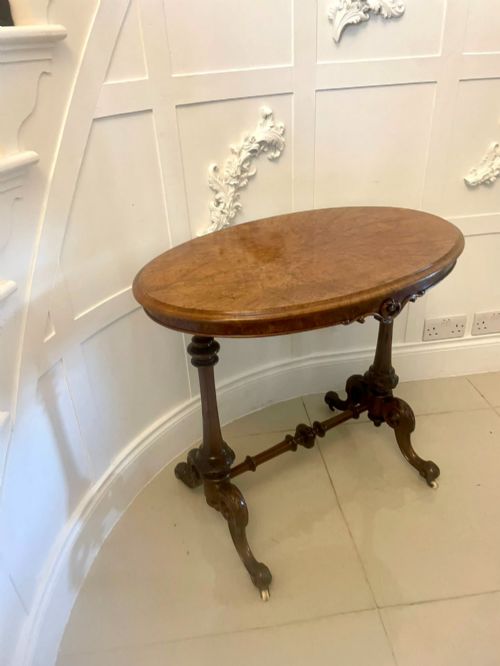
Examples on this page span from the late eighteenth century through the Victorian and Edwardian eras. Mahogany, rosewood and burr walnut form the primary timber foundations for the surviving pieces.
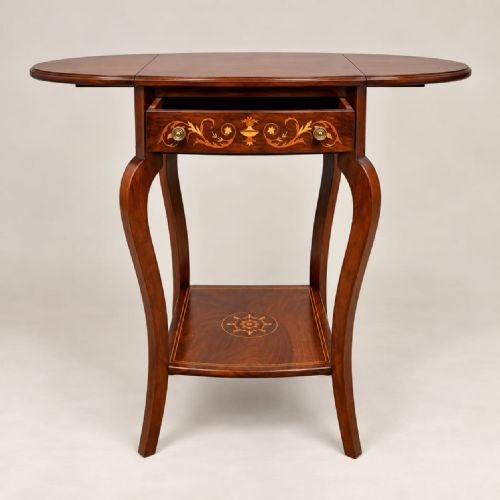
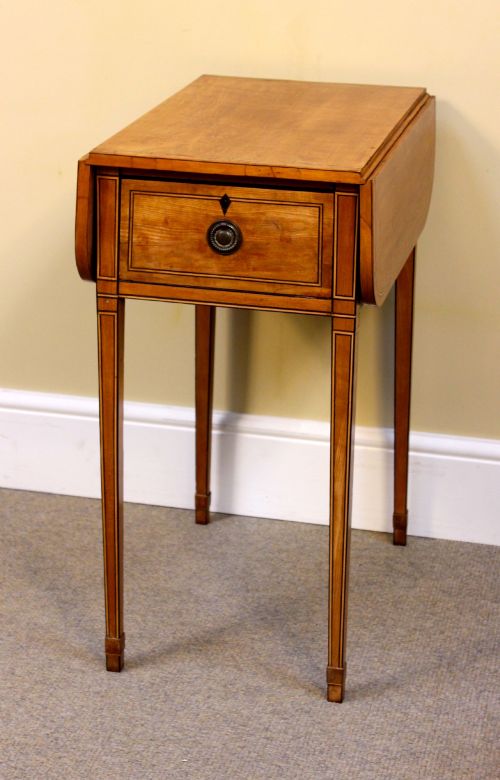
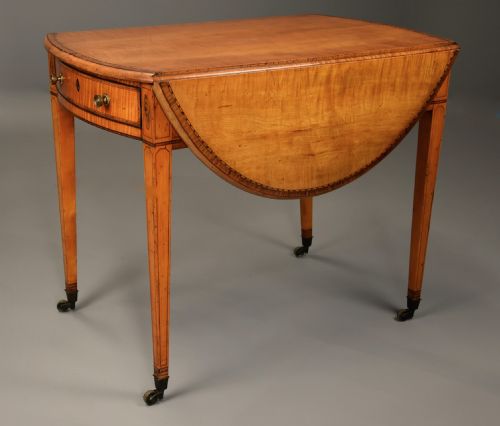
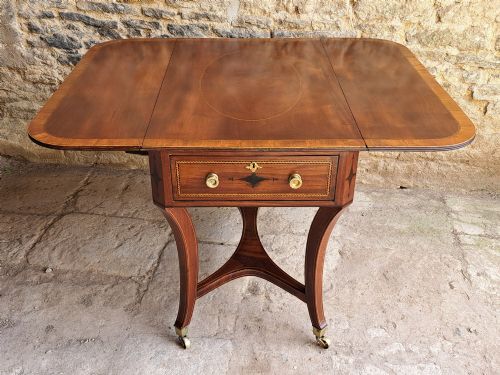
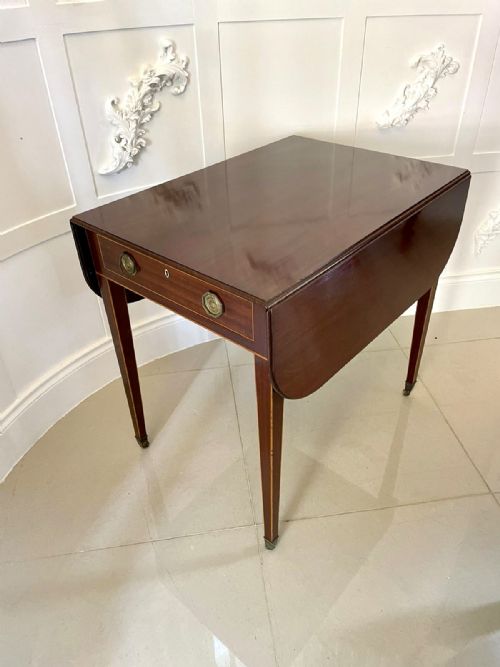
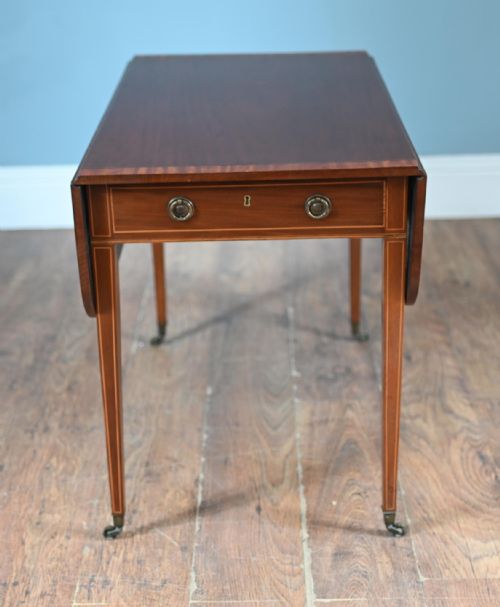
Alongside standard sofa tables, related forms like pembroke tables, centre tables and occasional tables appear frequently in the selection. These share the compact proportions and decorative surface work characteristic of the category.
How they were made
Cabinetmakers constructed these tables using solid timber frames faced with figured veneers such as mahogany, rosewood and burr walnut. Drop leaves relied on hinged fly brackets or swing legs to support the extended flaps.
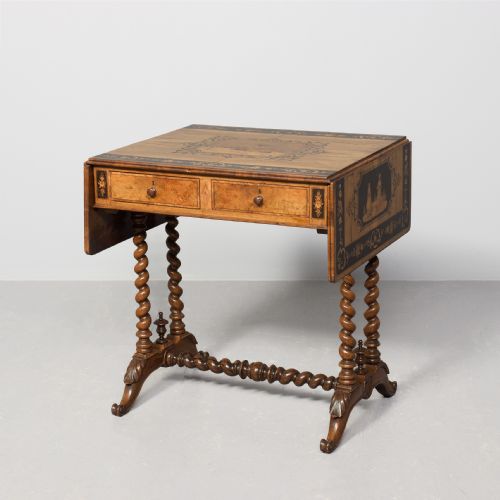
Decorative surfaces incorporated contrasting timbers like satinwood, boxwood and harewood, often arranged in geometric stringing or elaborate marquetry motifs. Brass stringing and mounts also feature prominently on Regency pieces to highlight structural lines.
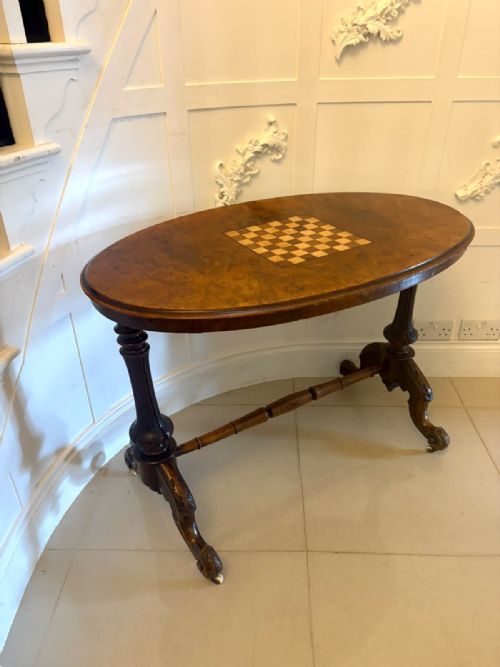
Some nineteenth-century tables cleverly concealed fold-out chess boards within their Burr Walnut tops for unexpected parlour games.
What varies in quality
The choice of timber grain dictates much of the visual appeal, with heavily figured fiddleback sycamore or burr walnut commanding attention over plain planks. Fineness of execution in the inlay work, from crisp boxwood stringing to pictorial marquetry, separates standard workshop output from exceptional examples.
Structural integrity depends on the original hardware and the stability of the pedestal bases or brass castors. Tables designed to be freestanding show finished timber grain and careful detail on all four sides rather than just the front elevations.
Gillow Lancaster
The Inlaid Sofa Table Glossary
- Drop leaf
- A table featuring hinged side flaps that lift to extend the surface area. These flaps are supported when raised by pivoting wooden brackets or swing legs.
- Stringing
- A thin, linear inlay of contrasting wood or light-coloured material set flush into the timber surface. It typically outlines table edges and drawer fronts.
- Marquetry
- The art of forming decorative patterns using veneers of different timbers, metals or shells. This technique creates pictorial or abstract designs across table tops.
- Pembroke table
- A small rectangular table equipped with two hinged drop leaves and typically one or two drawers. It shares many construction traits with the sofa table.
- Freestanding
- Finished with proper polish and detail on the reverse side. Such pieces were intended to sit in the middle of a room rather than against a wall.
Inlaid Sofa Table: Frequently Asked Questions
What is a sofa table?
A sofa table is a narrow, elongated drop-leaf table historically placed directly behind a sofa. They typically feature two small drawers and trestle-style or pillar supports.
Today they function effectively as console tables, desk surfaces or accent pieces in living spaces.
How do I date an inlaid table?
Dating relies on observing timber choices, construction methods and decorative styles. Georgian and Regency pieces often showcase mahogany or rosewood with delicate brass and boxwood stringing.
Victorian and Edwardian examples introduce burr walnut veneers, heavier carvings and different joinery techniques that reflect later tastes.
Can I use them as desks?
Many sofa tables and writing tables of this form include drawers suitable for stationary. Their comfortable height makes them practical for occasional laptop use or correspondence.
Drop leaves allow the footprint to remain compact when the writing surface is not needed.
Where should I place one?
Because these tables are often finished on all sides as freestanding pieces, they suit placement in the middle of a room or behind a central sofa. They also fit well against plain hallway walls or beneath windows.
Keep them away from direct heat sources and strong sunlight to protect the aged wood and delicate inlay.