

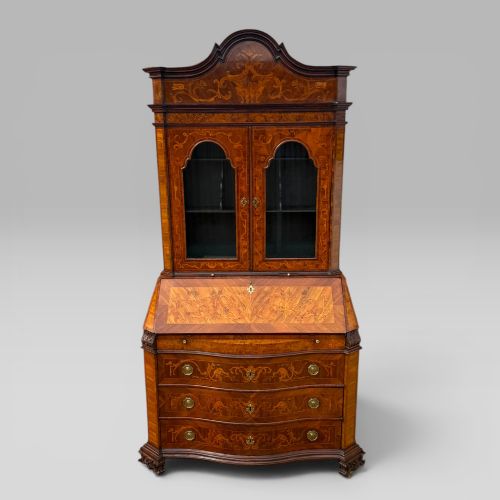
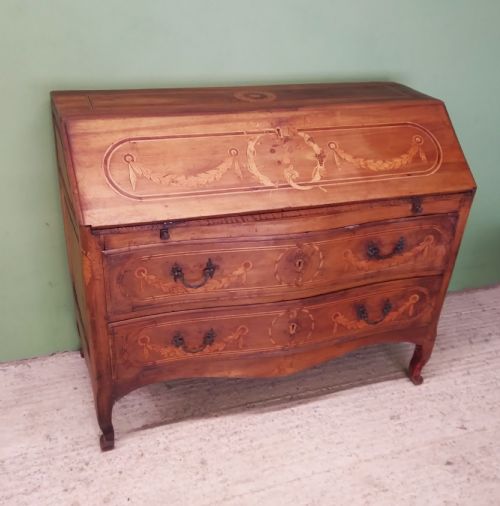

Inlaid Slant Front Desk
An inlaid slant front desk combines a sloping fall-front lid with intricate decorative wood veneers, providing a practical workspace and enclosed storage.
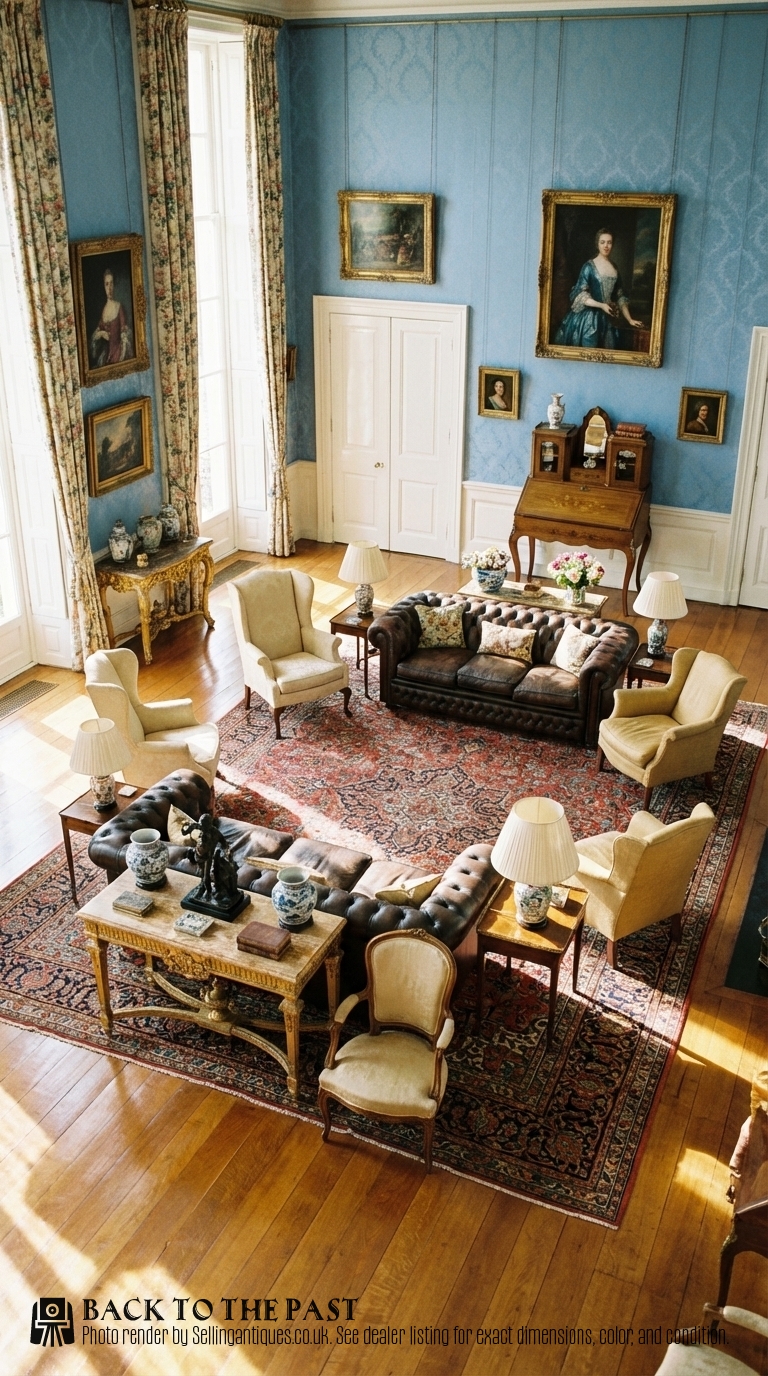
Inlaid Slant Front Desk
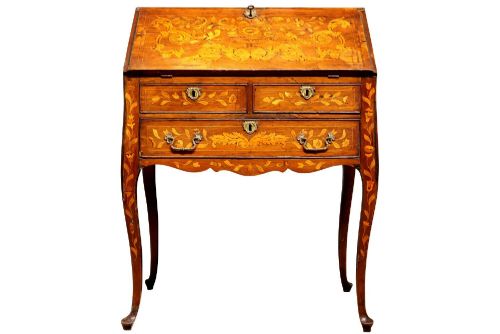
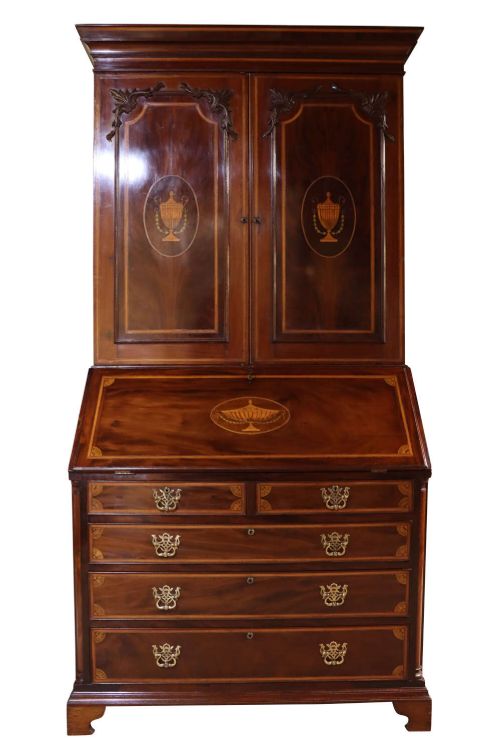
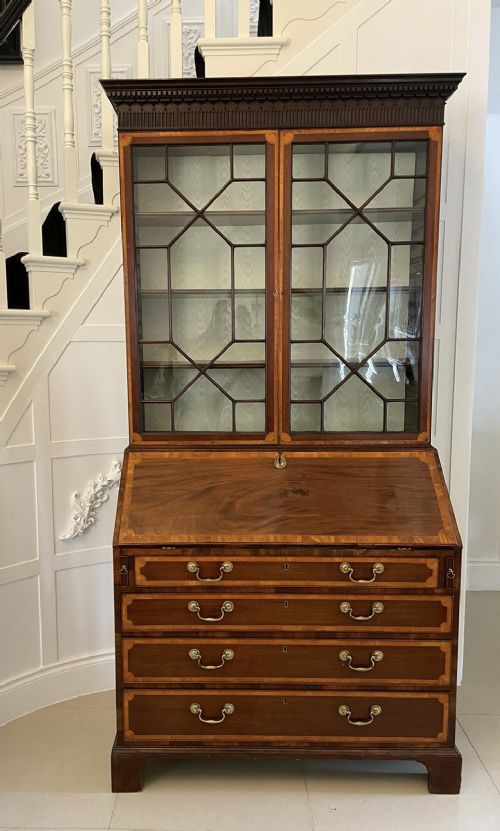
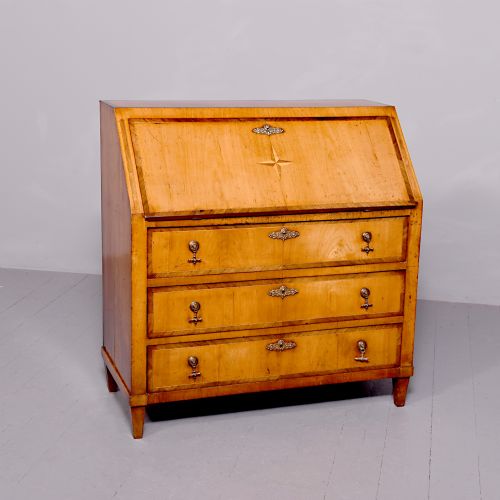
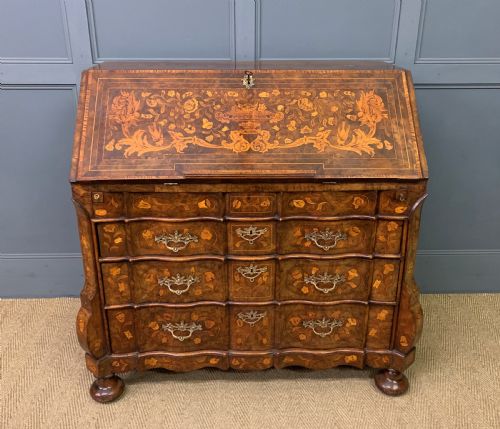
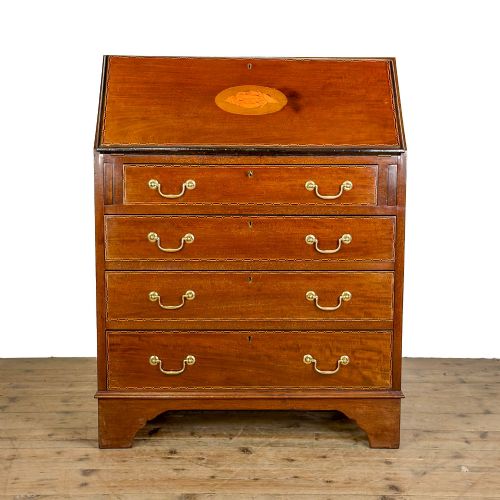
When you search for an inlaid slant front desk, you encounter pieces that function primarily as writing furniture while concealing internal compartments behind a hinged writing flap. These items appear across multiple periods, ranging from seventeenth-century William and Mary examples to eighteenth-century Georgian and Dutch pieces, as well as later Victorian and Edwardian variations.
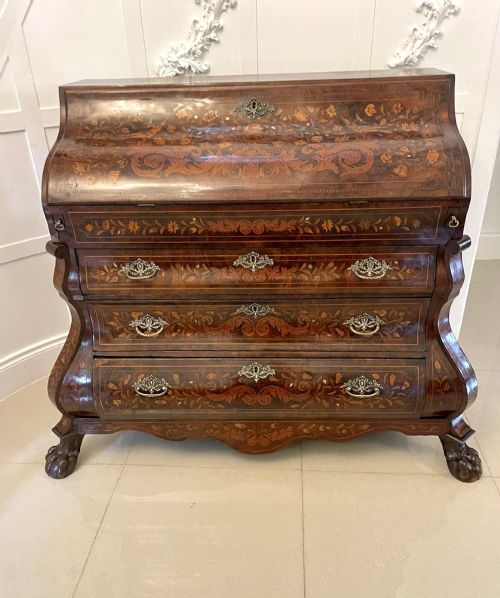
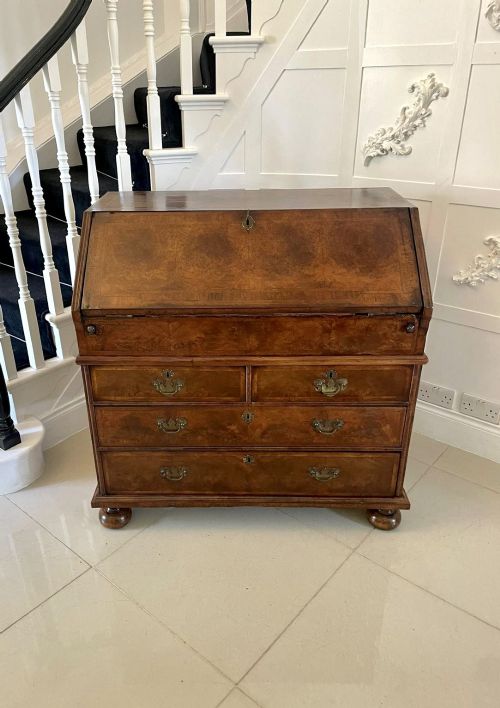
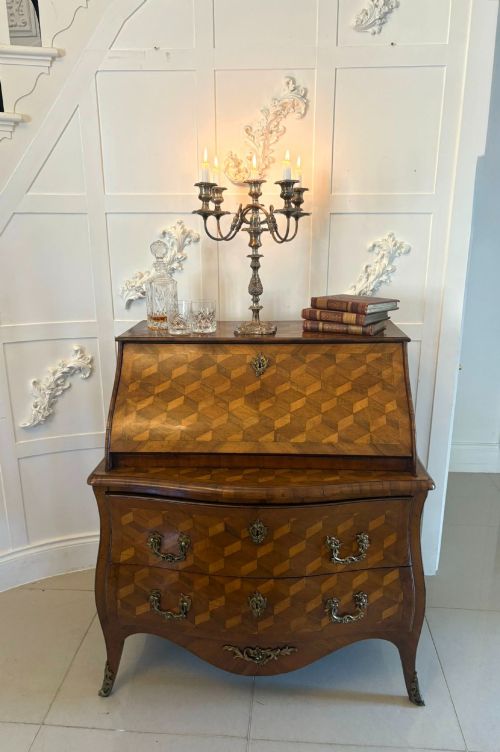
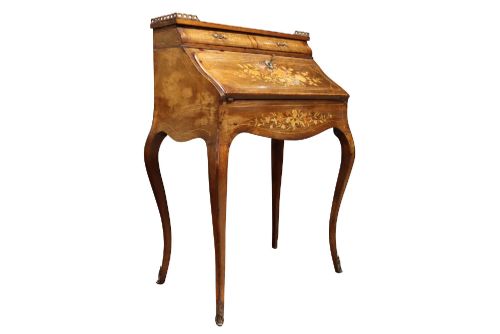
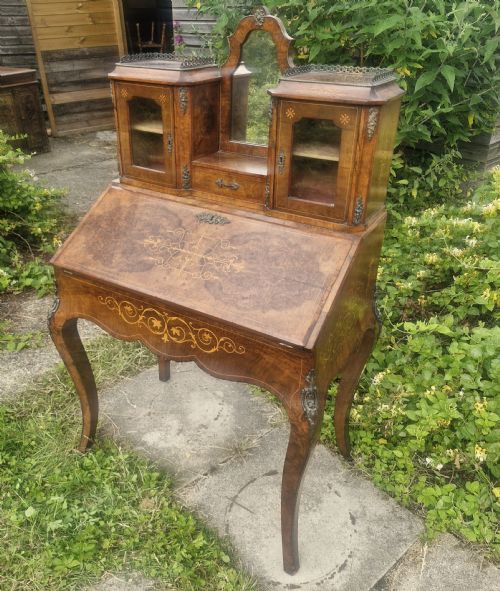
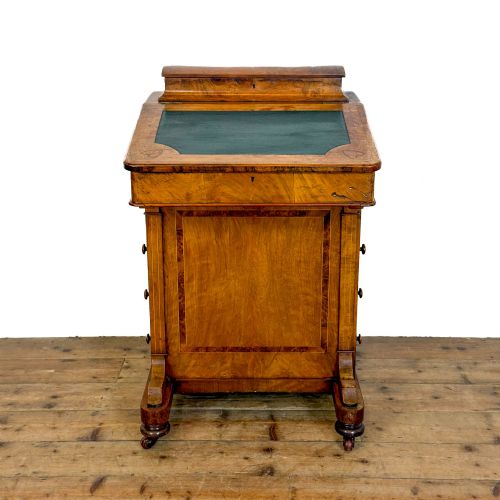
The most common formats on this page include standard bureaux, bureau bookcases with upper shelving sections, and compact writing desks such as the bonheur-du-jour and Davenport. Walnut, mahogany, and rosewood form the primary structural timbers, often enhanced by elaborate floral marquetry, parquetry, or herringbone patterns.
Origin points vary widely among surviving examples, encompassing English workshops, Dutch makers, French ateliers, and Italian regional centres. Each region imparted distinct proportions and decorative vocabulary, from bombe-shaped profiles to straight-sided cabinet forms.
How they were made
Cabinetmakers constructed the carcase using solid primary timbers such as mahogany, walnut, or fruitwood, applying decorative veneers to the exterior surfaces. Marquetry and parquetry designs required meticulous hand-cutting of contrasting woods, including satinwood, tulipwood, and yew, which were then fitted together precisely into the main veneer background.
Brass hardware, including escutcheons, hinges, and carrying handles, provided functional and decorative accents. Interior fitments of writing sections utilised small drawers, pigeonholes, and secret compartments, demonstrating complex joinery executed entirely by hand.
Listings feature woods such as walnut, mahogany, rosewood, fruitwood, and tulipwood across eighteenth- and nineteenth-century pieces.
What varies in quality
The sophistication of the floral marquetry and parquetry work dictates much of the distinction between standard examples and exceptional items. Pieces exhibiting intricate multi-wood pictorial inlays across the fall-front, sides, and interior drawers demonstrate a higher level of artisan skill than those with simple banding or stringing.
Timber selection also governs overall distinction, with burr walnut and figured mahogany veneers commanding greater visual depth. The integration of secondary woods, the preservation of original brass fittings, and the complexity of internal pigeonhole configurations further separate standard cabinetwork from master-level execution.
The Inlaid Slant Front Desk Glossary
- Marquetry
- Decorative veneer work forming pictorial patterns using various coloured woods. This technique adorns many eighteenth-century Dutch and English desk surfaces.
- Parquetry
- Geometric mosaic woodwork arranged in regular patterns like cubes or chequers. It appears frequently on the surfaces of French and continental writing furniture.
- Bonheur-du-jour
- A light ladies writing desk with an enclosed superstructure above the main surface. These compact pieces date predominantly to the nineteenth century.
- Bombe
- A swelling, outward-curved contour found on the front and sides of certain continental desks. This curved profile requires advanced woodworking skill.
- Herringbone
- An arrangement of small veneer strips laid in a V-shaped pattern resembling fish bones. It frames drawer fronts and panels on early walnut furniture.
- Davenport
- A compact pedestal desk featuring a sloping top and side drawers. Victorian examples often incorporate brass inlays and fine rosewood timbers.
Inlaid Slant Front Desk: Frequently Asked Questions
What is a slant front desk?
A slant front desk is a piece of furniture featuring a hinged, angled writing flap that drops down to create a horizontal writing surface.
Behind this flap lies a fitted interior containing small drawers and pigeonholes for correspondence and documents.
How do I identify the period?
Period identification relies on examining timber choices, construction methods, and decorative styles visible across the carcase and interior.
Early pieces often display burr walnut with herringbone banding, whereas later nineteenth-century examples frequently utilise rosewood or mahogany with distinct revival styling.
Where were these desks used?
These desks served primarily in private studies, libraries, and withdrawing rooms as personal writing and correspondence centres.
Their enclosed compartments allowed owners to secure private papers and writing materials when not in use.
How do I care for wood veneers?
Maintaining veneer surfaces requires stable room temperatures and protection from direct sunlight to prevent timber drying and fading.
Applying occasional appropriate wax polish maintains the lustre of the historic wood without harming the original finish.