

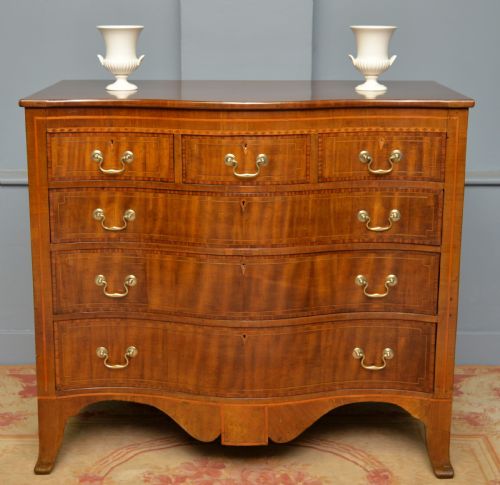


Inlaid Serpentine Commode
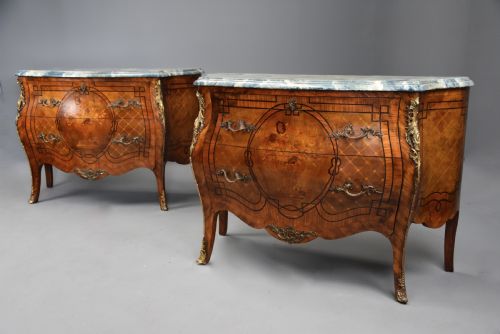
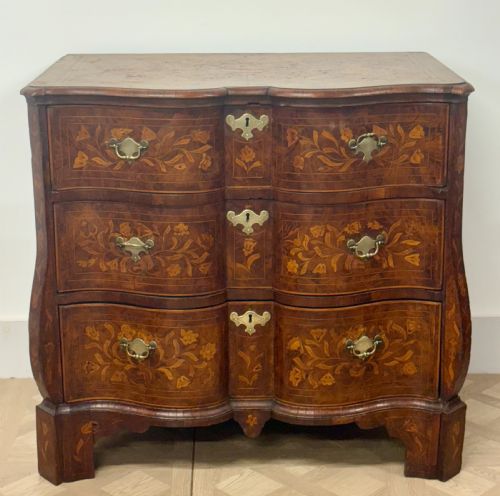
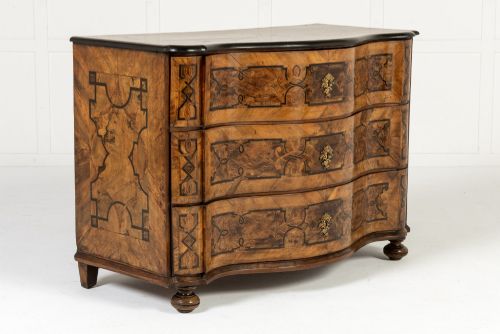
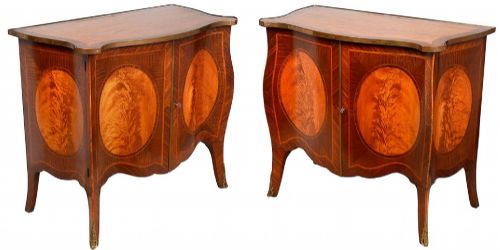
An inlaid serpentine commode brings curving fronts, rich timber grains and intricate marquetry together in a striking statement piece for a room.
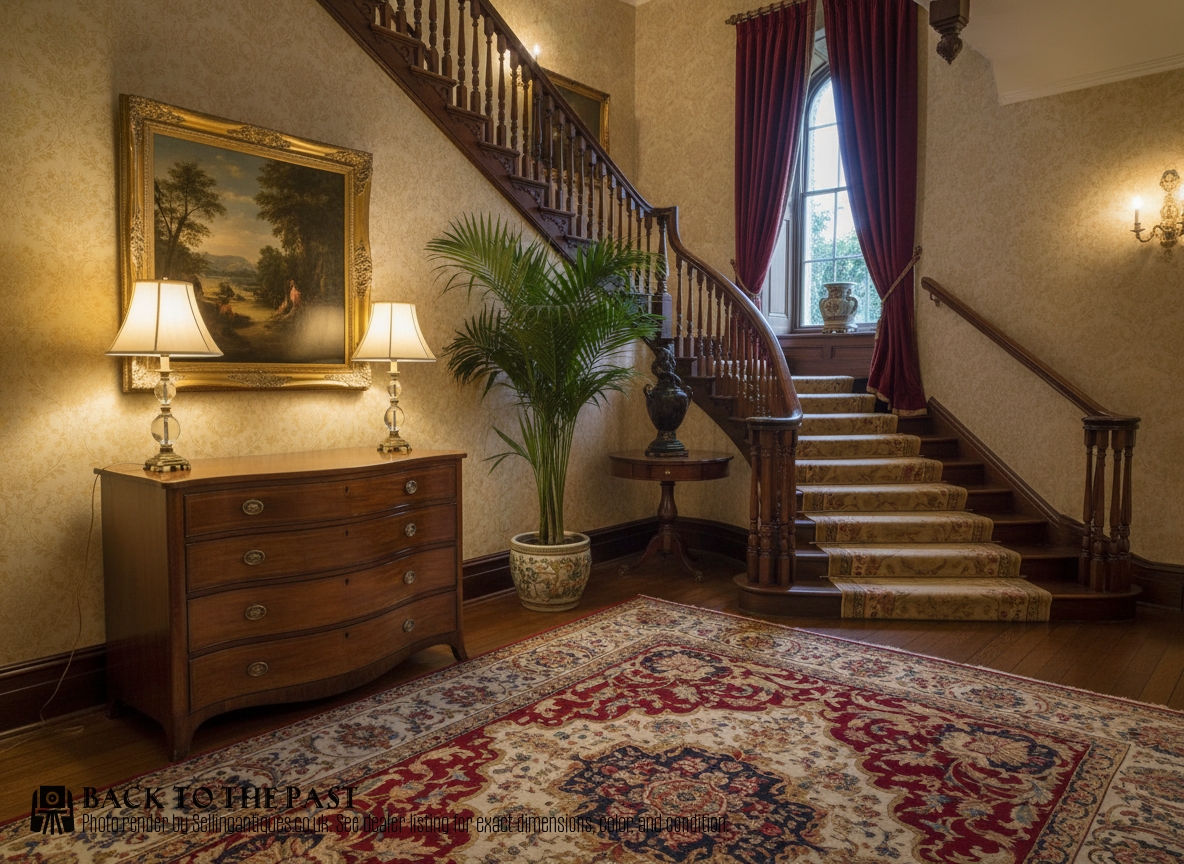
Inlaid Serpentine Commode
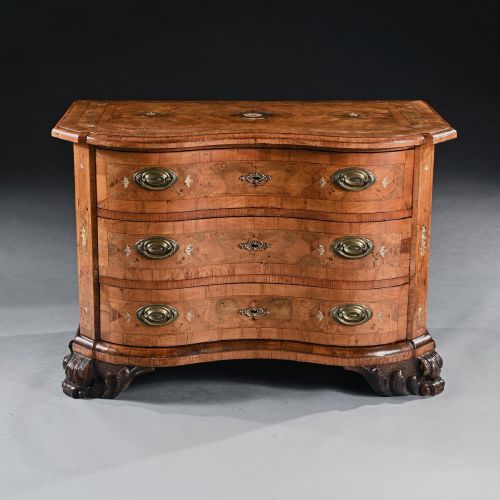
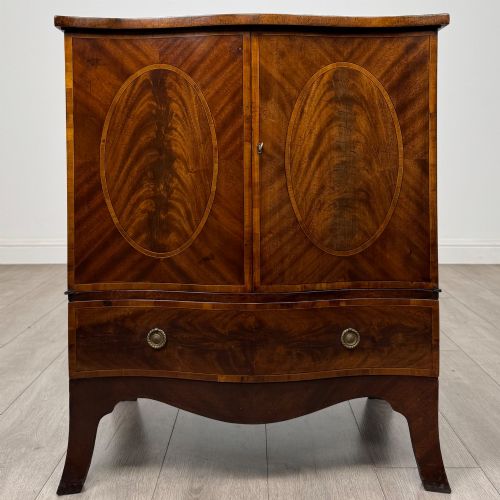
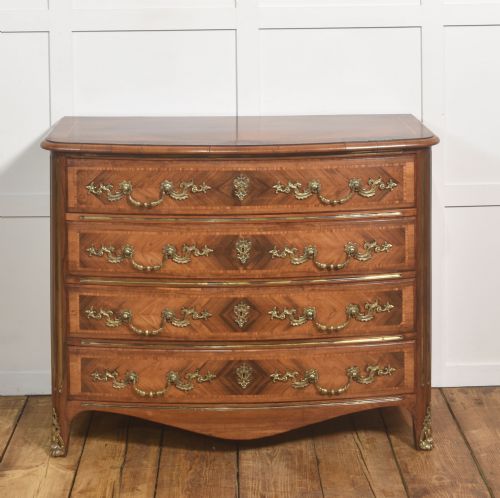
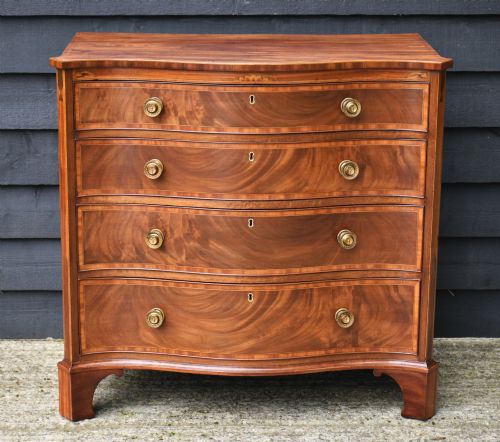
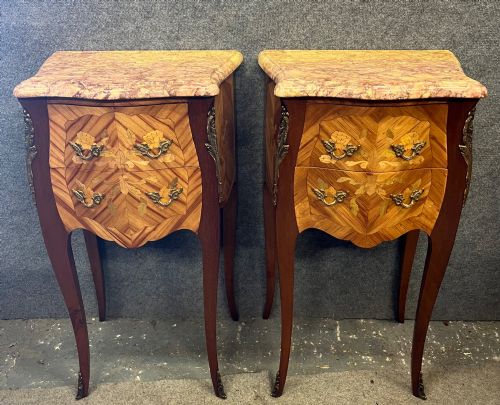
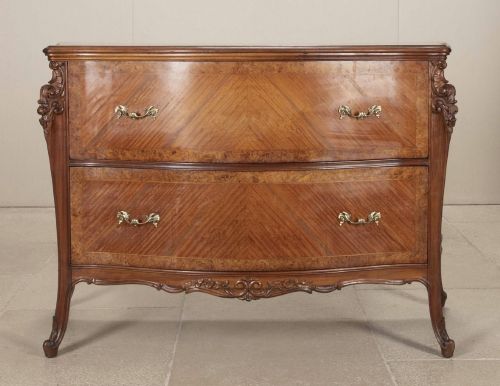
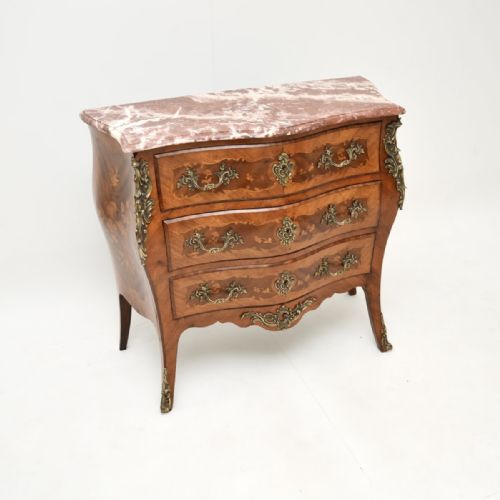
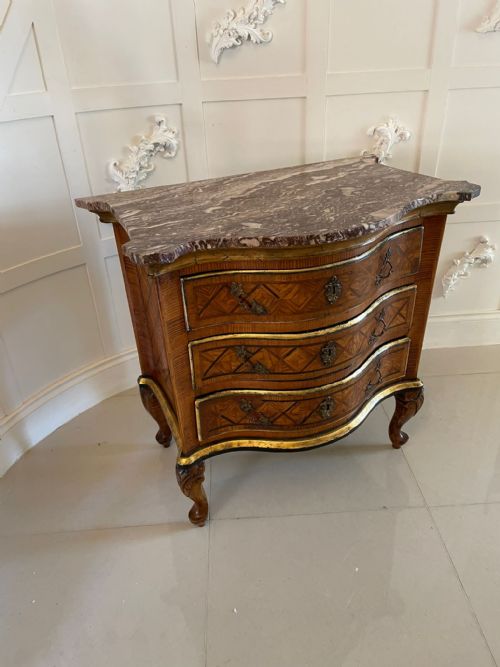
An inlaid serpentine commode is a decorative chest of drawers or cabinet featuring a distinctive undulating front line that curves inward at the centre and outward at the sides. These pieces range from substantial 18th century Georgian mahogany designs to French and continental fruitwood and kingwood examples.
The version most commonly met on this page is the Georgian mahogany or satinwood chest, alongside continental marquetry commodes decorated with floral and geometric patterns. Many examples incorporate shaped marble tops, brass handles and elaborate parquetry work.
Originating as practical yet ornate storage furniture for drawing rooms and bedchambers, these items served to display status and taste through fine cabinet work and timber selection.
What varies in quality
The standard of an inlaid serpentine commode rests upon the precision of the cabinet work where the curved timber meets the frame and drawer dividers. Superior pieces exhibit seamless veneer matching across the undulating contours and crisp, unblemished marquetry cutting.
Listings feature items spanning the eighteenth, nineteenth and early twentieth centuries, constructed from mahogany, walnut, satinwood and marble.
Edwards and Roberts
The Inlaid Serpentine Commode Glossary
- Serpentine
- A furniture front shaped with a convex centre flanked by concave curves, creating a gentle undulating wave. This profile demands advanced woodworking skill to construct accurately.
- Marquetry
- The art of applying thin decorative veneers in wood, ivory or metal to form intricate patterns or pictures on a surface. It differs from inlay by covering the entire background rather than being set into recesses.
- Ormolu
- Gilded bronze mounts used for decorative handles, feet and escutcheons on fine furniture. The technique involves applying a gold amalgam to cast bronze.
- Parquetry
- Geometric wood inlay work arranged in regular patterns such as cubes, triangles or diamonds. This technique creates a structured visual texture across the drawer fronts.
- Bombe
- A swollen or bulging outward profile found on continental European commodes and cabinets. This curved shape requires specialised framing to maintain structural integrity.
Inlaid Serpentine Commode: Frequently Asked Questions
What is a serpentine commode?
A serpentine commode is a drawer-based storage unit characterised by its curving, wave-like front profile. These items function as decorative focal points while providing enclosed compartment space.
Originating in various European workshops, they combine architectural moulding with ornamental marquetry veneers and shaped timber work.
How do I style a commode at home?
These pieces suit reception rooms, hallways or bedrooms where their curving fronts can be viewed without obstruction. Placing a lamp or decorative mirror above enhances their visual presence.
Ensure the surrounding space allows the sweeping lines of the cabinet to remain prominent without overcrowding the room.
Are these pieces French or English?
The selection includes both English Georgian interpretations and continental styles, particularly French Louis XV and Dutch designs. English versions often utilise solid mahogany with understated stringing.
Continental examples frequently feature extensive marquetry, burr walnut, kingwood and shaped marble surfaces.
What woods were used?
Cabinet makers utilised structural timbers like mahogany, walnut and oak as the underlying carcase materials. Fine decorative veneers were then applied across the exterior surfaces.
These veneers included satinwood, harewood, rosewood, kingwood and fruitwoods, often accented with pewter and ivory.