
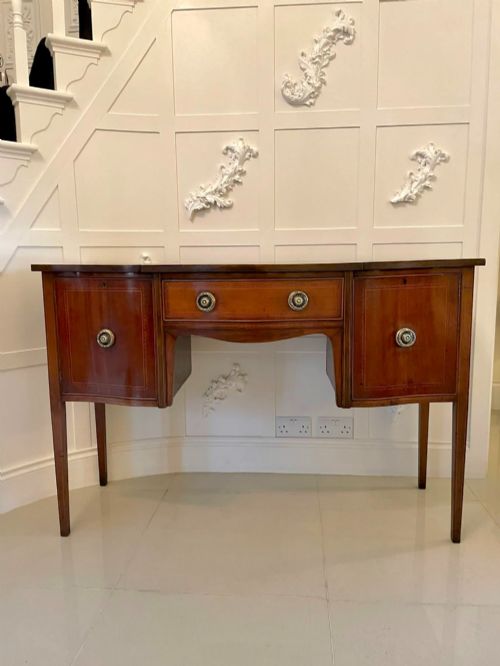
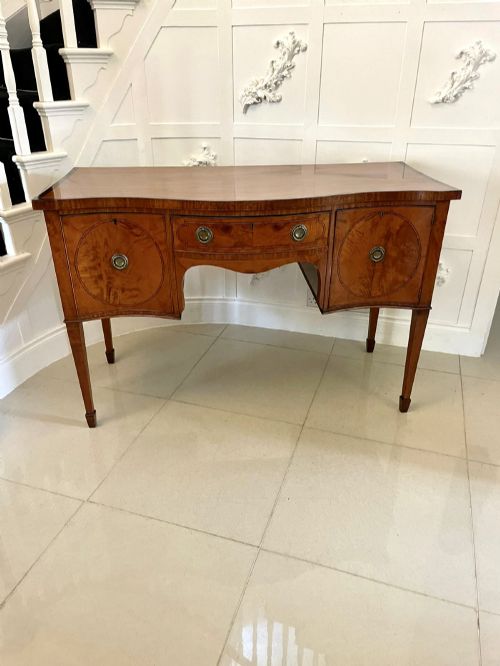
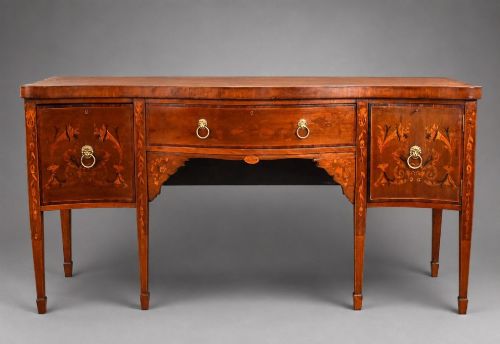
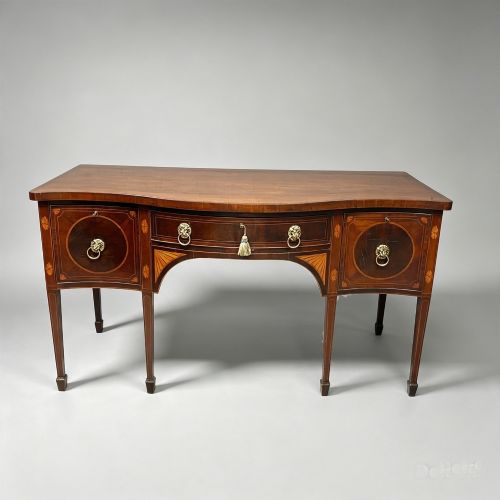



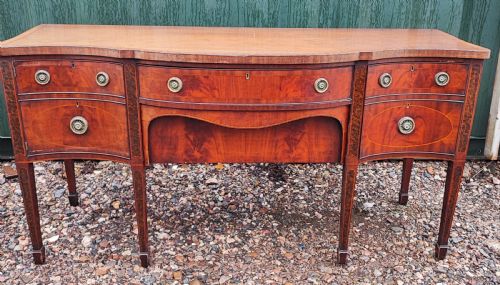


Inlaid Serpentine Buffet
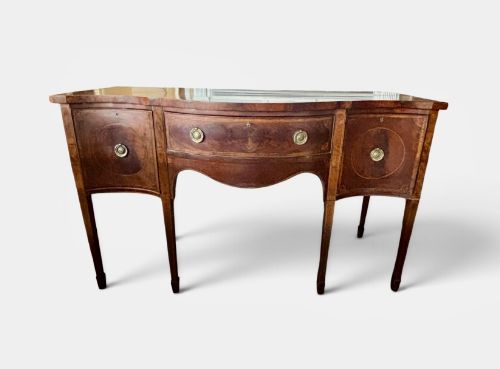
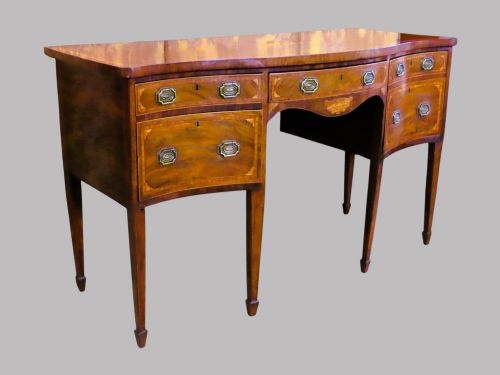
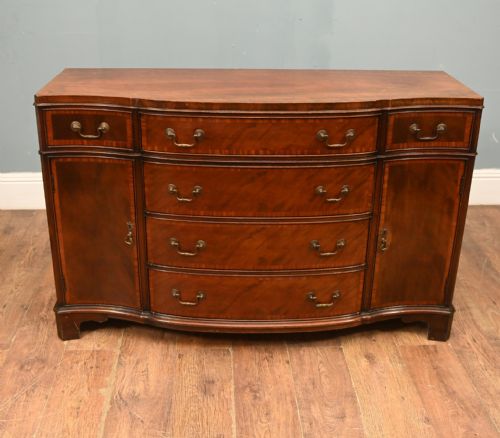
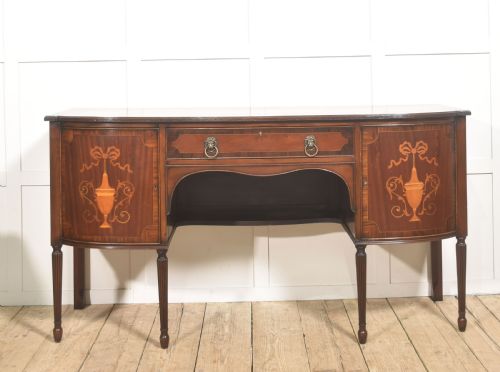
An inlaid serpentine buffet brings fluid curves and fine cabinetwork into a room, offering both generous storage and a striking silhouette.
Inlaid Serpentine Buffet
The search for an inlaid serpentine buffet leads directly to sophisticated dining room furniture defined by undulating fronts and contrasting wood details. These pieces combine the practical surface of a serving table with enclosed cupboard space.
Most examples found here date from the Georgian period through to the Edwardian and Victorian eras, encompassing both original eighteenth-century craftsmanship and later revivals. Mahogany serves as the primary timber, shaped into gentle curves that sweep outward and inward across the facade.
Makers of these sideboards and credenzas utilised varied proportions, ranging from narrow formats to large four-door designs. The overarching characteristic remains the serpentine line, which softens the heavy presence often found in formal dining furniture.
Distinctions in Quality and Execution
Quality rests heavily on the crispness of the serpentine curve and the precision of the timber matching across the front doors and drawers. Superior pieces demonstrate continuous grain flow and immaculate hand-cut inlay rather than printed or superficial decoration.
The choice of secondary timbers and the retention of original brass fittings or ormolu mounts also separate standard production from exhibition pieces. Structural integrity in the curved framework ensures the drawers operate smoothly despite seasonal wood movement.
Some Edwardian cabinetmakers clearly enjoyed testing their geometry, hiding tiny secret drawers behind serpentine curves that defy simple measurement.
The Inlaid Serpentine Buffet Glossary
- Serpentine
- A curved architectural line that sweeps outward in the centre and inward at the sides, creating a wave-like profile on furniture fronts. This contour requires immense skill from the woodworker to shape accurately.
- Inlay
- A technique where pieces of contrasting wood, such as boxwood or satinwood, are inserted into recessed cavities on the primary surface to form decorative patterns. It differs from veneer by sitting flush within the prepared channel.
- Credenza
- A low cabinet, often featuring glass doors or ormolu mounts, used originally for displaying plate or serving food. In later periods, the term overlaps significantly with the form of the sideboard.
- Marquetry
- Elaborate veneer work arranged in pictorial or geometric designs using various coloured woods. This technique often covers the entire front panel of Victorian and revival pieces.
- Flame mahogany
- Timber cut from the fork of the mahogany tree where the branch meets the trunk, producing a distinctive fire-like flame pattern. Cabinetmakers reserved this prized veneer for the most prominent drawer and door faces.
Inlaid Serpentine Buffet: Frequently Asked Questions
How do I date an inlaid serpentine sideboard?
Dating relies on examining the construction methods, drawer linings, and the style of the inlay work. Georgian pieces typically display hand-cut dovetails and understated boxwood stringing.
Later Victorian and Edwardian revival pieces often feature machine-prepared timbers, more eclectic marquetry, and softer secondary woods like pine or oak behind the mahogany facade.
Where were these pieces used in the home?
These pieces functioned primarily in the dining room as serving tables and storage units for heavy silverware, linen, and glassware. Their long surfaces held dishes during large meals before being cleared.
Over time, similar credenza and buffet forms migrated into drawing rooms and reception halls where display became more important than service.
How do I care for antique mahogany and inlay?
Maintenance requires keeping the wood away from direct sunlight and sudden temperature shifts that cause timber to split or veneer to lift. Regular dusting with a dry, soft cloth preserves the wax finish.
Harsh chemical polishes should be avoided entirely, as they strip the historic patina and loosen fragile boxwood and satinwood inlay work.
What is the difference between a sideboard and a credenza?
A sideboard traditionally incorporates a combination of long drawers and deep cupboards designed specifically for dining room service and storage. The form remains long and relatively low to the ground.
A credenza often includes glass-fronted display compartments and ornate ormolu mounts, reflecting its European continental origins and a primary focus on display.