




Dark Wood Serpentine Buffet
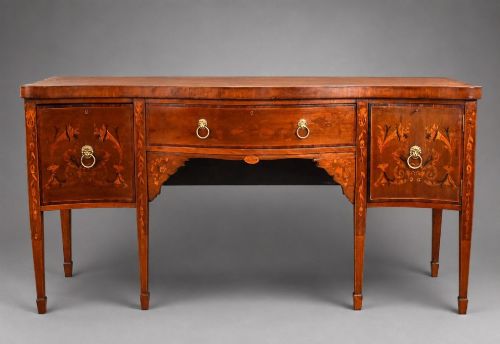
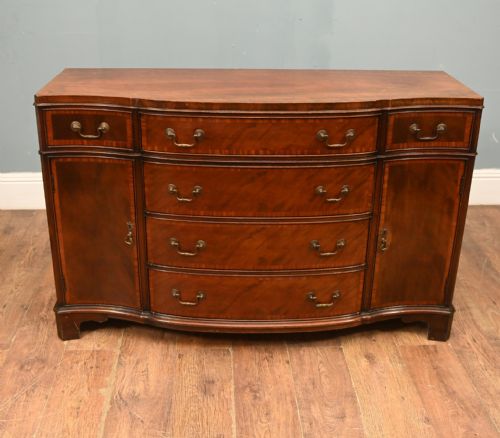
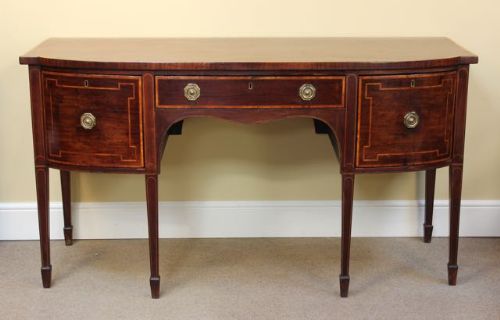
These dark wood serpentine buffet designs offer undulating fronts and rich timber tones, anchoring a dining room with sophisticated period presence.
Dark Wood Serpentine Buffet
A dark wood serpentine buffet brings sweeping curves and substantial storage to a dining space. Pieces matching this description appear across several distinct historical eras, ranging from the eighteenth century to twentieth-century revivals.
The version most commonly met on this page is the mahogany sideboard featuring a curved front. Makers from the Georgian period onward utilised this graceful shape to soften formal dining room interiors.
Makers produced these server forms in various dimensions, from large antique formats down to refined Edwardian iterations. Each variation maintains the signature undulating profile characteristic of serpentine furniture.
Materials and construction methods
Cabinetmakers constructed these sideboards primarily from solid and veneered mahogany, often selecting flame mahogany to create striking grain patterns across the broad front drawers and doors. This figured timber provides the rich reddish-brown tones associated with formal dining furniture.
Craftsmen enhanced the polished wooden surfaces using contrasting stringing and detailed marquetry inlay. Boxwood and satinwood elements frequently outline the drawer fronts and borders, adding geometric crispness to the curving framework.
Makers fitted these substantial servers with cast brass hardware such as ring pulls and backplates. These metal accents complement the dark timber and punctuate the serpentine façade.
Some Edwardian dining rooms required sideboards so expansive that servants practically needed a map to navigate the drawers.
Distinctions in craftsmanship and design
The refinement of the serpentine curve distinguishes superior examples from simpler iterations. A master cabinetmaker managed the transition of the timber grain smoothly around the complex convex and concave contours without interrupting the visual flow.
The choice of surface veneer defines the visual impact of the piece. Selected flame mahogany and crisp boxwood inlay demonstrate a higher tier of workshop production compared to plain timber surfaces.
Gillow
The Dark Wood Serpentine Buffet Glossary
- Serpentine
- A furniture front characterised by a curving shape, featuring a convex centre flanked by concave sides. This undulating profile requires skilled carpentry to execute cleanly.
- Flame mahogany
- A veneer cut from the fork of the mahogany tree where the branch meets the trunk. It displays a distinctive flickering flame pattern prized by period cabinetmakers.
- Boxwood inlay
- Narrow strips of pale yellowish boxwood embedded into darker wood surfaces. Craftsmen utilised this technique to create decorative borders and geometric outlines.
- Revival
- A later stylistic movement that reinterprets historical designs from earlier centuries. Pieces described as revival often date from the Edwardian era or the early twentieth century.
Dark Wood Serpentine Buffet: Frequently Asked Questions
What is a serpentine buffet?
A serpentine buffet is a large dining room serving piece featuring a distinctive curved front. The shape includes outward and inward sweeps that create a graceful profile.
Cabinetmakers designed these forms to hold dining silver, linens, and serving dishes while providing a broad top surface for food presentation.
How do I date a mahogany sideboard?
Dating relies on examining construction techniques, timber selection, and stylistic details. Eighteenth-century examples display hand-cut dovetails and subtle patination developed over generations.
Later revival pieces from the Edwardian period or the nineteen-twenties often incorporate machine-sawn elements and brighter varnish finishes while copying earlier Georgian proportions.
Where were sideboards placed?
These servers traditionally stood against the dining room wall during formal meals. Servants used the top surface to place dishes before serving guests seated at the dining table.
The cupboards and drawers below stored heavy porcelain, cutlery, and table linens close to hand.
What is flame mahogany?
Flame mahogany is a highly figured wood veneer derived from specific sections of the mahogany tree. The grain swirls and catches the light in a pattern resembling flickering fire.
Cabinetmakers reserved this prized timber for the most prominent surfaces, such as drawer fronts and cupboard doors.