




Classical Inlaid Sideboard
A classical inlaid sideboard brings architectural dignity and disciplined geometry to a dining room, combining figured timber with precise decorative banding.
Classical Inlaid Sideboard
When you search for a classical inlaid sideboard, you are looking at substantial storage furniture defined by balanced proportions and contrasting wood veneers. The pieces seen here span the Georgian, Regency, Victorian, and Edwardian periods, frequently reflecting Sheraton Revival and Neoclassical design principles.
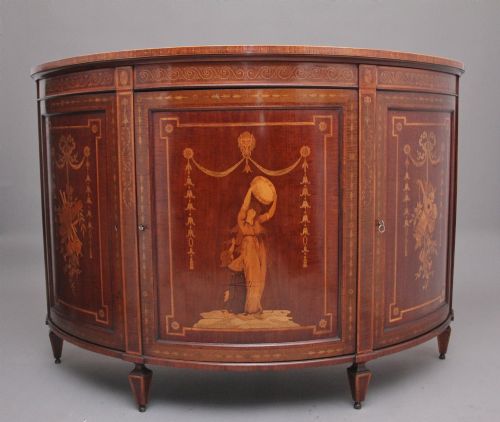
The most common formats on this page include mahogany and satinwood sideboards, alongside breakfront credenzas and demi-lune side cabinets. These items serve primarily as formal serving surfaces and dining room storage, utilising pedestal bases or serpentine and straight fronts.
Origins represented in the current selection range from English workshops to Italian makers. The overarching aesthetic relies on classical symmetry, urn motifs, and banded borders rather than heavy carving.
Materials and construction methods
Cabinet makers relied heavily on dense primary timbers such as mahogany, walnut, and satinwood, applying contrasting veneers to create visual depth. Boxwood and marquetry inlay were then carefully fitted into recessed channels to form geometric lines, swags, and classical emblems.
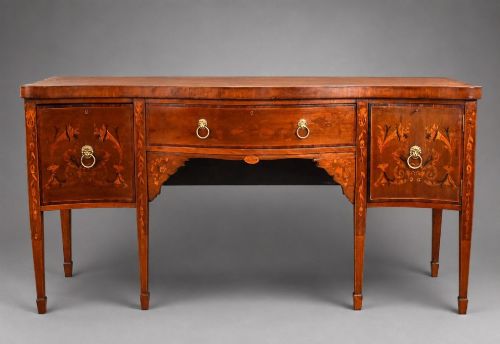
Secondary detailing often incorporates brass hardware, such as lion mask ring pulls and delicate gallery rails, fixed securely to the primary structure. Surface decoration sometimes includes hand-painted floral panels or ebonised highlights to enhance the Neoclassical palette.
Listings feature mahogany, satinwood, and walnut, decorated with boxwood marquetry inlay.
Distinctions in craftsmanship
Quality in these pieces is dictated by the precision of the timber selection and the execution of the inlay work. Finer examples show seamless integration of contrasting boxwood lines and tight marquetry, whereas lesser pieces display crude joins or lifted veneer edges.
The architectural integrity of the carcase, including the weight of the timber and the neatness of internal drawer linings, separates standard utility items from exhibition grade furniture.
Pietro Ferrario·Edwards and Roberts
The Classical Inlaid Sideboard Glossary
- Marquetry inlay
- Decorative patterns formed by fitting small pieces of veneer into a prepared wooden surface. This technique allows for complex pictorial or geometric designs using varied wood tones.
- Satinwood
- A lustrous, fine-grained timber with a naturally golden sheen, frequently utilised in late eighteenth and nineteenth century cabinet making. It provides a bright contrasting background for darker banded inlays.
- Serpentine front
- A furniture front characterised by a convex centre flanked by concave curves. This undulating shape requires advanced woodworking skill to construct accurately.
- Breakfront
- A large piece of furniture where the central section projects forward from the flanking cabinets. This configuration creates a distinct architectural shadow line.
Classical Inlaid Sideboard: Frequently Asked Questions
What is a classical inlaid sideboard?
A classical inlaid sideboard is a large storage piece for dining rooms, characterised by symmetrical proportions and contrasting decorative wood banding.
These items draw on Georgian, Regency, and Sheraton Revival design traditions, using timber varieties like mahogany and satinwood.
How do I date a sideboard?
Dating relies on observing the primary wood species, construction techniques, and decorative motifs present in the piece. Georgian and Regency examples tend to feature linear mahogany structures, while later nineteenth century revivals incorporate painted satinwood and elaborate marquetry.
Examining internal drawer construction and secondary timbers provides further confirmation of the period of manufacture.
Where were these sideboards placed?
They were traditionally positioned against the dining room wall to hold serving dishes, silver, and glassware during formal meals.
In modern interiors, they function similarly in dining spaces or serve as prominent storage credenzas in large hallways and living rooms.
How do I care for inlaid wood?
Inlaid surfaces require protection from direct sunlight and extreme humidity fluctuations to prevent the delicate veneer and boxwood lines from drying out and lifting.
Applying a traditional beeswax polish occasionally helps nourish the timber and maintain the natural sheen of the polished surface.
What is the difference between a sideboard and a credenza?
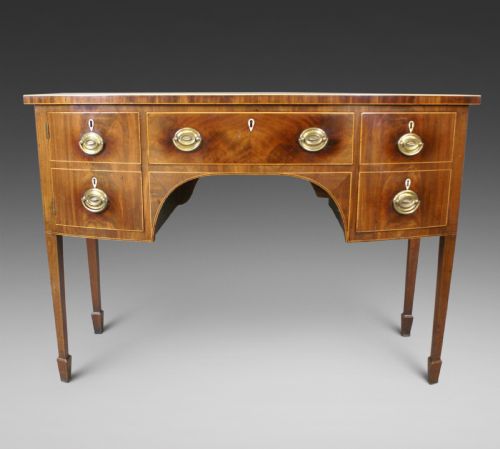
Sideboards are typically long dining room pieces designed specifically for serving food and storing tableware, often featuring central drawers flanked by cupboards.
Credenzas historically lacked legs, sitting low to the ground with sliding or hinged doors, though Victorian adaptations often introduced breakfront shapes and ebonised finishes.