
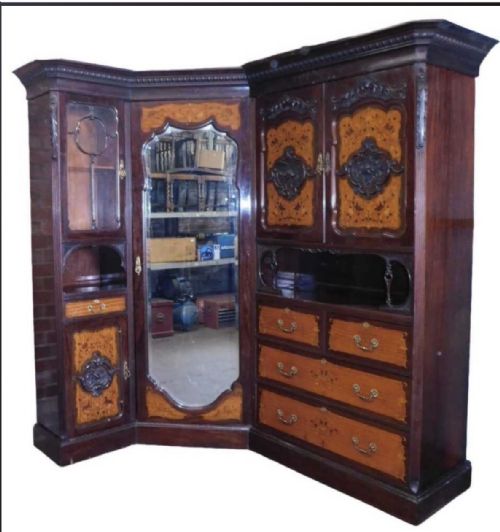


Inlaid Satinwood Armoire
An inlaid satinwood armoire brings warmth and refined detail to a bedroom, offering substantial storage with notable decorative flair.
Inlaid Satinwood Armoire
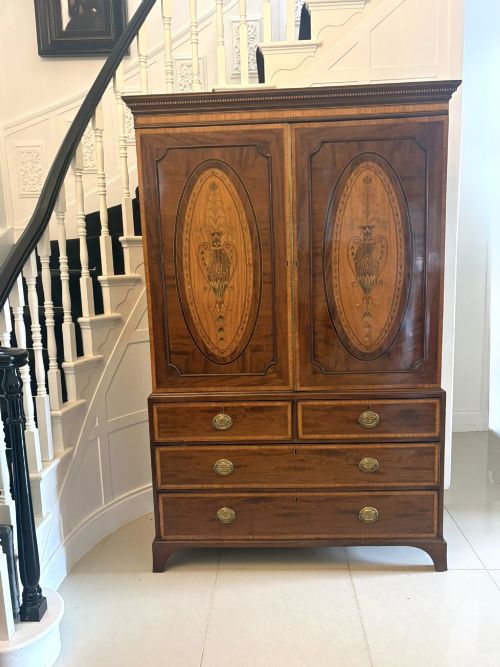
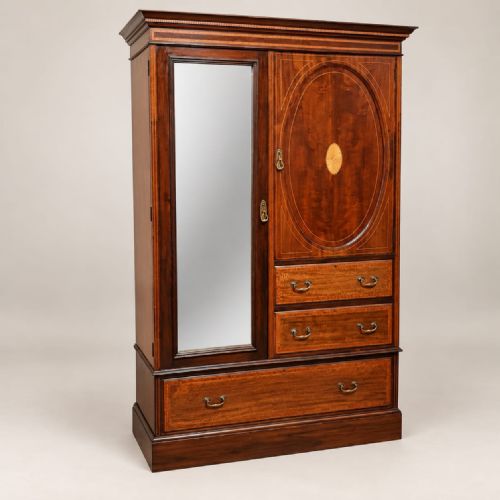
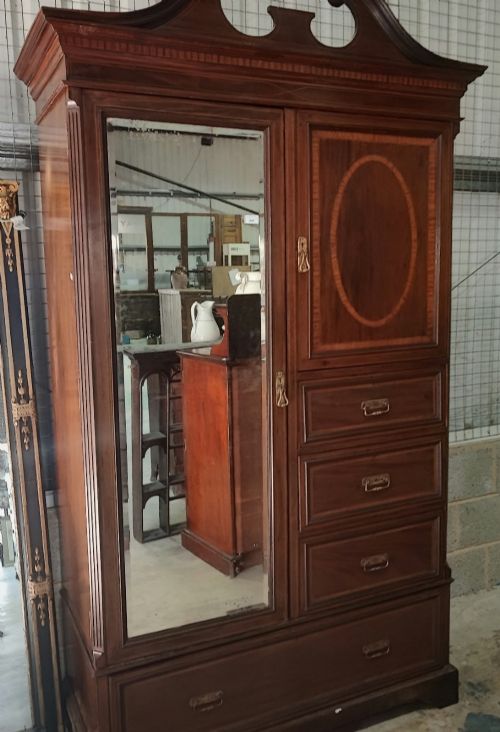
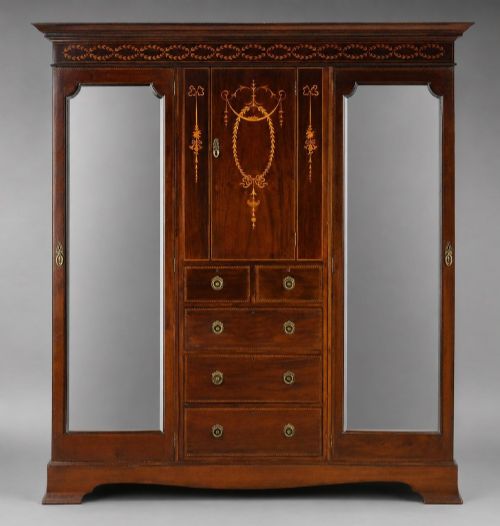
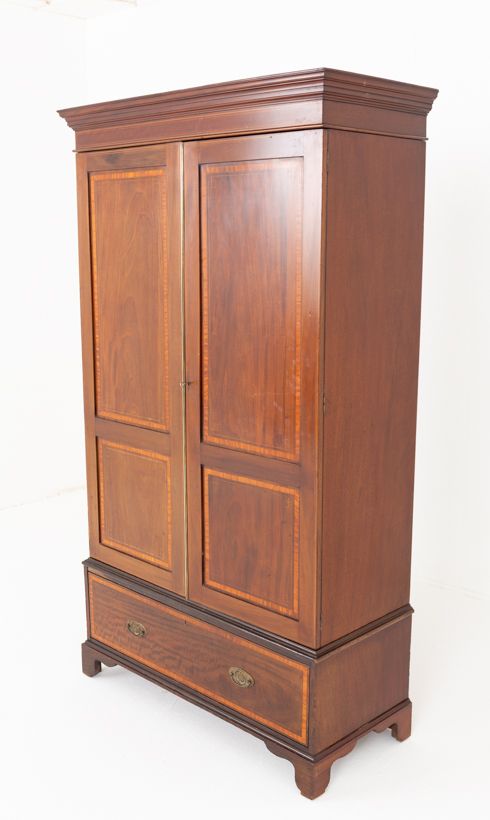
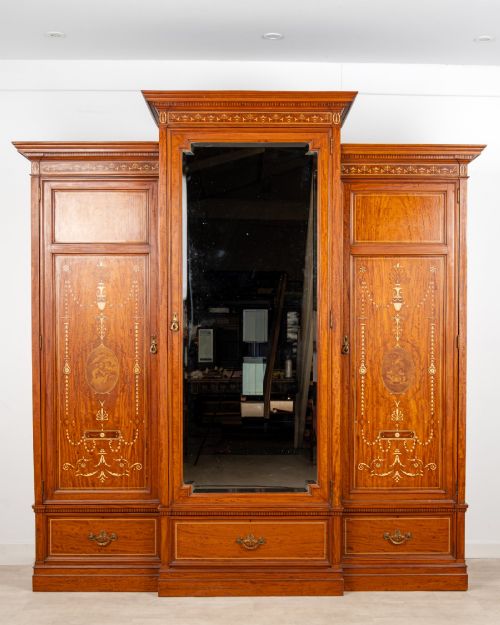
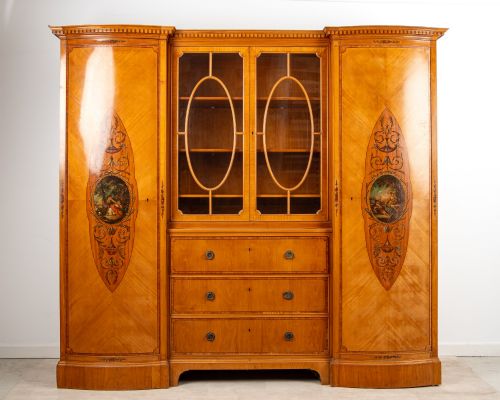
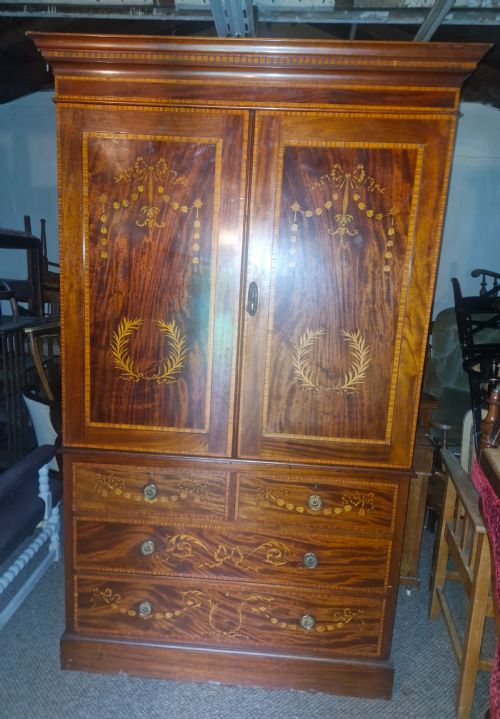
When searching for an inlaid satinwood armoire, buyers encounter large wardrobe furniture primarily spanning the Georgian, Victorian, and Edwardian periods. These tall pieces frequently appear as triple wardrobes, compactums, and linen presses.
The form developed to house clothing and linens in grand domestic interiors, often combining hanging space with internal drawers and sliding trays. Many examples showcase the revival of Sheraton styles alongside typical Edwardian and Victorian proportions.
Makers such as Edwards and Roberts, Druce and Co., and Maples and Co. produced significant iterations of these wardrobes, combining utility with decorative veneering.
How They Were Made
Construction relies heavily on a mahogany or satinwood carcass embellished with contrasting boxwood and rosewood stringing. Artisans applied fine veneers to larger surfaces to create geometric banding and decorative panels.
Several grand wardrobes hide entire bedroom suites within their timber frames, ready for matching morning routines.
What Varies in Quality
Quality rests in the precision of the timber matching and the subtlety of the contrasting stringing. Superior examples display seamless veneering across large breakfront surfaces without lifting or cracking.
The complexity of the interior fittings, such as multi-section linen presses and integrated drawers, distinguishes standard wardrobes from bespoke commissions by prominent cabinet makers.
Edwards and Roberts·Druce and Co.·Maples and Co.
The Inlaid Satinwood Armoire Glossary
- Compactum
- A multi-section wardrobe designed to maximise internal storage with a combination of hanging space, drawers, and shelves. These large pieces provide comprehensive bedroom storage.
- Linen press
- A tall cupboard featuring upper sliding trays for folded textiles and lower drawers for bulkier garments. Georgian and Victorian examples often integrate satinwood banding.
- Marquetry
- The art of applying pieces of veneer to a structure to form decorative patterns and pictorial designs. Craftsmen utilised contrasting timbers like rosewood and boxwood.
- Stringing
- Thin inlay lines of contrasting wood used to outline panels and drawers on case furniture. This technique defines the edges of satinwood surfaces.
- Breakfront
- A piece of furniture featuring a central section that projects forward from the flanking sides. This architectural layout adds depth and presence to large wardrobes.
Inlaid Satinwood Armoire: Frequently Asked Questions
How do I date an inlaid satinwood armoire?
Dating relies on stylistic clues, construction methods, and timber choices typical of specific eras. Georgian and George III pieces generally feature heavy cornices and banded mahogany, whilst Edwardian examples often display painted panels and lighter satinwood veneers.
Cabinet construction also shifts over time, moving from hand-cut dovetails in earlier centuries to more standardised machine-assisted joinery by the nineteen-hundreds.
Can these large wardrobes be dismantled for transport?
Many larger wardrobes and compactums were constructed to dismantle into sections for ease of movement and installation. Cornices, plinths, and individual side wings often separate from the central carcass.
Checking the construction reveals whether panels bolt together internally or remain fixed as a single solid unit.
What is the difference between a wardrobe and a compactum?
A standard wardrobe focuses primarily on vertical hanging space behind large panelled or mirrored doors. A compactum incorporates a multi-functional layout that includes linen slides, small drawers, and cupboards within the same footprint.
This makes the compactum a more versatile piece of bedroom furniture for storing diverse types of clothing.
How should I care for satinwood furniture?
Satinwood benefits from placement away from direct sunlight and strong heat sources to prevent the timber and delicate veneers from drying out. Regular dusting with a soft, dry cloth maintains the polished finish.
Occasional application of appropriate wax feeds the wood without building up heavy residues on the fine inlay.