
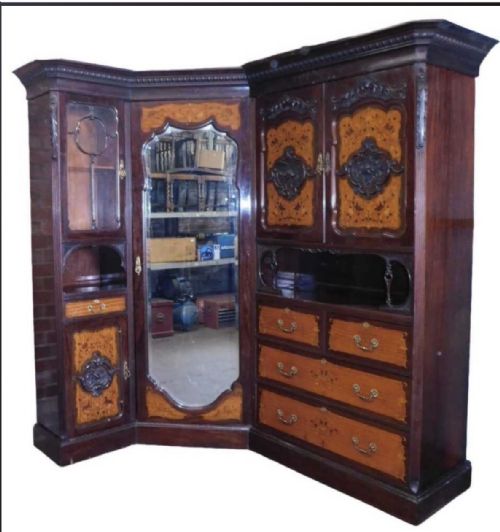


Satinwood Compactum Wardrobe
A satinwood compactum wardrobe is a capacious fitted piece offering hanging space, drawers, and shelving, prized for its pale figured timber and clever internal layout.
Satinwood Compactum Wardrobe
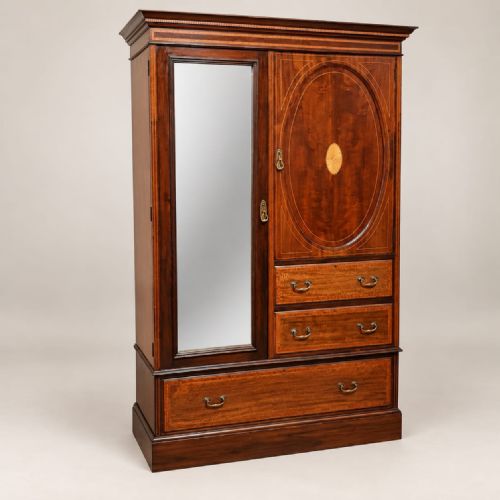
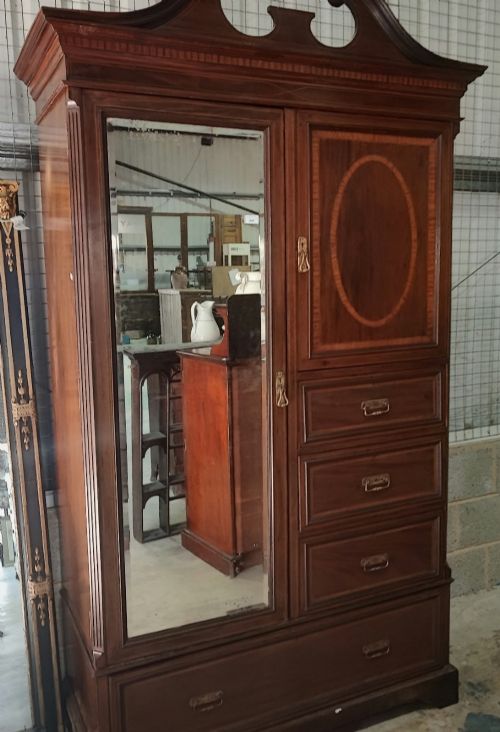
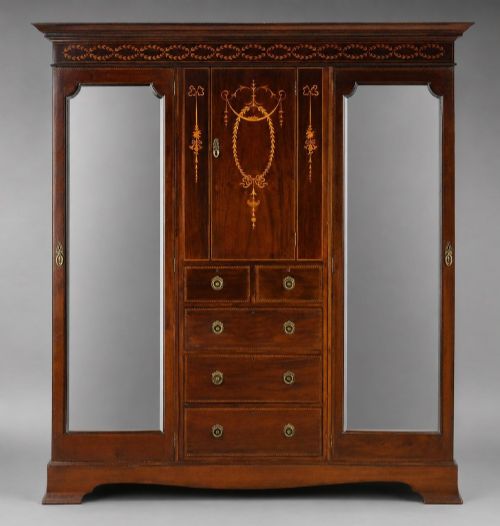
When searching for a satinwood compactum wardrobe, buyers encounter large multisection clothes storage pieces designed to combine the functions of a wardrobe, chest of drawers, and sometimes a tallboy into a single unified item.
The versions most commonly met on this page date from the Victorian and Edwardian periods, frequently displaying Sheraton Revival styling or Aesthetic Movement influences alongside the characteristic pale timber.
These substantial pieces frequently incorporate mirrored doors, brass hardware, and internal sliding trays, reflecting the sophisticated dressing requirements of the late nineteenth and early twentieth centuries.
How they were made
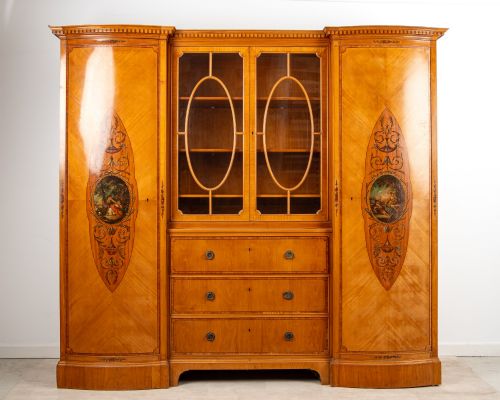
Cabinet makers utilised timber veneer over sturdy carcase woods like mahogany, applying contrasting bandings and marquetry inlays to create decorative surface patterns on the doors and drawer fronts.
Mirrored glass panels were frequently integrated into the central doors, whilst brass fittings secured the doors and allowed internal drawers to operate smoothly within the multisection carcases.
Some wardrobes conceal internal shirt drawers behind locked mirrored doors, keeping morning routines strictly private.
What varies in quality
The distinction between standard commercial output and the finest examples lies in the selection of figured wood, the precision of the marquetry inlay, and the complexity of the internal configuration.
Workshops known for high-end production achieved superior results through heavier brass hardware, better-finished interior sliding trays, and more ambitious breakfront or concaved architectural carcase designs.
Edwards and Roberts·Heal's·Maples & Co·Gillows·Shapland & Petter
The Satinwood Compactum Wardrobe Glossary
- Compactum
- A large multisection wardrobe designed to provide comprehensive clothing storage including hanging space, drawers, and shelves.
- Satinwood
- A pale, hard timber with a natural sheen, frequently used as a veneer or for solid decorative elements in cabinet making.
- Marquetry
- The art of applying pieces of veneer to a structure to form decorative patterns and pictorial designs.
- Breakfront
- A piece of furniture having a central section that projects forward from the flanking sections.
- Sheraton Revival
- A late nineteenth-century design style drawing inspiration from the lightness and classical ornamentation of late eighteenth-century furniture.
Satinwood Compactum Wardrobe: Frequently Asked Questions
What is a compactum wardrobe?
A compactum wardrobe is a large multisection piece of furniture designed to house hanging garments, drawers, and shelving within a single integrated unit. It offers comprehensive clothing storage that surpasses standard standalone wardrobes.
These pieces were developed to maximise bedroom storage efficiency. They often combine the functions of a tallboy and a wardrobe in one substantial footprint.
How do I care for satinwood?
Satinwood requires gentle cleaning with a soft, dry cloth to remove dust and prevent the buildup of grime on the polished surface. Avoid placing the timber in direct sunlight or near heat sources to prevent fading and veneer lifting.
Applying a traditional beeswax polish occasionally helps maintain the lustre of the wood. Excessive moisture should be strictly avoided during any routine maintenance.
Are these wardrobes easy to dismantle?
Many large wardrobes from this period were constructed with modular or dismantlable carcases to allow for easier transport and installation in domestic rooms. However, the complexity of breaking down a multisection piece depends on the specific maker and internal framing.
Professional assistance is often recommended for moving these heavy items safely. Careful labelling of sections during disassembly ensures correct reassembly.
How do I distinguish Edwardian from Victorian examples?
Victorian examples tend to display heavier proportions, deeper colour tones in the timbers, and robust ornamentation such as elaborate breakfront cornices and carved mouldings. Aesthetic Movement and early Sheraton Revival influences also appear frequently in this era.
Edwardian pieces often feature lighter, airier designs with painted panels, delicate satinwood veneers, and simpler neoclassical stringing. The overall construction reflects a shift towards brighter, more refined domestic interiors.