



Vintage Satinwood Wardrobe
These vintage satinwood wardrobe pieces offer figured timbers and refined storage, bringing period character and practical depth to the bedroom.
Vintage Satinwood Wardrobe
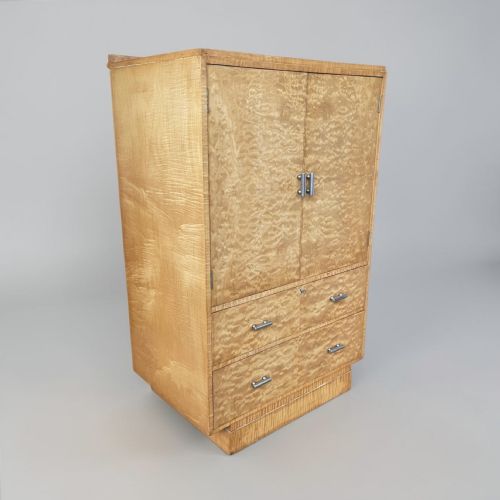
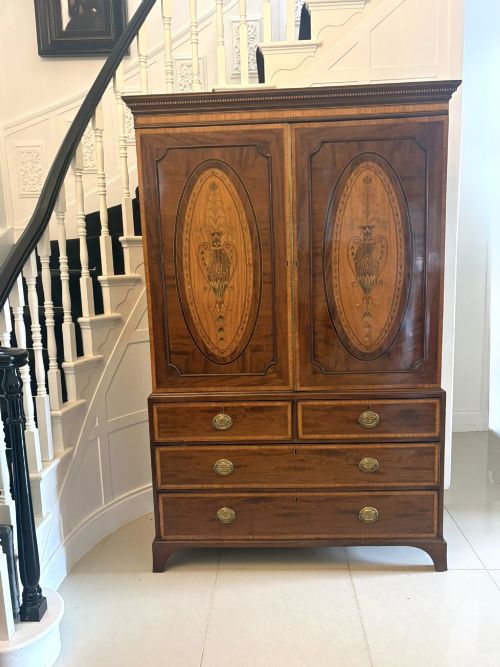
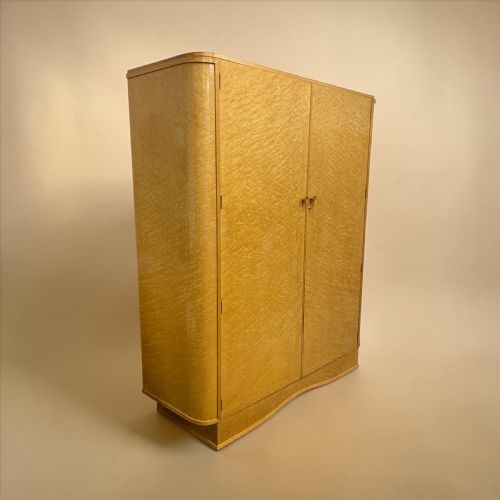
When buyers search for a vintage satinwood wardrobe, they encounter grand armoires, compactums, and linen presses spanning the Edwardian period, Art Deco era, and the nineteenth century. These large bedroom storage pieces combine substantial hanging space with internal shelving and drawers, often incorporating mirrored doors into their facades.
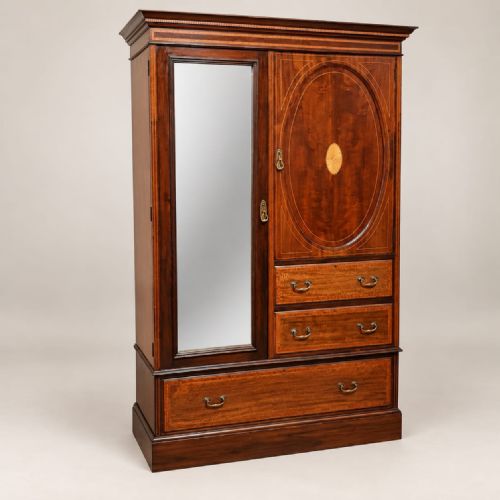
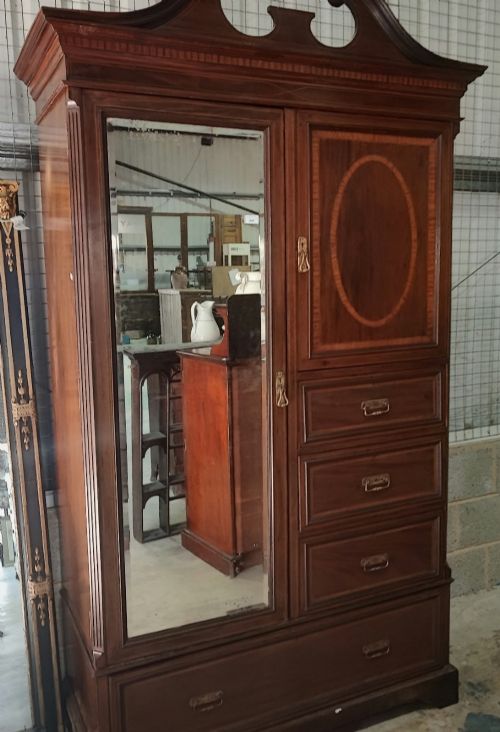
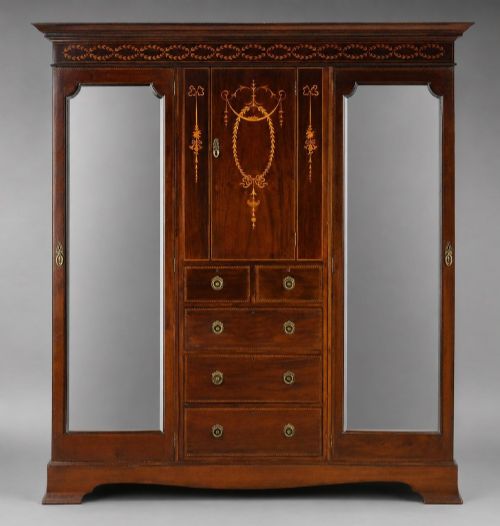
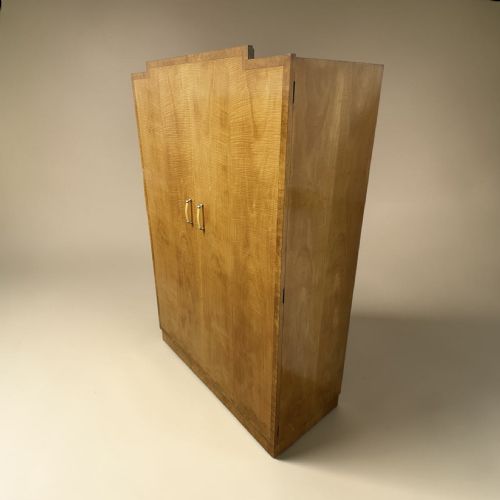
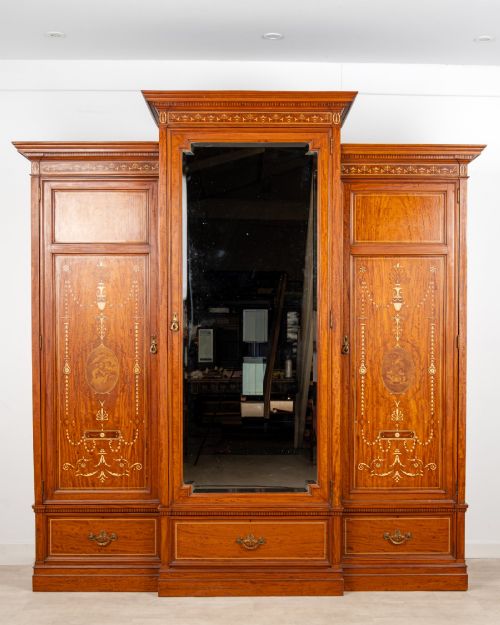
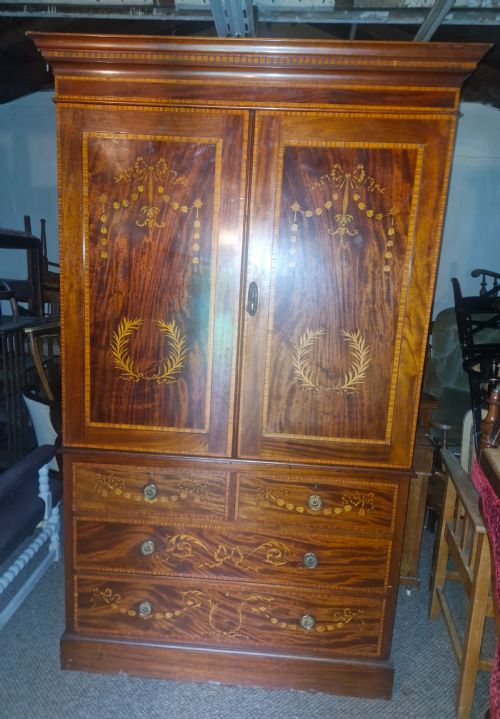
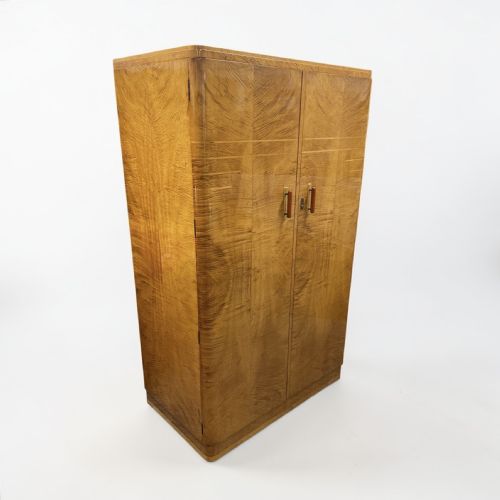
The Edwardian pieces on this page heavily feature mahogany carcasses set with satinwood panels and delicate stringing, reflecting a revival of Sheraton styles. Art Deco examples from the nineteen thirties lean towards streamlined geometric forms, while earlier nineteenth-century items introduce deep linen presses and compactum configurations.
How they were made
Cabinet makers constructed these wardrobes using sturdy timber foundations of mahogany or birch, onto which they applied finely figured satinwood veneers and contrasting bandings. Brass handles, hinges, and hanging rails provide functional metallic contrast to the polished wooden surfaces.
Many examples integrate large bevelled mirror glass panels into the doors, requiring precise framing to support the heavy glass safely. Inlaid details utilise various contrasting timbers to create floral or geometric motifs across the front panels.
Jean Faure signed this timber with Parisian flair.
What varies in quality
Quality reveals itself in the choice of timber and the precision of the cabinet work, particularly in how the satinwood veneer is selected and matched across wide doors. Superior pieces display crisp marquetry, tight joints, and original brass hardware that operates smoothly.
The complexity of the internal configuration also distinguishes the standard of manufacture, with multi-section compactums and linen presses offering sophisticated internal drawer arrangements and shelving behind the main doors.
Edwards and Roberts·Waring and Gillow·Druce and Co·Heal s·Jean Faure·Maples and Co
The Vintage Satinwood Wardrobe Glossary
- Satinwood
- A dense, lustrous hardwood known for its pale yellow colour and natural sheen, frequently used as a veneer on fine cabinet furniture.
- Compactum
- A large fitted wardrobe that incorporates a combination of hanging space, linen shelves, and internal drawers within a single carcass.
- Linen Press
- A tall storage piece featuring upper sliding trays or shelves enclosed by doors, positioned above a base section fitted with wider drawers.
- Marquetry
- The art of applying decorative veneer pieces to a structural surface to create intricate pictures or geometric patterns.
- Stringing
- Thin inlay lines of contrasting wood used to outline panels and drawers on Georgian and Edwardian cabinet furniture.
Vintage Satinwood Wardrobe: Frequently Asked Questions
How do I clean satinwood?
Dust the surface regularly with a soft, dry cloth to prevent dirt accumulation on the delicate veneer.
Apply a quality beeswax polish sparingly every few months to nourish the timber and maintain its natural lustre.
Can these wardrobes be dismantled?
Many large wardrobes and compactums are built to break down into modular sections for easier transport and installation.
Check the construction of the specific piece to confirm whether the cornice, base, and side panels separate independently.
What is a compactum wardrobe?
A compactum is a multi-functional storage unit designed to hold various types of clothing within one enclosed footprint.
These pieces typically combine hanging space with dedicated compartments for folded garments, shoes, and smaller items.
How to date Edwardian satinwood?
Edwardian pieces often display Sheraton Revival influences with lighter mahogany foundations, satinwood banding, and inlaid floral motifs.
Examine the internal drawer construction and hardware styles for manufacturing methods characteristic of the early twentieth century.