


Inlaid Rosewood Writing Table
An inlaid rosewood writing table brings refined nineteenth-century craftsmanship into a modern interior.
Inlaid Rosewood Writing Table
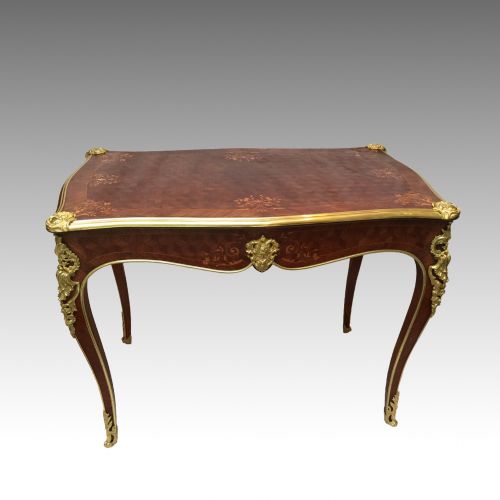
When you search for an inlaid rosewood writing table, you are looking at nineteenth-century and Edwardian library desks, lady's writing furniture, and freestanding centre tables. These pieces originated in English workshops and French cabinet-makers' studios during the Regency, Victorian, and Edwardian eras.
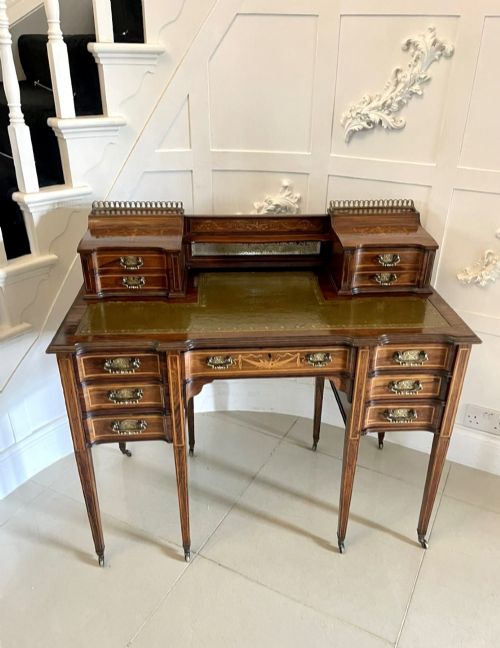
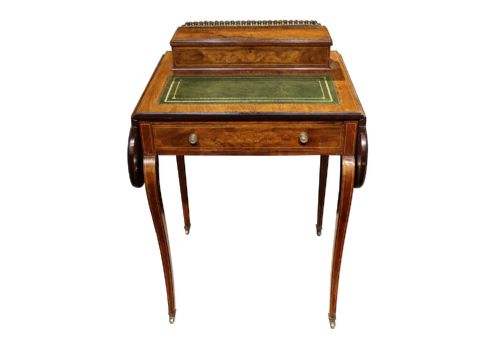
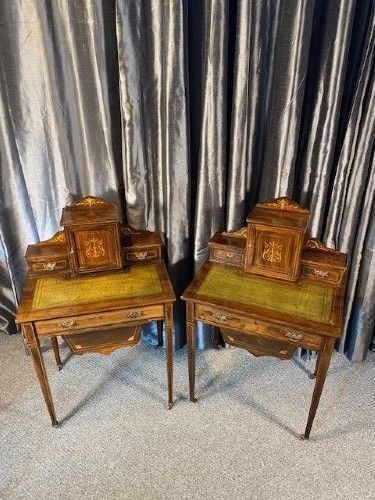
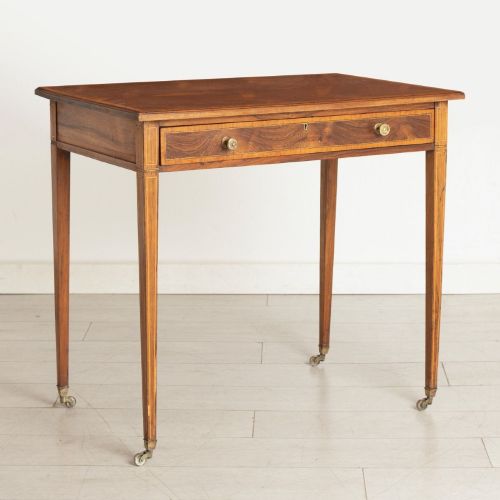
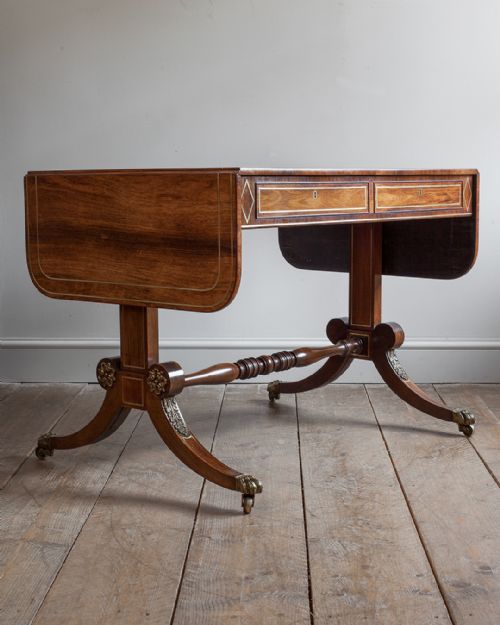
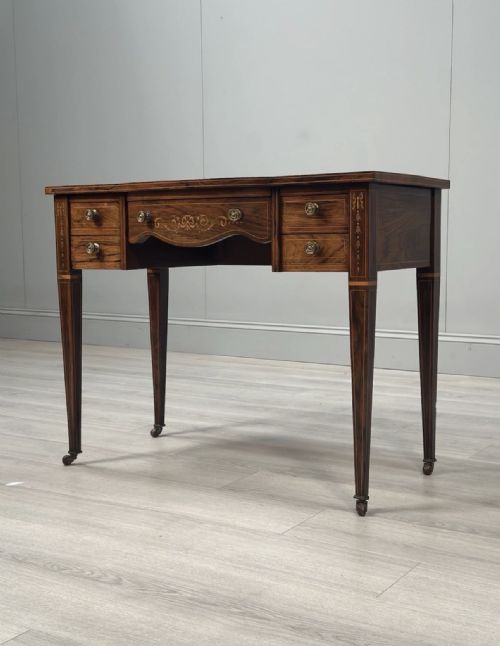
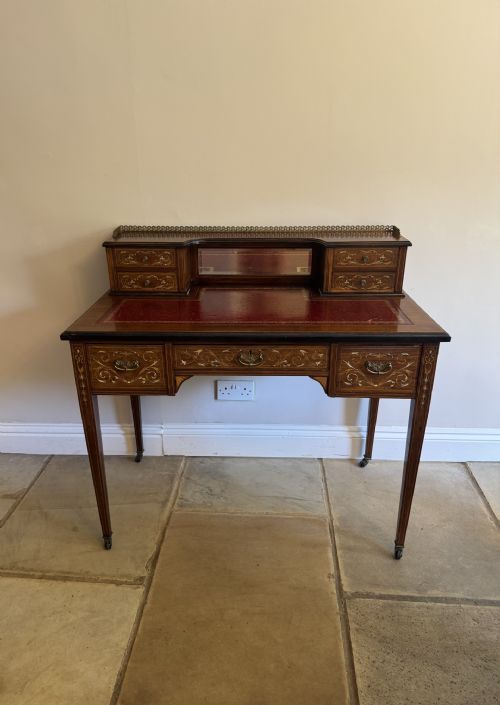
The version you are most likely to meet on this page is a compact Edwardian or late Victorian ladies' writing desk featuring delicate boxwood and satinwood inlay. English library tables and Regency sofa tables with brass stringing also appear frequently among the listings.
Materials and Technique
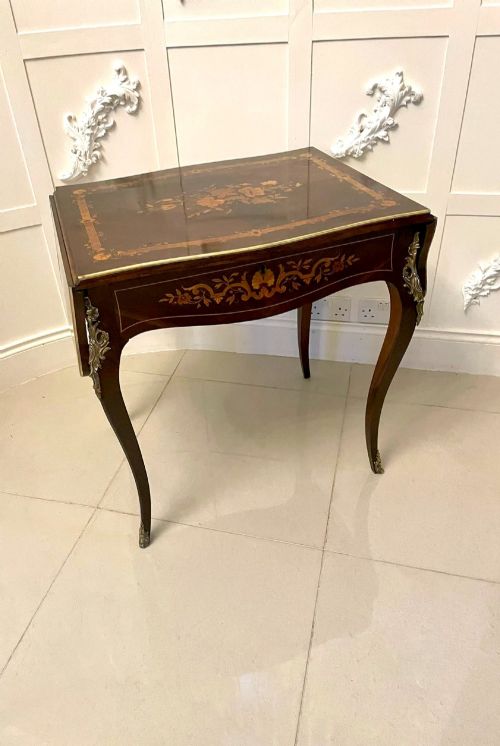
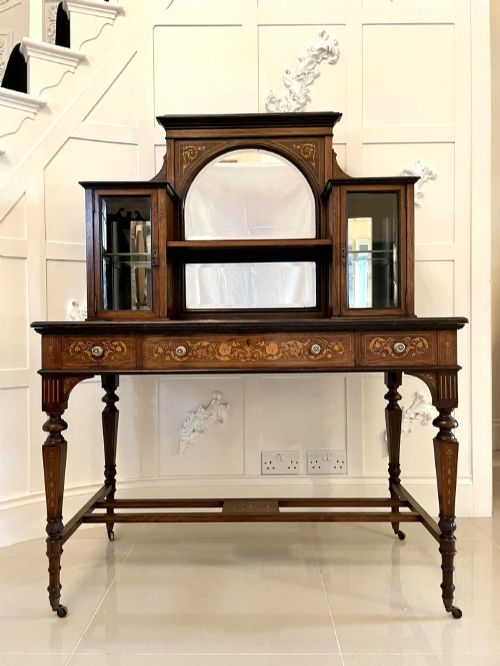
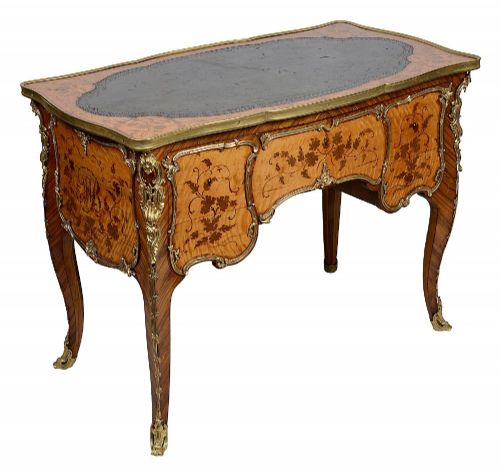
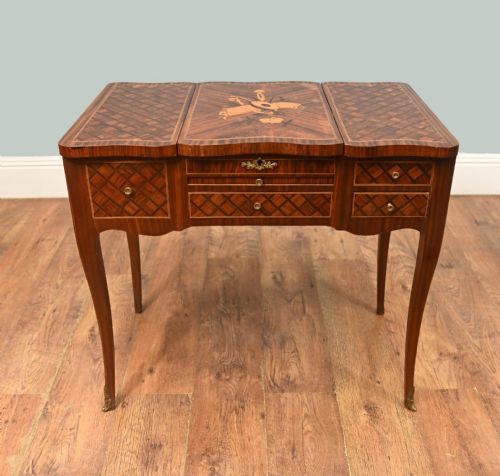
Makers utilised dense, dark rosewood as the primary timber, often framing panels of lighter satinwood, kingwood, and boxwood for decorative contrast. Artisans applied precision marquetry and parquetry to create floral motifs and geometric patterns across the top surfaces and drawer fronts.
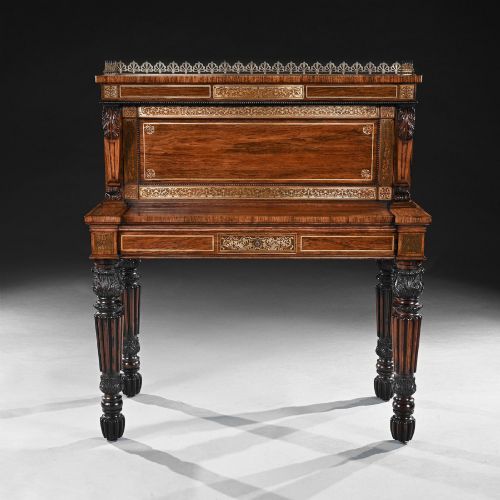
Brass inlay and cast ormolu mounts provide structural detailing and edge protection on Regency and French pieces. Leather writing inserts frequently form the central writing surface, bordered by gilt tooling.
Drop-side flaps on late Victorian lady's writing tables allowed correspondents to expand their workspace instantly before folding the edges away.
Markers of Distinction
The distinction between standard production pieces and the top of the range lies in the crispness of the marquetry and the choice of secondary timbers. Finer examples display meticulous hand-cut stringing and balanced grain patterns across every elevation.
Hardware quality also separates grades of furniture, with heavy cast brass mounts and fully dovetailed drawer construction indicating superior workshop origin rather than mass production.
Maple & Co.·Gillows Oxford Street Workshop·Donald Ross·Collinson & Lock
The Inlaid Rosewood Writing Table Glossary
- Marquetry
- Decorative veneer work forming pictorial or floral designs. Artisans assemble thin slices of various woods like satinwood and boxwood into paper-thin sheets before applying them to the core structure.
- Parquetry
- Geometric wood inlay forming repeating patterns such as cubes or chequers. This technique uses contrasting timbers to create an optical sense of depth across flat surfaces.
- Ormolu
- Gilt bronze mounts applied to furniture edges and corners. The technique involves treating brass or bronze with a gold amalgam to achieve a durable metallic lustre.
- Bureau de Dame
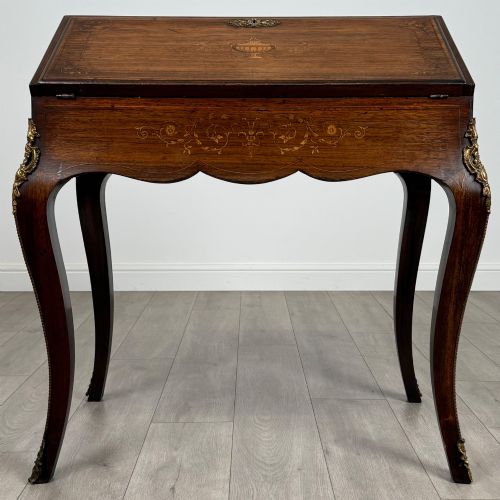
- A small ladies' desk featuring a sloping lid or fitted interior compartments. These compact pieces were designed for correspondence in private sitting rooms.
- Sofa Table
- A long, narrow table traditionally placed in front of a sofa, equipped with drop leaves at either end. Regency versions often incorporate double pedestals and brass inlay.
Inlaid Rosewood Writing Table: Frequently Asked Questions
What is an inlaid rosewood writing table?
An inlaid rosewood writing table is a freestanding nineteenth-century or Edwardian desk ornamented with contrasting wood veneers and brass details. These compact tables served domestic writing and correspondence needs in period drawing rooms and libraries.
Cabinet-makers built these surfaces using dense tropical hardwoods embellished with satinwood, boxwood, and marquetry. Today they function as focal points or compact workspaces within traditional and contemporary rooms.
How do I date a rosewood writing table?
Dating involves examining the structural form, the style of the inlay, and the secondary woods used in drawer construction. Regency pieces display bold brass stringing and classical proportions, while Edwardian examples often feature lighter proportions and Sheraton Revival motifs.
Cabinet-making techniques also shift across decades, moving from hand-cut dovetails in the early nineteenth century to more standardised machine-cut joints toward 1900. Maker stamps or labels, when present, provide definitive chronological markers.
Where were these tables placed originally?
These tables occupied principal reception rooms, libraries, and private boudoirs where light met seating arrangements. Freestanding centre tables stood in the middle of rooms, displaying marquetry on all four sides.
Smaller lady's writing desks sat against walls or beneath windows to catch natural daylight for letter writing. Sofa tables stood directly behind upholstery or served as side tables when the leaves remained dropped.
How do I care for antique rosewood?
Antique rosewood benefits from stable indoor humidity and protection from direct sunlight to prevent the timber from fading. Routine maintenance involves dusting with a dry, soft cloth rather than applying silicone-based polishes.
Leather writing surfaces require occasional specialised conditioning to keep the material supple and prevent cracking along the gilt-tooled borders. Gentle care preserves the original French polish and prevents moisture damage to the delicate veneer.