

Inlaid Pot Cupboards
Inlaid pot cupboards are compact bedside and night storage pieces carrying delicate marquetry, offering practical bedroom surfaces paired with traditional cabinet work.
Inlaid Pot Cupboards
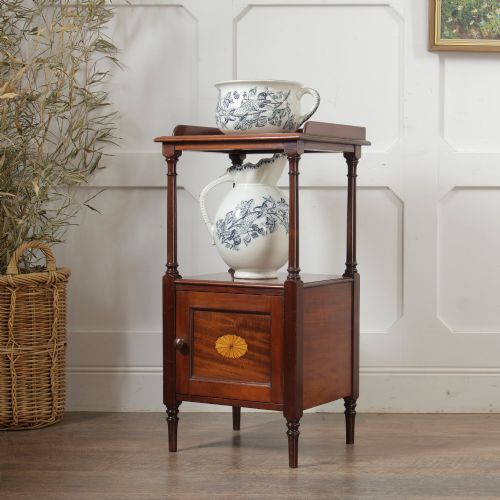
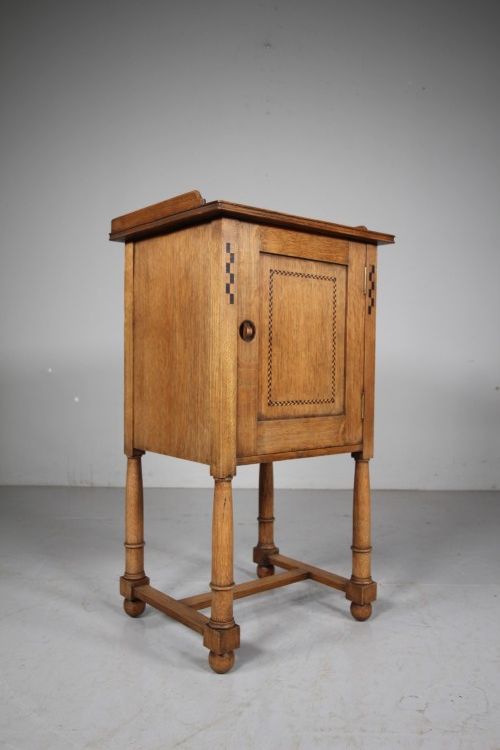
Inlaid pot cupboards serve as bedside cabinets, nightstands and compact storage units designed to hold chamber pots or personal items behind closed doors. When you examine inlaid pot cupboards on this page, you encounter pieces originating primarily from the Victorian, Edwardian and Georgian periods, alongside later twentieth-century iterations.
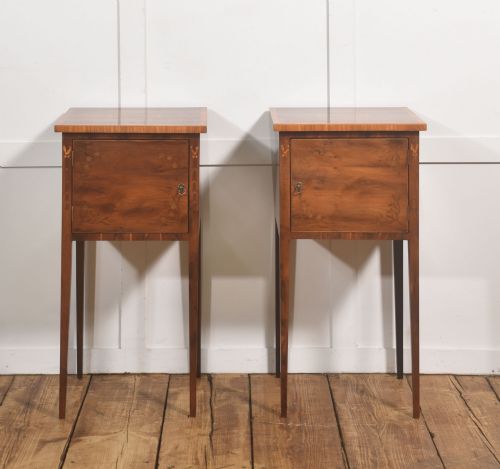
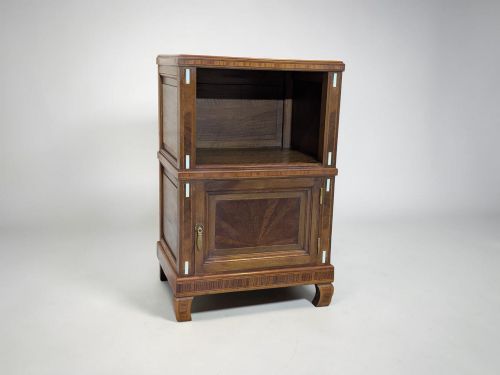
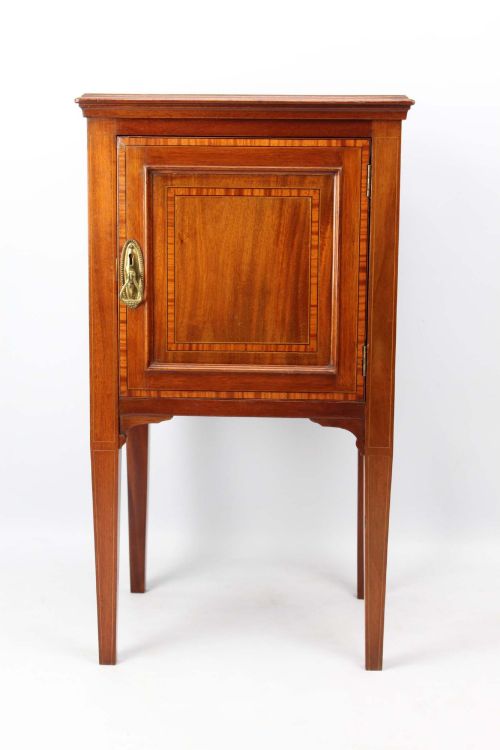
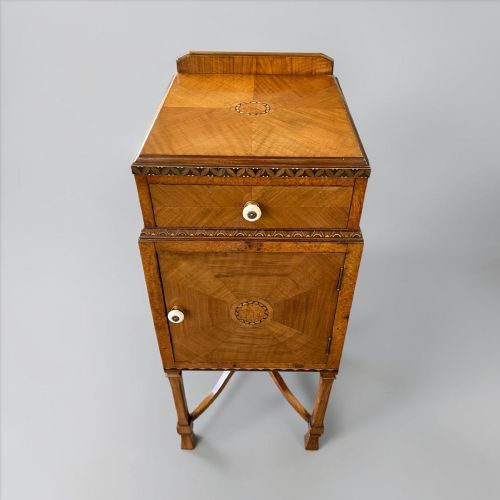
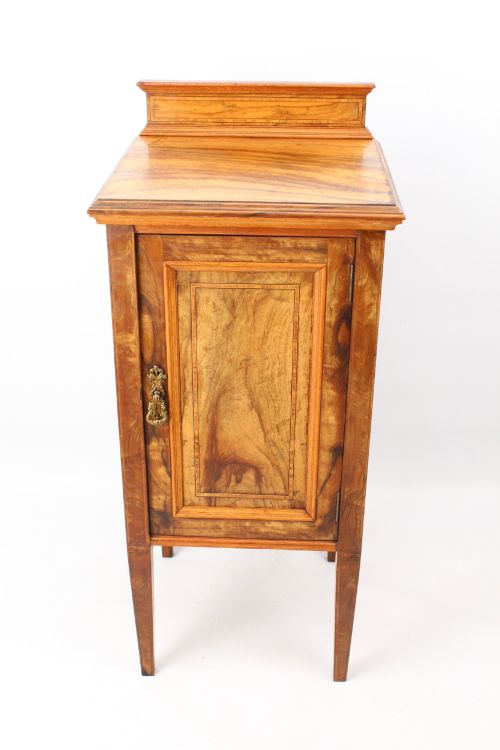
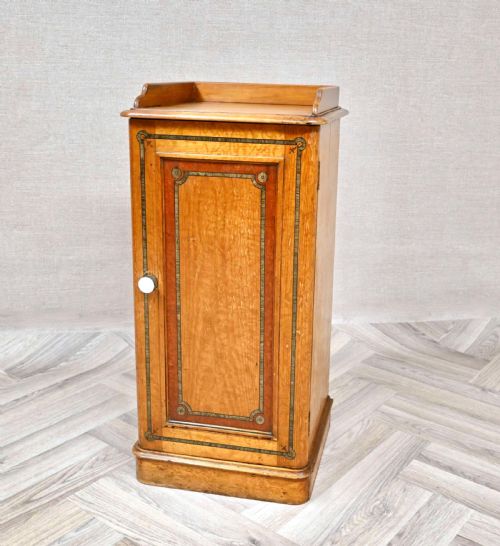
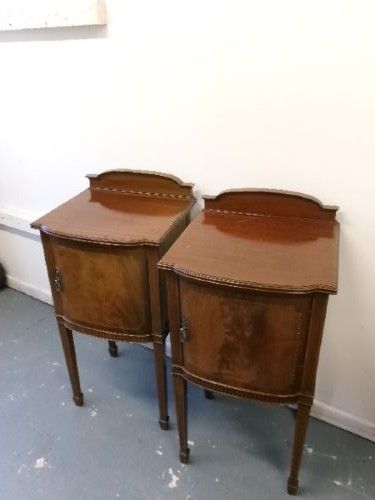
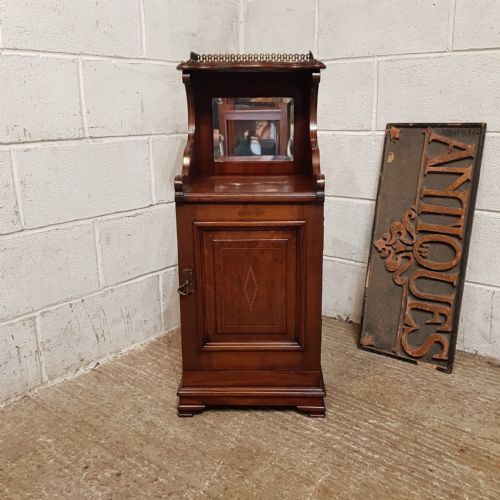
The prevailing form on this page is the Edwardian or late Victorian mahogany bedside cabinet, frequently featuring contrasting stringing or elaborate marquetry panels. Alongside these, buyers find occasional Georgian and Regency night tables, as well as French and Dutch variations employing walnut, satinwood and rosewood.
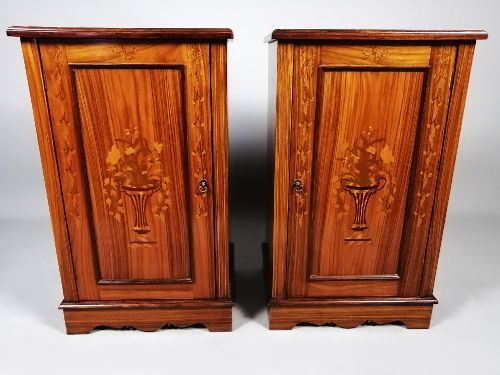
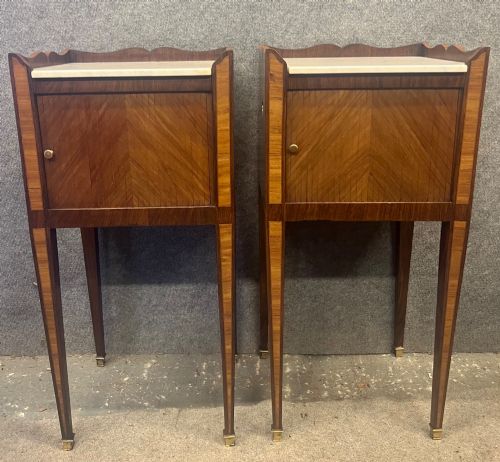
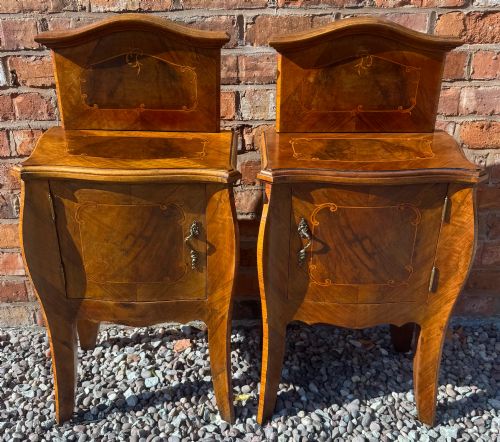
Forms range from simple rectangular side cabinets to bow-fronted designs, serpentine shapes and marble-topped variants. Pairs appear regularly among the Edwardian and French selections, offering matching bedside symmetry.
Materials and construction
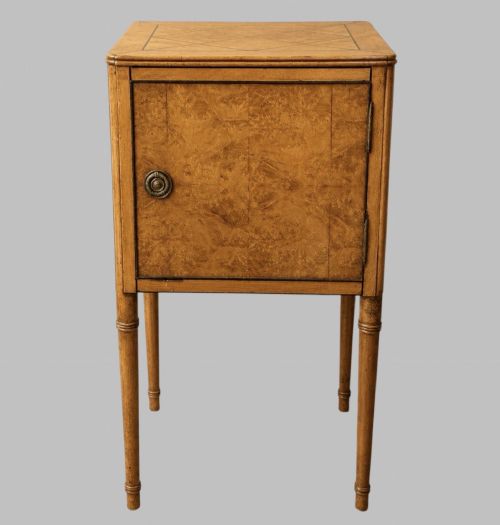
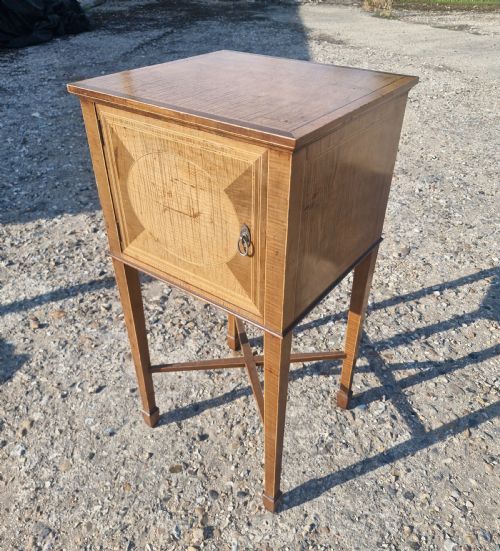
Cabinet makers constructed the carcases of these pieces using primary timbers such as mahogany, walnut, oak and satinwood, frequently applying secondary woods for internal framing and drawer linings. Surface decoration relies heavily on contrasting veneer work, employing boxwood, ebony and maple stringing to create geometric or floral motifs.
Marquetry and parquetry techniques form the core of the decorative vocabulary, particularly within Sheraton Revival and Dutch floral styles where varied wood tints build pictorial panels. Hardware typically consists of cast brass handles and hinges, while certain Continental and Victorian iterations incorporate inset marble tops.
Some nineteenth-century bedside cabinets conceal a porcelain chamber pot behind finely matched mahogany doors.
Evaluating craftsmanship and condition
Quality rests in the crispness of the cabinet joinery, the stability of the timber carcase, and the precision of the marquetry and stringing inlay. Superior examples display seamless veneer matching, tight mitre joints on mouldings, and undamaged secondary framing beneath.
The refinement of the timber selection dictates the tier of the piece, moving from utilitarian pine or plain oak up to figured burr walnut, rich rosewood and finely grained satinwood. Retaining original brass hardware and untouched French polished surfaces elevates the standing of an individual cabinet.
Maple & Co·Morant & Co·Walter Carter Harrods·Gillows
The Inlaid Pot Cupboards Glossary
- Marquetry
- Decorative veneer applied to a wood structure to form intricate pictures or patterns using various tinted woods. It differs from simple inlay by covering the entire surface rather than resting within hollowed-out channels.
- Stringing
- Thin strips of contrasting wood inlaid into grooves on a cabinet surface to create linear borders and geometric frames. Makers utilised boxwood and ebony most frequently for this delicate outlining.
- Pot cupboard
- A small bedside cabinet originally built to enclose a chamber pot behind a single door or cupboard front. Modern owners repurpose them as conventional nightstands and lamp tables.
- Sheraton Revival
- A late nineteenth and early twentieth-century design movement resurrecting the neoclassical elegance, light proportions and satinwood veneers associated with eighteenth-century designer Thomas Sheraton.
- Bow front
- A convex, outwardly curved front profile popular on nineteenth-century sideboards and bedside cabinets. This shape softens the room's geometry while maintaining interior storage depth.
Inlaid Pot Cupboards: Frequently Asked Questions
What is an inlaid pot cupboard?
An inlaid pot cupboard is a small antique bedside cabinet or nightstand featuring decorative wood veneers and marquetry work. They were originally constructed to keep a chamber pot discreetly enclosed.
Today, buyers use them as functional bedside tables with closed storage, placing lamps on top and books inside.
How do I date an inlaid bedside cabinet?
Dating relies on timber choices, construction methods and stylistic markers such as Edwardian stringing or Georgian proportions. Pine carcases and heavy mouldings often point to Victorian origins, while lighter satinwood suggests the Edwardian Sheraton Revival period.
Examining drawer linings, screw types and backboards helps confirm the manufacturing era.
Are matching pairs common?
Matching pairs appear frequently, particularly among Edwardian mahogany and French walnut pieces made for twin bedroom suites. Finding a matched pair from the nineteenth or early twentieth century offers symmetry for modern bed arrangements.
Single cabinets remain equally prevalent for asymmetric bedroom styling.
How should I care for antique wood?
Maintain these cabinets by keeping them away from direct heat sources and sudden humidity shifts that can crack delicate veneers. Dust with a soft, dry cloth and apply occasional high-quality beeswax to nourish the polished wood surface.
Avoid commercial liquid sprays that may degrade the historic finish over time.