

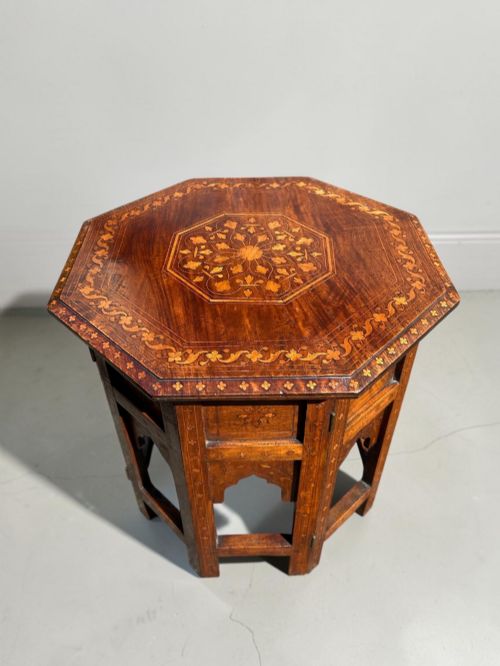
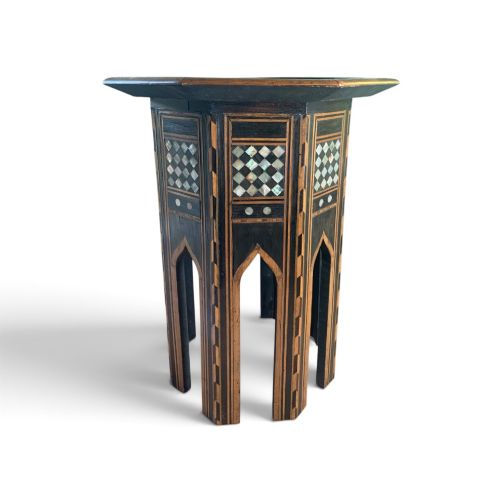

Inlaid Plant Stand
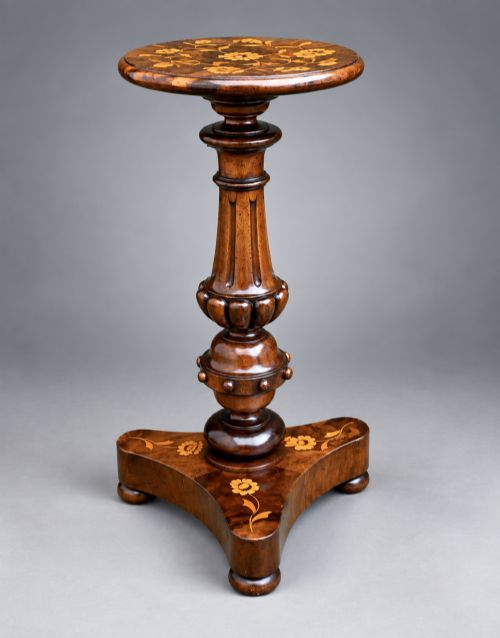
When you search for an inlaid plant stand, you are looking at elevated timber supports designed to display foliage or decorative objects within a room.
Inlaid Plant Stand
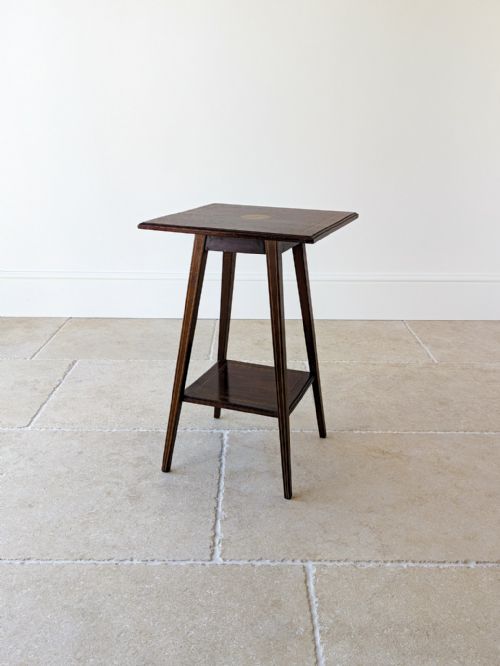
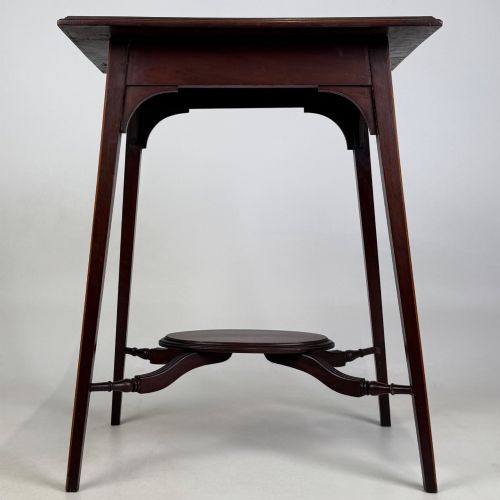
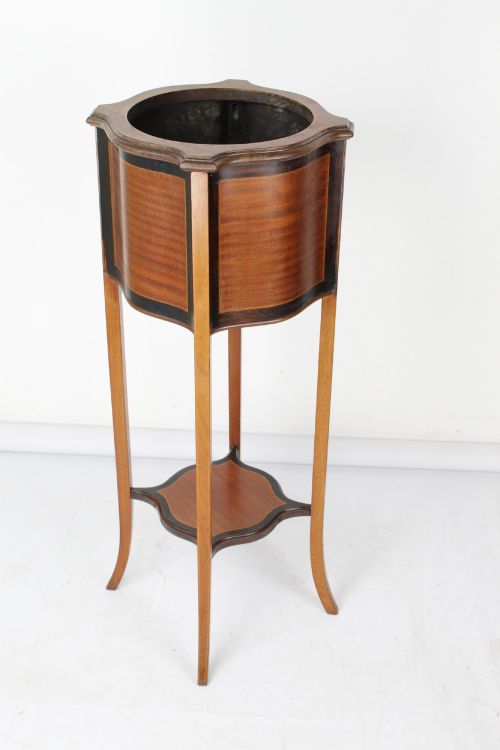
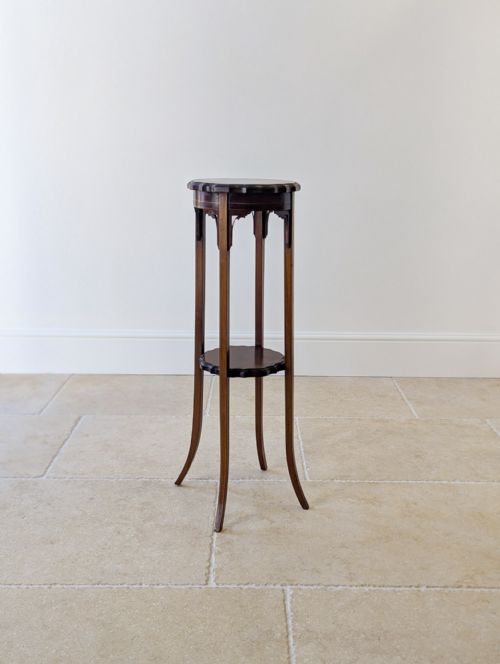
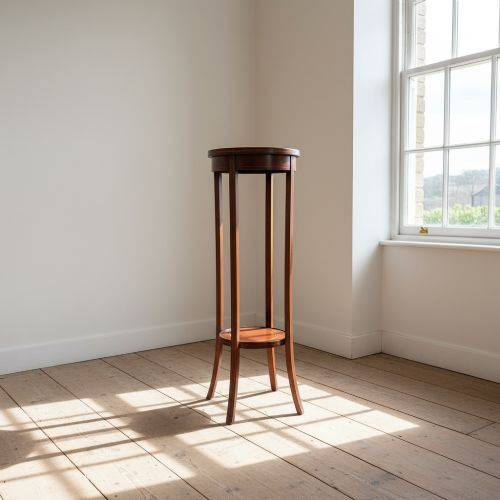
An inlaid plant stand is an elevated timber support designed to display foliage or decorative objects within a room. When exploring this selection, buyers frequently encounter Edwardian mahogany examples built with slender uprights and circular platforms.
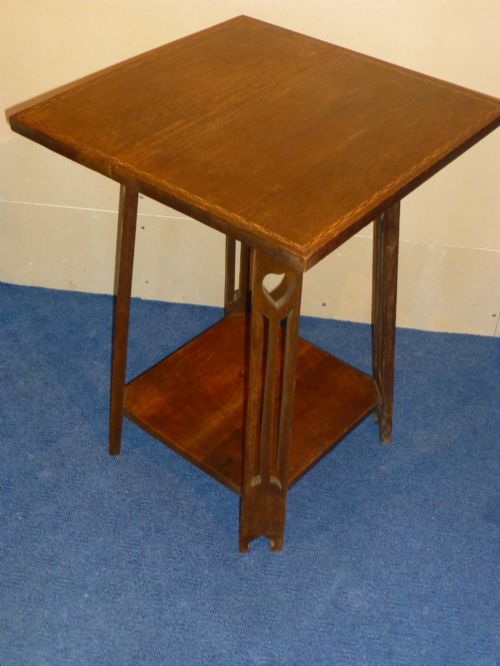
The category extends beyond simple pedestals to encompass jardiniere tables fitted with metal liners, torcheres, and multi-tiered occasional tables. These pieces originate across periods spanning the Victorian era, the turn of the twentieth century, and earlier Georgian designs.
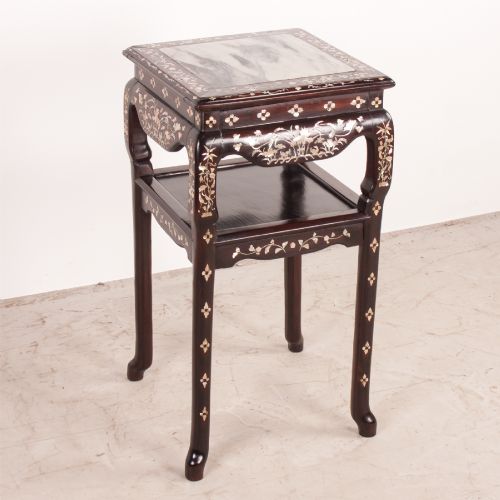
Makers and workshops utilised diverse global styles, incorporating Anglo-Indian bone and brass ornamentation, Moorish geometric patterns, and Chinese mother-of-pearl alongside standard British revival aesthetics. The primary function remains the elevation of decorative plants or urns to eye level in a domestic interior.
How they were made
Cabinetmakers constructed these stands using primary timbers such as mahogany, walnut, satinwood, and oak, frequently shaping tops into circular, square, or octagonal formats. Structural stability required steady central shafts on tripod legs or four slender legs joined by stretchers.
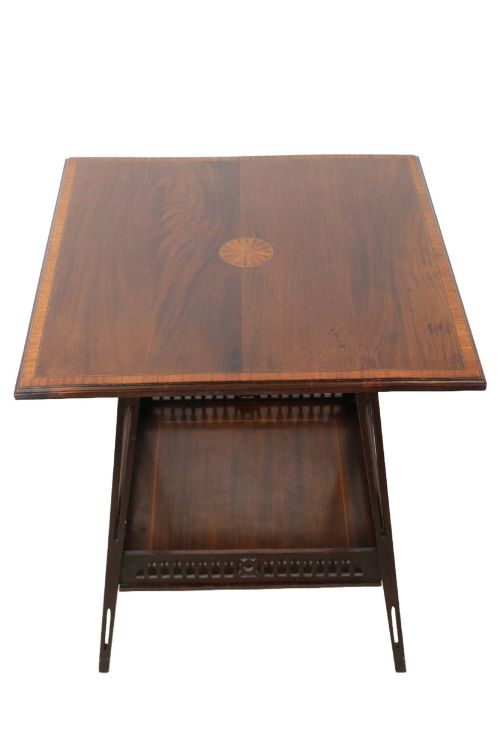
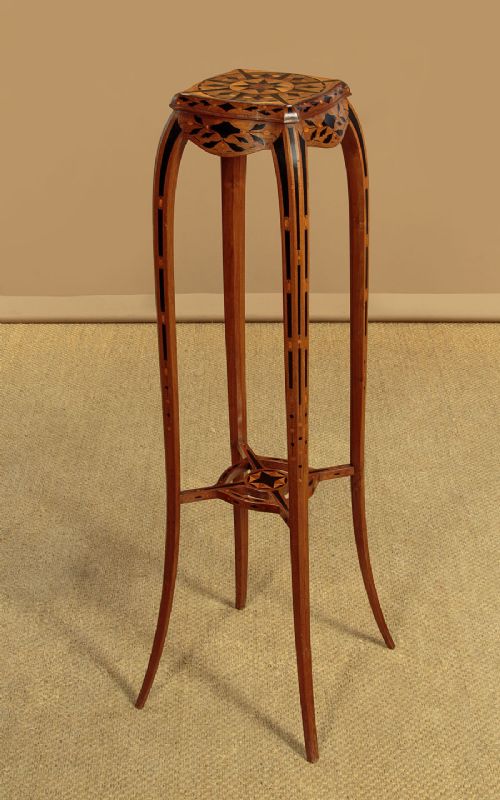
Decoration relied on precision woodworking techniques, pressing contrasting wood inlay, satinwood banding, and chequered patterns into the main timber surface. Master artisans also embedded bone, brass wire, and mother-of-pearl into carved recesses to create complex botanical and geometric motifs.
Listings feature items built from mahogany, walnut, satinwood, and rosewood, incorporating bone and mother-of-pearl inlay across Victorian and Edwardian periods.
What varies in quality
The standard of a piece depends on the precision of the joinery and the complexity of the contrasting timber or metal ornamentation. Fine examples display tight, flush joints in the inlay work where different materials meet without visible gaps or excessive filler.
Subtlety of proportion and the choice of dense, well-figured timber distinguish superior examples from utilitarian workshop output. Original metal liners in jardiniere stands and stamped maker signatures add considerably to the integrity of a piece.
Trevor Page & Co·Liberty & Co·William Birch·Edwards & Roberts
The Inlaid Plant Stand Glossary
- Torchere
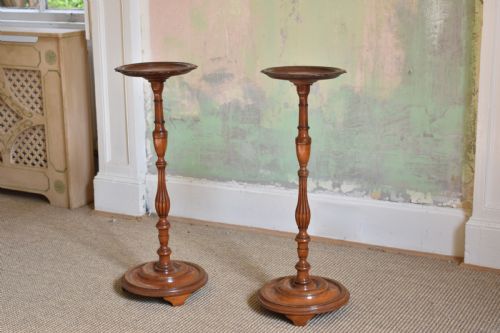
- A tall, slender stand designed specifically to support a lamp or decorative plant. These pieces typically feature a narrow circular top raised on a column and supported by three spreading feet.
- Jardiniere
- A decorative container or stand intended to hold a live plant or floral arrangement. Many versions incorporate a removable metal liner to protect the timber structure from moisture.
- Marquetry
- The art and craft of applying pieces of veneer to a structure to form decorative patterns and pictures. Makers used diverse woods and shell to create contrasting surface designs.
- Etagere
- A piece of furniture consisting of a set of open shelves for displaying small objects. These often appear in multi-tiered side tables within this category.
- Specimen wood
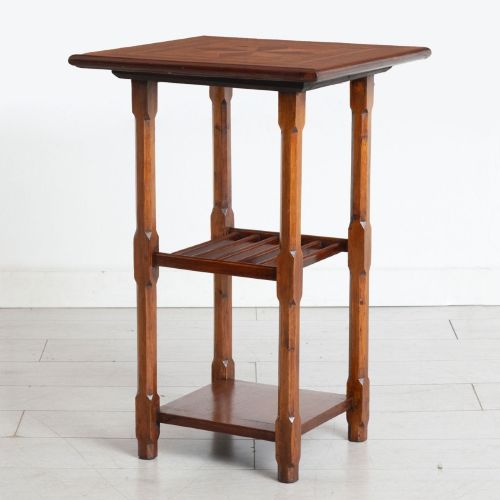
- Furniture constructed from a variety of different timbers to showcase natural colour variations. These tables display geometric panels of contrasting native and exotic woods.
Inlaid Plant Stand: Frequently Asked Questions
What is a plant stand used for?
These elevated tables were designed to hold heavy ceramic pots, ferns, and floral displays away from damp or cold floors. Raising plants allowed them to receive better light and protected domestic floorboards from water damage.
Over time, owners adapted these versatile surfaces to hold lamps, urns, and decorative sculptures. Their compact footprints made them useful for filling empty corners in Victorian and Edwardian reception rooms.
How do I spot Edwardian pieces?
Edwardian stands frequently utilise lightweight mahogany frames decorated with satinwood stringing and delicate floral marquetry. They often date from the period around nineteen hundred to nineteen ten, reflecting lighter domestic tastes.
Construction during this era prioritised slender supports and graceful proportions over the heavy timbers typical of earlier decades. Many surviving examples from this time bear machine-sawn components alongside hand-fitted inlay.
Are brass liners original?
Many jardiniere stands retain their original removable brass or copper liners, which were built to contain soil and water. These metal inserts often show patination, oxidation, and tool marks consistent with their age and use.
Finding a stand with its matching liner intact is helpful, though many survived without them after decades of domestic use. Replacements are common, so inspecting the fit against the timber rim helps determine authenticity.
How do I care for inlaid wood?
Inlaid surfaces require protection from direct sunlight and extreme humidity changes to prevent the delicate veneer from lifting. Keeping the timber nourished with a suitable wax maintains the moisture balance in the wood.
Moisture from plant pots poses a risk to antique table tops, making the use of protective saucers essential. Gentle dusting with a soft cloth preserves the contrasting tones of the bone, brass, and timber elements.