
Inlaid Pier Cabinet
When you search for an inlaid pier cabinet, you are looking at tall, narrow display furniture designed to sit against the architectural piers between windows in nineteenth-century drawing rooms.
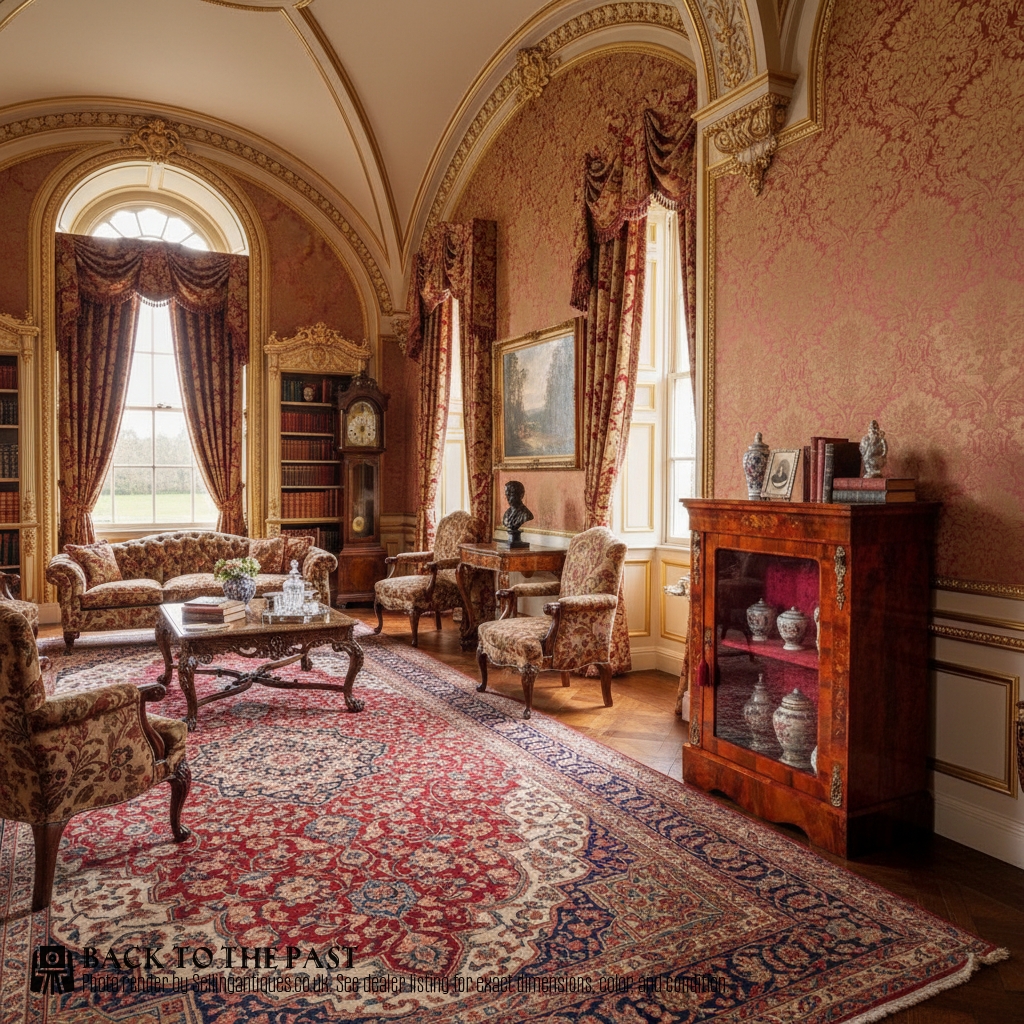
Inlaid Pier Cabinet
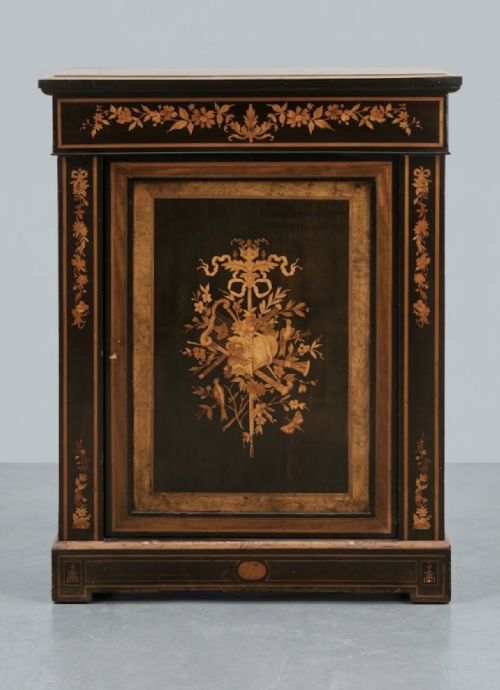
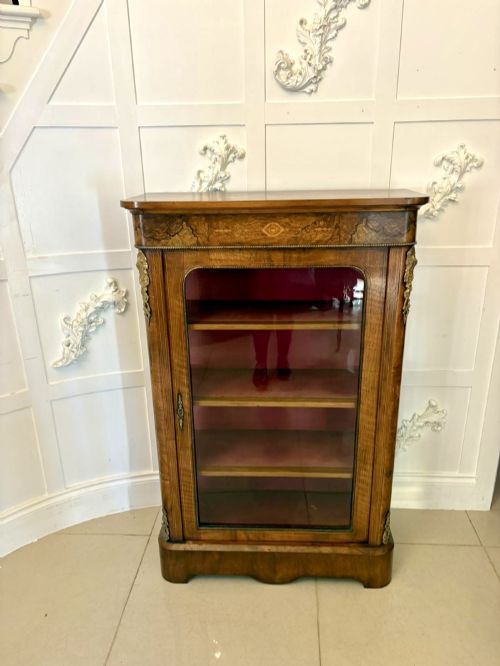
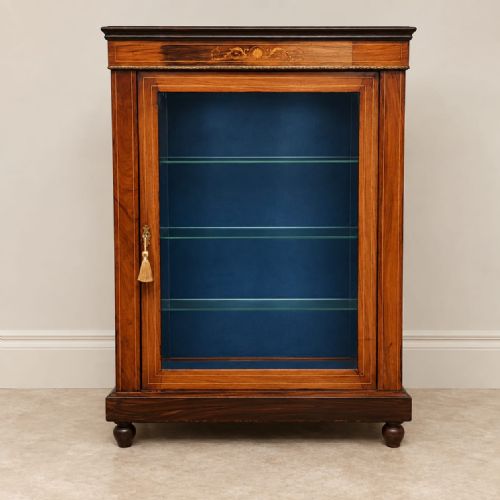
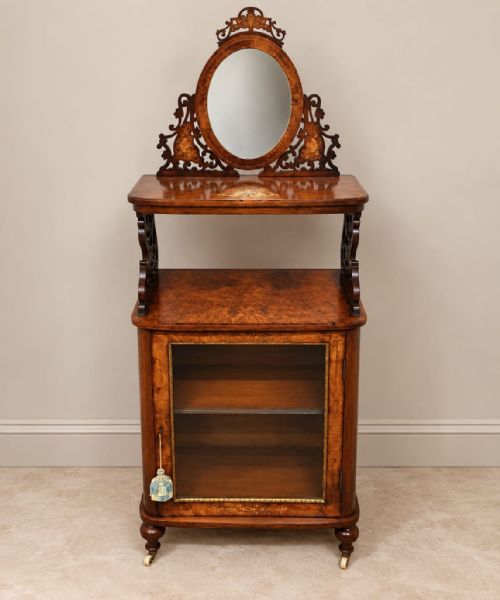
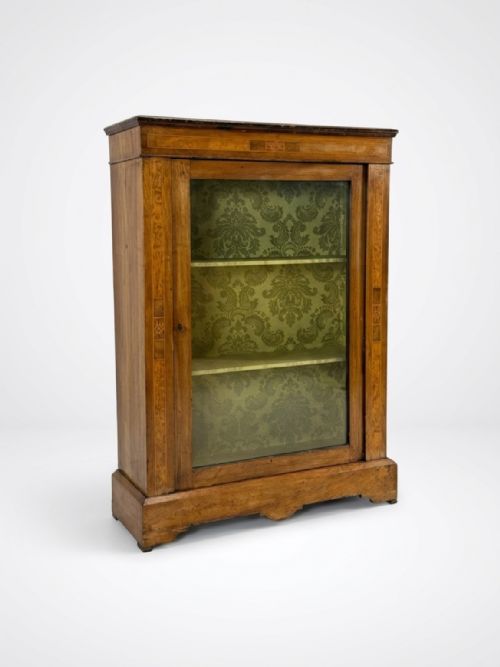
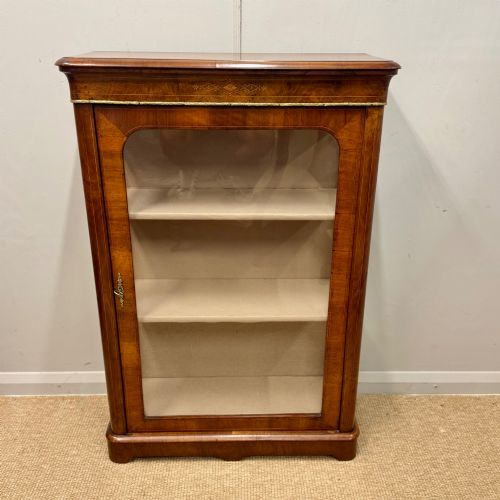
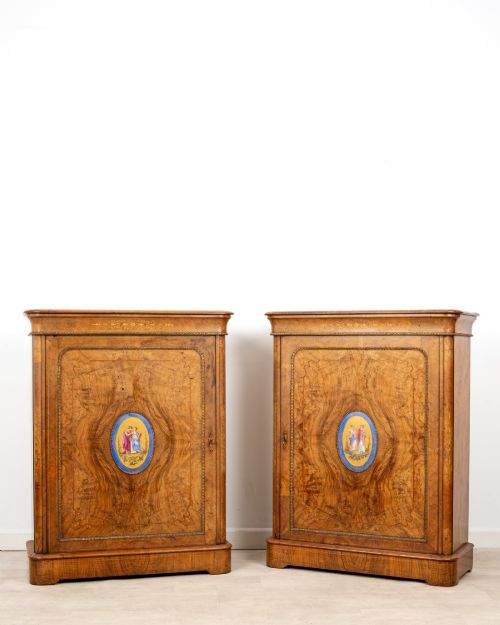
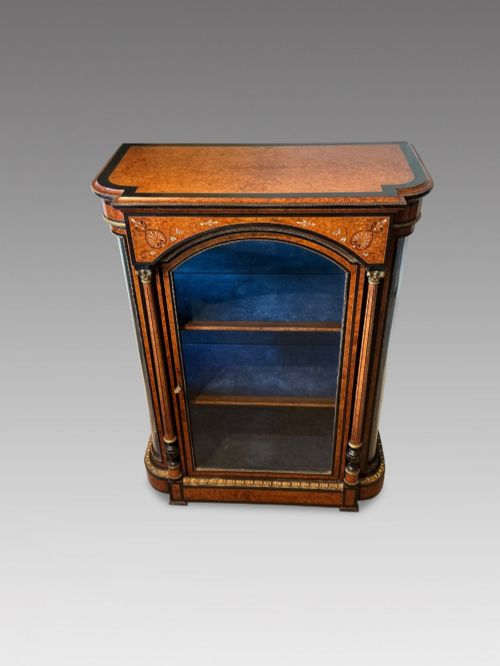
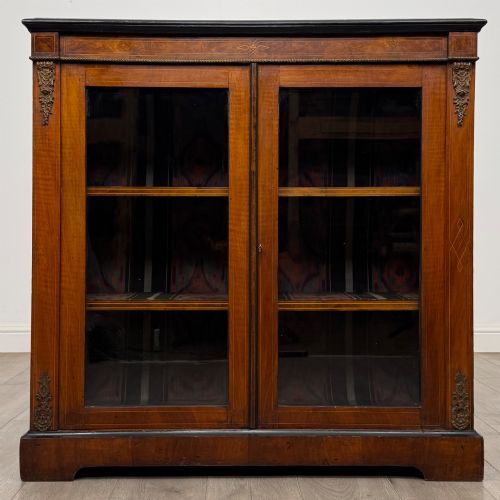
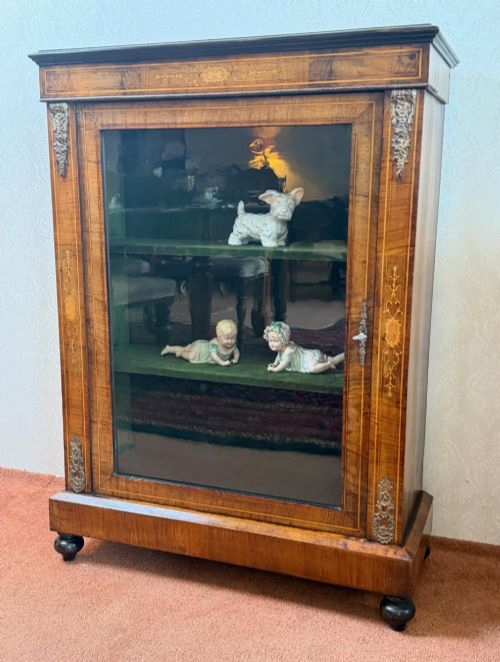
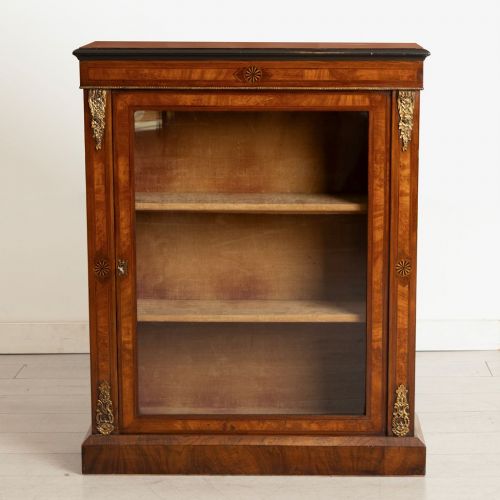
An inlaid pier cabinet is a slender display piece designed for the formal Victorian interior, most frequently encountered in figured burr walnut with glazed single doors.
The form developed to utilise narrow wall spaces between tall windows, combining a flat top with internal shelving for the exhibition of ceramics, books and curiosities.
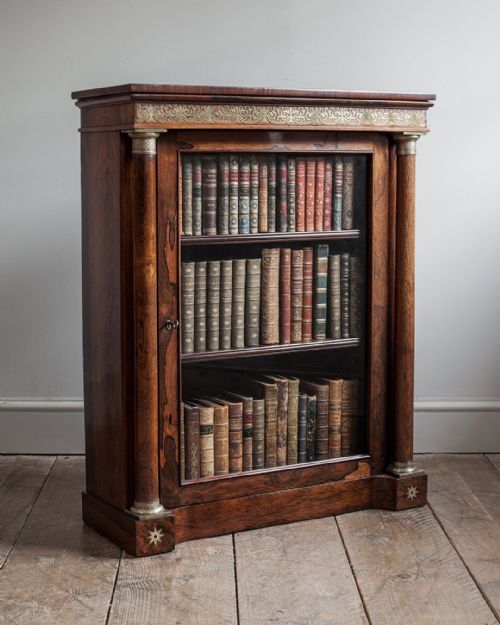
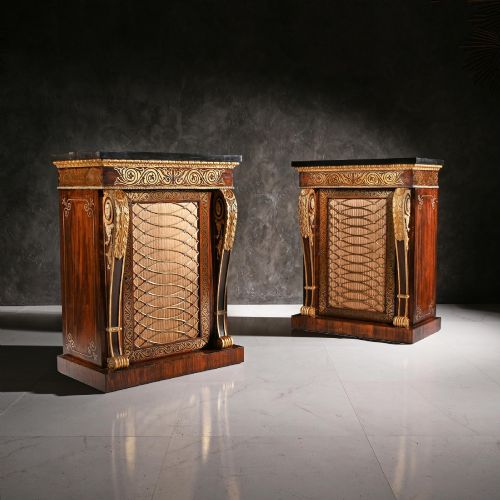
While Victorian examples dominate, variants stretch from Regency rosewood models to Napoleon III ebonised and Boulle marquetry versions.
How They Were Made
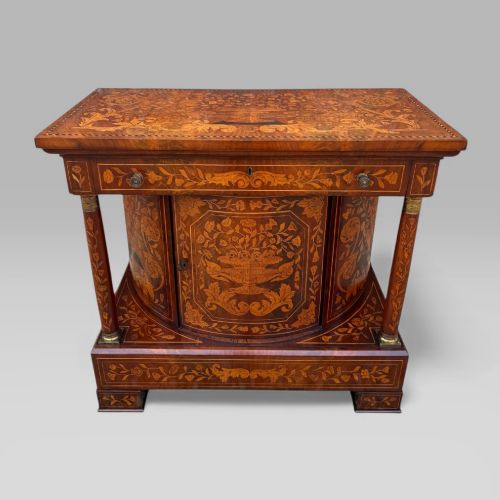
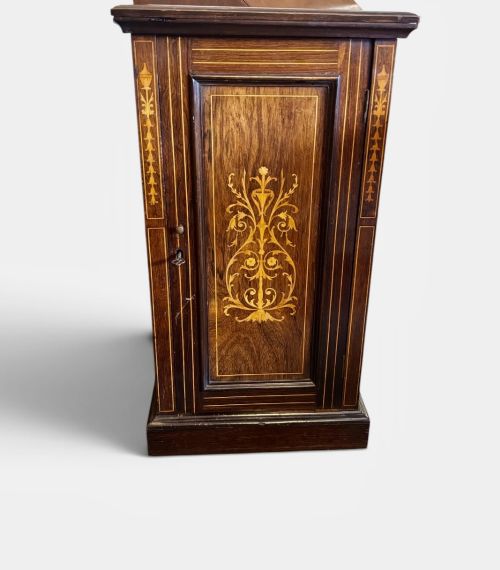
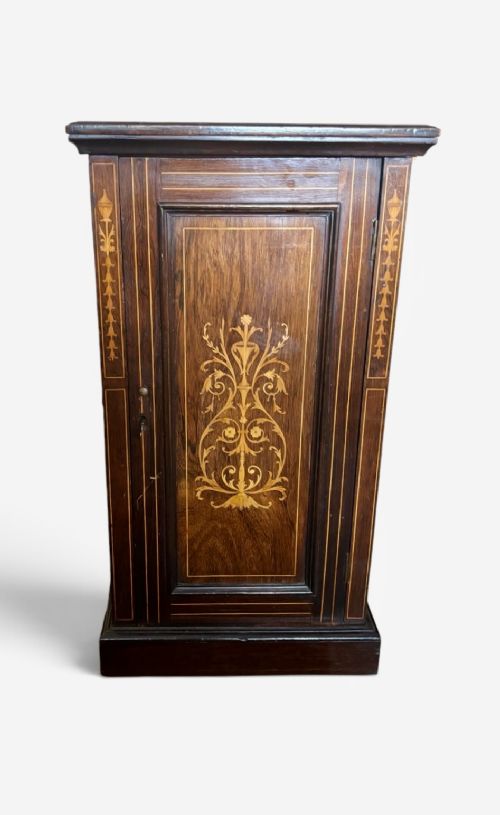
Cabinets rely upon timber veneers, principally burr walnut, rosewood, and mahogany, laid over solid pine or oak carcases to create intricate floral and scroll marquetry panels.
Gilding and metalwork take the form of cast ormolu mounts, brass stringing, and tortoiseshell inlays that highlight the structural corners and door frames.
Glass panels are fitted into glazed doors to protect the interior, whilst velvet linings occasionally furnish the display shelves.
Certain Victorian cabinets bear later French champagne advertising sign-writing upon their glass doors.
What Varies in Quality
Superior execution shows in the selection of timber, where tightly figured burr walnut or rich rosewood veneers display depth and symmetry across the entire surface.
The refinement of the marquetry and the crispness of cast ormolu mounts distinguish standard production pieces from workshop examples boasting porcelain plaques and detailed brass stringing.
Construction details such as the thickness of the timber, the snugness of the door fit, and the elegance of proportions elevate certain cabinets above mass manufacture.
Louis Constantin Le Gaigneur
The Inlaid Pier Cabinet Glossary
- Burr walnut
- A prized timber harvested from the gnarled growths of walnut trees, valued for its swirling, highly patterned grain.
- Marquetry
- The art of applying decorative pieces of veneer to a structure to form intricate pictorial or geometric patterns.
- Ormolu
- Gilt bronze ornamentation cast and chased to mount upon furniture corners and panels.
- Boulle
- A form of marquetry utilising brass and tortoiseshell developed during the reign of Louis XIV and revived in the nineteenth century.
- Pier glass
- A tall mirror originally designed to hang on the wall space between windows, frequently paired with a matching pier cabinet beneath.
Inlaid Pier Cabinet: Frequently Asked Questions
What is an inlaid pier cabinet used for?
These cabinets were designed to display prized ceramics, glassware, and small collections within the formal reception rooms of nineteenth-century homes.
The glazed doors kept dust away from delicate objects while allowing light to reflect off the polished wood and gilt mounts.
Where should I place one in a modern room?
Their narrow, shallow footprint makes them well suited for alcoves, hallways, or narrow wall spaces where standard sideboards would protrude too far.
They function effectively as standalone display pieces for books, glassware, or curated collections without dominating the floor area.
How do I tell Victorian from Regency cabinets?
Regency models tend to feature cleaner architectural lines, rosewood timbers, and brass stringing or inlay rather than the elaborate floral marquetry seen later.
Victorian pieces frequently utilise burr walnut veneers, curved glass doors, and heavier ormolu mounts influenced by French revival styles.
Are the interiors usually adjustable?
Most period examples feature fixed wooden or glass shelves supported by internal wooden racks, though construction methods vary by workshop.
Buyers should inspect the interior layout to ensure it suits the scale of the objects they intend to exhibit.