
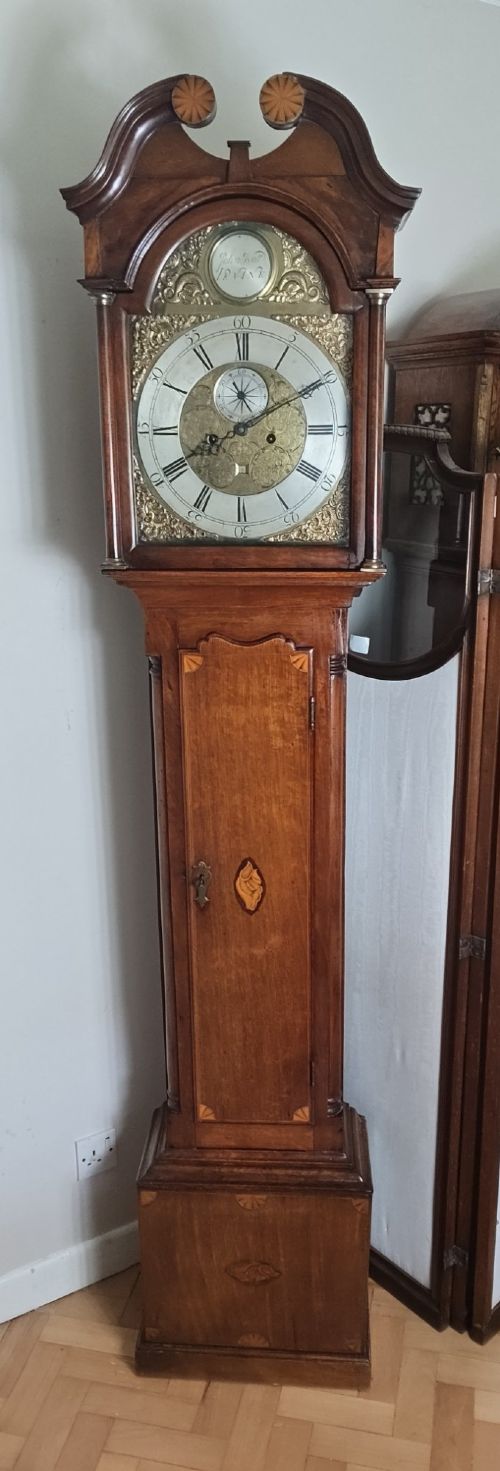
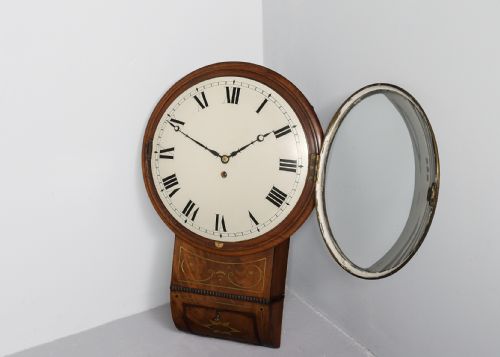
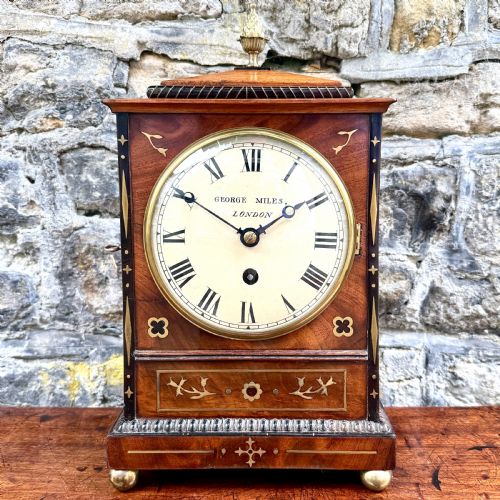
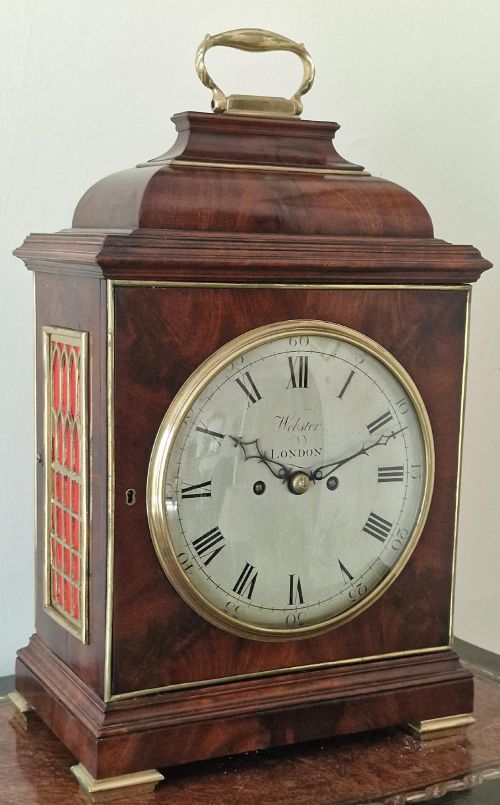



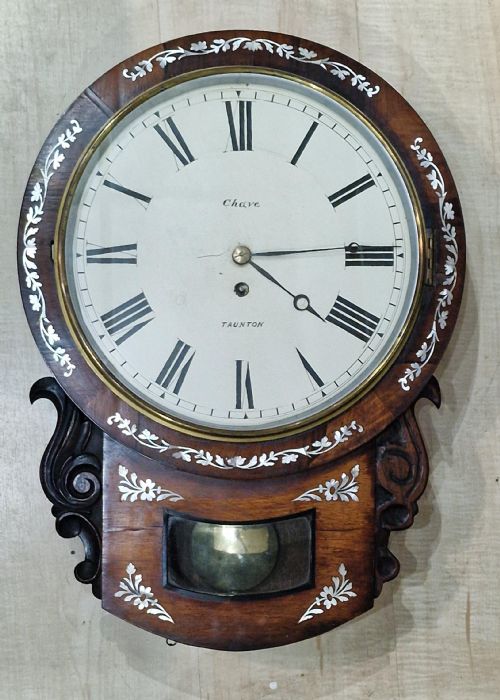


Inlaid Pendulum Clock
When you seek an inlaid pendulum clock, you examine timepieces combining precise mechanical movement with decorative woodwork spanning several historic periods.
Inlaid Pendulum Clock
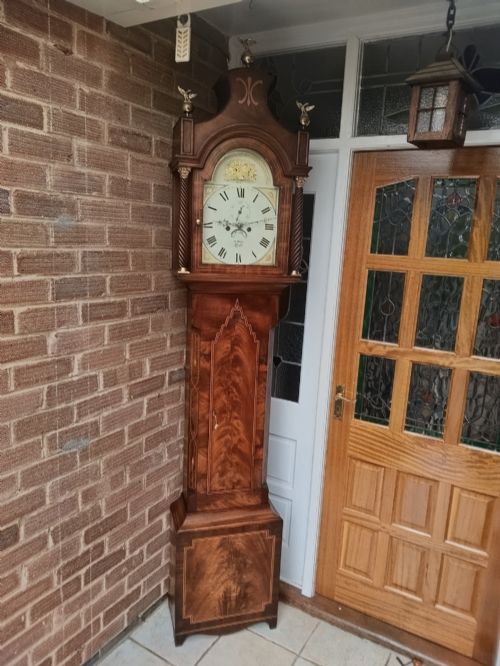
An inlaid pendulum clock covers various formats from tall grandfather and longcase clocks to compact wall clocks, drop dial designs, and mantel timepieces. These objects emerge primarily across the Georgian, Regency, Victorian, and Edwardian eras, reflecting British and French workshop traditions.
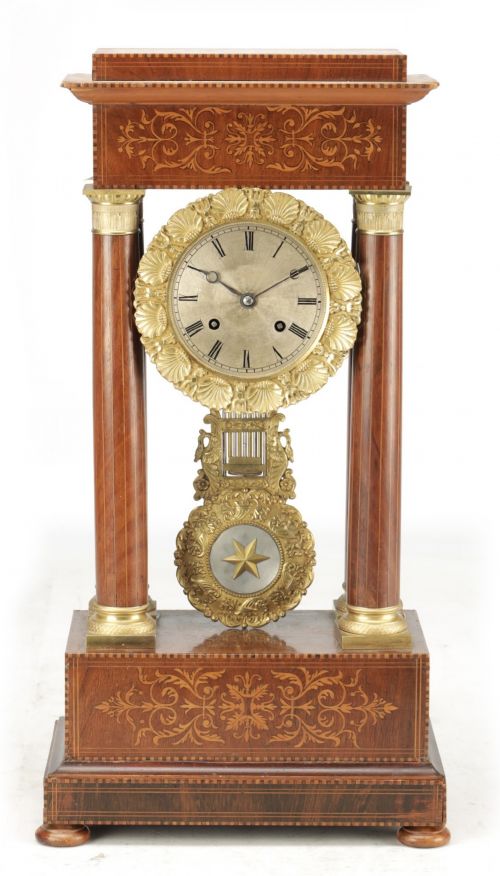
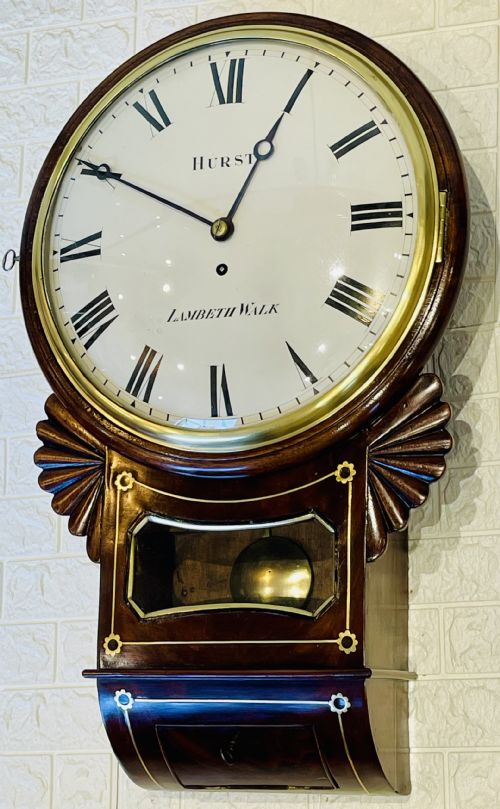
The version you meet most frequently on this page is the mahogany drop dial wall clock or the tall grandfather clock, often featuring brass details or dial surrounds. Pieces range from straightforward domestic timekeepers to elaborate portico and bracket clocks created for formal rooms.
Materials and Technique
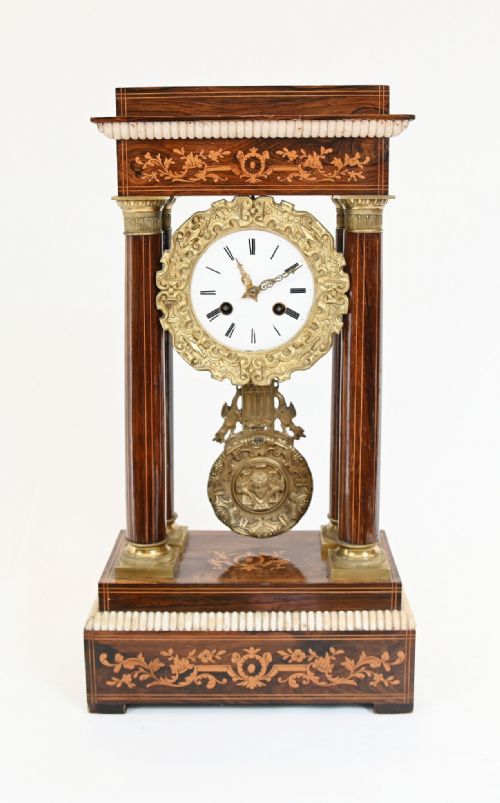
Cabinetmakers constructed the wooden housings using timbers such as mahogany, rosewood, oak, and ebonised wood, frequently applying marquetry, paterae, or mother of pearl inlay to enrich the exterior surfaces. Metal wire and ormolu mounts also appear on continental examples to accent the case construction.
Movements relied on brass gear trains, fusee mechanisms, or pendulum regulation, paired with white enamel, brass, or convex dials protected by glass panels. Clocks often utilised bell-striking systems to mark the passing hours.
Some nineteenth-century French clockmakers hid delicate mother of pearl inlay within ebonised wood to catch the flickering parlor candlelight.
Standards of Craftsmanship
Distinctions in quality rest upon the precision of the cabinetwork and the sophistication of the internal movement. Finer examples display crisp inlay work, select flame mahogany or rosewood veneers, and robust twin-fusee mechanisms signed by capable makers.
Simpler timepieces offer standard domestic utility with plain wooden cases and basic dial layouts, whereas superior pieces integrate architectural elements, bronze or brass garnitures, and quarter-striking capabilities that demand advanced horological skill.
Webster London·Thomas Moss·Samuel Chave Taunton·Halliday and Rich Bridgwater·Henri Marc Of Paris·William Moon London·Joseph Mansfield·Samuel Marti
The Inlaid Pendulum Clock Glossary
- Fusee
- A conical pulley used in spring-driven clocks to maintain even power as the mainspring unwinds. This mechanism improves timekeeping accuracy across the duration of the winding cycle.
- Drop Dial
- A wall clock featuring an extended lower wooden case that houses the pendulum swing below the circular dial. These pieces were standard in offices and stations during the nineteenth century.
- Portico Clock
- A mantel timepiece designed with architectural columns supporting the movement housing, popular in French nineteenth-century design. They often incorporate inlay and metal mounts.
- Garniture
- A set comprising a central clock flanked by matching decorative ornaments such as urns or vases. These displays adorned mantelpieces in Victorian interiors.
Inlaid Pendulum Clock: Frequently Asked Questions
How do fusee movements work?
A fusee movement uses a conical pulley connected to the mainspring via a cord or chain. As the spring loses tension, the chain moves to a wider part of the cone to maintain consistent torque.
This clever mechanical adjustment ensures the clock maintains steady timekeeping accuracy between windings.
Where were wall clocks placed?
Drop dial and wall clocks served practical timekeeping roles in domestic hallways, kitchens, professional offices, and public rooms. Their elevated placement allowed occupants to view the dial easily from across the space.
Larger fusee wall clocks were particularly common in commercial and municipal buildings during the nineteenth century.
How do I wind my clock?
Winding requires inserting the appropriate key into the winding hole on the dial face and turning it gently until resistance indicates the mainspring is fully tensioned. Care must be taken not to overwind antique mechanisms.
Many eight-day models require attention just once a week to keep the pendulum swinging reliably.
What is a portico clock?
A portico clock is a French mantel timepiece built with an architectural frame resembling classical pillars supporting the central dial housing. These decorative objects often feature fine marquetry inlay and exotic woods.
They stood as ornamental centerpieces on formal drawing-room mantelpieces during the nineteenth century.