

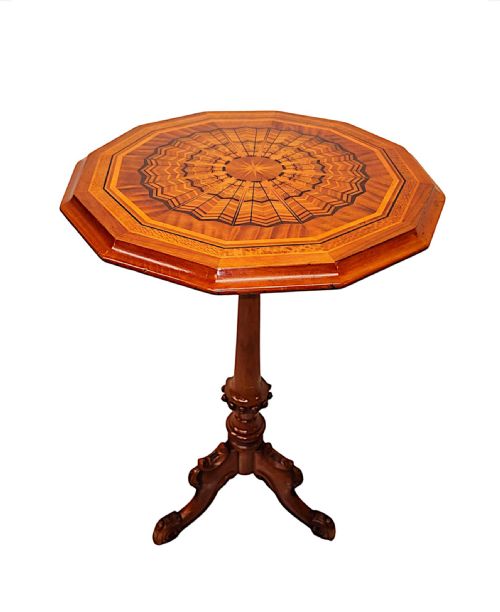
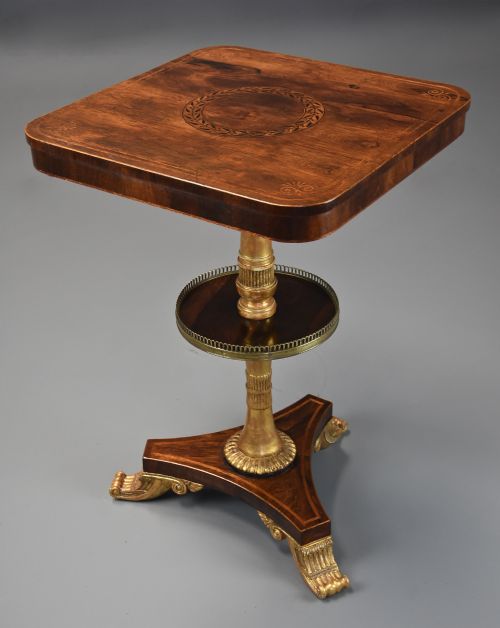

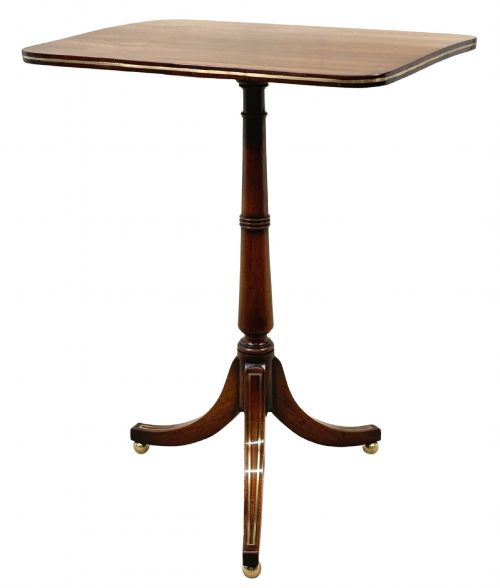


Inlaid Pedestal Lamp Table
An inlaid pedestal lamp table brings refined surface detail and steady central support to a room, holding a light or resting beside a chair.
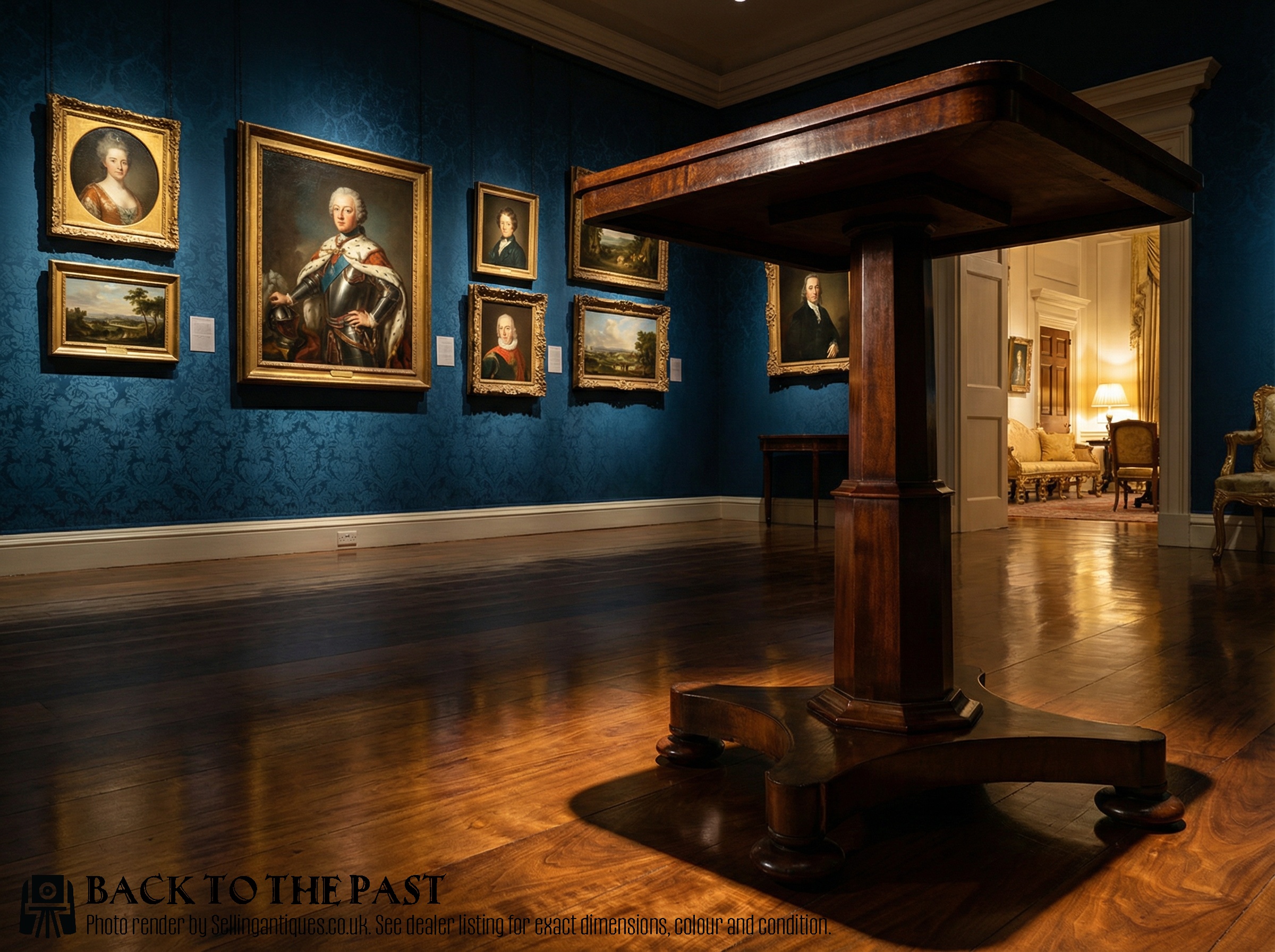
Inlaid Pedestal Lamp Table
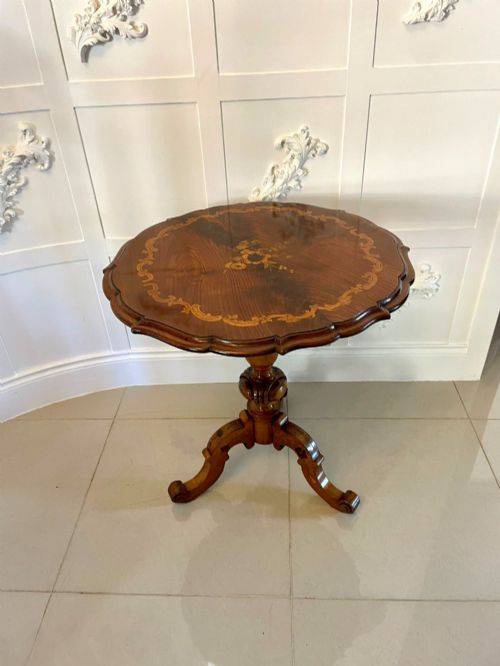
An inlaid pedestal lamp table serves various domestic functions, appearing frequently as an occasional table, wine table, or side table in the record. Buyers searching for an inlaid pedestal lamp table encounter pieces spanning the nineteenth century, the Victorian era, the Regency period, and early twentieth-century production.
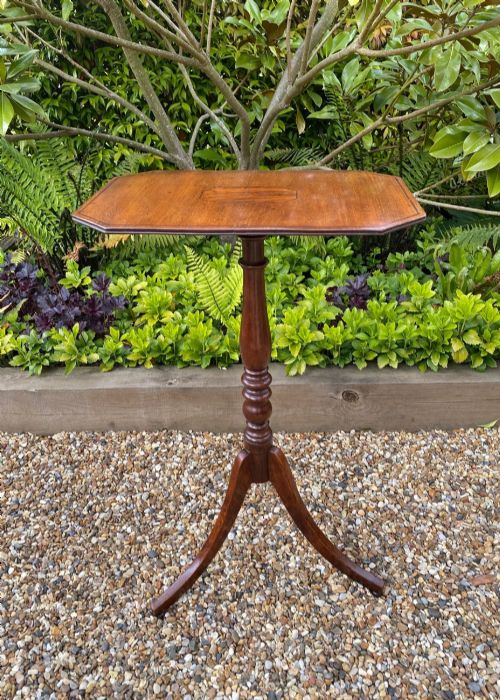
The dominant forms display circular, oval, octagonal, or hexagonal tops supported by a central pillar, often resting on tripod feet or a platform base. Walnut, burr walnut, mahogany, and rosewood form the primary structural timbers for these tables, shaping their silhouettes across English and continental workshops.
Materials and Construction
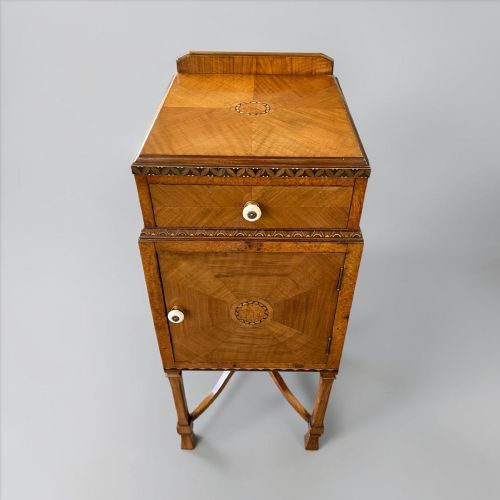
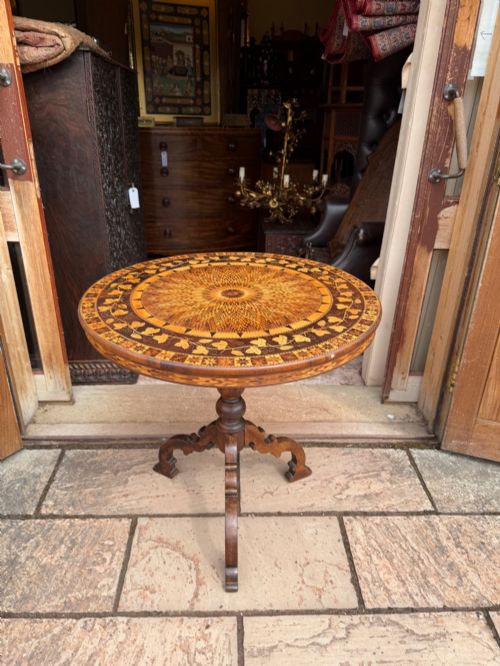
Cabinetmakers utilised rich timber veneers such as burr walnut, rosewood, satinwood, kingwood, and amboyna over sound underlying woods. These surfaces received meticulous decorative treatments including wood inlay, marquetry, parquetry, and brass stringing to form complex geometric motifs, floral patterns, and pictorial views.
Support structures combine turned central pedestals with substantial footing, occasionally mounting brass details, ormolu, or bone accents to enhance the design. French polishing and traditional joinery methods secure the stability of the central column while protecting the delicate veneer work on the top.
The recorded forms encompass occasional tables, wine tables, side cabinets, and two-tier stands with marquetry or brass inlay.
Judgments of Quality
The visual strength of an inlaid pedestal lamp table rests upon the precision of the surface decoration and the selection of figured timbers. Finely cut marquetry, balanced wood grains, and crisp execution of brass stringing or bone details distinguish superior examples from simpler production.
Proportion and structural integrity define the higher tiers of these pieces. A well-balanced central pedestal supports the weight of the top without wobble, while the underlying carcase remains true and free from excessive shrinkage or warping.
Gillows·George Bullock
The Inlaid Pedestal Lamp Table Glossary
- Marquetry inlay
- The art of applying decorative pieces of veneer to a structure to form intricate pictorial or geometric designs. This technique creates the pictorial scenes often found on Italian Sorrento tables.
- Pedestal
- A single central support or column carrying a table top. It allows maximum legroom around the base compared to four-legged tables.
- Brass stringing
- Thin lines of brass inlaid into channels cut in the wood surface. This linear decoration characterises many Regency period tables.
- Parquetry
- A geometric mosaic of wood pieces used for covering floors or furniture surfaces. It produces repeating patterns like cubes or chequers.
- Specimen wood
- Furniture tops constructed from multiple different types of timber arranged to show contrasting natural colours. These selections often include exotic woods gathered during the nineteenth century.
Inlaid Pedestal Lamp Table: Frequently Asked Questions
What is an inlaid pedestal lamp table used for?
These tables hold table lamps, candles, or decorative objects beside seating areas in a drawing room or study. Their central pillar design allows them to sit neatly in corners or beside armchairs.
The stable base and compact top also suit them for use as wine tables or small side surfaces for books and tea.
How do I identify a Regency period table?
Regency tables often display dark exotic timbers such as rosewood, accompanied by precise brass stringing or inlay work. The forms draw on classical architecture with clean lines and balanced proportions.
Support structures frequently feature bold turned pedestals standing on platform bases with sabre legs.
What is the difference between marquetry and parquetry?
Marquetry involves cutting varied veneers to create pictorial scenes, flowers, or sweeping organic scrolls across the table top. It allows artisans to picture landscapes or intricate floral sprays.
Parquetry uses geometric shapes like squares, triangles, and diamonds to build repeating mathematical patterns across the wood surface.
Where were Sorrento tables made?
Sorrento tables originated in the town of Sorrento in southern Italy, famed for its marquetry and wood-carving traditions. Local craftsmen produced small occasional and pedestal tables featuring detailed inlaid views and floral motifs.
These continental pieces often utilised olive wood, walnut, and various tinted timbers to achieve their characteristic pictorial designs.