

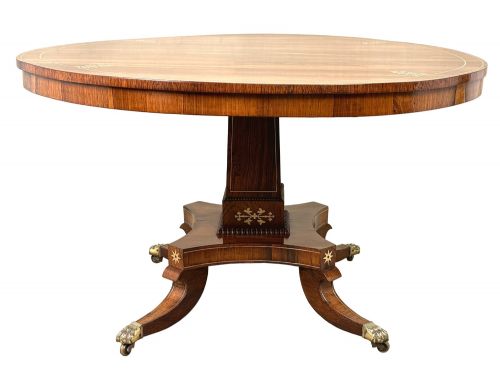


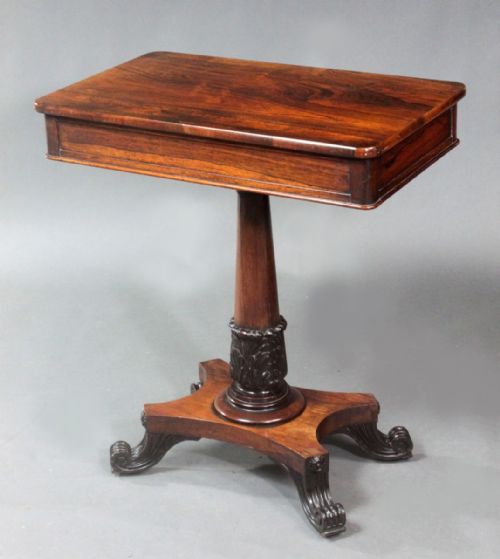


Quadform Base Occasional Table
These quadform base occasional table pieces offer compact utility and traditional timber grain, making them a practical addition to any sitting room.
Quadform Base Occasional Table
A quadform base occasional table groups compact furniture pieces designed for everyday placement beside seating or in the centre of a room. The selection here spans Regency, William IV, and Victorian periods, alongside specific dates from eighteen-fifty to eighteen-sixty.
The forms vary across side tables, lamp tables, centre tables, work tables, and dumb waiters. Most examples utilise timber frames supported by column or pedestal structures.
Buyers will find circular tops, tilt-top mechanisms, and inlaid surfaces among the listings. These formats provide functional occasional surfaces suited to period interiors.
Materials and construction methods
Cabinetmakers constructed these tables primarily from mahogany and rosewood, occasionally employing padouk, oak, and pollard oak. Surfaces often feature brass inlay, leather inserts, or gold leaf detailing.
Makers utilised solid timbers and veneers over secondary woods to achieve figured grain patterns. Pedestal supports and tilt-top mechanisms required precise joinery to ensure stability under daily use.
Quadform Base Occasional Table Retail Price Guide 2026
Typical asking prices for quadform base occasional table among the pieces listed under this phrase on Sellingantiques today, from the lower quarter to the upper quarter. They describe what is for sale here now, not the wider market.
Some nineteenth-century tables convert into dumb waiters for dining assistance.
Assessing quality in construction
Quality separates simple utility pieces from finer cabinet work through the crispness of brass inlay and the selection of timber veneers. Figured mahogany or richly grained rosewood indicates a higher grade of material choice.
The execution of turnings on pedestal columns and the smoothness of mechanisms such as tilt-tops or metamorphic actions define the level of craftsmanship invested by the maker.
The Quadform Base Occasional Table Glossary
- Regency
- A stylistic period spanning the early nineteenth century defined by classical restraint and influence from antiquity. Pieces from this era often incorporate rosewood and brass detail.
- William IV
- A transitional design phase during the eighteen-thirties favouring robust mahogany forms and bold architectural pedestals. This style bridges late Regency and early Victorian aesthetics.
- Tilt-top
- A hinged tabletop mechanism allowing the surface to fold vertical for storage when not in use. This clever engineering is typical of nineteenth-century occasional and side tables.
- Padouk
- A dense tropical hardwood displaying reddish-brown tones, utilised for its durability and fine finish. Cabinetmakers valued it for occasional furniture requiring resilience.
Quadform Base Occasional Table: Frequently Asked Questions
What is a quadform base occasional table?
It is a movable surface supported by a four-part or pedestal base, designed for flexible placement around a room.
These nineteenth-century examples served various domestic duties from holding lamps to supporting needlework.
How do I date a nineteenth-century table?
Dating relies on observing stylistic markers such as Regency curves, William IV heft, or Victorian proportions.
Material choices like rosewood or pollard oak also help place a piece within its historical decade.
Where should I place an occasional table?
These tables fit easily beside seating arrangements as lamp or side tables, or stand independently as centre pieces.
Their compact footprints allow them to integrate smoothly into traditional or mixed interiors.
What woods were commonly used?
Makers favoured mahogany and rosewood for their rich grains and suitability for polishing.
Exotic timbers like padouk and decorative elements such as brass inlay appear on finer examples.