


Inlaid Oak Desk
These pieces of inlaid oak desk span from the seventeenth century through the Edwardian period, combining dense timber with varied marquetry and parquetry.
Inlaid Oak Desk
An inlaid oak desk brings together heavy native timber and contrasting decorative veneers, covering forms such as bureau desks, fall front bookcases, pedestal desks, and writing slopes. You will encounter pieces originating from the seventeenth, eighteenth, and nineteenth centuries, alongside Edwardian examples.
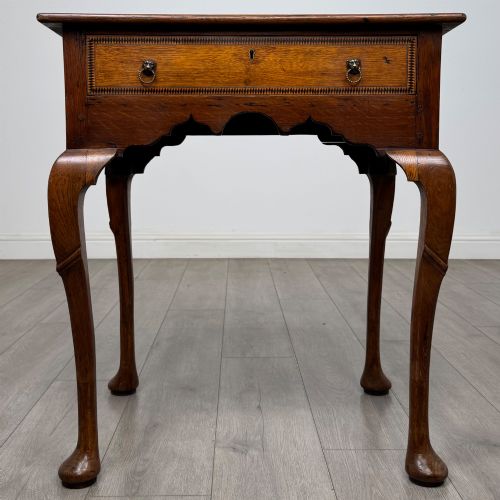
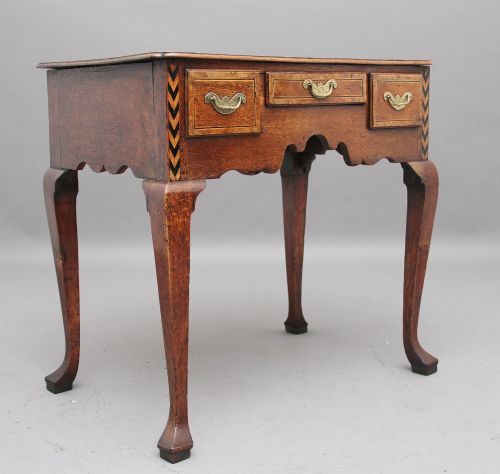
The domestic workspace takes many shapes across the record, including Welsh office bureaus, lowboys, and Carlton House variants. Oak provides the structural carcase, while lighter woods supply the contrasting patterns.
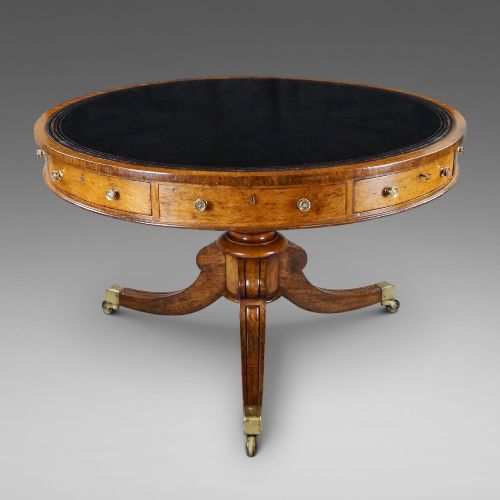
The domestic desk evolved from simple box forms and bureau desks on stands toward more complex pedestal arrangements by the Victorian and Edwardian eras. Simpler writing slopes and side tables with inlaid decoration also appear frequently.
Materials and Construction
Carpenters utilised solid oak for the primary framework and drawer linings, deploying quarter-sawn boards to display the timber's characteristic medullary rays. Secondary timbers such as mahogany, walnut, and satinwood occasionally support the main oak structure.
Decorative surfaces rely on wood inlay, marquetry, and parquetry, incorporating materials like holly and bog oak to achieve tonal contrast. Brass handles, leather writing surfaces, and glass elements complete the construction of the later nineteenth and early twentieth-century examples.
Listings feature oak combined with brass, leather, glass, walnut, satinwood, fruitwood, and wood inlay across multiple centuries.
Quality and Execution
The refinement of the contrasting wood inlay dictates the visual impact, ranging from simple geometric parquetry to elaborate floral marquetry panels. Precision in the joinery of the oak carcase and the retention of original brass hardware separate standard utility pieces from finer workshops.
Proportion and timber selection determine the standing of each item, with closely figured oak grain and crisp execution of the inlaid decoration marking the higher tier of execution.
Heals·Wright & Hunter of Belfast
The Inlaid Oak Desk Glossary
- Marquetry
- An elaborate technique of forming decorative patterns by fitting together thin veneers of various coloured woods. This method creates pictorial or geometric designs across the surface of the desk.
- Parquetry
- A geometric mosaic of wood pieces used for decorative floors and furniture surfaces. It relies on regular shapes like squares, triangles, and lozenges.
- Bureau
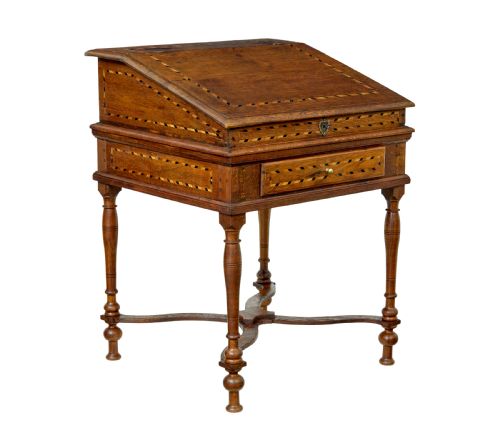
- A sloping desk that lifts or drops to reveal a writing surface and small interior compartments. Many examples sit upon a chest of drawers or a dedicated stand.
- Lowboy
- A small table with drawers, typically raised on four tall legs and constructed during the seventeenth and eighteenth centuries. It functions as a compact writing or dressing table.
- Crossbanding
- A border of veneer laid around the edge of a table top or drawer front with the grain running perpendicular to the central panel. It frames the primary wood.
Inlaid Oak Desk: Frequently Asked Questions
How do I date an inlaid oak desk?
Examine the construction methods of the drawers, the style of the brass hardware, and the complexity of the inlay. Earlier seventeenth and eighteenth-century pieces often display hand-cut dovetails and solid oak linings.
Later Victorian and Edwardian examples incorporate machine-sawn elements, lighter satinwood borders, and alternative secondary timbers like mahogany inside the drawers.
How should I care for an antique oak surface?
Maintain the timber by applying traditional beeswax sparingly and buffing it with a soft brush. Avoid modern silicone polishes that can build up and soften the historic finish.
Keep the desk away from direct heat sources and strong sunlight to prevent the oak from splitting and the inlaid veneers from lifting.
Where were these desks made?
The pieces originate from various regions including English workshops, Welsh country houses, and nineteenth-century Dutch makers. Regional preferences dictated whether local native oak was paired with simple geometric parquetry or more intricate floral marquetry.
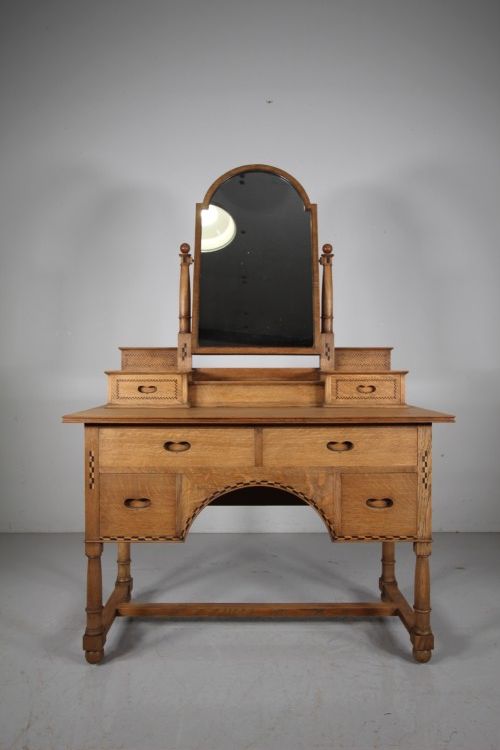
Documented examples also record production in Belfast and London workshops during the Arts and Crafts movement.