


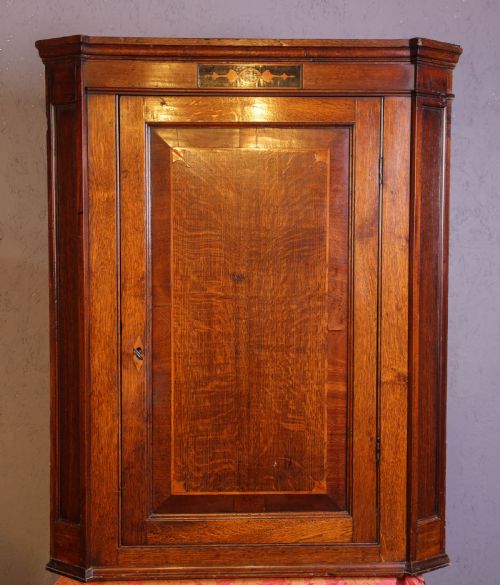


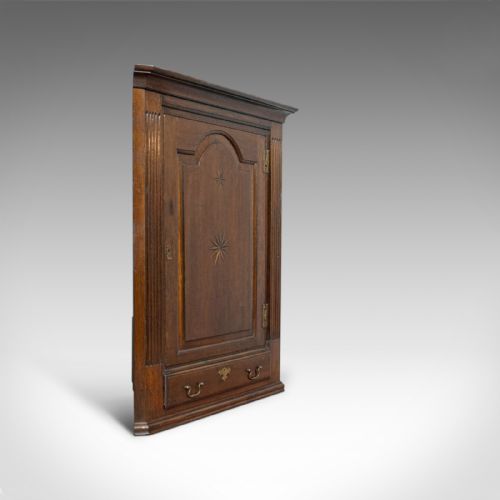


Inlaid Oak Corner Cupboard
These inlaid oak corner cupboard examples bring functional Georgian geometry to spare room angles, prized for warm timber and contrasting detail.
What They Are
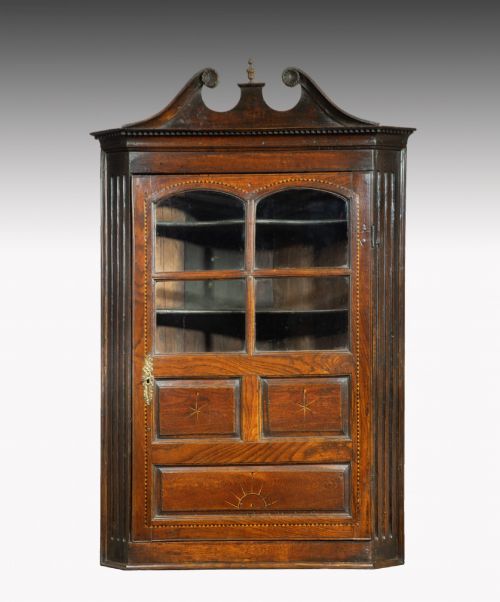
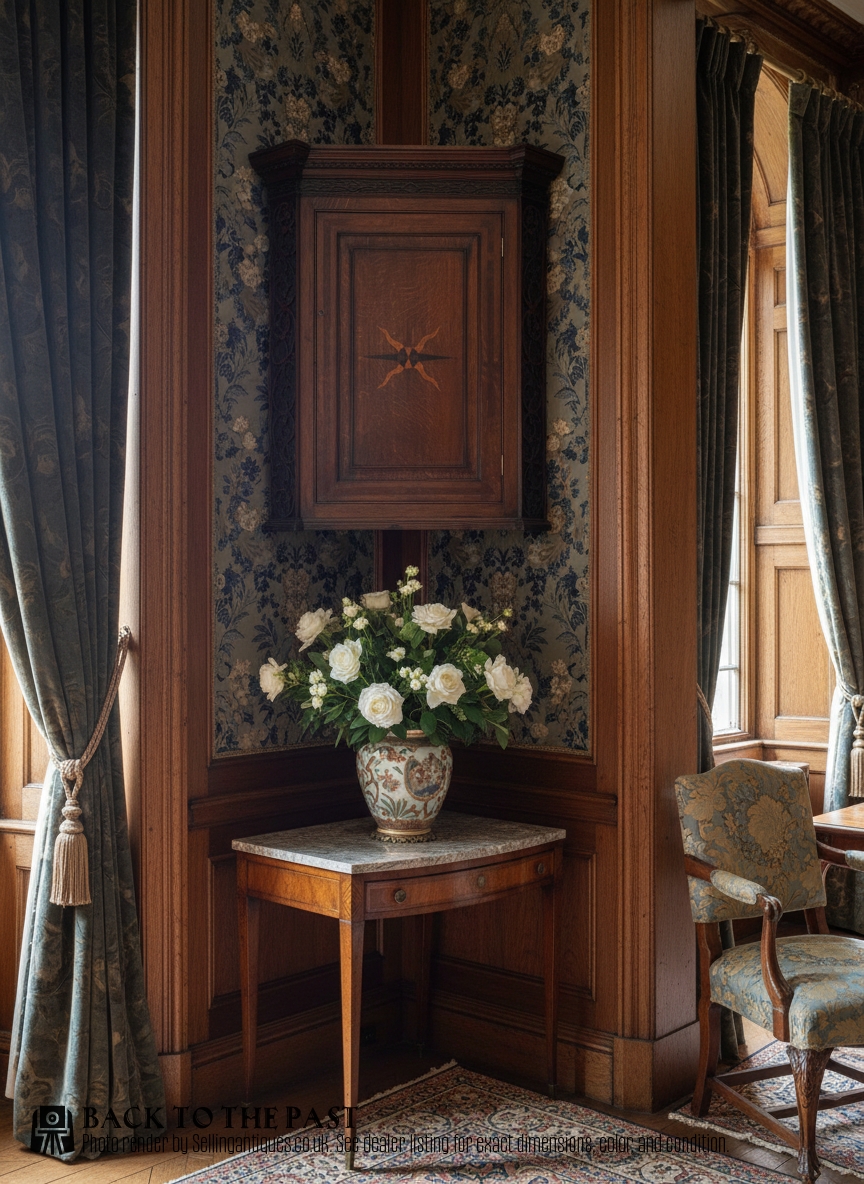
An inlaid oak corner cupboard is a wall-hanging cabinet designed to utilise room junctions, most frequently seen here in Georgian forms from the eighteenth and early nineteenth centuries. These pieces combine sturdy structural timber with decorative contrasting borders, serving as both practical storage and focal points.
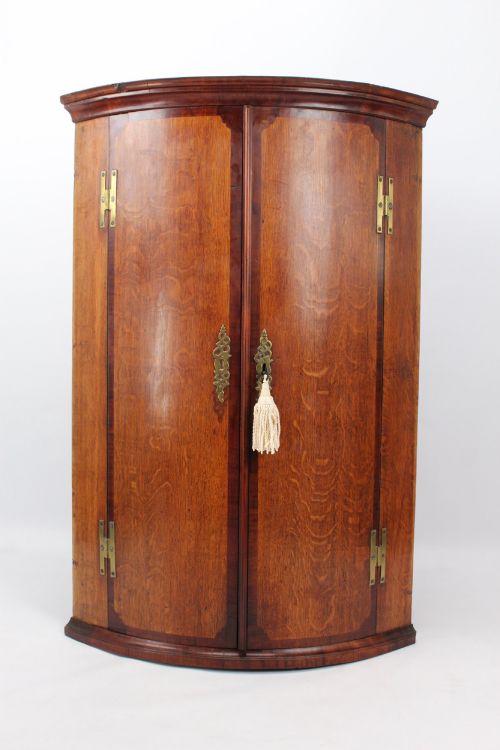
The versions most likely to be met on this page are George III wall-hanging cabinets, often featuring single doors. Many examples display barrel fronts or bow fronts that soften the rigid ninety-degree angle required to fit a wall corner.
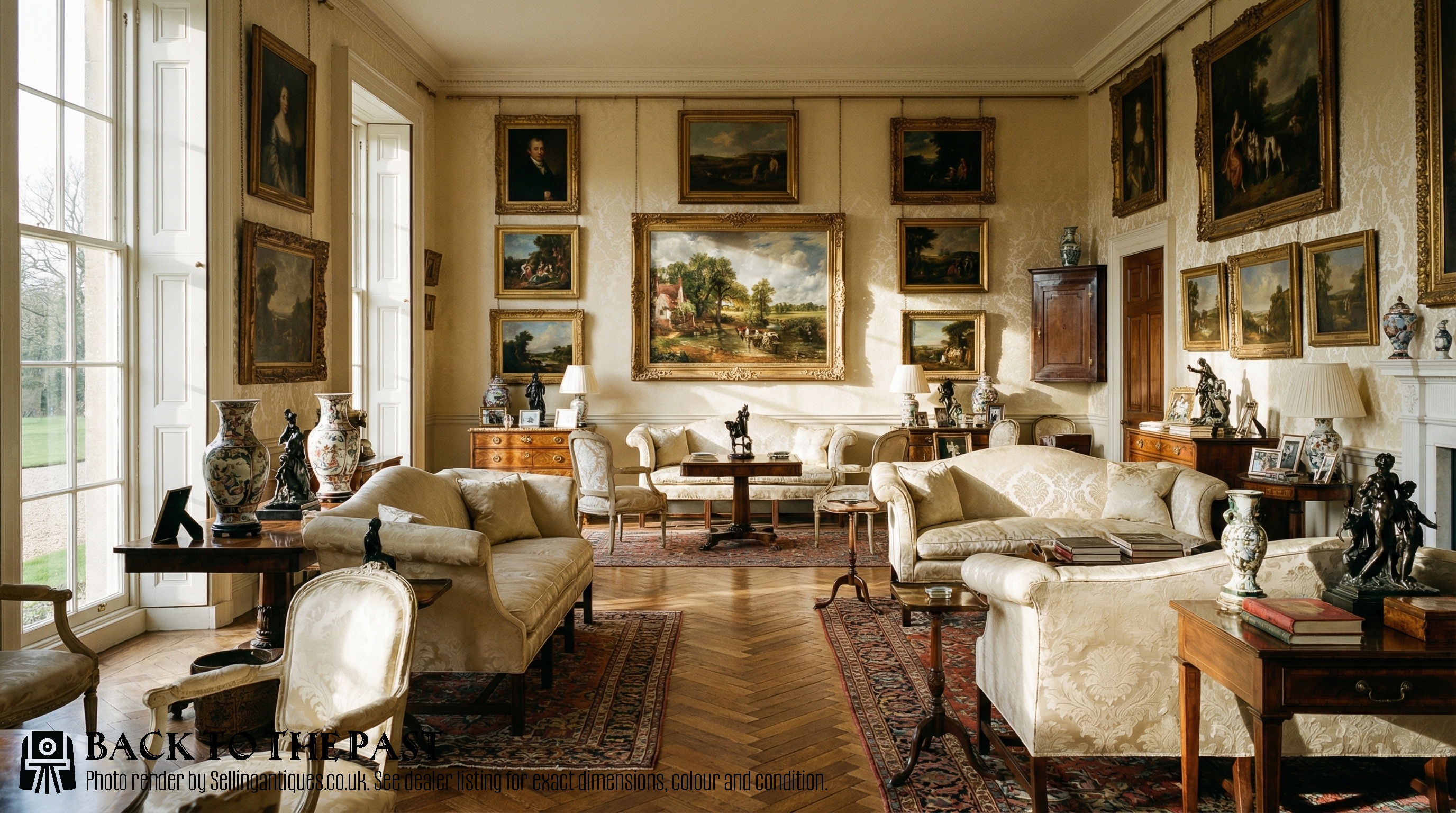
Makers designed these cupboards to maximise compact spaces while displaying the grain of native oak alongside darker or lighter decorative insertions. They reflect domestic requirements of the period, offering concealed shelving behind panelled or curved doors.
How They Were Made
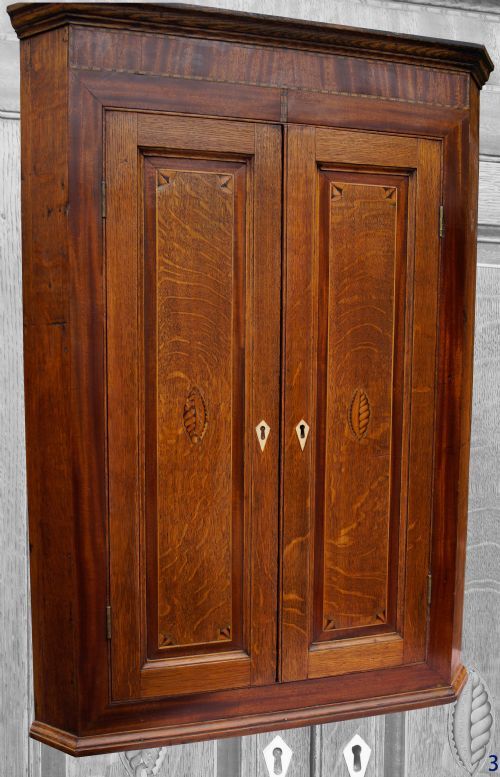
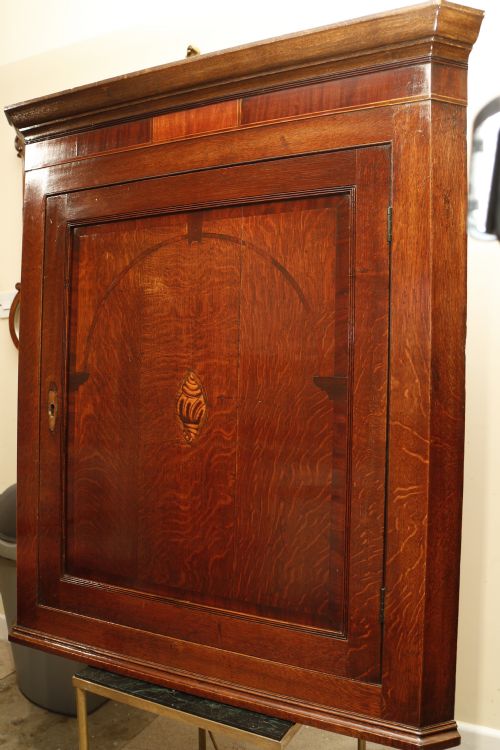
Cabinetmakers constructed these pieces primarily using solid oak for the primary carcass and door frames, often incorporating mahogany crossbanding and fruitwood or boxwood inlay to create geometric borders. Brass hardware such as hinges and escutcheons secured the doors and provided functional contrast to the dark timber.
Wood inlay techniques involved recessing thin strips or shaped pieces of contrasting timber into channels cut directly into the oak surface. Crossbanding laid grain patterns perpendicular to the main panels, framing the central door with precise linear precision.
Retail Price Guide 2026
Typical UK retail prices for inlaid oak corner cupboard, calculated from the Sellingantiques database of over a million retail prices indexed since 2003. This retail price guide relies exclusively on Sellingantiques data; no external sources or auction records are used, so the figures do not describe the wider market.
Several cupboards were historically pressed into service as makeshift drinks cabinets, keeping spirits safely tucked away in the corner.
What Varies in Quality
Quality rests in the crispness of the timber selection and the precision of the contrasting inlay work. Finer examples display tightly figured oak grain paired with meticulously fitted boxwood and fruitwood stringing that remains flush with the surrounding surface.
The sophistication of the silhouette defines the upper tier of these pieces, particularly where bow fronts or barrel curves are executed with seamless joinery. Brass mounts and original hinges further separate standard utility pieces from more ambitious cabinet work.
The Inlaid Oak Corner Cupboard Glossary
- Crossbanding
- A border technique where thin strips of veneer are laid with the grain running perpendicular to the adjacent surface. This frames panels with a neat, contrasting perimeter.
- Boxwood
- A dense, pale hardwood frequently utilised for fine inlay lines and stringing. Its uniform texture allows for sharp geometric definition.
- Bow front
- A convex curved cabinet front that projects outward from the corner. This shape softens the profile of a wall-mounted piece.
- George III
- The stylistic period spanning the mid to late eighteenth century. Furniture from this era often balances classical proportions with restrained decorative inlay.
Frequently Asked Questions
How do I hang a corner cupboard safely?
These wall-hanging cabinets require secure fixing directly into wall studs or masonry using appropriate brackets. Because the timber and contents carry substantial weight, professional installation ensures the carcass remains stable.
Positioning the cupboard at a comfortable eye level allows easy access to internal shelves while maintaining balanced proportions within the room.
What rooms suit an oak corner cupboard?
Dining rooms, hallways and studies provide natural homes for these cabinets, utilising awkward wall junctions without consuming floor space. Their compact footprint makes them practical for smaller interiors.
Placing the piece away from direct heat sources protects the antique oak and delicate wood inlay from drying and splitting over time.
How do I identify a George III period piece?
Examination of the timber construction, joinery methods and secondary woods helps determine the eighteenth-century origin. Hand-cut dovetails and traditional fixings indicate period manufacture.
Inlay styles typical of the era, such as boxwood stringing and mahogany crossbanding, provide further clues to dating when compared against standard Georgian design conventions.
How should I clean the inlaid wood?
Dusting with a soft, dry cloth prevents the buildup of particles in the grain and around the inlaid borders. Avoid modern chemical polishes that can degrade historical finishes.
Occasional application of traditional beeswax feeds the oak and preserves the subtle sheen of the fruitwood and boxwood details without harming the surface.