


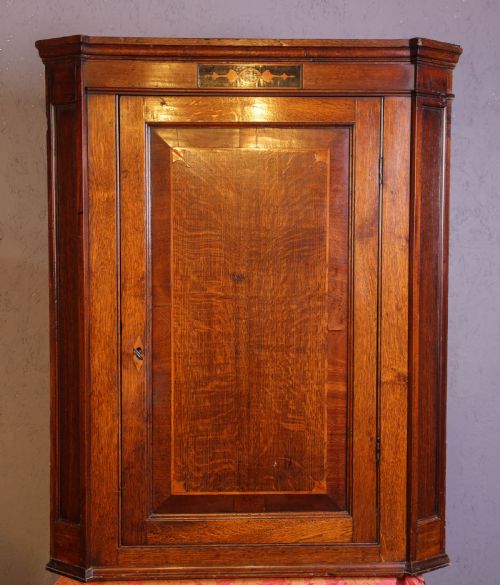


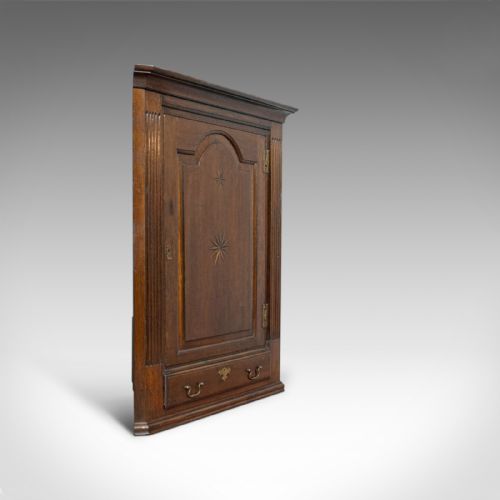


Inlaid Oak Corner Cabinet
An inlaid oak corner cabinet turns unused wall space into a display of figured timber and precise joinery.
Inlaid Oak Corner Cabinet
These pieces are wall-hanging cupboards designed specifically to fit the intersection of two walls, making efficient use of dead space in domestic interiors. When you search for an inlaid oak corner cabinet, you encounter Georgian forms originating predominantly from the eighteenth century and the year 1800.
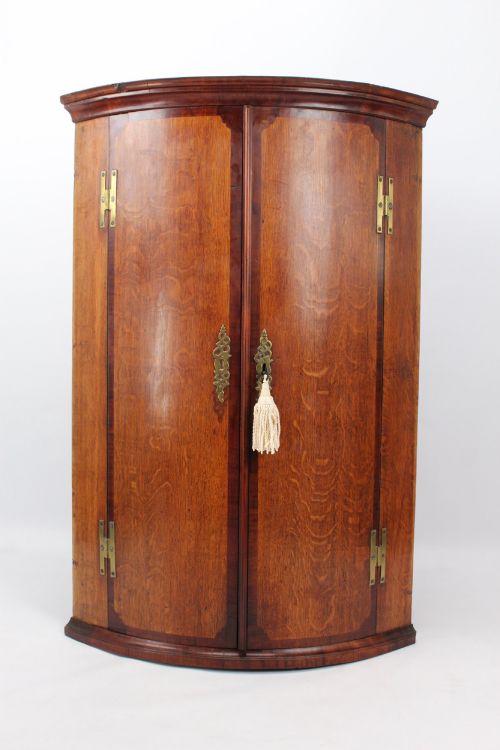
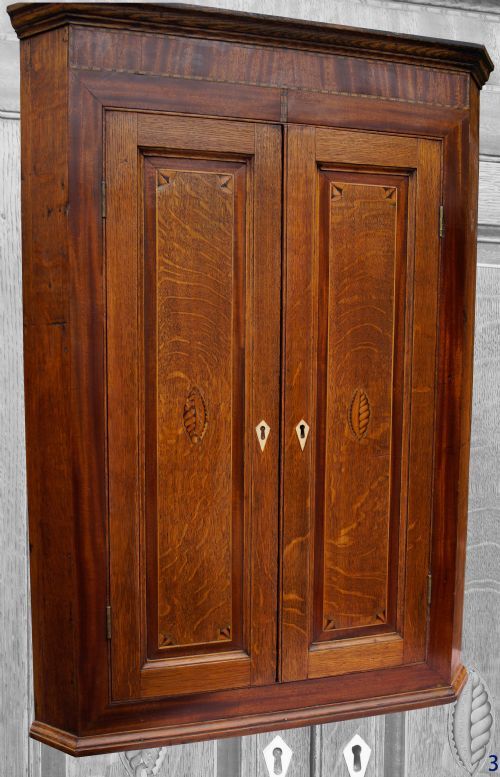
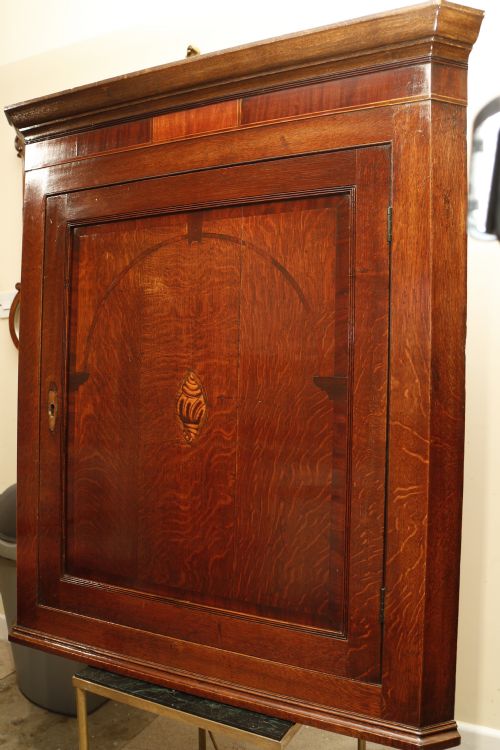
The dominant formats on this page are hanging corner cupboards and wall cabinets, often featuring bowed or flat fronts. Surviving examples frequently combine structural oak carcasses with contrasting timber inlays and mahogany crossbanding.
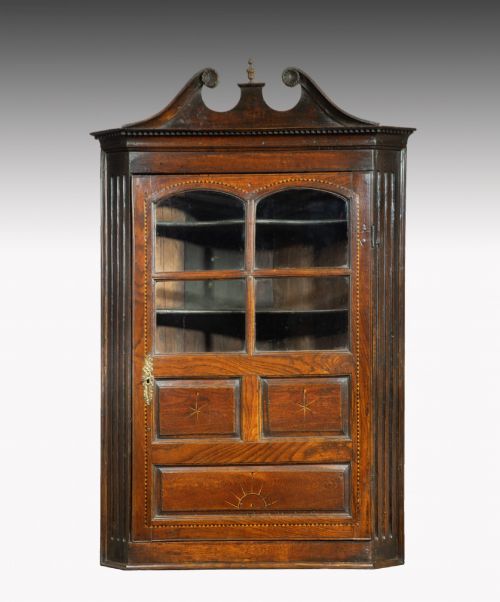
Most entries belong to the Georgian and George III periods, displaying the traditional proportions and architectural cornices typical of the era. Buyers find both panelled door variations and glazed display configurations designed to house glassware or china.
Construction and materials
Cabinet makers built the primary carcase and doors using solid oak, sometimes utilising mahogany for crossbanding and framing. Timber panels were hand-planed and joined with traditional framing techniques to accommodate seasonal wood movement.
Decorative surface detail relies on contrasting wood inlay, fruitwood, and satinwood to create geometric stringing or marquetry motifs. Brass H-hinges, escutcheons, and working locks complete the construction of these wall-mounted cupboards.
Form variations include flat-fronted panels, glazed display doors, and bowed barrel fronts.
Markers of quality
Quality rests upon the crispness of the cabinet maker's joinery and the depth of figure in the oak. Superior pieces display finely executed mahogany crossbanding and precise fruitwood or satinwood inlay rather than rudimentary painted decoration.
The choice of internal shelving configuration and the retention of original brass hardware elevate an example above standard utilitarian storage. Construction neatness inside the cupboard, including secondary softwood or oak linings, indicates the maker's original standard of production.
The Inlaid Oak Corner Cabinet Glossary
- Crossbanding
- A border technique where thin strips of veneer are laid across the grain of the primary timber to frame a panel. This adds a refined linear boundary to the door front.
- Marquetry
- The art of forming decorative patterns using fitted pieces of various coloured wood veneers. It appears on finer cabinet doors to create floral or geometric pictures.
- Escutcheon
- A protective brass plate surrounding a keyhole. It secures the wood from wear and adds a metallic accent to the cabinet door.
- Cornice
- The decorative moulded projection running along the top edge of the cabinet. It crowns the structure and mirrors architectural room mouldings of the period.
- Stringing
- Thin lines of contrasting wood inlay embedded flush into the surface of the oak. It traces geometric borders around panels and drawer fronts.
Inlaid Oak Corner Cabinet: Frequently Asked Questions
How do I hang a heavy oak corner cabinet safely?
These wall-hanging pieces require secure fixing directly into brickwork or sturdy internal wall studs using heavy-duty brackets. The weight of solid oak and glass demands professional installation to ensure stability.
Distributing the load prevents the antique carcass from twisting or pulling away from the corner junction under its own weight.
Were these cabinets originally meant for drinks?
Georgian households utilised these wall cupboards primarily for storing tableware, spices, or medicinal bottles rather than general household provisions. Their elevated corner position kept contents secure and out of the reach of children.
Later adaptations sometimes repurpose the enclosed space for glassware or spirits storage due to the convenient shelf depth.
How do I tell an 18th-century cabinet from a later copy?
Examine the internal construction, timber shrinkage, and hand-cut joinery marks behind the door panels and shelves. Eighteenth-century examples display irregular hand-planed board surfaces and wrought iron or early brass fixings.
Machine-sawn timber, modern screws, and uniform interior finishes typically indicate nineteenth-century production or later restoration work.
What is the difference between a bow front and a flat front?
Flat front cabinets feature a planar door set at a forty-five-degree angle to the room, fitting flush into the corner walls. Bow front versions project outward with a curved door profile that requires specialised curved framing.
Bow front examples provide slightly more internal volume and introduce a softer visual curve to sharp room angles.