
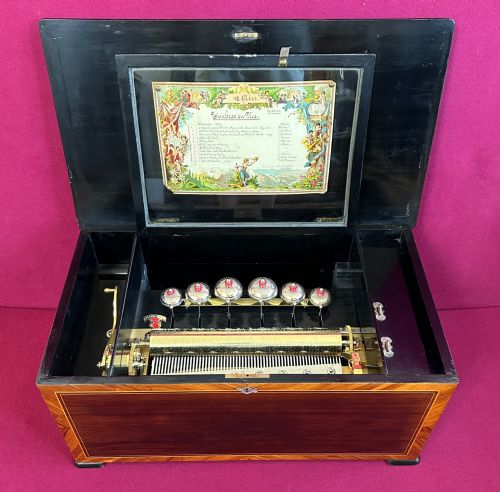


Inlaid Music Box
An inlaid music box brings mechanical melody and intricate wood marquetry together, offering both visual elegance and historic charm for your home.
Inlaid Music Box
When you search for an inlaid music box, you encounter pieces designed to entertain through pinned cylinders and tuned steel combs housed in decorated wooden enclosures. These items date primarily from the Victorian era and the nineteenth century, often originating from Swiss workshops.
The most common examples on this page are Victorian cylinder music boxes featuring marquetry inlay on rosewood or walnut cases. Alongside traditional tabletop boxes, the selection includes related items such as music cabinets, musical chairs, and stools incorporating inlaid wooden details.
Materials and Construction
Casing construction relies on dense timbers like rosewood, walnut, and mahogany, frequently enhanced with boxwood and brass detailing. Artisans applied marquetry inlay to create pictorial or geometric patterns across the lids and drawer fronts.
Internal mechanics depend on steel combs and pinned brass cylinders driven by spring motors, sometimes wound with keys or hand cranks. Certain models integrate additional components such as glass covers and visible bells to complement the sound production.
Materials span rosewood and walnut inlaid with boxwood, complemented by brass mechanisms and steel combs.
Assessing Quality and Craftsmanship
Distinction in quality rests upon the complexity of the internal movement, such as the number of airs played and the inclusion of mechanical elements like bells. Finer mechanisms produce a richer tone and demonstrate superior precision in the pinning of the brass cylinder.
The execution of the exterior marquetry inlay and the choice of cabinet wood dictate visual merit. Dense timbers like rosewood and walnut, paired with crisp boxwood detailing and well-preserved finishes, separate standard pieces from superior examples.
Langdorff & Fils·Nicole Freres·LeCoultre
The Inlaid Music Box Glossary
- Cylinder
- The rotating brass barrel set with tiny pins that pluck the teeth of the steel comb to produce the tune. Each pin must be positioned with exact precision to ensure correct timing and pitch.
- Airs
- The individual musical tunes or melodies that a box is pinned to play during a single rotation cycle. Larger boxes often accommodate a greater number of distinct airs.
- Marquetry
- The art of applying small pieces of varied veneers to a structure to form decorative patterns or pictures. This technique defines the exterior appearance of many Victorian and Edwardian cases.
- Comb
- The tuned, flat piece of steel with multiple teeth that vibrates when struck by the pins on the rotating cylinder. The quality of the steel dictates the resonance of the sound.
- Gonçalo Alves
- A dense, highly figured tropical hardwood sometimes utilised in the construction of Edwardian music cabinets. Its striking grain patterns lend a distinct visual character to the piece.
Inlaid Music Box: Frequently Asked Questions
How do cylinder music boxes work?
A wound spring turns a pinned brass cylinder, causing the projecting pins to pluck specific teeth on a tuned steel comb. This mechanical action plays the programmed melodies in sequence.
Additional components like governors regulate the speed of rotation, while optional bells strike at designated intervals to add complexity to the performance.
What woods were used for the cases?
Cabinet makers utilised dense exotic and domestic timbers including rosewood, walnut, and mahogany for the primary structure. These woods provided a stable acoustic chamber and a dark ground for decorative work.
Boxwood and other lighter veneers were integrated specifically for the marquetry inlay, creating contrast within the geometric or floral patterns on the lid.
How many airs do these boxes play?
Standard musical boxes typically play between six and twelve distinct airs during a complete cycle of the cylinder. The number of tunes depends on the length of the cylinder and the complexity of the pinning.
Each air corresponds to a specific section of the rotating brass barrel, engaging different combinations of teeth on the steel comb.
Where were most nineteenth century boxes made?
The majority of nineteenth-century cylinder boxes originated in Switzerland, which became a major centre for mechanical music production. Workshops in towns like Sainte-Croix exported instruments worldwide.
Many of these Swiss movements were housed in British-market cases or retailed through specialised music and jewellery establishments in London and the provinces.
How should I care for an antique music box?
Keep the mechanism away from direct sunlight, excessive moisture, and rapid temperature changes to protect both the wooden case and the internal steel components. Regular maintenance by a specialist ensures the spring and comb remain in working order.
Wind the mechanism gently without over-tightening, and allow the current tune to finish playing before shifting levers or changing settings.