
Inlaid Mother of Pearl
Pieces bearing inlaid mother of pearl catch the eye through iridescent shimmer set into dark wood, papier-mâché, or lacquer.
Inlaid Mother of Pearl
Inlaid mother of pearl describes decorative items where luminous shell sections are embedded into a contrasting ground to form geometric patterns or pictorial motifs. A buyer examining this selection encounters diverse forms spanning the nineteenth and early twentieth centuries, reflecting global traditions.
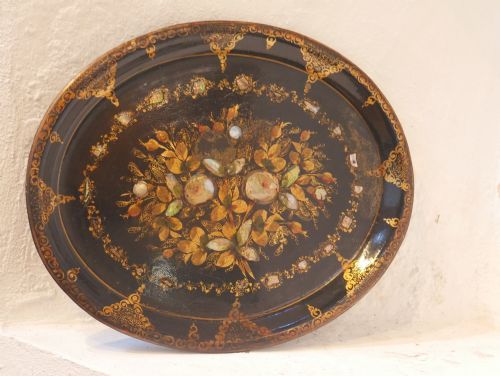
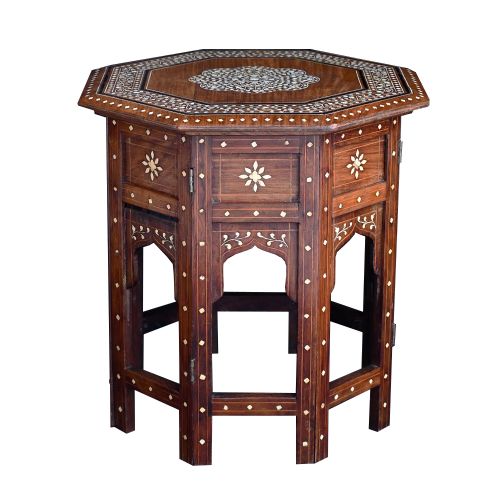
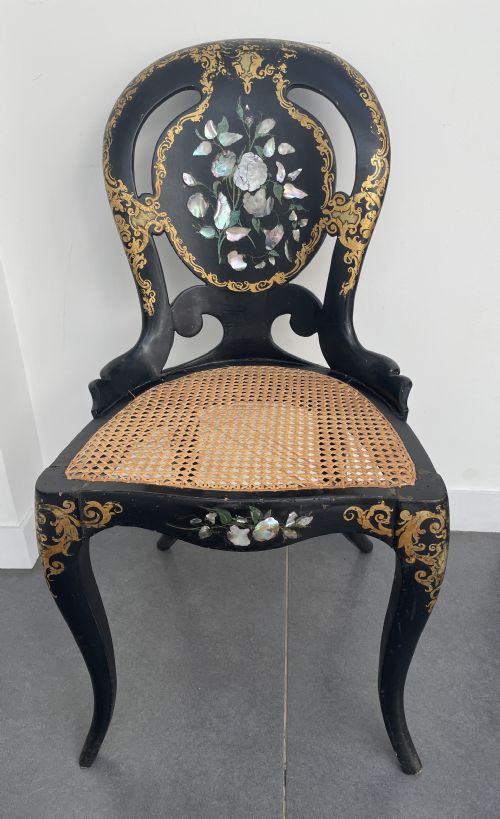
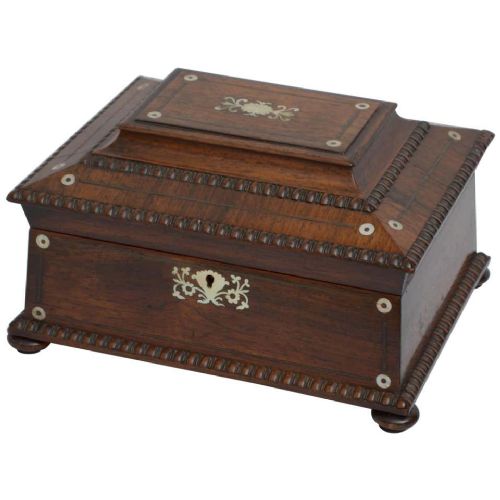
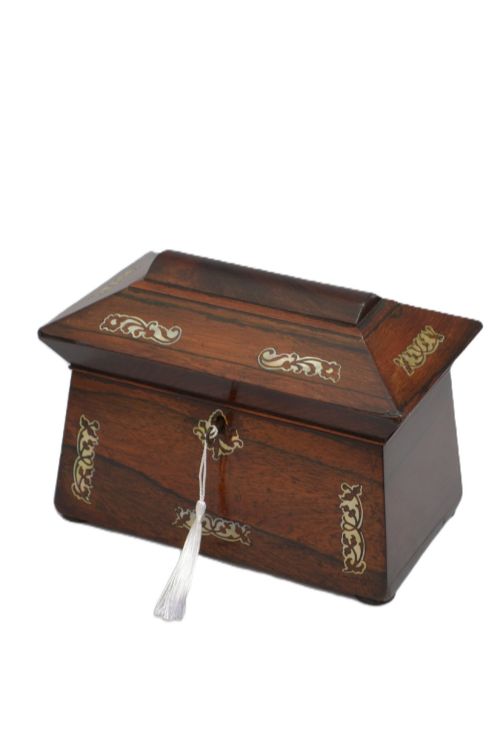
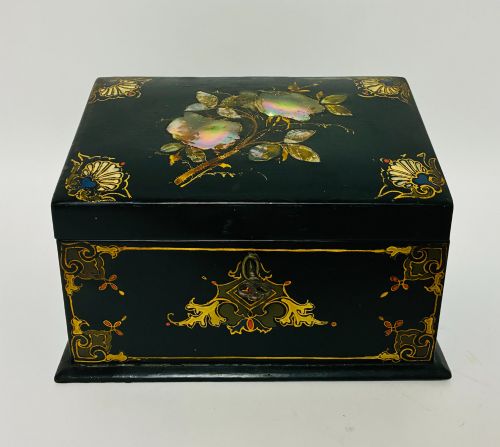
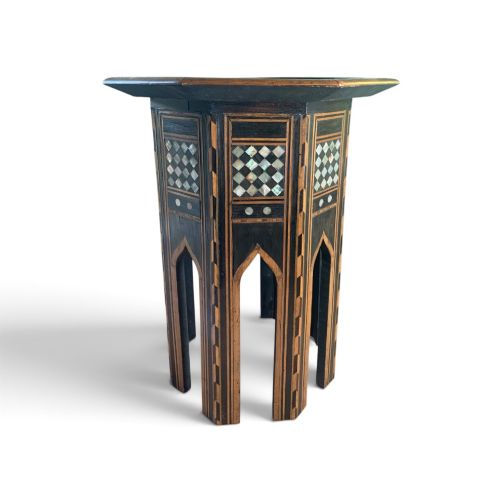
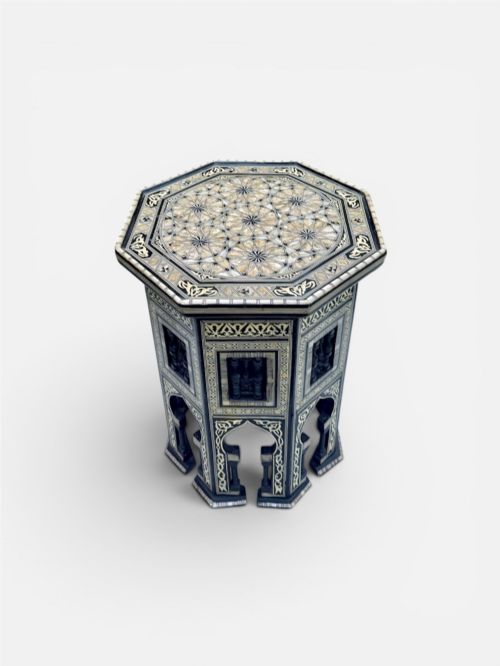
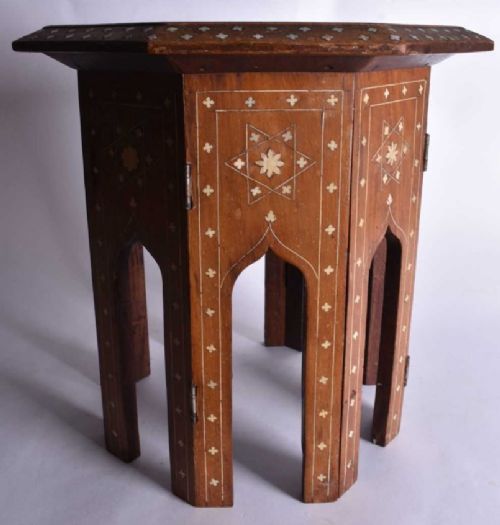
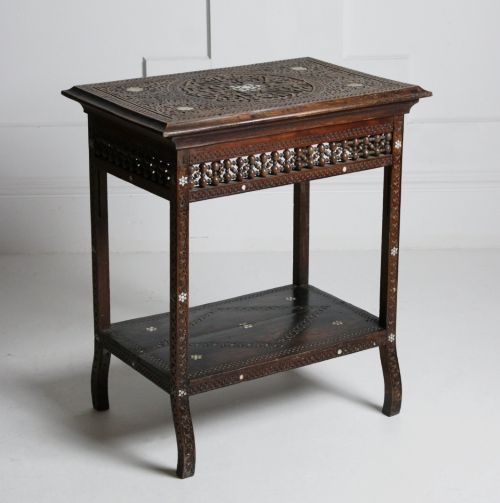
The objects vary widely in utility and scale, ranging from small personal accessories like card cases, tea caddies, and writing boxes to larger furnishings such as octagonal Damascus tables, cabinets, and chairs. English Victorian pieces frequently utilise black papier-mâché or rosewood, whilst Middle Eastern and Asian works incorporate hardwood, bone, and intricate parquetry.
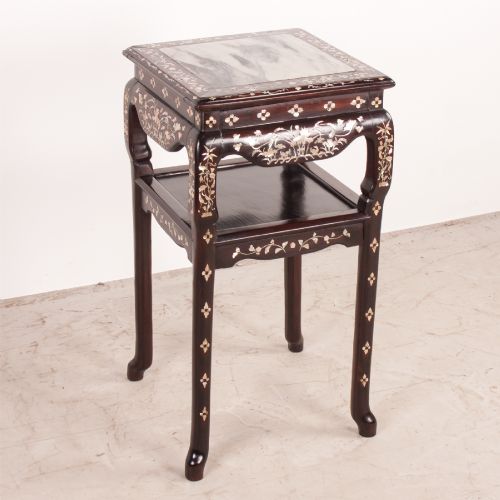
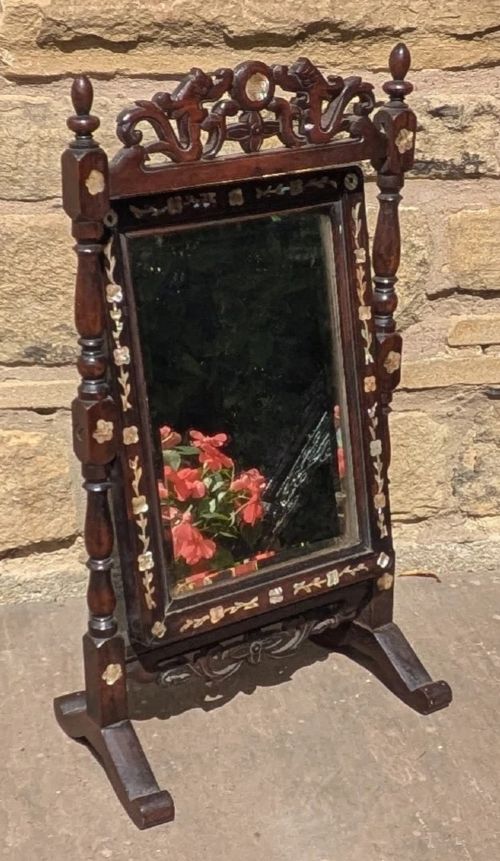
Geographic origins shape the inventory significantly, bringing together English Victorian craftsmanship, Syrian and Moorish revival workshops from Damascus, and East Asian lacquerware or hardwood furniture from China and Japan. Tables, mirrors, and games boards dominate the larger items, while boxes and trays represent the smaller domestic pieces.
Materials and Techniques
Craftsmen shaped thin plates of iridescent shell, alongside bone and brass wire, fitting them meticulously into hand-cut recesses within a solid or veneered timber base. Woods such as walnut, rosewood, coromandel, ebony, and lacquered papier-mâché provided the dark, stable ground necessary to contrast the bright nacre.
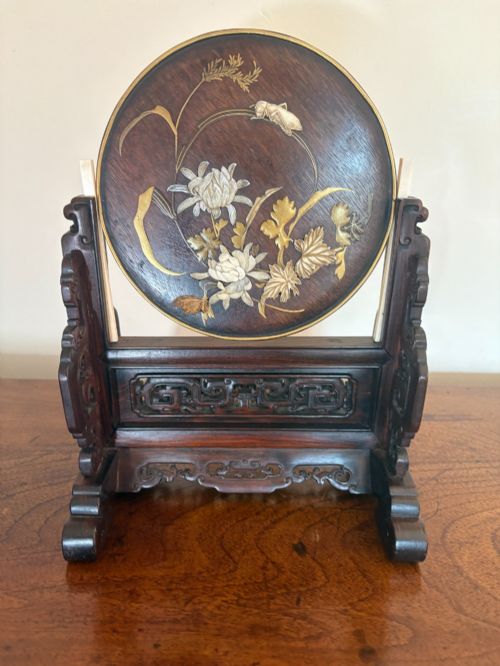
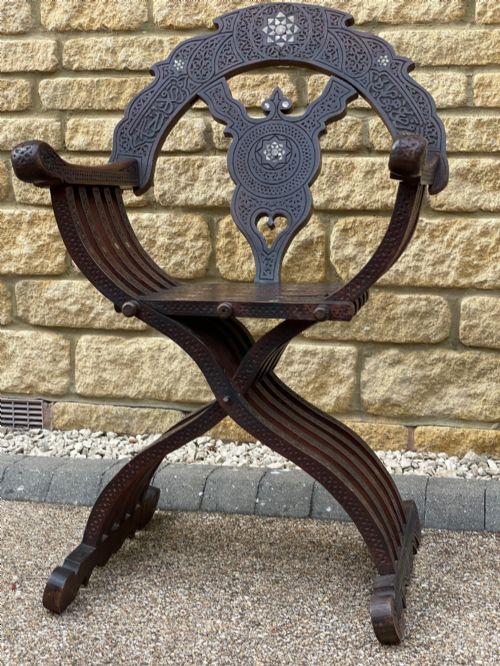
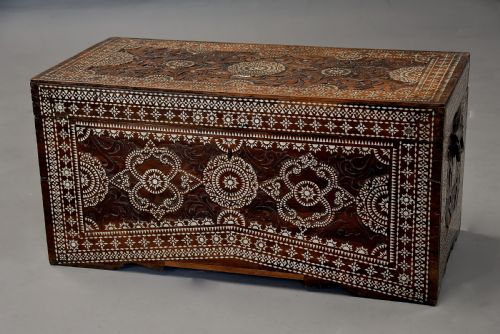
In Syrian and Moorish workshops, artisans combined mother of pearl with geometric wood marquetry and bone elements to cover entire surfaces in intricate tessellations. East Asian makers applied similar shell fragments into dark lacquer or dense hardwoods like hongmu and padouk, often securing them with layers of clear finish or engraving fine surface details.
Even a pair of nineteenth-century wooden shoes received the mother of pearl treatment.
Craftsmanship and Design
Quality rests upon the precision of the inlay work, where tight joints between the shell and the surrounding wood indicate superior handling by the maker. Pieces displaying well-preserved engraving across the nacre and complete, balanced geometric patterns command greater regard than those with missing tesserae or careless filler.
The selection of the shell itself influences distinction, with iridescent grades showing deep prismatic flashes rather than flat white opacity. Additionally, the complexity of the underlying structure - such as multi-wood parquetry or heavy carved framing - separates standard utility items from ambitious cabinet work.
Jennens and Bettridge·August Ungethüm·Liberty and Co
The Inlaid Mother of Pearl Glossary
- Parquetry
- Geometric mosaic woodwork formed by small veneer blocks fitted together. This technique frequently frames the shell in table tops and boxes.
- Papier-mâché
- A composite material made from paper pulp or layers of paper bound with glue, then pressed and dried. Victorian makers lacquered and inlaid this substance to create durable trays and caddies.
- Mashrabiya
- An architectural element of turned wood latticework found in Middle Eastern design. It appears alongside shell inlay in mirrors and furniture.
- Shodona
- A Japanese tabletop cabinet with asymmetrical shelving and compartments. These pieces often feature lacquer and mother of pearl decoration.
- Writing slope
- A portable desk with a slanted lid that opens to reveal a velvet-lined writing surface and compartments for stationery. They frequently incorporate extensive boxwood and shell inlays.
- Tessera
- An individual small block of stone, glass, or shell used in mosaic work. In these pieces, each shell fragment acts as a tessera within the wider pattern.
Inlaid Mother of Pearl: Frequently Asked Questions
How do I clean inlaid mother of pearl?
Dust surfaces gently with a dry, soft cloth to prevent abrasive particles from scratching the softer shell and wood components. Avoid harsh chemical cleaners, moisture, and polishes that can seep under the lifted edges of the inlay.
Condition the surrounding timber occasionally with appropriate wax if the wood appears dry. Take care not to apply wax directly onto exposed or unsealed shell sections.
What is a tea caddy?
A tea caddy is a specialised box designed to store loose tea leaves securely when tea was an expensive commodity. They often feature internal lidded compartments and mixing bowls.
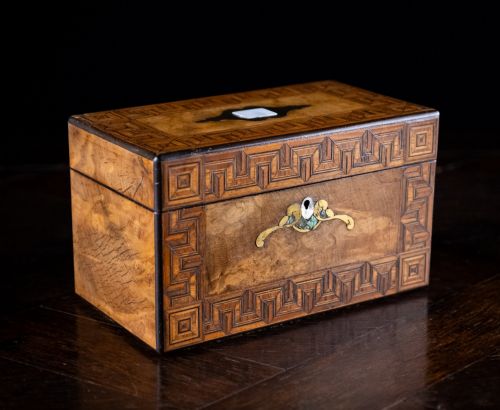
Victorian examples frequently showcase intricate mother of pearl inlay on rosewood or papier-mâché. Their decorative nature meant they sat proudly on the parlour table during the nineteenth century.
How do I tell Syrian tables apart?
Syrian and Moorish tables typically feature an octagonal folding frame constructed from dense hardwood. The surfaces are densely covered in geometric bone and mother of pearl inlay.
European Victorian interpretations of these styles may use simpler ebonised wood structures with sparser shell decoration. Examining the construction of the folding mechanism helps distinguish regional workshops.
Were these items used daily?
Many items served practical domestic roles in Victorian and Edwardian households, from serving trays to card tables and sewing boxes. Their decorative finishes indicate they belonged in reception rooms rather than back quarters.
Writing slopes and card cases facilitated correspondence and evening entertainment. Their survival reflects both their utility and the care owners took with delicate materials.