


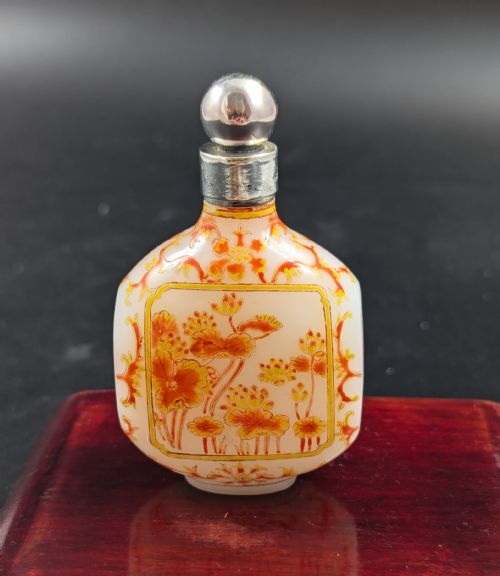


Antique Chinese Scent Bottle
These antique chinese scent bottle pieces are small, portable works of art from the Qing Dynasty and Art Deco periods, collected for their intricate carving and miniature scale.
Antique Chinese Scent Bottle
When you search for an antique chinese scent bottle, you encounter miniature vessels primarily designed as snuff bottles, fashioned during the Qing Dynasty and into the Art Deco period.
The pieces on this page span the nineteenth century, including specific dates such as 1850, 1890, 1900, and 1920, representing both standard forms and larger cabinet examples.
You see forms originating from Chinese workshops alongside items bearing European finishing, such as the Cartier Paris mounting combined with carved shadow agate.
How they were made
Maker techniques rely on the careful carving of hardstones like rock crystal, quartz, and agate, often utilising openwork methods such as the master-carved Linglong prunus design.
Pottery and glass production involves famille rose porcelain, enamelled white glass with Guyue Xuan marks, Peking glass overlay, and inside painting executed through the narrow neck of the vessel.
Mounts and closures incorporate solid silver and 18-carat gold, while other examples utilise natural coral, metal, and jade combined with mother of pearl.
Antique Chinese Scent Bottle Retail Price Guide 2026
Typical asking prices for chinese scent bottle among the pieces listed under this phrase on Sellingantiques today, from the lower quarter to the upper quarter. They describe what is for sale here now, not the wider market.
What varies in quality
Quality rests upon the precision of the lapidary work and the depth of the relief carving, where undercut dragons or openwork branches demonstrate exceptional technical control.
Surface decoration dictates value through the crispness of famille rose enamel application, the clarity of inside-painted scenes, and the successful integration of natural stone inclusions.
Cartier Paris·Guyue Xuan mark
The Antique Chinese Scent Bottle Glossary
- Qing Dynasty
- The final imperial dynasty of China, lasting from 1644 until 1912. Most carved hardstone and porcelain vessels date from this era.
- Famille Rose
- A palette of opaque enamel colours introduced in the Qing Dynasty, dominated by pink and rose shades used for delicate figural painting.
- Peking Glass
- Chinese coloured glass made using overlay techniques where contrasting layers are carved away to reveal the background colour.
- Inside-Painted
- A technique where artists paint detailed miniature scenes on the interior surface of translucent glass or crystal bottles using bent brushes.
Antique Chinese Scent Bottle: Frequently Asked Questions
What is an antique chinese scent bottle?
These miniature vessels were primarily produced as snuff bottles during the Qing Dynasty and later periods, designed to hold powdered tobacco or aromatic substances. They function as portable displays of fine craftsmanship.
Collectors prize them for the wide variety of materials used, ranging from carved agate and rock crystal to painted porcelain and overlaid glass.
How were they used?
Owners carried personal amounts of powdered snuff inside these small containers, using a tiny spoon attached to the stopper for dispensing. They were held in the hand during social interactions and admired for their tactile qualities.
Over time, many transitioned from functional personal items into cabinet pieces collected for their artistic merit and miniature scale.
How do I date an antique chinese scent bottle?
Dating relies on stylistic evidence, materials, and reign marks, with many pieces originating across the nineteenth century and into the early twentieth century. Art Deco examples reflect Western retail partnerships, such as French mountings added to Asian carvings.
Examining the wear on the base, the technique of the interior hollowing, and the composition of the stoppers helps establish the period of manufacture.
How should I display them?
Because of their small size, these pieces suit cabinet display where adequate lighting highlights translucent materials like rock crystal, jade, and Peking glass. Placing them away from direct sunlight protects delicate painted surfaces and coral elements.
Handling them requires care, particularly with pieces featuring intricate openwork branches or precious metal mounts.