
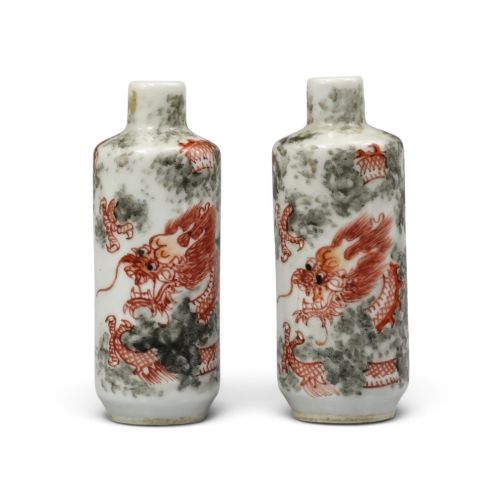


19th Century Chinese Bottle
A 19th century chinese bottle brings miniature artistry and imperial porcelain to your cabinet through intricate snuff bottles and cabinet vases.
19th Century Chinese Bottle
A 19th century chinese bottle principally takes the form of small snuff bottles and cabinet vases produced during the Qing Dynasty, particularly the Guangxu and Daoguang periods. You will encounter porcelain vessels alongside hardstone examples carved from jade, rock crystal, and rose quartz.
The assortment on this page leans heavily toward snuff bottles decorated with figural scenes, dragons, and enamel work, alongside larger vase forms. These pieces reflect the intricate craftsmanship demanded by the imperial court and domestic elites during the nineteenth century.
How They Were Made
Potters and artisans utilised porcelain painted with cobalt oxide, iron-red, and famille rose enamel to create detailed surfaces on snuff bottles and vases. Crackle glazes and celadon finishes also appear, showing traditional high-temperature kiln techniques.
Hardstone vessels required patient carving in materials such as spinach-green nephrite jade, rock crystal, and ivory. Openwork carving, known as linglong, demanded precise toolwork to pierce the stone without fracturing the vessel.
Listings feature porcelain, jade, rock crystal, and ivory across the nineteenth century, including specific pieces from the Guangxu and Daoguang periods.
What Varies in Quality
The distinction between ordinary and superior pieces rests on the precision of the carving and the delicacy of the enamel painting. Master-carved rock crystal or spinach jade displays depth and clean lines that lesser stones lack.
Painted porcelain quality depends on the control of iron-red and famille rose pigments, where finely drawn dragons or figural expressions separate standard production from exceptional imperial-style works.
The 19th Century Chinese Bottle Glossary
- Famille rose
- A major palette of Chinese ceramic glazes introduced in the eighteenth century, dominated by opaque pink enamel. It allowed for subtle tonal gradations in figural and floral scenes.
- Celadon
- A term for ceramics denoting both wares glazed in jade-green hues and the green glaze itself. This finish mimics the prized appearance of jade.
- Qing Dynasty
- The final imperial dynasty of China, lasting from sixteen-forty-four to nineteen-twelve. Production from this era defines the majority of these bottles.
- Nephrite jade
- A dense, tough silicate mineral carved into vessels and ornaments. Spinach-green varieties are particularly noted for their dark green tones and natural inclusions.
19th Century Chinese Bottle: Frequently Asked Questions
What were 19th century chinese bottles used for?
These vessels primarily served to hold powdered tobacco, which was consumed as snuff among the Qing Dynasty elite. Ivory, porcelain, and jade containers functioned as personal accessories and symbols of status.
Larger examples, such as the bottle vases recorded in the evidence, were displayed in domestic interiors and cabinet collections. Their detailed painted and carved surfaces were meant for close appreciation.
How do I identify a Guangxu-period piece?
Guangxu-period pieces date from the late nineteenth century and often feature specific decorative schemes, such as iron-red dragons amidst vaporous clouds on porcelain. Examining the style of the painting helps connect the object to this late Qing reign.
Comparing the baseline materials and glaze types against known Qing Dynasty standards aids attribution. Consultation with broader historical benchmarks supports accurate dating.
What is linglong carving?
Linglong refers to intricate openwork carving executed on hardstones like rock crystal. Artisans cut through the material to create layered, pierced designs that remain structurally sound.
This technique demands significant skill from the carver to maintain symmetry and delicacy. Pieces bearing this mark denote superior workshop output.
Are these bottles made of jade?
Certain bottles are carved from genuine nephrite jade, including spinach-green varieties. Other vessels utilise rock crystal, rose quartz, ivory, or porcelain instead of stone.
Materials vary widely across the inventory, reflecting the diverse preferences of nineteenth-century makers. Inspecting the surface texture and weight clarifies the medium.