
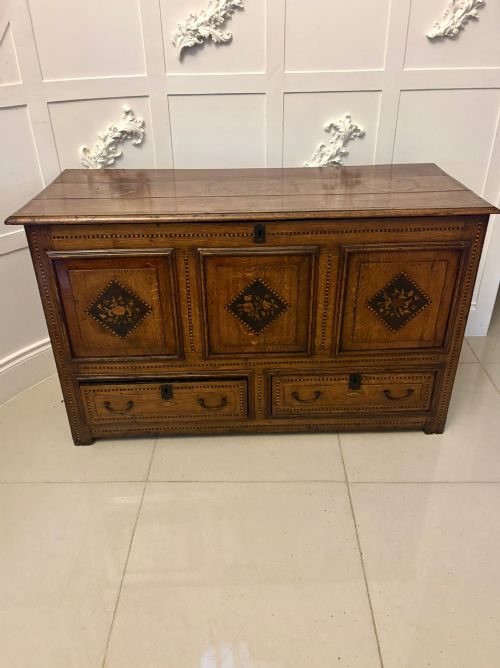
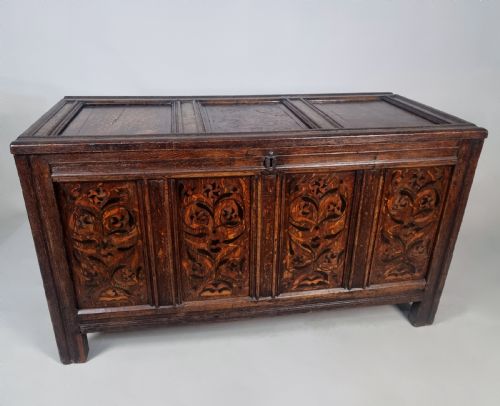
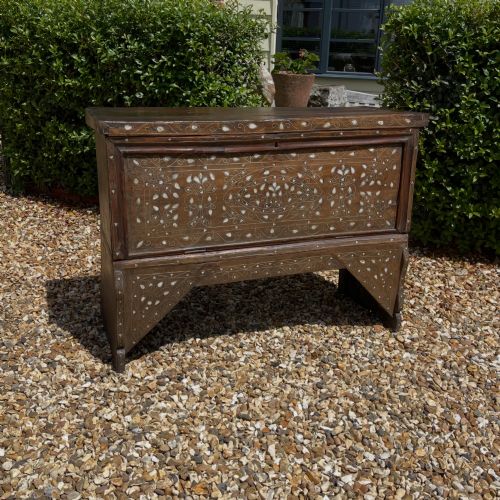


Inlaid Marquetry Trunk
These inlaid marquetry trunk pieces bring pattern and presence to a room, offering genuine period storage with intricate surface detail.
Inlaid Marquetry Trunk
An inlaid marquetry trunk appears across several distinct periods, most commonly taking the form of a robust coffer, mule chest or blanket box. These pieces serve as functional storage vessels while displaying decorative wood veneers and geometric patterns.
The selection ranges from early oak coffers dated to the sixteenth and seventeenth centuries through to nineteenth-century continental walnut dome coffers and Syrian inlaid trunks. Buyers meet various regional interpretations, including Scottish, Welsh and Dutch examples.
Beyond standard blanket chests, the broader category includes related items like travelling cabinets, tool chests and longcase clocks that share the defining marquetry and inlay characteristics.
How They Were Made
Carinthian and regional craftsmen built the primary carcass of these pieces using sturdy timbers such as oak, walnut, mahogany and rosewood. These foundational woods provided the structural strength required for heavy domestic storage.
Surface decoration relies on marquetry inlay, combining contrasting woods alongside materials like brass, glass, iron and mother-of-pearl. Artisans cut these elements precisely to fit flush within the timber ground, creating pictorial or geometric designs.
Some trunks doubled as travelling companions, carrying the private tools and trinkets of cabinet makers across Georgian roads.
What Varies in Quality
The standard of an inlaid marquetry trunk depends upon the precision of the veneer work and the complexity of the contrasting materials. Tighter joints between individual veneer pieces and sharper definition in the pattern separate finer examples from simpler provincial work.
The integrity of the primary timber structure and the survival of the original surface patination dictate the standing of a piece. Finer examples retain their original hinges, locks and internal fittings without intrusive modern repairs.
The Inlaid Marquetry Trunk Glossary
- Marquetry inlay
- A decorative technique where small pieces of wood, metal or shell are fitted into a veneer to form geometric or pictorial designs. This method transforms a plain wooden surface into a patterned panel.
- Coffer
- A heavy wooden chest traditionally used for storing valuables, textiles or documents. These sturdy boxes often feature hinged lids and raised feet.
- Mule chest
- A traditional storage chest featuring one or more drawers beneath the main compartment. They bridge the design gap between a simple coffer and a chest of drawers.
- Drop dial wall clock
- A wall-mounted timepiece featuring an extended trunk or case below the circular dial. Many examples incorporate glass panels and decorative wood veneers.
- Arcaded coffer
- A chest adorned with carved or inlaid arches along the front panel. This architectural detail is typical of earlier period pieces.
Inlaid Marquetry Trunk: Frequently Asked Questions
What is an inlaid marquetry trunk?
An inlaid marquetry trunk is a wooden storage box decorated with fitted patterns of contrasting wood veneers and materials. These pieces range from early oak coffers to later continental walnut designs.
Craftsmen utilised precise cutting techniques to embed decorative motifs directly into the surface of the trunk, combining utility with ornamental appeal.
How were these trunks used historically?
Historically, these trunks served as secure storage for valuable household textiles, clothing, documents and personal belongings. Their robust construction protected contents from dust and dampness in domestic settings.
Many examples included internal compartments or lower drawers to help organise smaller items like tools or precious papers.
How do I date an antique trunk?
Dating relies on examining the construction methods, timber species, hardware and style of the marquetry decoration. Earlier pieces often utilise solid oak with hand-cut joinery, while later examples incorporate walnut or mahogany.
Stylistic cues such as arcading, Elizabethan Revival motifs or specific regional veneer patterns help narrow down the period of origin.
Where should I place a trunk in my home?
These trunks function well as blanket boxes at the foot of a bed, as coffee tables in a living space, or as hallway storage. Their decorative tops and panelled sides make them visually engaging from multiple angles.
Placement should avoid direct sunlight and extreme temperature fluctuations to protect the delicate wood veneers and historic timbers.