
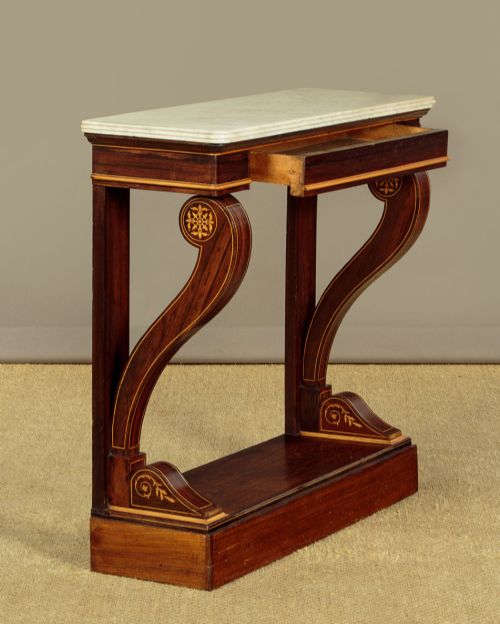
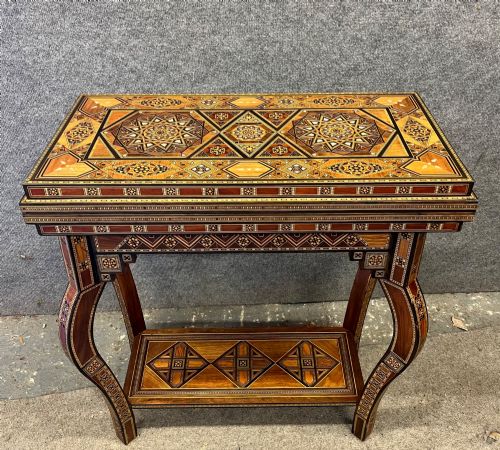
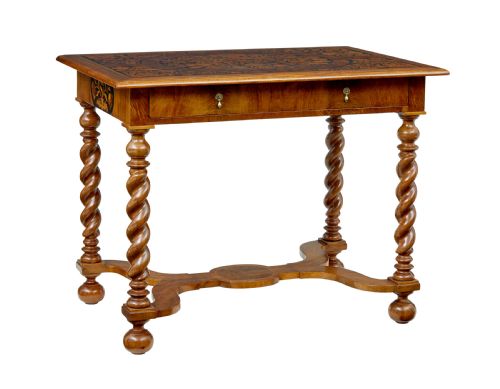
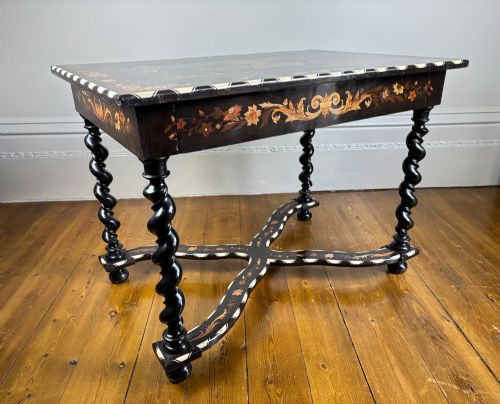
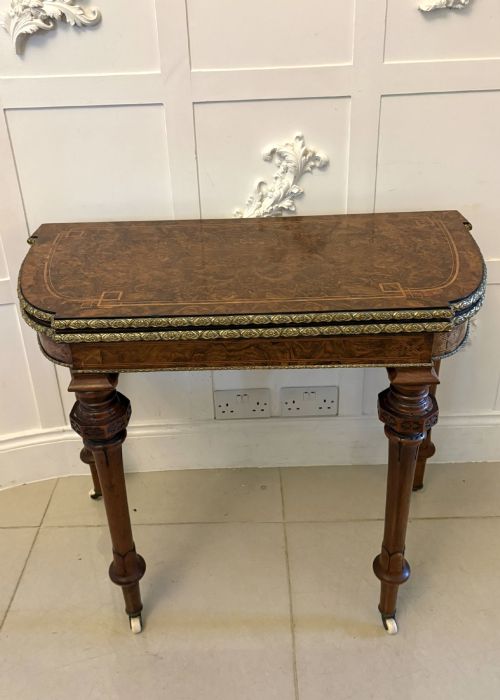
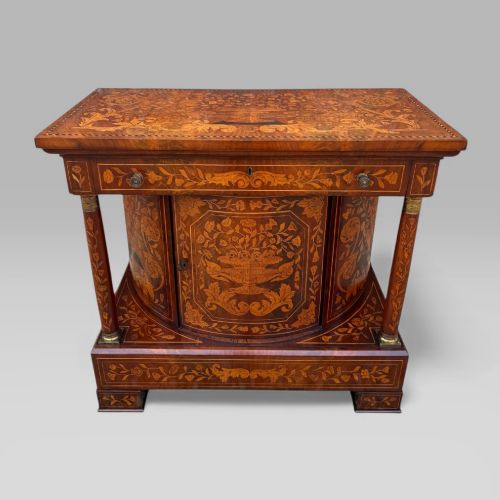
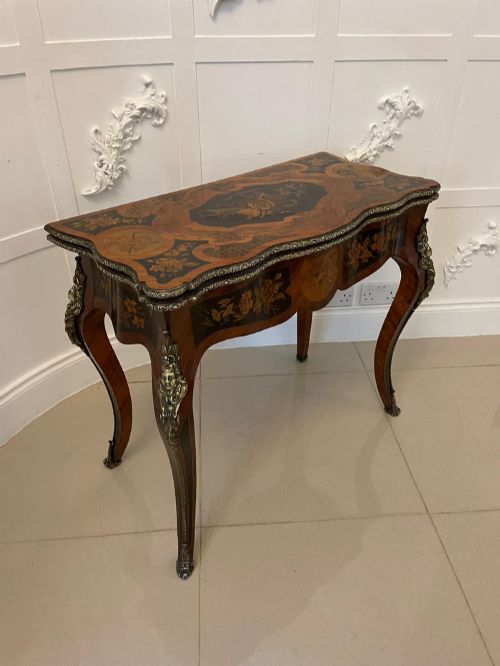

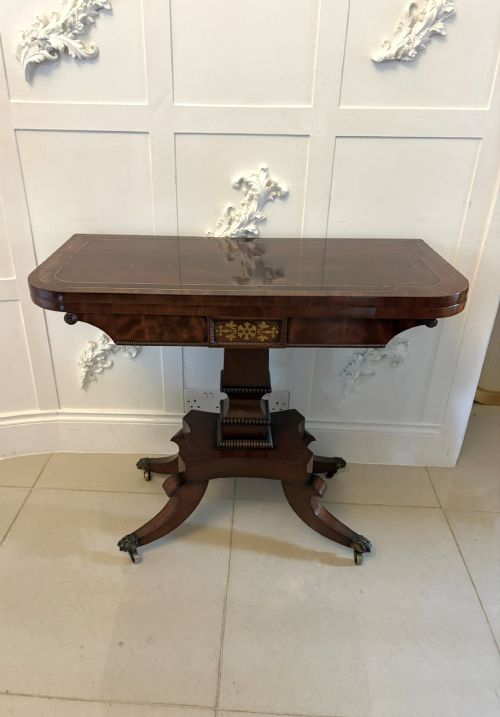
Inlaid Marquetry Console Table
When you search for an inlaid marquetry console table, you are looking at decorative timber furniture built for display and surface use from the seventeenth century onward.
Inlaid Marquetry Console Table
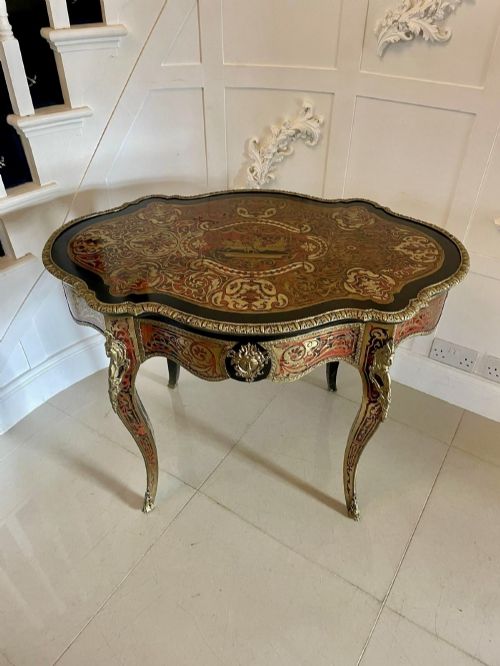
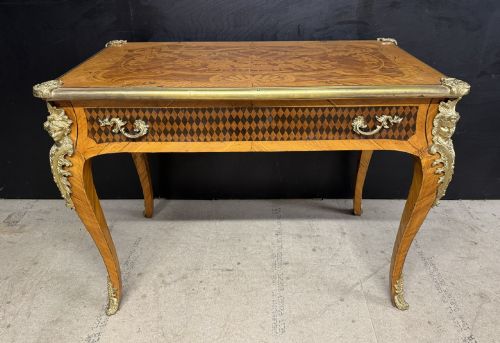
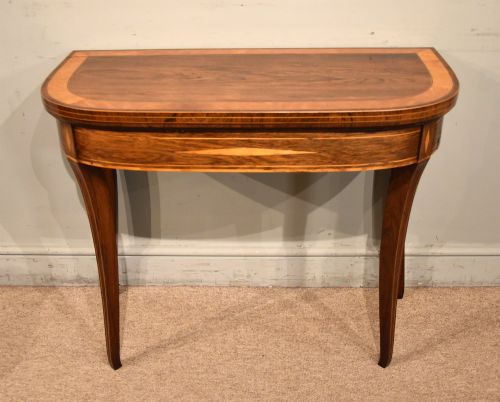
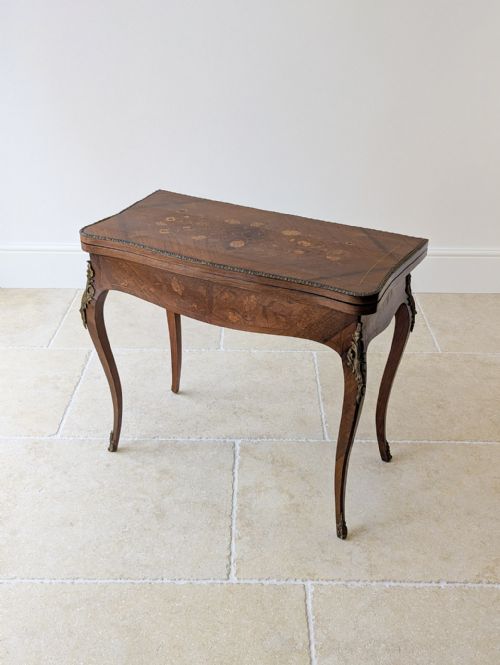
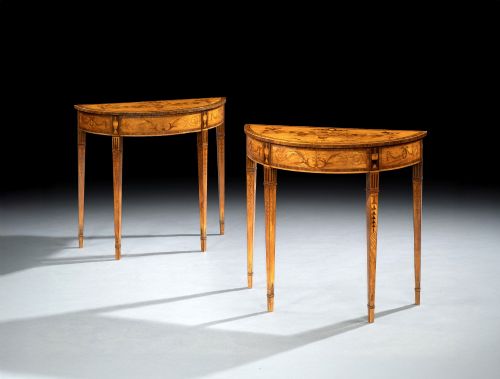
An inlaid marquetry console table combines structural timber frames with detailed surface decoration arranged in geometric or pictorial patterns. The pieces appearing under this search phrase span seventeenth-century origins through the Victorian era and the twentieth century, taking forms such as demi-lune side tables, fold-over card tables, and wall-fixed consoles.
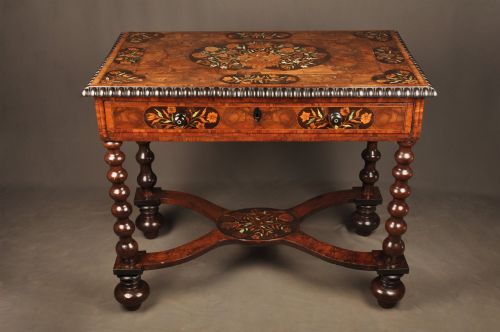
The survival of these tables ranges from early English oak and Dutch walnut examples to nineteenth-century French kingwood and burr walnut creations. Many items share functions with card tables and games tables, featuring hinged tops that open against a wall or stand in the centre of a room.
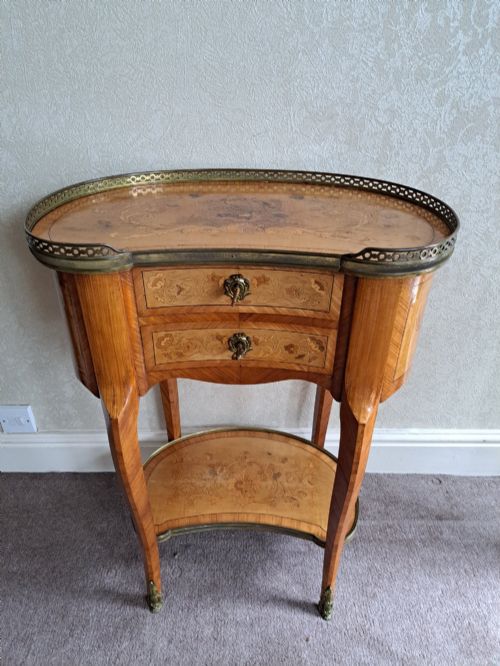
Makers and workshops across England, France, and the Netherlands produced these forms in styles including George III, Regency, and Louis XV Revival. Buyers meet varied profiles, from satinwood demi-lune pier tables to robust mahogany wall cabinets.
Materials and construction
Cabinetmakers built the structural carcases of these tables using solid timbers such as mahogany, walnut, oak, and rosewood. Veneers of exotic woods like satinwood, kingwood, and maple form the background for intricate surface decoration.
Marquetry inlay involves cutting thin slices of contrasting woods, bone, or mother-of-pearl to form floral, bird, or geometric designs pressed into the surface. Metal elements such as brass stringing, gilt bronze, and ormolu mounts provide structural framing and decorative edge protection.
Some Dutch tables hide floral marquetry birds that watch silently over centuries of card games.
Indicators of quality
The standard of a marquetry console table rests on the precision of the timber cut and the tightness of the veneer joints. Smoother transitions between contrasting woods and sharper floral details distinguish workshop production from standard output.
The integration of cast ormolu mounts and the weight of secondary timbers indicate the original cost of production. Tables retaining original hinges, brass inlay, and undisturbed surface patination hold greater integrity than altered examples.
George Bullock·Millet·Gillows
The Inlaid Marquetry Console Table Glossary
- Marquetry inlay
- A decorative technique where small pieces of veneer are fitted together to form pictorial or geometric designs on a timber ground. This method differs from simple incised carving by using contrasting wood tones.
- Ormolu
- Gilt bronze ornamentation applied to furniture edges, mounts, and legs during the eighteenth and nineteenth centuries. The technique involves applying a gold amalgam to cast bronze.
- Demi-lune
- A half-moon shape used for table tops and side furniture designed to stand flush against a wall. This profile became common in George III and Neo-Classical designs.
- Boulle
- A style of marquetry using tortoiseshell and brass inlay developed in France. It appears on nineteenth-century centre and console tables.
- Fold-over top
- A hinged table surface that opens to double its area for card playing or dining. Many console tables incorporate this mechanism.
Inlaid Marquetry Console Table: Frequently Asked Questions
Where did people place console tables?
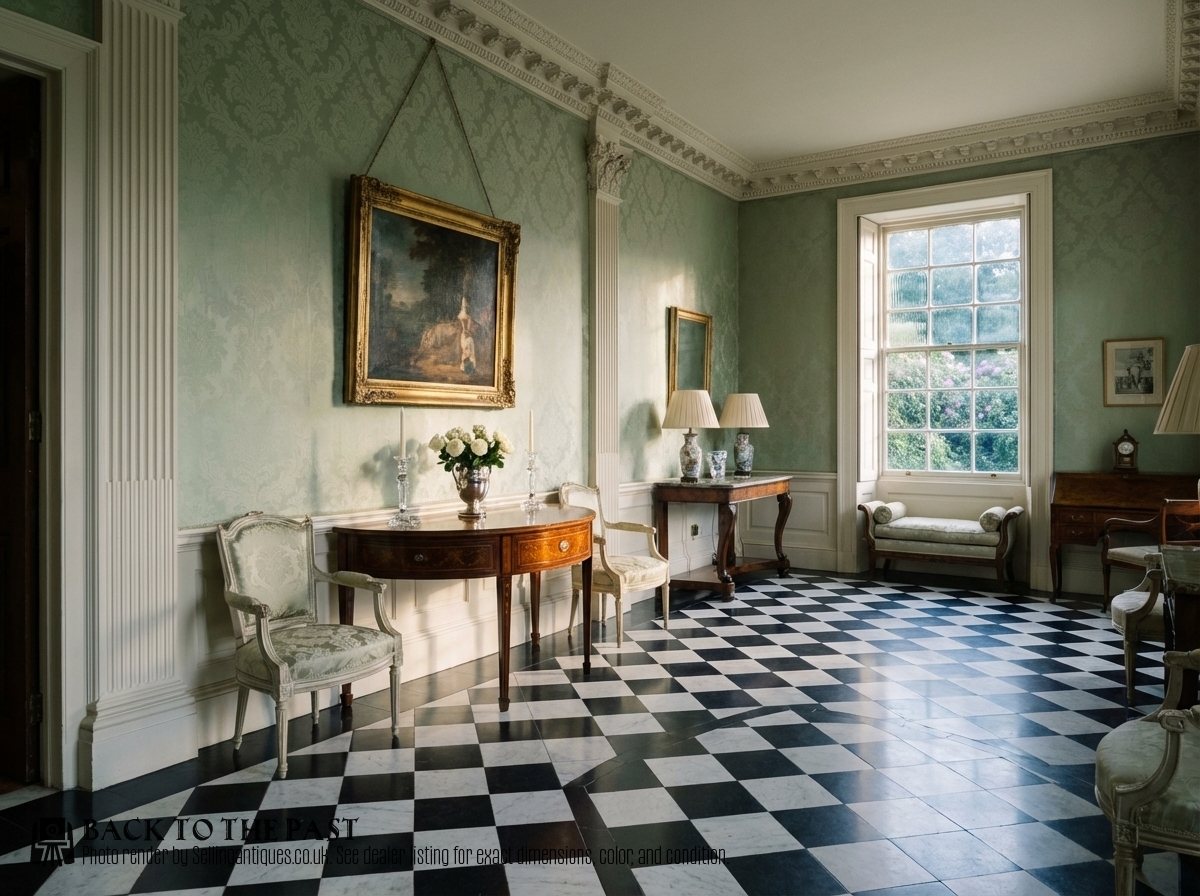
Console tables were traditionally placed against walls in hallways, drawing rooms, and formal reception spaces. They served as decorative surfaces for lamps, clocks, and ornaments rather than for heavy daily tasks.
Because many examples feature flat backs or demi-lune shapes, they occupied minimal floor space while providing a focal point beneath mirrors or paintings.
What is the difference between marquetry and inlay?
Inlay generally refers to cutting depressions into a solid wood surface and inserting contrasting materials like brass or wood. Marquetry covers the entire surface with a mosaic of veneer slices forming a picture or pattern.
Both techniques appear frequently across eighteenth and nineteenth-century walnut and mahogany tables.
How do I care for polished veneer?
Polished veneer surfaces require consistent humidity levels and protection from direct sunlight to prevent timber shrinkage and fading. Dusting with a dry, soft cloth maintains the finish without stripping the wax.
Avoiding placement near heat sources preserves the stability of the underlying carcase and veneer glues.