
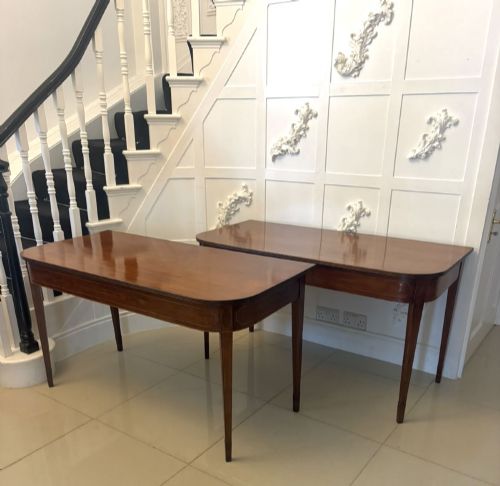
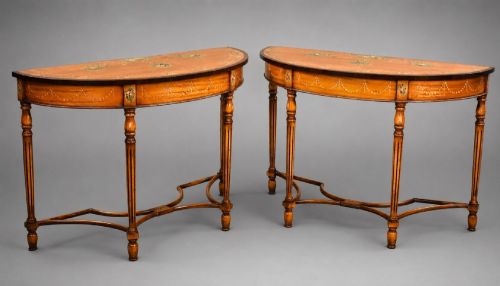


Sheraton Style Pier Table
These sheraton style pier table pieces bring neoclassical elegance to a hall or drawing room.
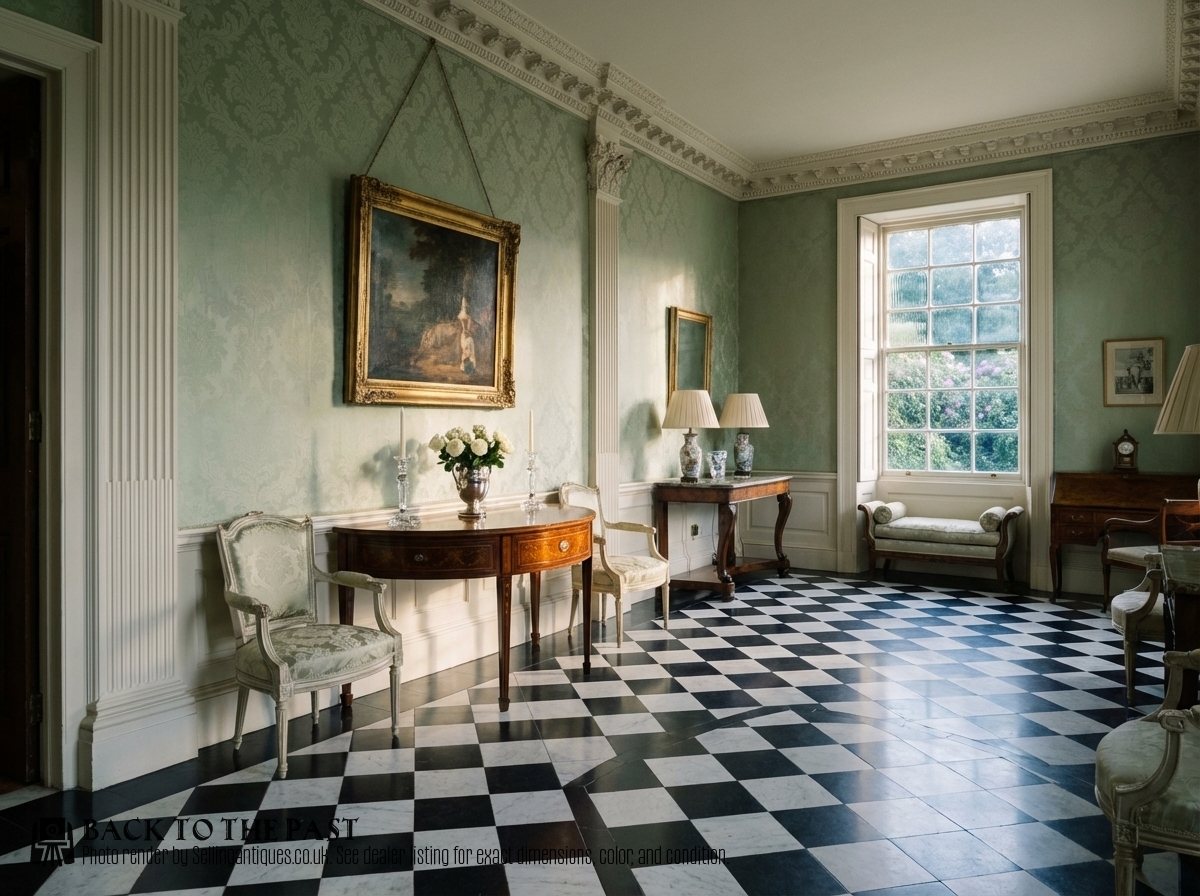
Sheraton Style Pier Table
A sheraton style pier table is a slender, semi-circular or demi-lune console designed to stand flat against a wall, typically between windows. These pieces emerge in various forms across the eighteenth and nineteenth centuries, including console tables, side tables, side cabinets, and console and pier tables.
The versions most commonly met on this page span the George III, Regency, and Sheraton Revival periods, alongside Victorian, Edwardian, and later twentieth-century iterations. They often feature satinwood, mahogany, and padoukwood construction, frequently enriched by painted decoration and intricate inlay.
Makers and craftsmen of these periods utilised the demi-lune shape to save space while providing a formal surface for decorative objects. Collectors encounter both authentic period pieces and later revival interpretations that faithfully mirror the restrained classical geometry.
Materials and construction
Construction relies heavily on fine cabinet timbers like satinwood and mahogany, often enhanced by contrasting crossbanding in boxwood or other pale woods. The carcase work demands high precision to achieve the smooth, curved demi-lune form without compromising structural integrity.
Surface decoration frequently incorporates polychrome paint and hand-painted details, alongside neoclassical style inlay using diverse wood veneers. Giltwood and brass elements appear as decorative accents, framing panels or highlighting structural joints.
Listings span periods from 1700 through the Georgian, Regency, and Victorian eras to the 1930s, using satinwood, mahogany, and giltwood.
Assessing quality and craftsmanship
Quality rests on the crispness of the inlay and the subtlety of the hand-painted decoration across the satinwood surface. The finest examples display finely figured timber veneers with tight crossbanding that follows the precise curve of the top.
Structural refinement also dictates value, seen in the delicacy of the tapering legs and the stability of the joints. Finer tables balance decorative ambition with balanced proportions, avoiding heavy or clumsy scantlings.
The Sheraton Style Pier Table Glossary
- Demi-lune
- Having the shape of a half-moon. This curving profile defines the traditional footprint of a pier table designed for wall placement.
- Satinwood
- A hard, durable timber with a natural golden sheen. Cabinetmakers favoured it for decorative veneers and smooth painted finishes.
- Crossbanding
- A strip of veneer applied to the border of a table top running perpendicular to the grain of the central panel. This technique creates a neat framing effect.
- Neoclassical
- A style drawing inspiration from classical antiquity. It favours symmetrical balance, straight lines, and refined ornamentation.
- Pier table
- A decorative table made to stand against a wall pier between windows. It often supports a mirror hung above it.
Sheraton Style Pier Table: Frequently Asked Questions
What is a pier table?
A pier table is a decorative side table specifically built to stand flat against the wall space between two windows. It traditionally sits beneath a matching wall mirror.
These tables generally feature a shallow, semi-circular or demi-lune footprint to maximise floor space in formal reception rooms and halls.
How do I spot Sheraton Revival?
Sheraton Revival pieces date from the late nineteenth and early twentieth centuries, copying the lighter neoclassical styles of the late eighteenth century. They rely on satinwood, painted details, and tapered legs.
Examine the construction methods, secondary timbers, and wear patterns to distinguish a revival piece from an original eighteenth-century work.
Where should I place one?
These tables suit hallways, landings, and drawing rooms where floor space is limited. Their shallow profile ensures they do not obstruct walkways.
Position them against a flat wall, ideally beneath a painting or mirror, to display small decorative objects without crowding the room.
What is satinwood?
Satinwood is a dense, lustrous tropical timber with a yellowish colour and a natural sheen resembling satin. It takes a fine polish and provides a bright canvas for painted decoration.
Cabinetmakers during the Georgian and revival periods used it extensively for veneering tabletops and drawer fronts.