
Inlaid Mahogany Sideboard Cabinet
An inlaid mahogany sideboard cabinet brings rich timber and crisp contrasting banding to a dining room or hallway.
Inlaid Mahogany Sideboard Cabinet
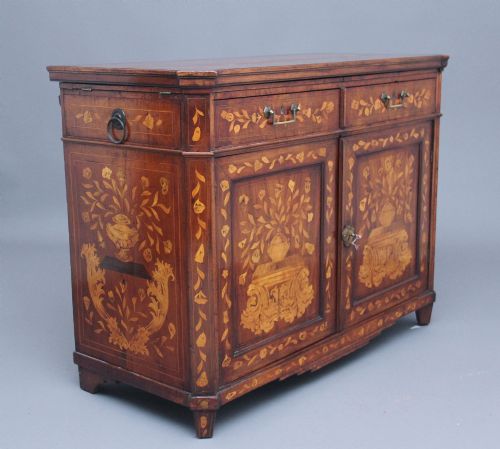
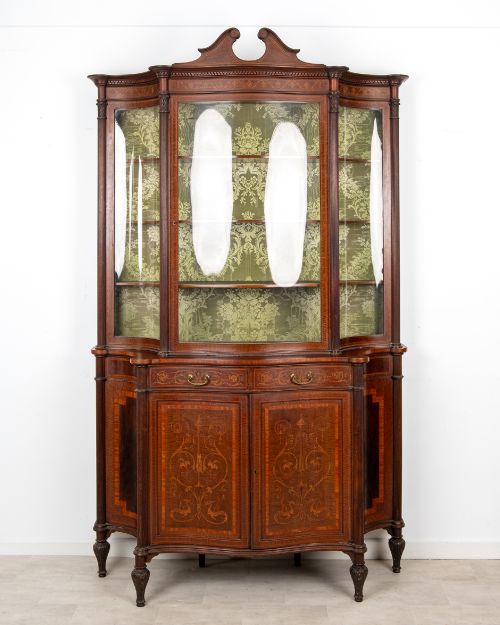
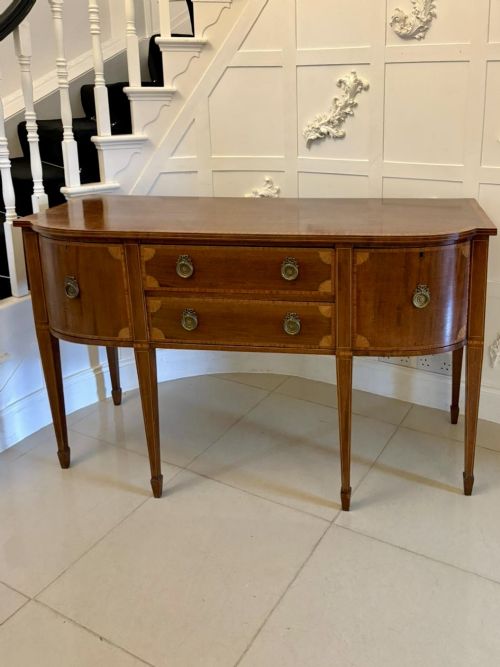
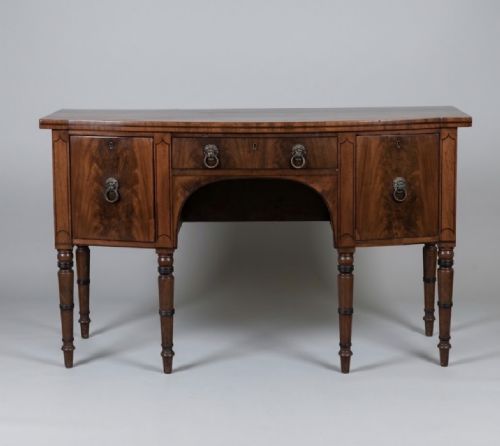
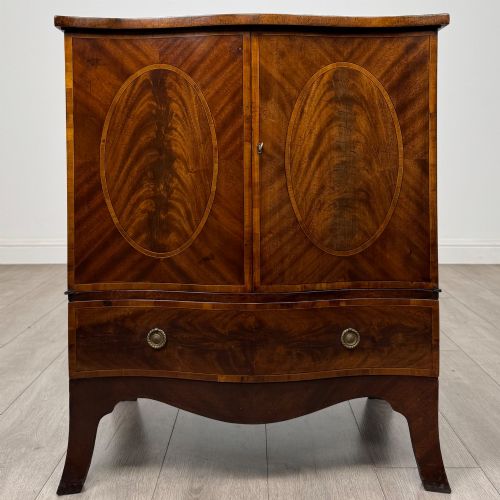
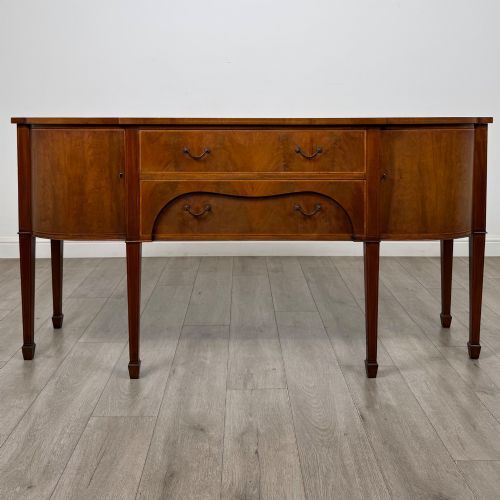
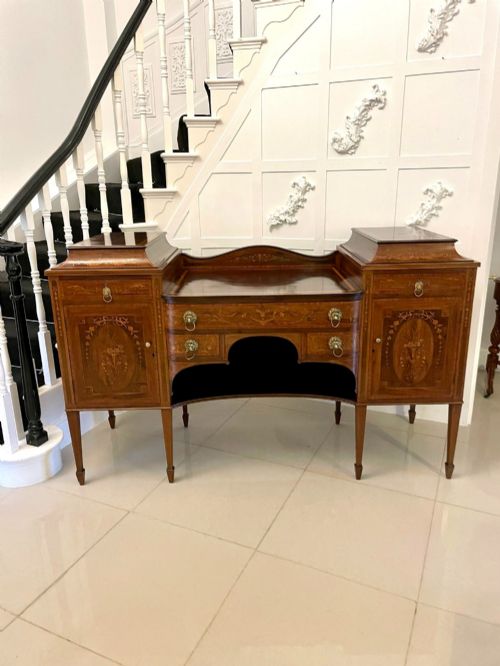
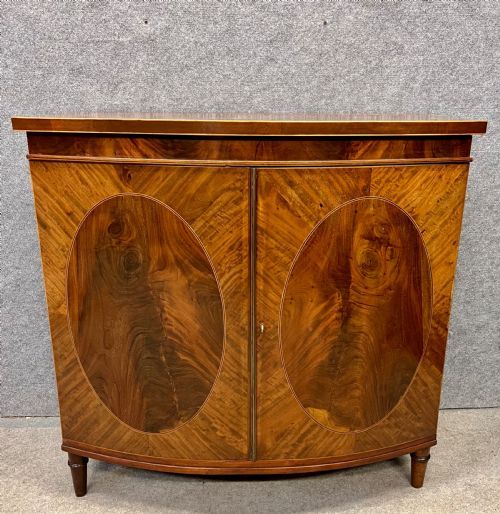
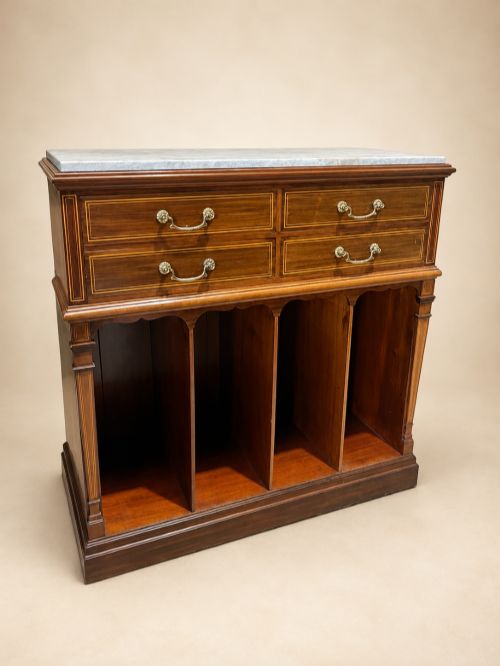
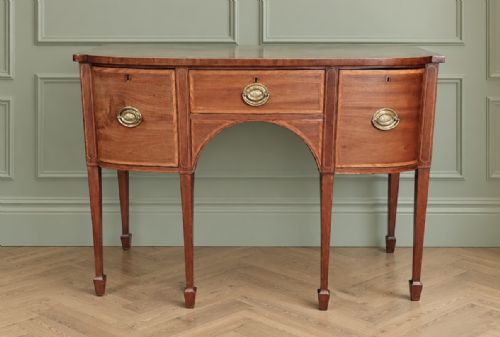
An inlaid mahogany sideboard cabinet combines deep red-brown timber with decorative contrasting stringing, satinwood bands or pictorial marquetry. These dining and reception room pieces appear in forms ranging from bow-fronted servers to tall display cabinets and compact side cupboards.
The pieces on this page span the Georgian, Regency, Victorian and Edwardian eras, alongside later revival interpretations. Edwardian Sheraton Revival pieces and 19th-century bow-front sideboards form the core of what you encounter here.
Makers such as Hewetsons and firms like Maple & Co contribute to the record, alongside provincial workshops producing utilitarian washstands, chiffonier bookcases and console wall tables.
Materials and Construction
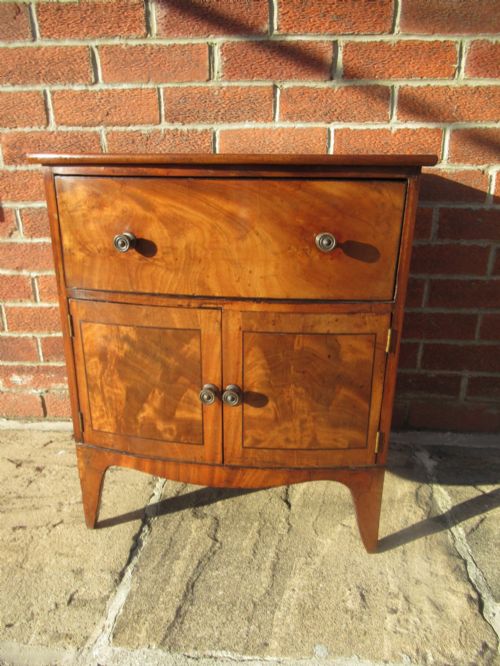
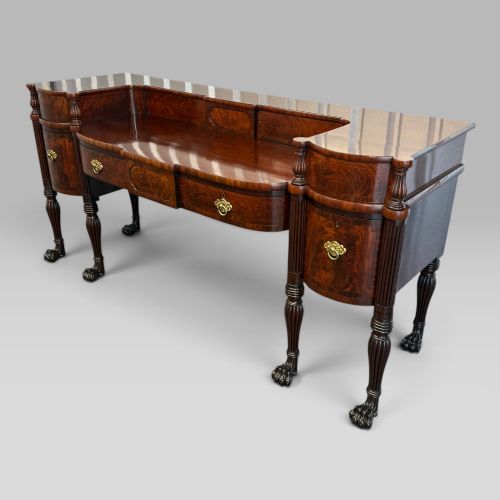
Makers built these cabinets using solid mahogany frames and panelled carcases, frequently applying flame mahogany veneers to drawer fronts and doors to create rippling visual depth. Boxwood and ebony stringing provide sharp linear borders around these figured surfaces.
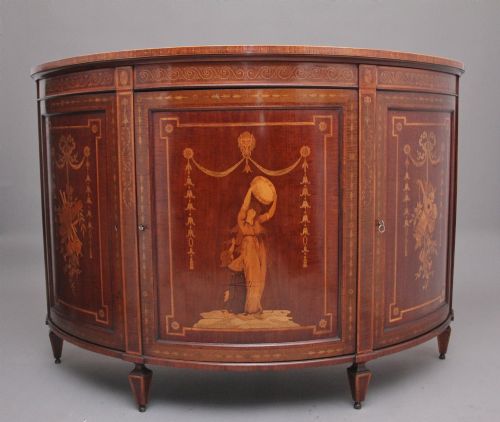
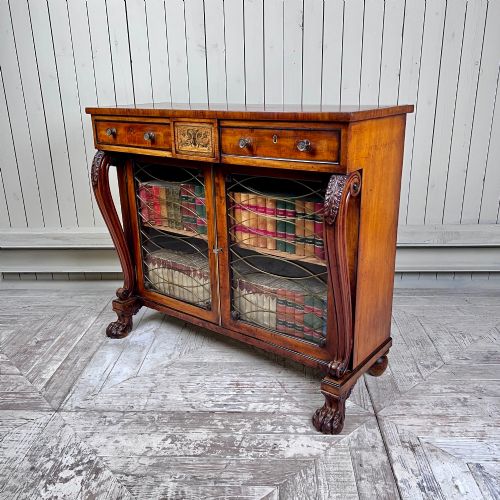
Contrasting veneers like satinwood form decorative fans, urns and crossbanded margins, whilst brass handles, escutcheons and lion paw feet finish the Regency and Georgian examples.
A travelling cabinet from the early 19th century reminds us that even sideboards once packed their bags for a journey.
Distinctions in Execution
Quality rests in the precision of the inlay and the selection of the timber grain rather than the mere presence of decoration. Crisp, tight mitres in boxwood stringing and symmetrical flame figuring separate superior items from standard production.
The integrity of the structural joinery, the thickness of the mahogany drawer linings and the subtlety of hand-cut marquetry panels distinguish individual cabinetmaker skill across the 19th and early 20th centuries.
Hewetsons London·Maple & Co
The Inlaid Mahogany Sideboard Cabinet Glossary
- Crossbanding
- A border of veneer laid with the grain running perpendicular to the surrounding timber. This frames the primary panel of a sideboard top or drawer front.
- Marquetry
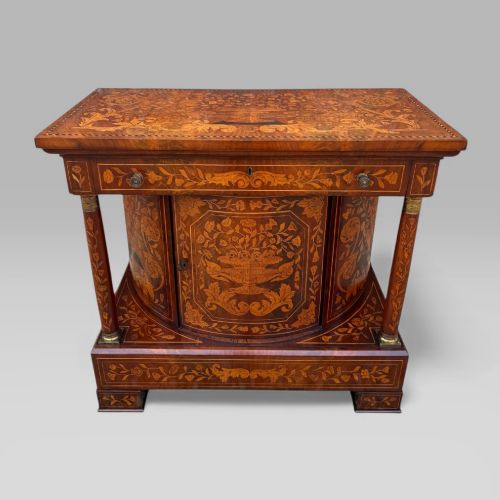
- A decorative technique arranging thin veneers of various woods, such as satinwood and ebony, into pictorial or geometric patterns.
- Bowfront
- A convex curved front characteristic of many Georgian and Edwardian sideboards. It softens the linear profile of a dining room cabinet.
- Chiffonier
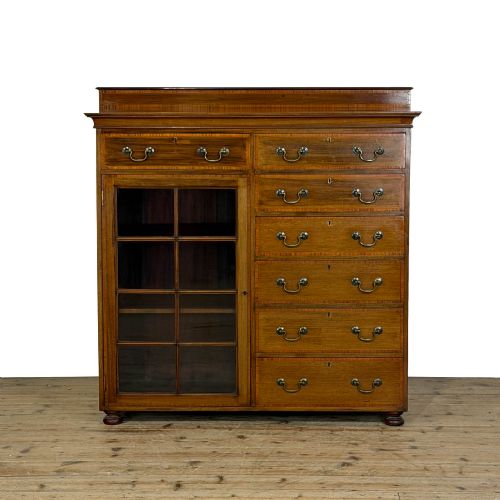
- A compact sideboard or low cabinet equipped with drawers and enclosed shelves below. Regency and Victorian examples frequently incorporate glazed or mirrored doors.
Inlaid Mahogany Sideboard Cabinet: Frequently Asked Questions
How do I date an inlaid mahogany sideboard?
Examine the timber selection, construction methods and stylistic motifs present on the carcase. Georgian and Regency pieces rely on structural proportion and restrained brass mounts, whereas Edwardian Sheraton Revival cabinets often employ lighter satinwood bands and machine-sawn veneers.
Secondary woods inside drawers and the backing boards offer further clues to the manufacturing decade. Cabinetmakers changed their fastening methods and timber preparation over the course of the 19th century.
Where should I place a side cabinet?
These cabinets suit dining rooms, living spaces and generous hallways where surface area and enclosed storage are both required. Their shallow depths allow them to sit against walls without obstructing interior traffic.
Keep them away from direct heat sources and strong sunlight to protect the mahogany polish and prevent the decorative satinwood veneers from drying.
What is the difference between a sideboard and a chiffonier?
A sideboard is traditionally a longer dining room server designed for holding serving dishes and cutlery, featuring a combination of long drawers and cupboards. A chiffonier is generally more compact, functioning as a side cabinet with enclosed shelves and occasionally a small superstructure or bookcase above.
Both forms utilise mahogany and fine inlay work, but their proportions and internal layouts reflect different domestic uses.
How do I care for antique mahogany furniture?
Maintain the finish by dusting with a dry, soft cloth and applying a microcrystalline wax polish sparingly to nourish the timber. Avoid silicone-based sprays, which build up a residue and dull the patina over time.
Maintain stable humidity levels in the room to prevent the mahogany planks and delicate satinwood stringing from shrinking or warping.