
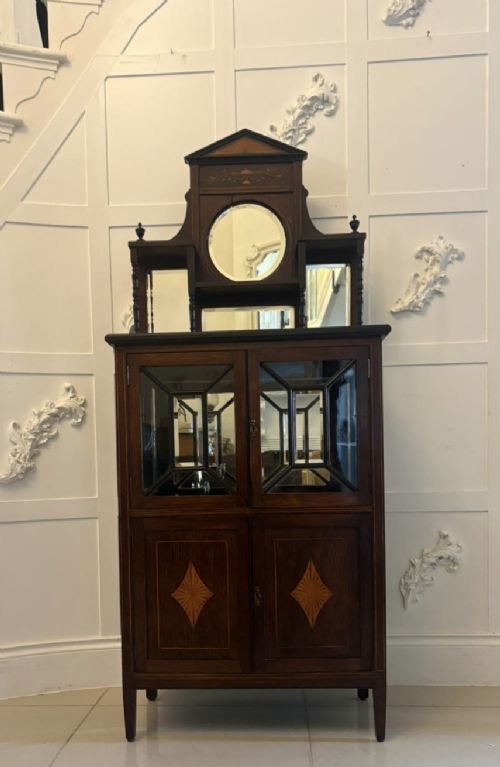
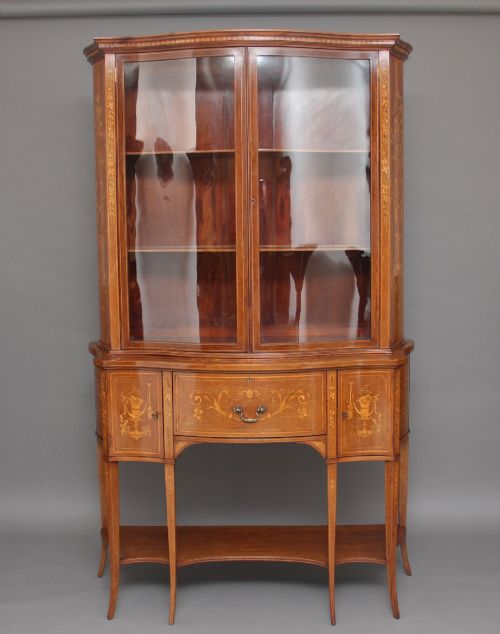


Vintage Parlour Display Cabinet
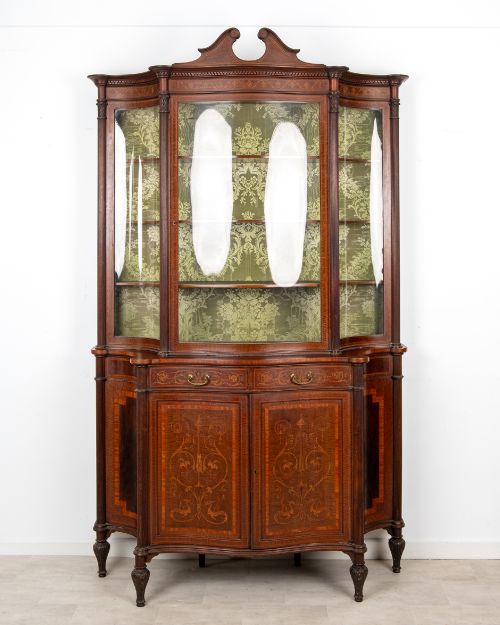
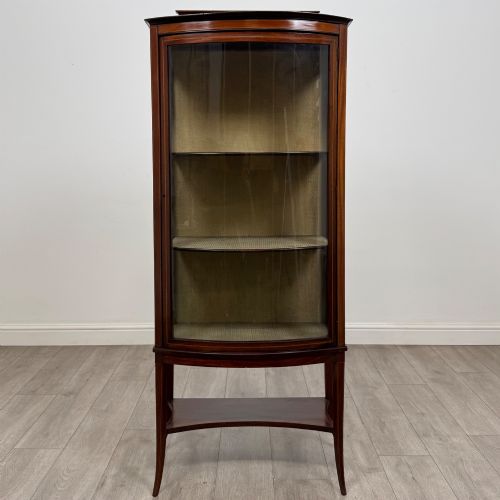
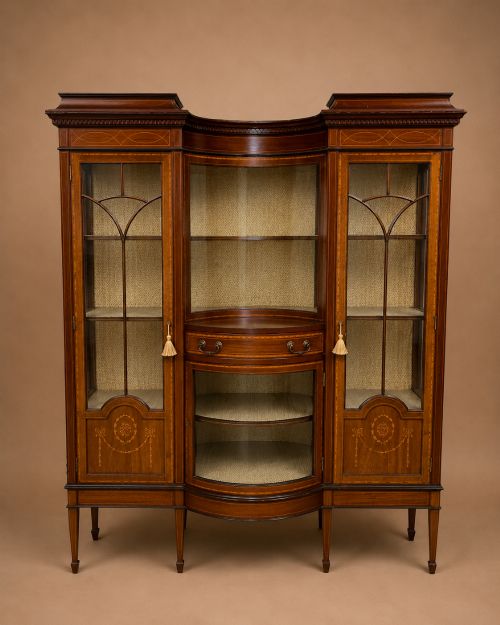
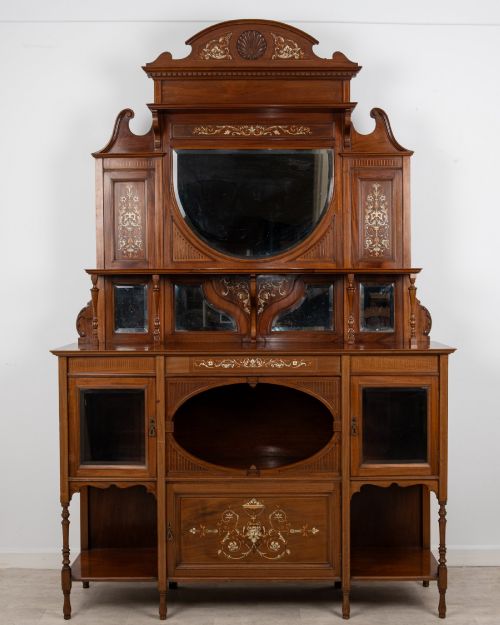
These vintage parlour display cabinets are glazed timber showcases built to display china and curiosities in the formal rooms of the period.
Vintage Parlour Display Cabinet
A vintage parlour display cabinet is a formal storage piece designed to showcase prized ceramics and ornaments in the principal rooms of a home. Buyers exploring this selection will encounter a dominant presence of Edwardian and nineteenth-century examples fashioned from mahogany, satinwood, and walnut.
The assortment spans diverse silhouettes, from bow-fronted and serpentine shapes to architectural credenzas and single-door glazed vitrines. These furnishings reflect historical revivals, incorporating Sheraton, Chippendale, and French decorative motifs executed with delicate stringing and marquetry.
Materials and construction
Cabinet makers utilised dense hardwoods such as mahogany and walnut as structural timbers, frequently applying contrasting veneers of satinwood, boxwood, and rosewood for decorative marquetry panels and stringing. Ormolu mounts, brass hardware, and mirrored backs were integrated to enhance light reflection within the glazed compartments.
Joinery methods relied on precise framing for glass doors and intricate inlay work, where fine wood sections were hand-cut and fitted into the primary timber body. Surface finishes were achieved through traditional polishing techniques that deepened the natural grain of the wood.
Materials documented across the inventory include mahogany, satinwood, walnut, rosewood, glass, mirror, and ormolu.
Distinctions in quality
Quality diverges according to the crispness of the marquetry inlay, the complexity of the timber selection, and the sophistication of the overall silhouette, such as serpentine or bow fronts. Pieces designated for exhibition or bearing identified workshop provenance demonstrate superior execution in carved details and cabinetwork.
The refinement of the brass fittings, the integrity of the original glass, and the depth of the cabinet proportions separate standard production furniture from ambitious cabinetmaking. Subtle elements like interior fabric linings and secondary wood choices further indicate the tier of the piece.
Maple and Co·Shapland and Petter
The Vintage Parlour Display Cabinet Glossary
- Marquetry
- Decorative patterns formed by fitting together small pieces of veneer into timber surfaces. This technique creates elaborate floral or geometric designs across the cabinet doors and friezes.
- Vitrine
- A glass-fronted cabinet specifically constructed for the display of porcelain and curiosities. These pieces often feature bevelled glass panes and mirrored backs to maximise visibility.
- Credenza
- A low-profile side cabinet originating in the nineteenth century, frequently incorporating central cupboards flanked by curved glazed sections. They serve as substantial display and storage units.
- Chippendale Revival
- A decorative style popular in the Edwardian era that reinterprets eighteenth-century carved mahogany motifs. It is characterised by ornate fretwork and disciplined proportions.
- Vernis Martin
- A simulated Japanese lacquer technique developed in France, utilised on high-status cabinets to create glossy painted panels. It provides a decorative surface of considerable visual depth.
Vintage Parlour Display Cabinet: Frequently Asked Questions
What fits inside these cabinets?
These pieces house delicate porcelain tea sets, glassware, and small ornaments behind protective glazed doors.
The glass panels keep dust away from fragile collections while allowing them to remain visible in reception spaces.
How do I date a cabinet?
Dating relies on identifying timber choices, stylistic revival motifs, and structural construction methods typical of the nineteenth and early twentieth centuries.
Edwardian pieces often display lighter satinwood inlays, whilst earlier nineteenth-century examples favour denser mahogany and burr walnut veneers.
Where should I place it?
A parlour cabinet suits formal sitting rooms or dining areas where it can anchor a wall alongside other period furnishings.
Positioning them away from direct sunlight protects both the polished timber surfaces and the displayed contents inside.
What is a mirror back?
A mirror back is a fitted glass panel placed behind the internal shelves of the display compartment.
This addition reflects interior light forward, illuminating the back of displayed ceramics and curiosities.